Mr. Trump, unsurprisingly, doesn’t talk like that. He recently claimed that high oil prices are good for America, by which he presumably meant good for his donors in the American oil industry. What’s surprising is that environmentalists don’t usually talk like that anymore, either, whereas they used to preach the importance of conservation, recycling and other eco-friendly behaviors all the time. The cartoon possum Pogo summed up the movement’s original Earth Day message in an anti-littering poster: “We have met the enemy and he is us.”
Over the past decade, green activists, tired of being caricatured as guilt-tripping scolds, have recast the enemy as fossil-fueled politicians like Mr. Trump and fossil-fuel extractors like Exxon. They’ve mostly stopped lecturing us about our individual carbon footprints and other environmental sins, focusing instead on political and systemic change, while urging us not to obsess about our personal behaviors. Climate hawks routinely point out that BP invented the carbon-footprint calculator, portraying the entire concept of personal eco-responsibility as Big Oil propaganda designed to make you feel ashamed about a problem created by corporate greed and political corruption.
It’s true that political change will be vital to weaning the world off energy sources subject to price spikes when there’s unrest around the Strait of Hormuz. Around the globe, supportive government policies have already helped drive down the prices of solar, wind, batteries and electric vehicles, spurring a clean-energy revolution that has allowed other countries and citizens to reduce their costs and exposure to oil shocks, as well as emissions. Mr. Trump’s assaults on green subsidies, mass transit and pollution regulations have been an infuriating drag on that progress in the United States. He’s making it harder to go green.
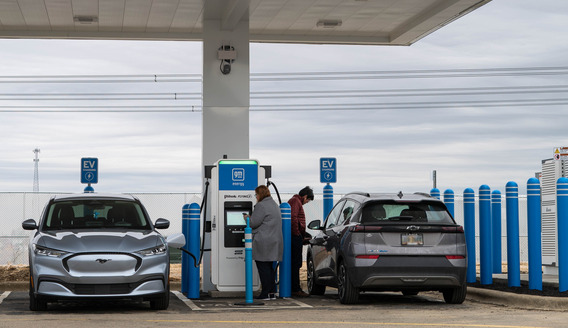
But he isn’t forcing you to drive a massive S.U.V. to the mall, and neither is Exxon. The good news is that going green no longer necessarily involves financial sacrifice. The five best-selling electric vehicles in the United States all cost less than the national average for a new car. Even before prices at the pump started soaring above $4 a gallon, Consumer Reports found that the typical E.V. owner saves $6,000 to $12,000 on maintenance and fuel over the car’s lifetime. As the owner of an all-electric Chevy Bolt, I can report that it’s nice not to have to think about gas prices. My Bolt is powered by solar panels on my roof that paid for themselves in seven years. And it’s nice not to pay big electric bills, too.
I don’t want to be a guilt-tripping scold, either, especially since I still fly way too much. The point isn’t that people should be perfect; it’s that better is better than worse. Even if you’re still reliant on fossil energy, even if you don’t believe that driving alone means driving with Putin and you don’t feel like adjusting your thermostat, occasional car-pooling or biking can still be enjoyable and profitable. Inflating your tires, as mundane as it sounds, can save you a few hundred dollars a year on fuel. Maybe more if the bottlenecks persist at the Strait of Hormuz.