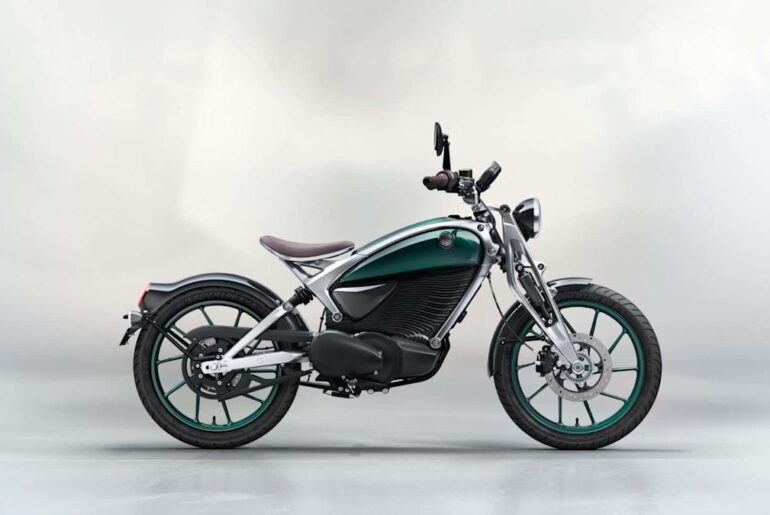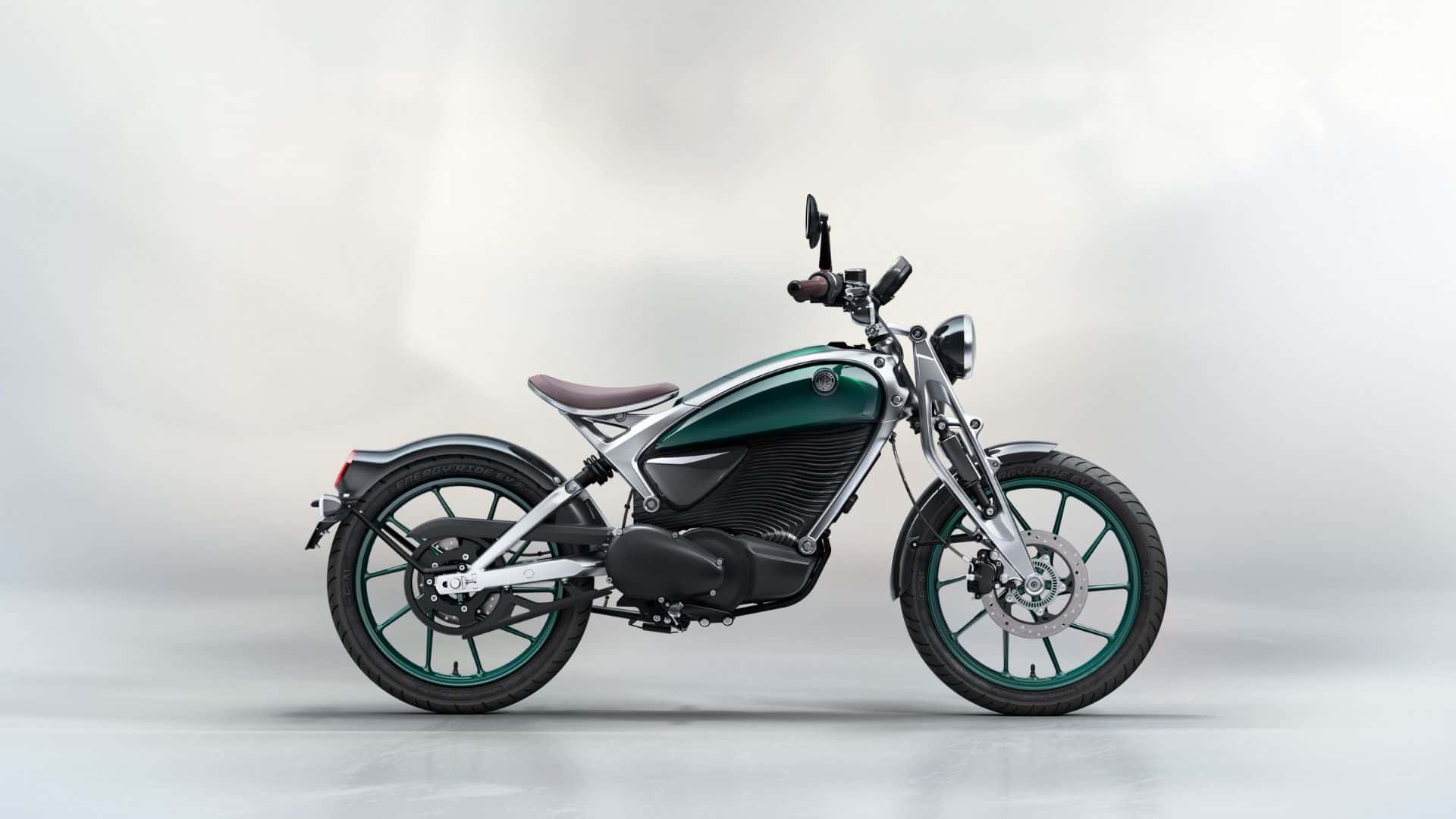
When Royal Enfield first showed off the Flying Flea C6 EV concept at EICMA a couple of years ago, it was admittedly kind of jaw-dropping for two reasons. The first is, of course, the mere visual appeal of its design. There is, quite simply, nothing else that looks like this bike.
The second part is, rather understandably, an eyebrow raise at a company that so firmly leans into its history, suddenly making a sharp turn toward an electric platform. If that plotline sounds familiar, that’s probably because it is. But unlike the tale of Harley and LiveWire, the introductory goal here doesn’t appear to be a high-end machine that few can afford.
Instead, it’s meant to lean into another strength of the modern, Eicher-owned iteration of Royal Enfield: Offering cheeky, appealing design and solid construction at prices that a great deal more regular people can afford.
To be clear, pricing on the Flying Flea C6 isn’t available yet at the time of writing; that’s coming in a few days (at least, home-market pricing in India will be), on April 10. Local moto news outlets in India are expecting it to come out around the equivalent of US $2,600, but the real figure there remains to be seen, and we’ll report back once it’s out.
I’m getting ahead of myself, though. What we’re here to talk about today is specs, because we finally have them!
Let’s start with the curb weight, which is a claimed 124 kilograms (or about 273 pounds). EV motorcycles, such as they’ve been in the past, are known for being on the heavier side. But if you’ve already guessed that this low weight is achieved by a smaller battery, you’d be correct.
Tucked away inside that gorgeous finned magnesium battery case is a lithium-ion unit packing a tidy 3.91 kWh of power. The motor powered by that battery produces a claimed 15.4 kW of power (equivalent to around 20 horsepower), alongside 60 Nm (about 44 lb-ft) of torque.
Claimed range according to Indian Driving Cycle (IDC) test standards is 154 kilometers, or a hair over 95 miles. Now, to be clear, I haven’t ridden the Flying Flea C6 yet, so I can’t offer an informed riding perspective. But I have spent a decent amount of time riding other EV motorbikes, so I have to say that this seems like an overly optimistic, ideal-world figure, at best.
For those who aren’t familiar with how EV ranges work, the basic rule is that the more stop-and-go traffic you’re riding or driving in, the better your range will be. That’s why EVs make fantastic vehicles for weaving your way through the levels of traffic congestion that often come with living in a busy city environment. If that’s all you’re doing, then you’re more likely to get closer to the claimed range figure mentioned here.
Unfortunately, that’s not how most people ride in the real world. Most of us have mixed riding scenarios, where we might have some tight stop-and-go traffic some of the time, paired with longer blasts on highways at higher speeds. Longer blasts on highways at higher speeds are a lot of fun on an EV, but there’s truly no faster way to deplete your battery’s range than doing a whole lot of that type of riding.
The more of that type of riding you do, the quicker you’ll reach full-on range anxiety, and find yourself pulling over to anxiously consult Plugshare (or a similar EV charging station map app, depending on your geography) to see where the nearest charging station that supports your type of charging standard is located.
Why do I say this? Because while I haven’t had any hands-on seat time with the Flying Flea C6 yet, I have spent a decent amount of time with a few different EV motorbikes. The most long-range capable one was the Zero SR/F, which boasted a 17.3 kWh battery pack when I lived with it for almost an entire year. Granted, that was a much heavier machine, which tipped the scales at around 500 pounds. And yes, its zippy nature meant you could easily reach and sustain higher speeds than the Flying Flea C6’s claimed top speed of 115 kph (about 71 mph).
But with all that being said, I still only managed to get around 88 miles on a single charge of that battery while doing a spirited weekend ride. Admittedly, stop-and-go city riding saw that bike practically sip electrons, to the point where it almost felt like I was breaking even on my motive energy expenditure thanks to brake regen. This isn’t an apples-to-apples comparison, and all OEMs tend to be a bit optimistic in their range (or fuel efficiency, for combustion bikes) estimates.
The Flying Flea C6 boasts an onboard charging setup, with claims that you can go from 20% to 80% of a full battery in just over an hour. To charge to 100% will take you a leisurely extended lunch period of about two hours and 16 minutes, give or take.
What about ride modes? The Flying Flea C6 boasts five: City, Rain, Highway, Sport, and a user-defined Custom mode. Other rider aids include dual-channel ABS and lean-sensitive traction control. Smartphone connectivity (and a wireless charging box), a 3.5-inch TFT display with touchscreen, and Google navigation are standard. Lighting is LED all around, which isn’t surprising in the least.
Will the C6’s Google nav system be similar to the one offered with the Tripper Dash on its cousins, the Himalayan 450 and the Guerrilla 450? That’s unclear, but something I’d love to ask Enfield when I get the chance.
Other stats to know: The Flying Flea C6 rolls on a pair of 19-inch wheels, wrapped in Ceat EnergyRide tires. You also get a 260mm front brake disc and a 220mm rear brake disc, that girder front fork you can’t ignore, a rear monoshock, a seat height of 823mm (about 32 inches), and ground clearance of 207mm (about 8.14 inches).
Much Depends On Pricing
That’s often the thing with EV motorbikes. As an object, it’s clear that there’s a reasonable space available for a motorcycle like the Royal Enfield Flying Flea C6, but a lot of that reasonability and what potential owners will be happy to live with will depend on how it’s priced.
It’s not being positioned as something it isn’t; it’s intended to be a stylish commuter, and if it’s priced accordingly, then it should do pretty well. Clearly, it will do better in some markets than others, but right now we exist in a strange liminal space, before full knowledge of the actual price being asked is made public.
Now that you know a bit more about the Flying Flea C6, what do you think? What are you hoping for in terms of pricing? Would you give it a try if you had the chance? Let me know in the comments.
We want your opinion!
What would you like to see on Rideapart.com?
– The RideApart Team