For the past couple of years, electrification has been actively reshaping how manufacturers think about performance, efficiency, and even what riders expect from a motorcycle. Fully electric bikes are getting quicker and more refined, while combustion engines are being pushed to become cleaner and smarter. Somewhere in between, there’s a space that hasn’t been fully explored yet.
That’s where Kawasaki steps in.
This is a brand known for high-revving inline-fours and track-focused machines, so its move into electrification carries weight. Instead of going all-in on full electric right away, Kawasaki is taking a different route. It’s figuring out how to blend electric and combustion power in a way that actually adds to the riding experience.
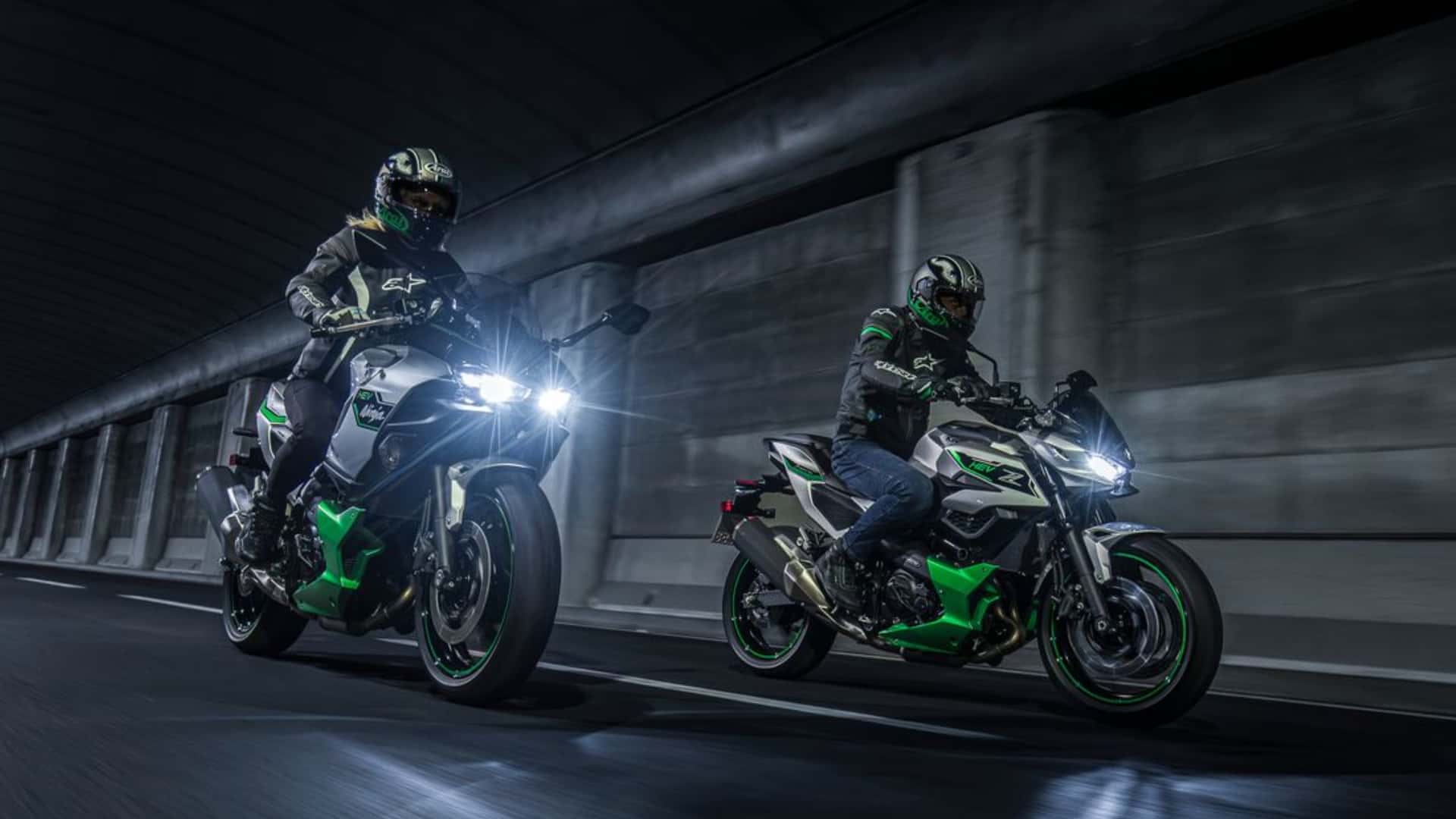
The result is the Kawasaki Ninja 7 Hybrid and Kawasaki Z7 Hybrid. These bikes still stand alone as the only mainstream, mass-produced strong hybrid motorcycles available today. Not concepts or limited experiments, but real production machines you can ride daily. And that’s what makes them so interesting.

Photo by: Kawasaki
It’s honestly a bit strange that no one else has followed. In the car world, hybrids went from niche to normal in just a few years. They offered clear benefits like better efficiency, lower emissions, and even performance gains thanks to electric assist. Motorcycles, on the other hand, skipped that middle step almost entirely. Most brands either stuck with combustion or jumped straight to full electric, leaving hybrids largely untouched.
Part of that comes down to packaging and cost. Fitting an engine and an electric motor into a motorcycle without ruining weight distribution or ride feel is a real challenge. Then there’s pricing, which is far more sensitive in the bike world. Add to that a rider base that often values simplicity, and it’s easy to see why manufacturers have been cautious.
But Kawasaki went ahead and did it anyway, and more importantly, it’s continuing to refine the idea. The latest updates to the Ninja 7 Hybrid and Z7 Hybrid focus on making the technology feel more natural in everyday riding. The onboard systems, especially the ECU, have been reworked to improve how drive modes are selected and how the bike responds in different situations.
Photos by: Kawasaki
Photos by: Kawasaki
One of the biggest upgrades is how usable the hybrid system has become. Riders can now switch between full EV and Hybrid modes at speeds up to 37 miles per hour, a big jump from the previous 16 miles per hour. That alone makes EV mode far more practical in real-world conditions, especially in city riding where speeds constantly fluctuate.
Sport Mode also gets a meaningful upgrade. Previously tied to manual transmission operation using paddle shifters, it can now be used with the automatic transmission setting as well. That means riders can access a more aggressive throttle response and character without having to manage gear changes themselves. It’s a small tweak, and one that manual-only purists will scoff at, but it broadens the appeal and makes the bike easier to live with.
6
Source: Kawasaki
And that’s really what this all comes down to. Kawasaki isn’t just experimenting with hybrid tech for the sake of it. It’s actively shaping how that middle ground between electric and combustion could work for motorcycles. The Ninja 7 Hybrid and Z7 Hybrid don’t just introduce new technology, they make a case for why hybrids might deserve more attention in a space that’s been quick to overlook them.
Whether other manufacturers follow is still up in the air. But for now, Kawasaki has the lane to itself, and it’s using it to figure out what the next step in motorcycling might look like.
We want your opinion!
What would you like to see on Rideapart.com?
– The RideApart Team