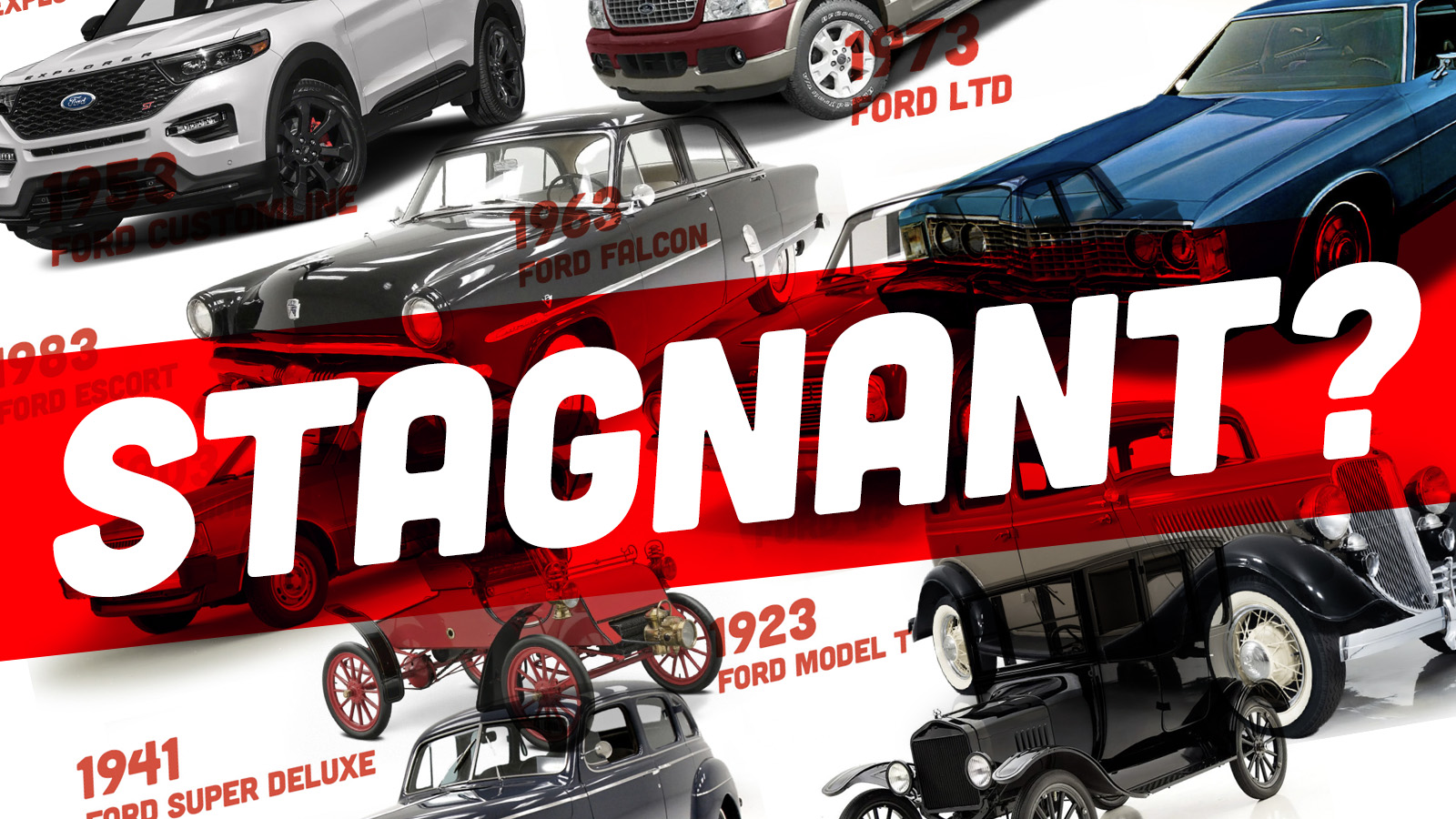
I’ve been reading some interesting things online lately about the pace of cultural, artistic, and technological change. Specifically, it seems that there’s a growing perception that things are, well, stagnating. And this isn’t just a few curmudgeons saying this on various message boards; it’s many curmudgeons saying this in some very large and influential publications.
It’s being noticed in fashion, art, music, and pop culture. Technology, too – old standbys like Moore’s Law (where the number of transistors on a microchip doubles every two years) are largely considered dead, for example. And, of course, people have been saying and thinking the same thing about cars as well, that the development and change in automobiles has slowed down in the past, say, 20 years or so.


Is all this true? Maybe? I mean, yeah, I still have clothes I wore 20 years ago that pass unnoticed today, and it’s easy to imagine that someone dressed in 1960s attire in the 1980s would have, to say the least, stood out. But what if it was just jeans and a T-shirt? Then maybe not. I think it’s possible that changes are happening that, while important, are less obvious than before. And it may be that way with cars, too.
I own cars from the 1970s, 1980s, 1990s, and 2010s, and they all feel quite different. But most of them are weird cars that hang onto deeply archaic designs and technology to begin with, so those aren’t really good examples. I want to try and think this through, so to do so, let’s take cars from one manufacturer that has been around since the beginning of the 20th century, and sold mass-market, mainstream cars. We’ll use Ford, and pick primarily examples of their best-selling passenger cars.
Oh, and it’s probably worth noting I’m focusing on gasoline, internal-combustion cars here. Electric vehicles, I think, are in a different position developmentally, so we’ll maybe address that development in another article.
I want to try and see if there really is a stagnation happening, and if so, what is it about? Is it just a superficial thing, or something deeper? Let’s dive in, decade by decade, and see what we can find out.
Let’s start at the very beginning, 1903, when Ford Motor Company started:
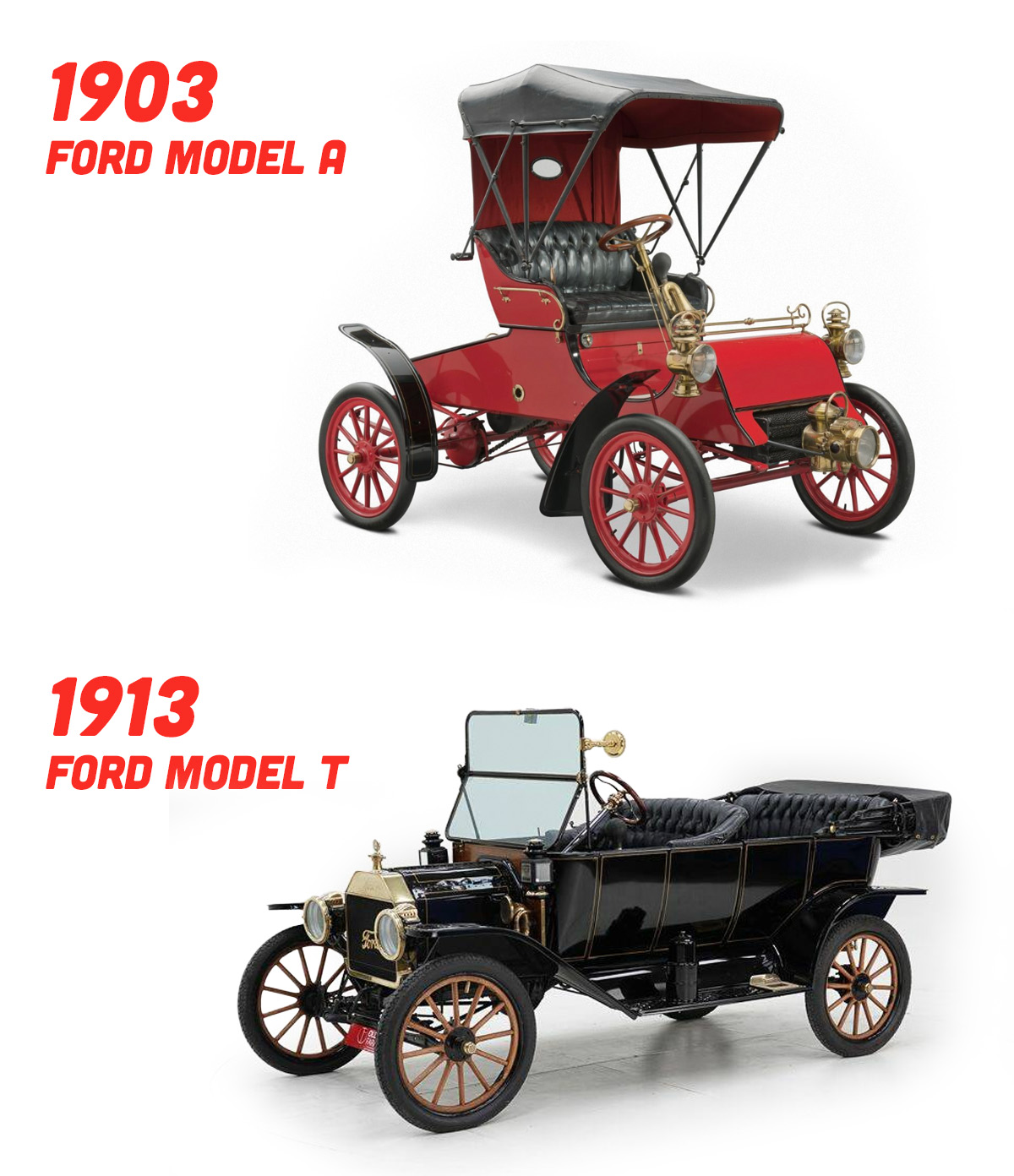
FoMoCo’s first real mass-market car, the Model A, was still very much a product of the natal motor industry. While automobiles had existed in some forms since 1769, gasoline-powered private automobiles were still very new in 1903, and standards and common practices were still being decided.
You were sitting atop the flat-twin, 8-horsepower engine, cooled with big, crude, finned radiator tubes, and a body that was like a loveseat sitting on a wagon. You sat on the car more than in it, and it really wasn’t especially reliable or capable.
Ten years later, though, we have the Model T, built since 1909: a truly mass-produced car, practical and rugged and reliable, with a 20 hp inline-four, a real, encompassing body, front engine/rear drive, and something that could be afforded by huge numbers of people.
These ten years represented a huge leap.
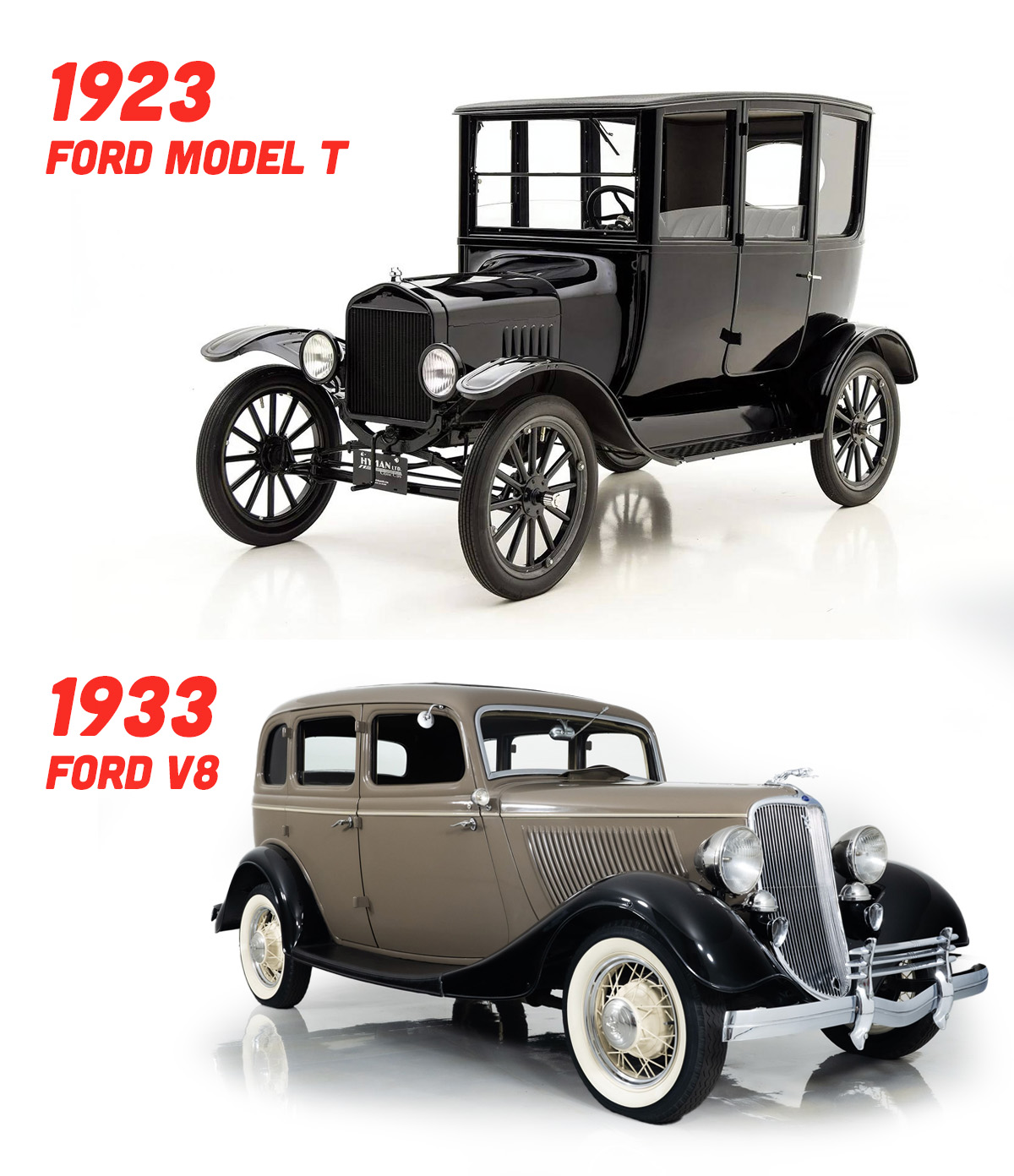
Ten more years, and the Model T has evolved a lot. There were electric lights, an electric starter (even if the crank was still an option), fully enclosed bodies were more common, and the design, while still based on the 1909 original, was getting more unified, less an aggregation of parts.
A decade later, we see some genuinely huge changes: a 1933 Ford had the first mass-produced V8 engine, and automotive design had come a long way, with more complex compound curves, and while fenders, headlights, and running boards were still separate entities, there was a further unification of body elements into a cohesive whole.
Control standards for pedals, wheel, and shifter, and so on, had become standardized by the 1930s, leaving the Model T’s old idiosyncratic three-pedal system and hand-operated spark advance in the dust.
This decade also saw pretty significant changes. A 1930s car generally felt quite different than a 1920s car.
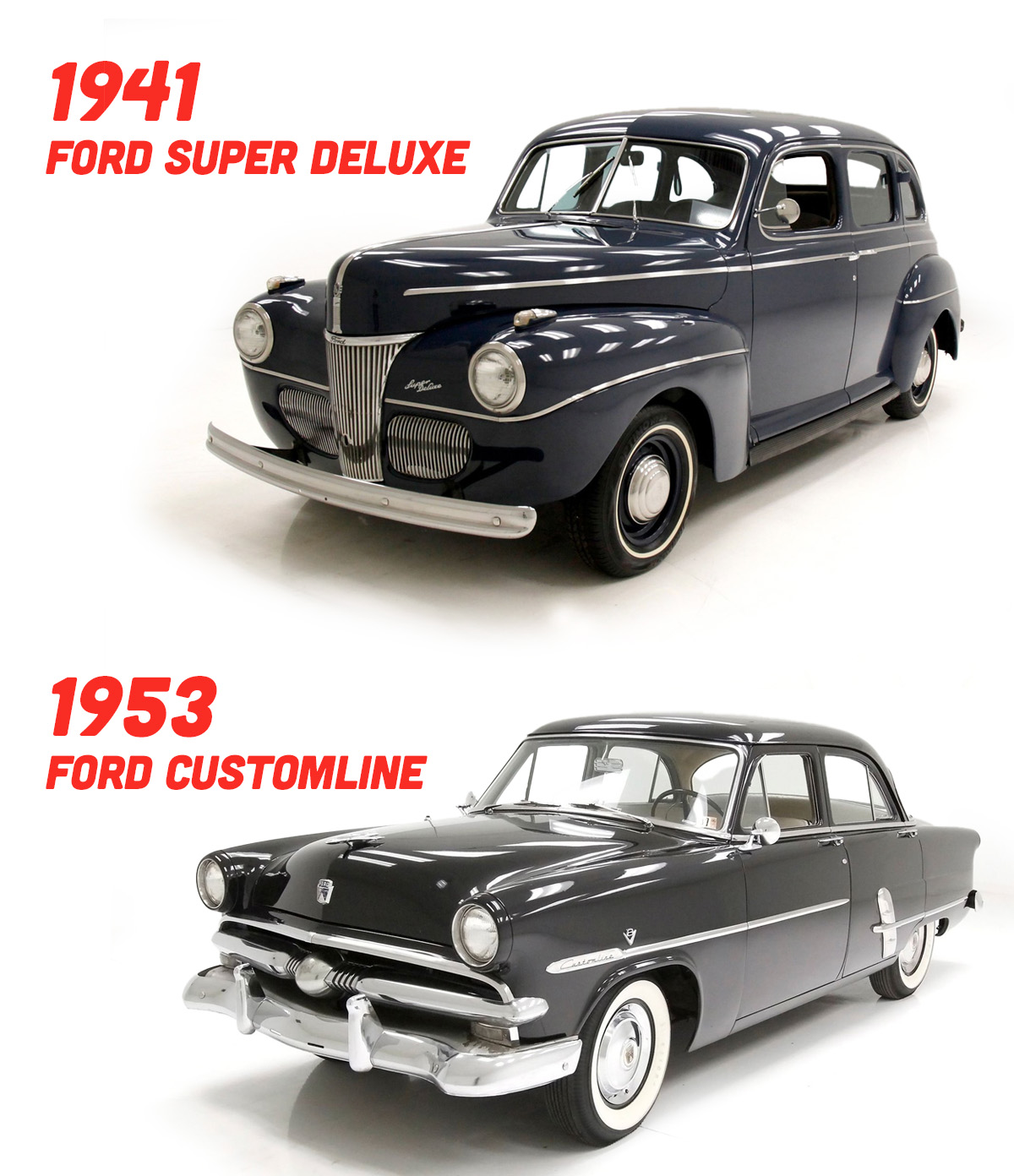
We have to use a 1941 Ford here instead of one a full decade ahead, thanks to a big inconvenience known as WWII. But that’s fine, as there are plenty of significant changes to be seen between the 1930s and 1940s cars. Designs have become far more harmonious, and while fenders are still separate units, the body has still widened overall, and complex curves have become even more pervasive.
The flathead V8 was still in use, but the driving experience was definitely evolving. The next decade would change things even more, as the 1950s brought about fully unified body designs with fully integrated “pontoon” fenders and a lower, longer silhouette that would define the general proportions of cars for decades to come.
Creature comforts and power-assistance would also flower in the 1950s, with vacuum or later electrically-assisted windows, seats, antennae, wipers, and more becoming common. Automatic transmissions would start their rise to popularity in this decade, and cars would generally become significantly easier and more comfortable to use.
Styling would also get more and more exuberant, culminating in the wildly chrome-slathered and tailfinned cars of the later ’50s.
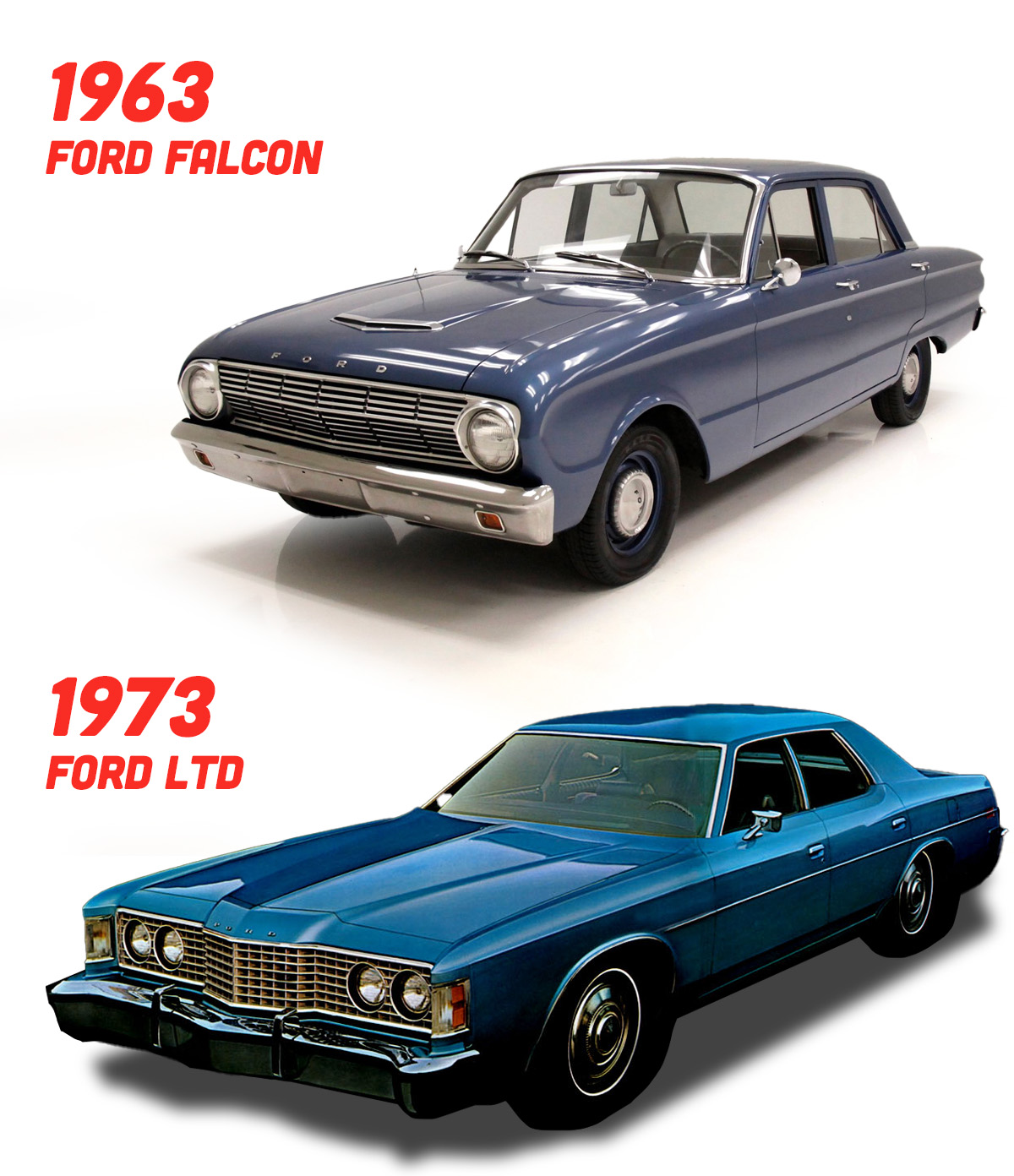
The 1960s were, in many ways, a reaction to the excesses of the 1950s; while there weren’t necessarily massive technological innovations, there were some, like the increasing popularity of unibody construction, like what the 1963 Falcon up there used. The 1960s also saw a swing to some more compact cars and an overall simpler, cleaner aesthetic. Once again, cars from this era felt very different from the decade prior.
While there were still plenty of V8 engines for ’60s cars, inline-6s and fours were not uncommon, and imports (and responses like the Corvair) saw more exotic things like air-cooled opposed engines.
The 1970s were, in turn, a bit of a reaction to the more restrained ’60s, with cars tending a bit bigger and more exuberant styling, with interiors that sometimes resembled space bordellos. Best-selling cars like the big Ford LTD there had massive V8 engines and stuck with body-on-frame construction for a while longer, but also started to at least pretend to care about safety with standard seat belts and even seat belt ignition interlocks.
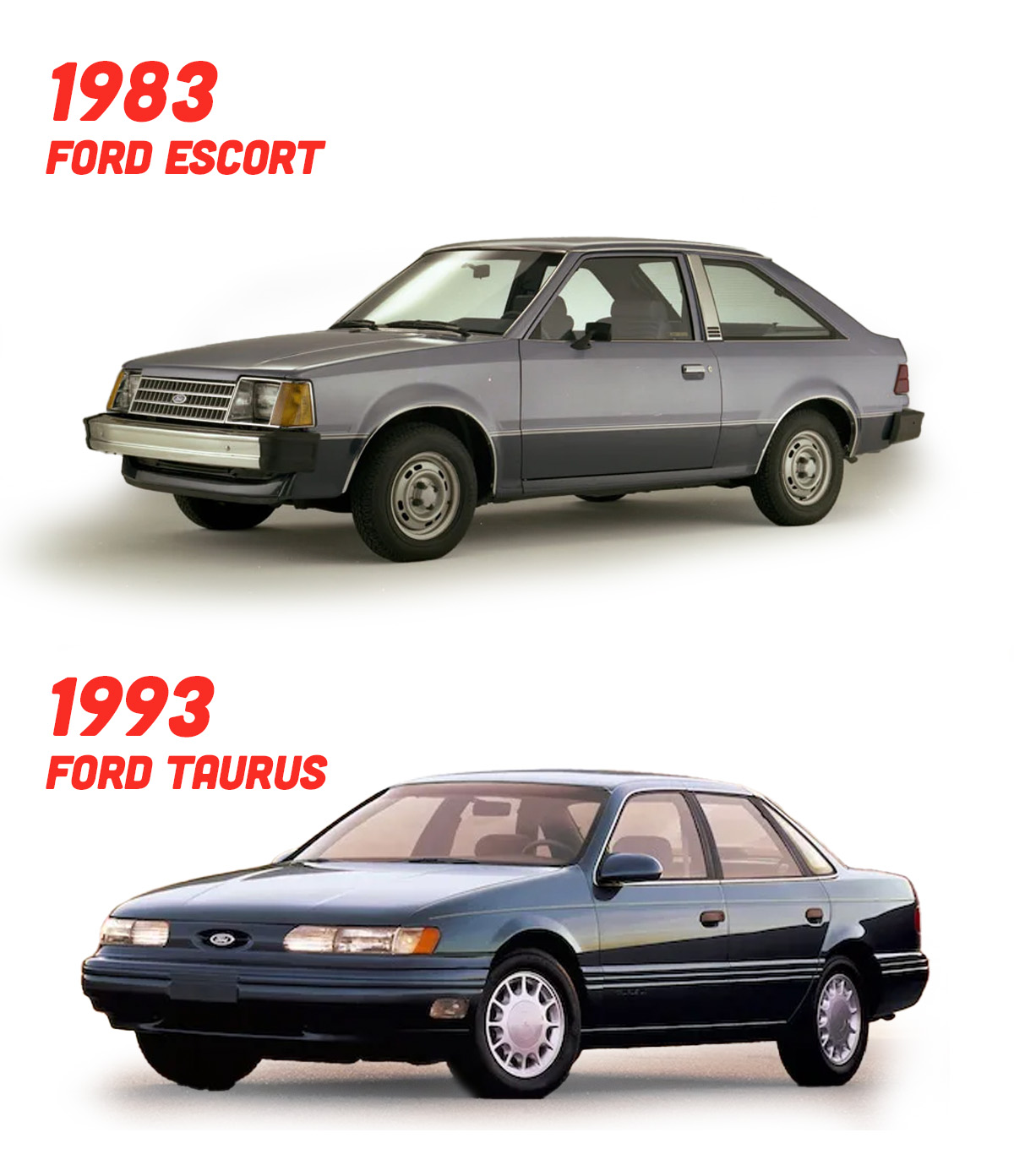
Thanks to oil prices and the increasing presence of Japanese imports in America, Ford made some pretty radical changes in the 1980s, with their best-selling car being pretty wildly different from their best-seller 10 years prior. The Escort was a compact unibody car with a transverse engine and front wheel drive, and fuel injection was even an option for the first time in 1983. All of these technical traits would become dominant in the years to come, even beyond compact cars.
A 1983 Escort looked, drove, and felt very differently from a ’73 LTD. This was a huge shift in how cars were, with the concept of a “world car” – that is, a basic platform that would be used in markets all over the globe – coming into prominence.
Moving into the 1990s, we see the same formula used by the Escort – transverse front engine driving the front wheels – adapted to a mid-size car in the Taurus. Aerodynamics were now a very influential part of exterior design, with regular wind tunnel tests affecting so many details of a car’s hardware. Door handles were more flush, and composite headlights were now becoming rapidly universal, replacing the old round or rectangular sealed beam lights.
I tend to think of the 1990s as the start of the truly “modern” era of cars, and driving a ’90s-era car today doesn’t feel all that different than a new car in many ways. But it felt pretty different from an ’80s car.
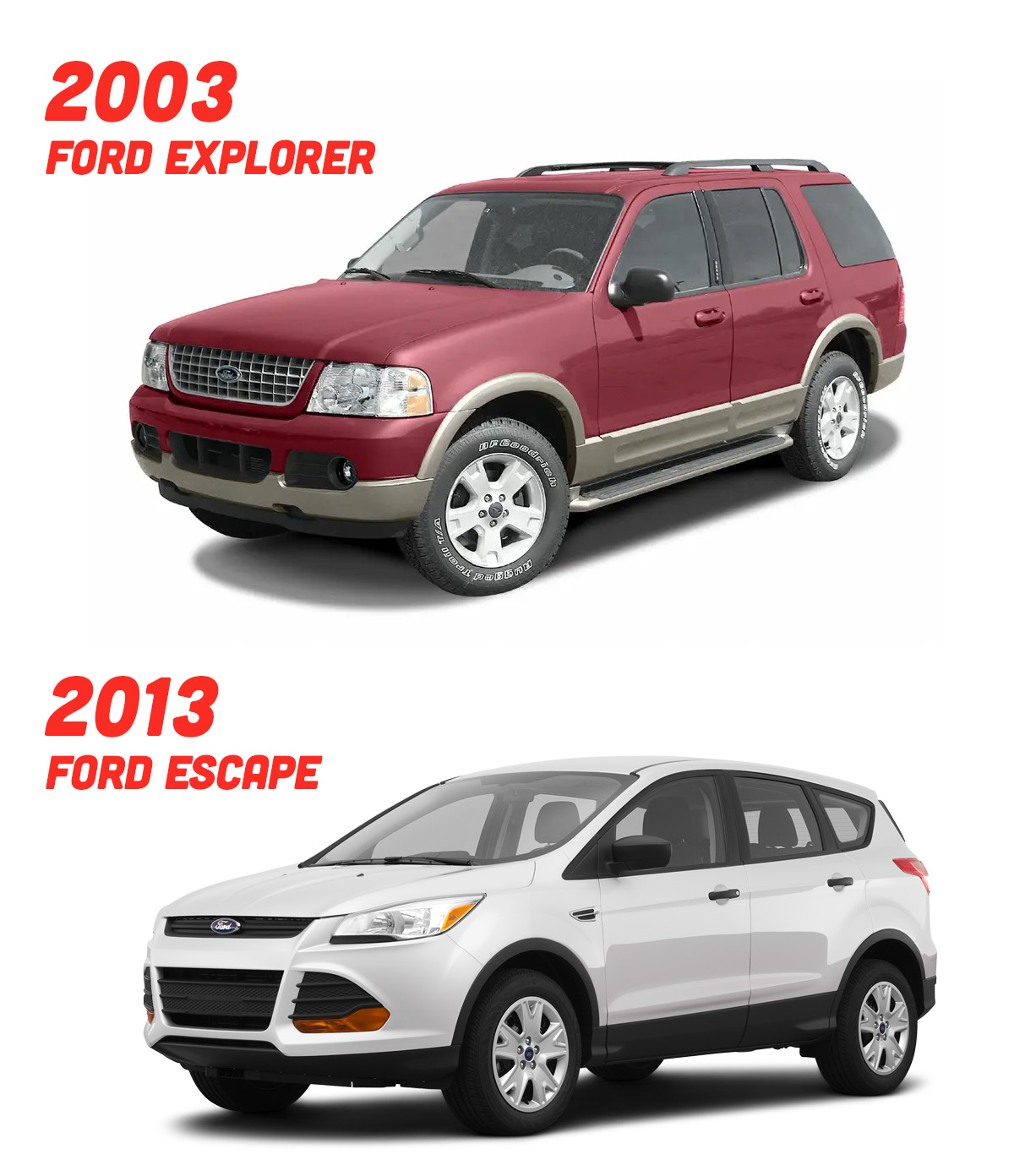
The SUV era was starting in the late 1990s, and by the 2000s had firmly taken root. The average car became a tall, big-tired wagon we all called SUVs. Aerodynamic, eroded river-rock-type styling remained dominant, looking like an evolution of aesthetic ideas that started in the ’90s.
Electronics continued to advance both invisibly, in ECUs and other engine management tech, as well as more noticeably, as features like cruise control and power everything became effectively standardized.
By the 2010s, those electronics were now sprouting very visible center-stack infotainment touch screens on pretty much everything, and styling was getting a bit more aggressive. But these didn’t feel all that different than 2000s-era cars, really.
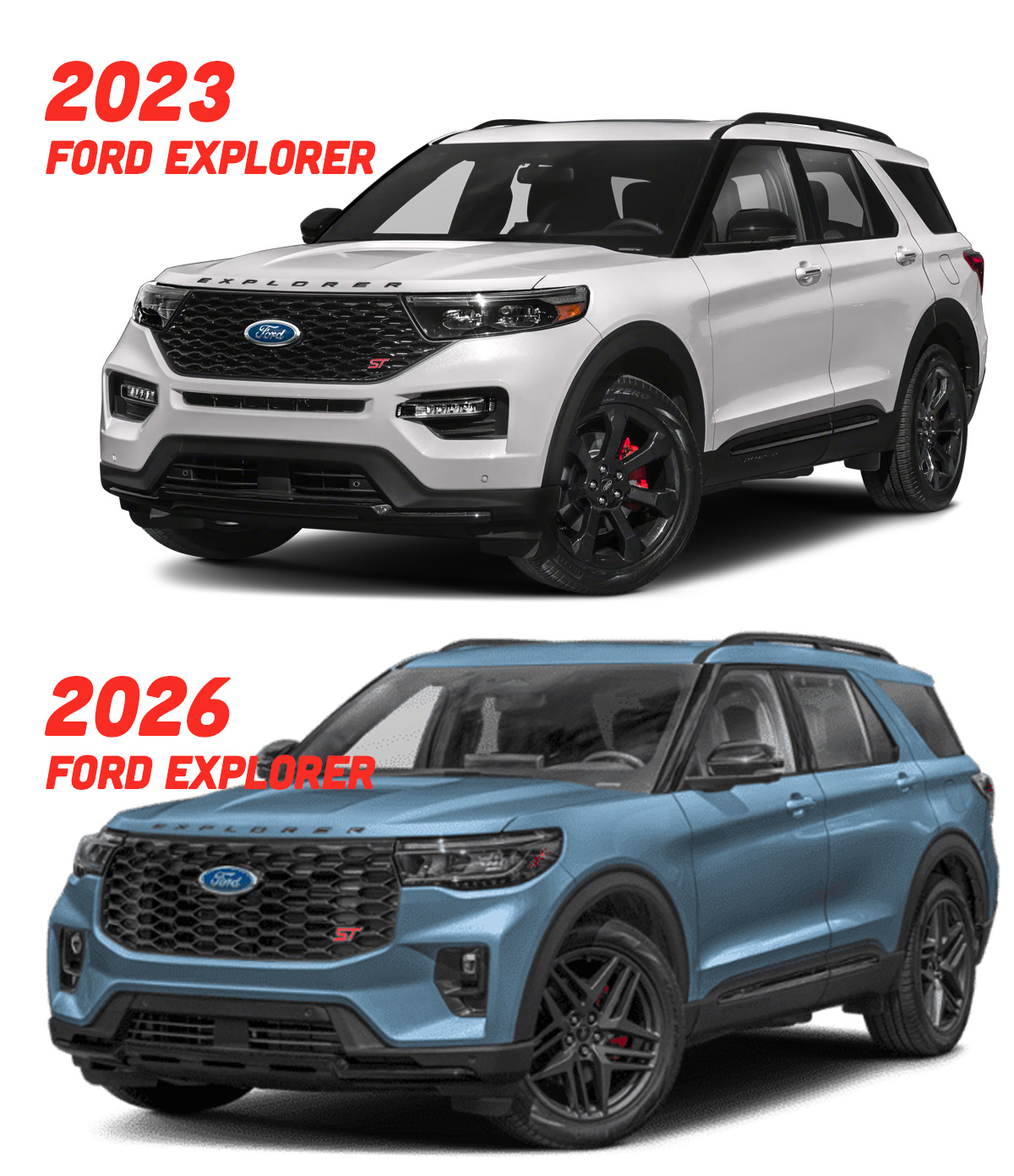
Between the 2010s and 2020s, things have definitely changed, but I think more evolutionary than revolutionary. Buyers seemed to gravitate to even bigger cars, so the Explorer now outsells the Escape, and styling has perhaps gotten a bit more complex and ornate, though still aero-focused and an evolution of what we’ve been seeing since the 2000s.
Touchscreens have become dominant in the interior (though there’s a current backlash to that), and electrification is far more common with not just full battery EVs but hybrids, and advanced driver assist features like lane keeping and dynamic cruise control are now common. Cars of the 2020s are incredibly advanced machines, no question, but when I get in my 2010 Volkswagen Tiguan, it’s not as different from a new 2026 VW Tiguan as, say, getting into a VW from 1994 or so.
Let’s think about this another way; let’s look at whole generation spans of time, say 20 years. How different do cars 20 years apart at various times in history feel? Let’s look:
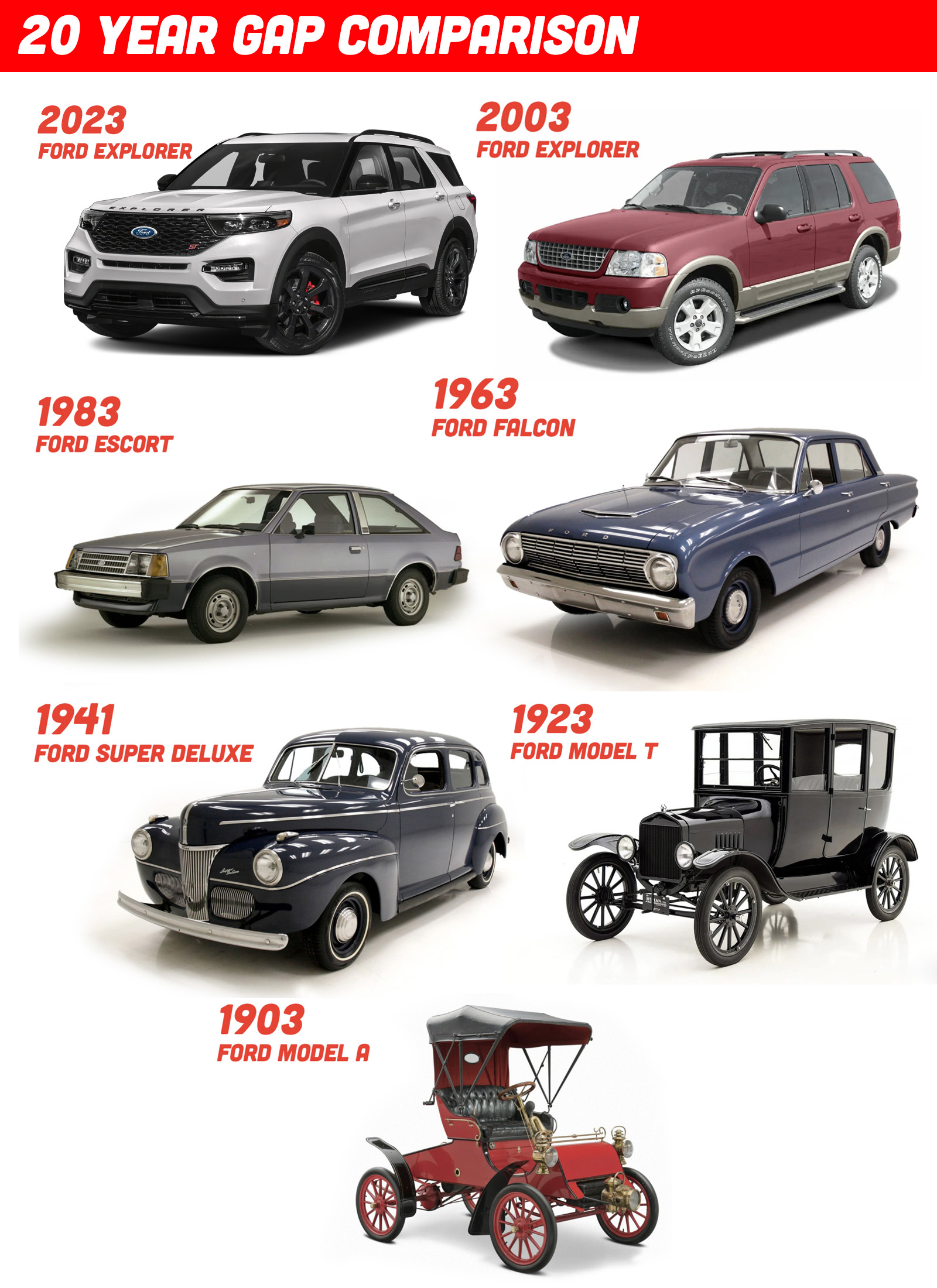
I think it’s safe to say that of all of these, the gap that feels the least significant is 2003 to 2023. Just compare that 2003 Explorer to the 1983 Escort and I think you’ll see what I mean. Those are radically different driving experiences, even beyond the differences in size and type of car.
Or look at the Escort compared to the Falcon – they’re not even close in so many ways: driving experience, safety, efficiency, design, and so on. Same with the jump between 1963 and 1941, or 1941 to the Model T. All of these generational gaps seem positively radical.
Except for the most recent. So maybe there is something to this theory of stagnation.
Or! I actually think something else is at play: the kind of development that is happening. I think maybe it’s less about stagnation as much as it is that we’ve exhausted the low-hanging fruit. The big things to learn about aerodynamics, engine management, or power electronics have already been learned. Now we’re at a point of refinement and deeper development, and those changes simply aren’t as noticeable.
But advancement is still happening every year. Is it all good? I think the fact that heated seat subscriptions and touchscreen glove box releases exist tells us that, no, it is not all good. But it’s definitely happening.
So, I guess I feel comfortable saying this: it is true that obvious and dramatic automotive development and advancement appear to be stagnating. Maybe, like microchips and Moore’s Law, we’re past the easier early stages of dramatic development. Maybe we’re in the early stages of more refined, deeper, and subtler developments.
Just like how computer CPU speeds don’t seem to ramp up as dramatically year-to-year as they once did, other advancements have taken over, and raw MHz speeds aren’t even something geeks crow about anymore, really. All modern cars are, generally, fast, comfortable, and efficient. The big basic problems have been addressed. So what comes next?
That I’m not sure about. I don’t think we’re stagnating, though. I just think it feels that way. If that bothers you too much, you can do what I do and drive genuinely archaic crapboxes; then anytime you step into something even from this century, it’ll feel like you leaped into the future.
Top graphic images: Ford