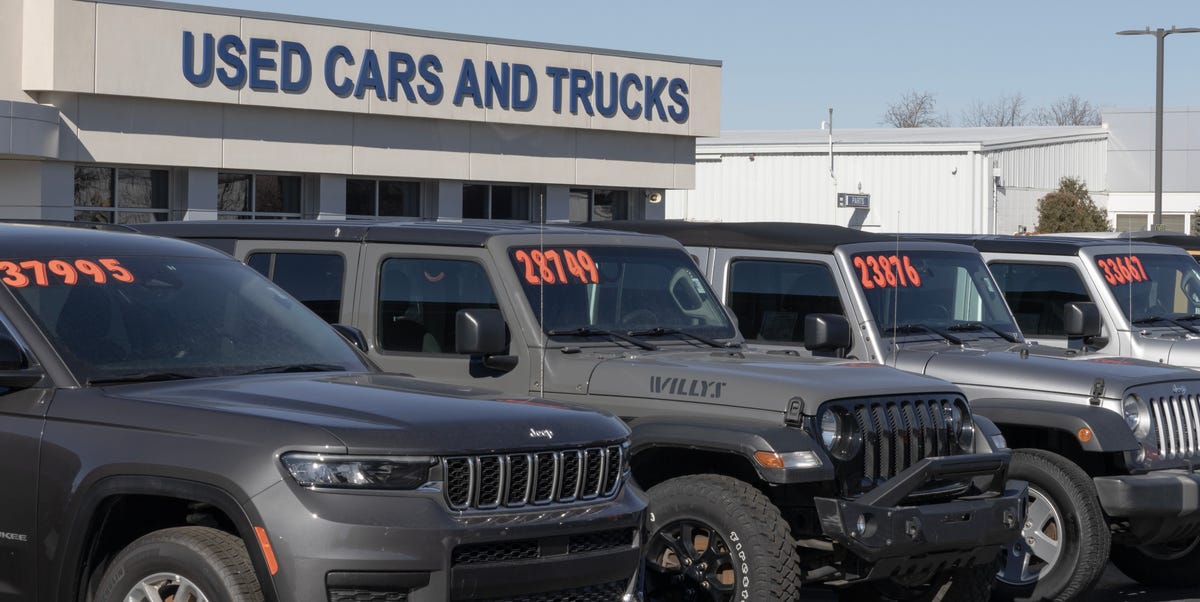
Good news if you’re looking to offload that old car: Prices for used vehicles are rising, and by a lot.
Cox Automotive’s Manheim Used Vehicle Value Index, a key industry benchmark tracking wholesale auction prices, rose 6.2% year over year last month and reached its highest level since summer 2023. The increase comes despite an otherwise hard-t0-gauge economic climate dominated by geopolitical uncertainty and rising fuel prices.
Related Story
Demand is strong. “The data is clear: used-vehicle demand is healthy and inventory levels are relatively tight,” said Cox chief economist Jeremy Robb. A lack of supply is playing a big role, with days’ supply—the number of cars that would normally sell in a given period—falling below 40 in March, the lowest level so far in 2026 and down from a year earlier. Wholesale used car supply, which feeds most retail car lots, dropped to 24.5 days at the end of March 2026, says Cox.
That short supply is partly driven by a new-car market where prices have been averaging more than $49,000. More and more buyers have turned toward used options, where the average listing price was about $25,287 as of February. But the problem is compounded by the fact that slower new-car sales means there are fewer trade-ins to build a used-car inventory.
Cox expects used-vehicle prices to continue to rise through the year. The company also says it forecasts 2026 used-vehicle sales to hit 20.4 million units.

But for a couple of sketchy, short-lived gigs right out of college, Natalie Neff has had the good fortune to spend the entirety of her professional life around cars. A 2017 Honda Ridgeline, 1972 VW Beetle, 1999 Ducati Monster and a well-loved purple-and-white five-speed Schwinn currently call her garage home.