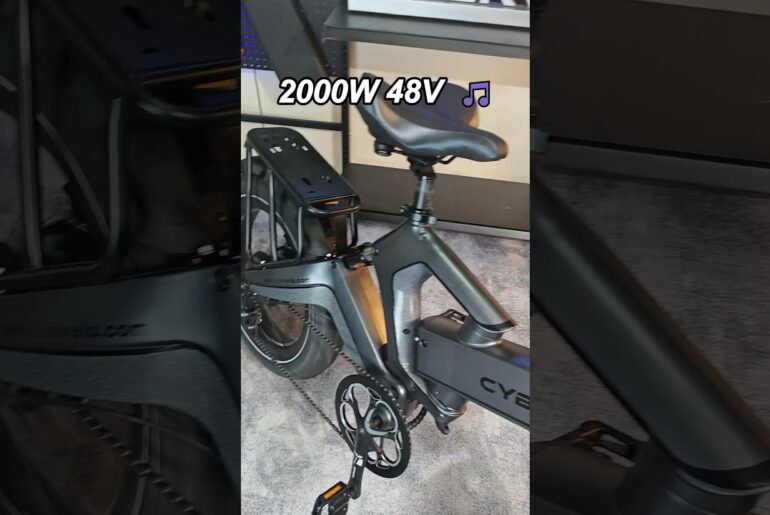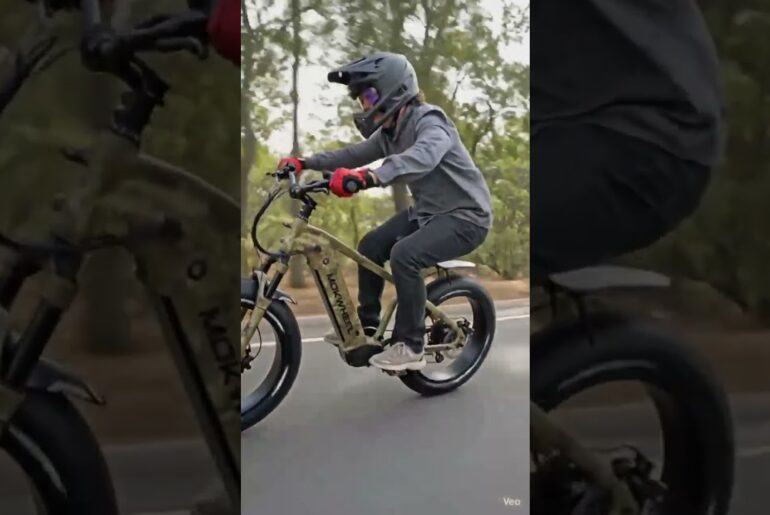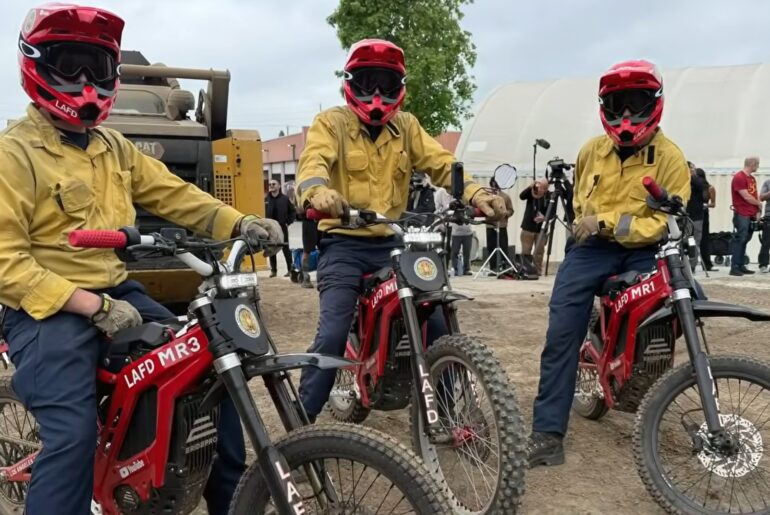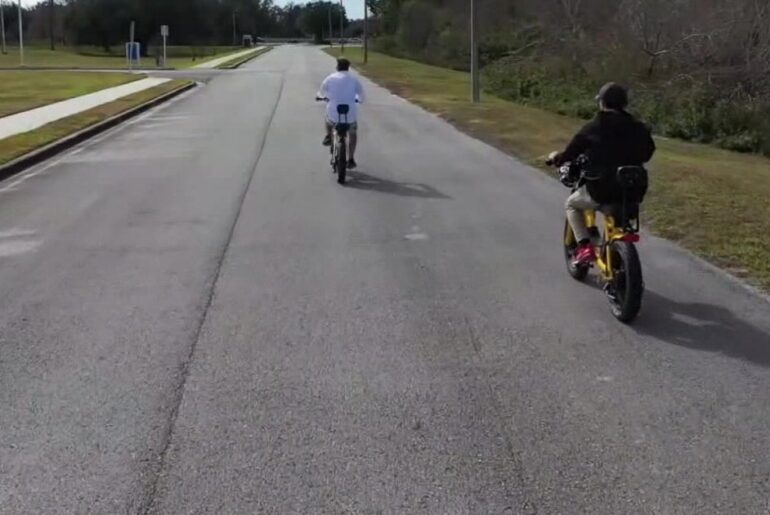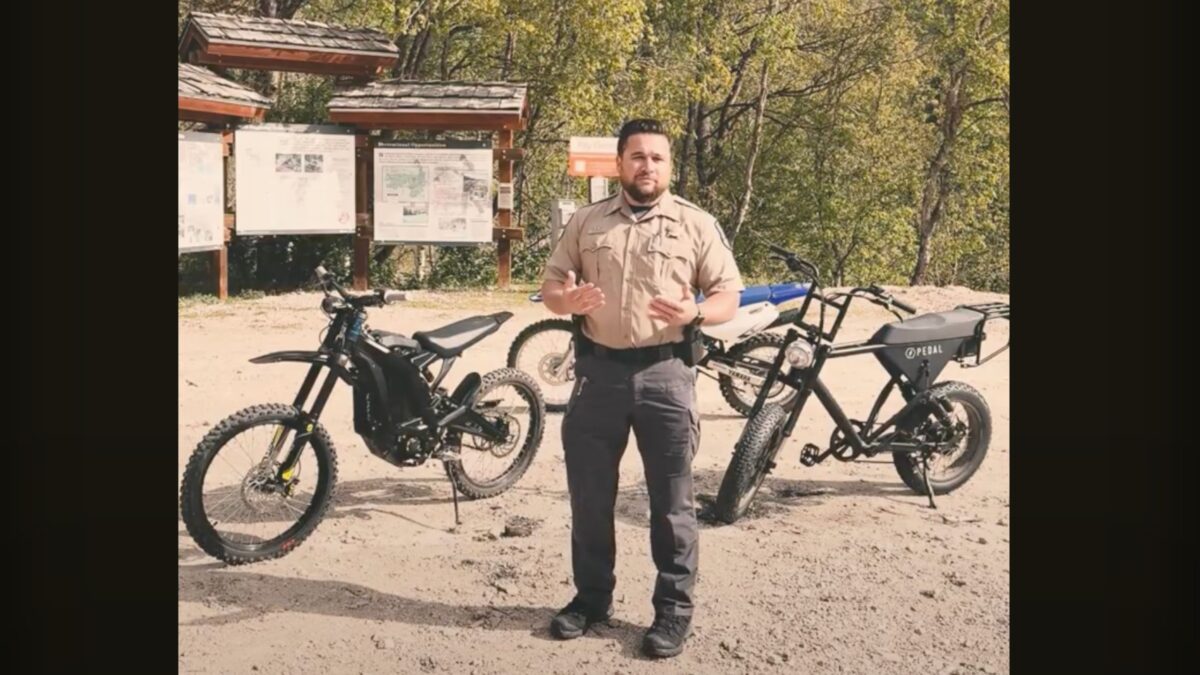
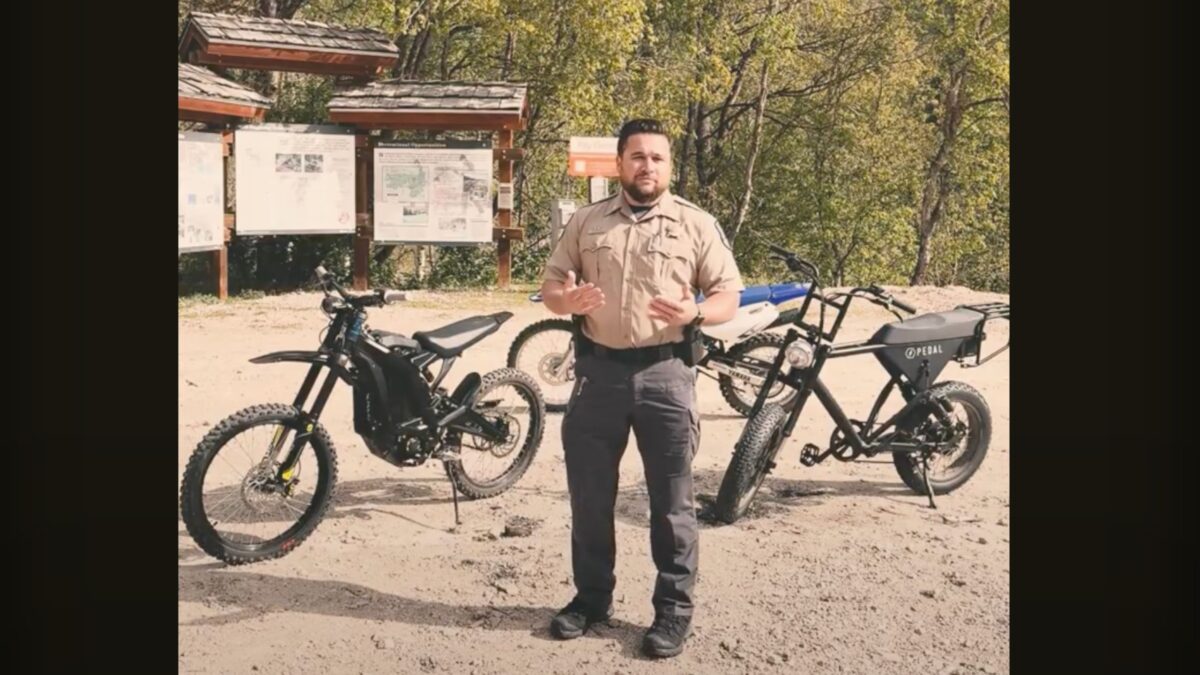
Captain Chase Pili from the Utah DNR Law Enforcement Division breaks down the key differences between e-motorcycles and e-bikes. Photo:
With new regulations and clearer definitions now in place, Summit County officials say enforcement around illegal e-motorcycles will increase heading into summer
PARK CITY, Utah — As electric bikes surge in popularity across Summit County, a new Utah law aims to draw a clearer line between what’s allowed on public roads and what isn’t.
Passed during the 2026 General Session and signed by Governor Cox, HB381 updates Utah’s electric bike regulations, requiring helmets for many riders and giving law enforcement more authority to enforce safety rules.
The update comes as lawmakers and law enforcement agencies across Utah have struggled to keep pace with rapidly evolving e-bike technology that blurs the line between bicycles and motor vehicles.
Similar Reads On TownLift
The law takes effect May 6 and comes as communities and parents grapple with a rapid rise in both e-bikes and more powerful electric motorcycles.
“We’re getting to a point where we no longer can tolerate having those e-motorcycles out on the road,” said Sgt. Skyler Talbot with the Summit County Sheriff’s Office. “We do like to lean into education, and we’ve been educating for years now, and I think this will be the year that the community can expect to see an uptick in enforcement.”
He continued, “If parents are going to allow their kids access to these e-motorcycles, it’s creating a scenario where we’re going to step in and start being more heavy handed on the enforcement side of that. And that can look like a lot of things. It can look like citations to the parents. It can look like referrals to juvenile court for the kids. And it can very easily come down to just impounding the vehicle.”
Law enforcement officers are urging parents to understand the distinctions between e-bike classes and e-motorcycles to ensure they are purchasing safe and legal devices for their children.
Defining e-bikes vs e-motorcycles
According to Talbot, one of the biggest challenges has been terminology.
“We’ve gotten to a point where we are just calling everything an e-bike because it’s easier,” Talbot said. “But there really is a distinction here,” Talbot said, noting the new law helps separate low-powered electric bicycles from higher-powered vehicles that function more like motorcycles.
There are three “classes” of e-bikes:
Class 1: Pedal assist, max 20 mph, no license or insurance required. Ages 8–14 must ride with adult supervision.Class 2: Throttle or pedal assist, max 20 mph, no license or insurance required. Ages 8–14 must ride with adult supervision.Class 3: Pedal assist, max 28 mph, helmet required under age 21, riders must be 16+.Children under the age of eight are not legally permitted to operate an e-bicycle.
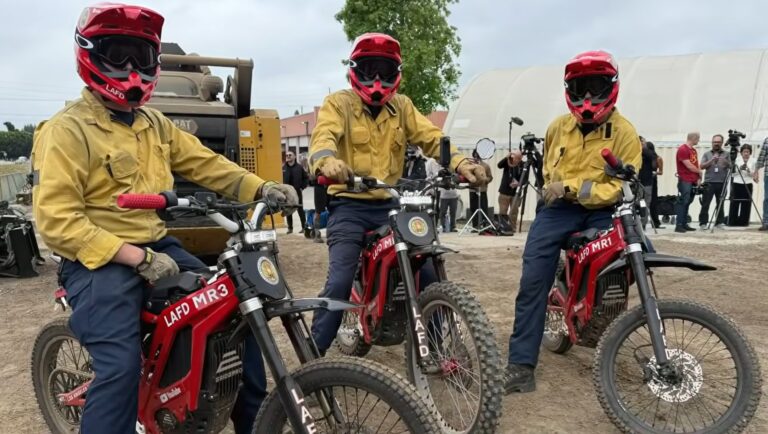
E-motorcycles often have foot pegs instead of pedals and can reach speeds of 30 to 60 mph.
Because of their speed and power, electric motorcycles are often regulated as off-highway vehicles (OHVs) or motorcycles, which means registration, education, and riding restrictions may apply. They are not legal on public roads, sidewalks, or bike paths unless properly registered and operated in accordance with state motor vehicle or OHV laws.
Officers now have clearer authority to stop, cite, and even impound illegal vehicles. “There’s no situation where these kids are allowed to be on these e-motorcycles on public roadways,” Talbot said. “That’s just a hard, fast no.”
Some of the most common bikes causing confusion are high-powered electric dirt bikes like Sur-Ron, Talaria, Segway Dirt, and other similar brands. These bikes are often marketed as “e-bikes” but exceed legal power and speed limits, functioning more like off-road motorcycles.
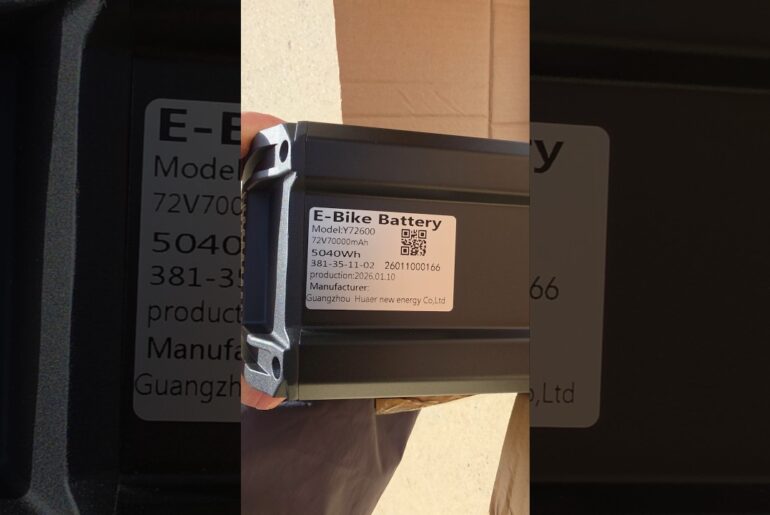
If a bike can operate solely on throttle at high speeds and doesn’t meet Utah’s e-bike classification system, it is likely considered an unregistered motor vehicle — meaning it is not legal on public roads, sidewalks, or bike paths.
How to spot an illegal e-motorcycle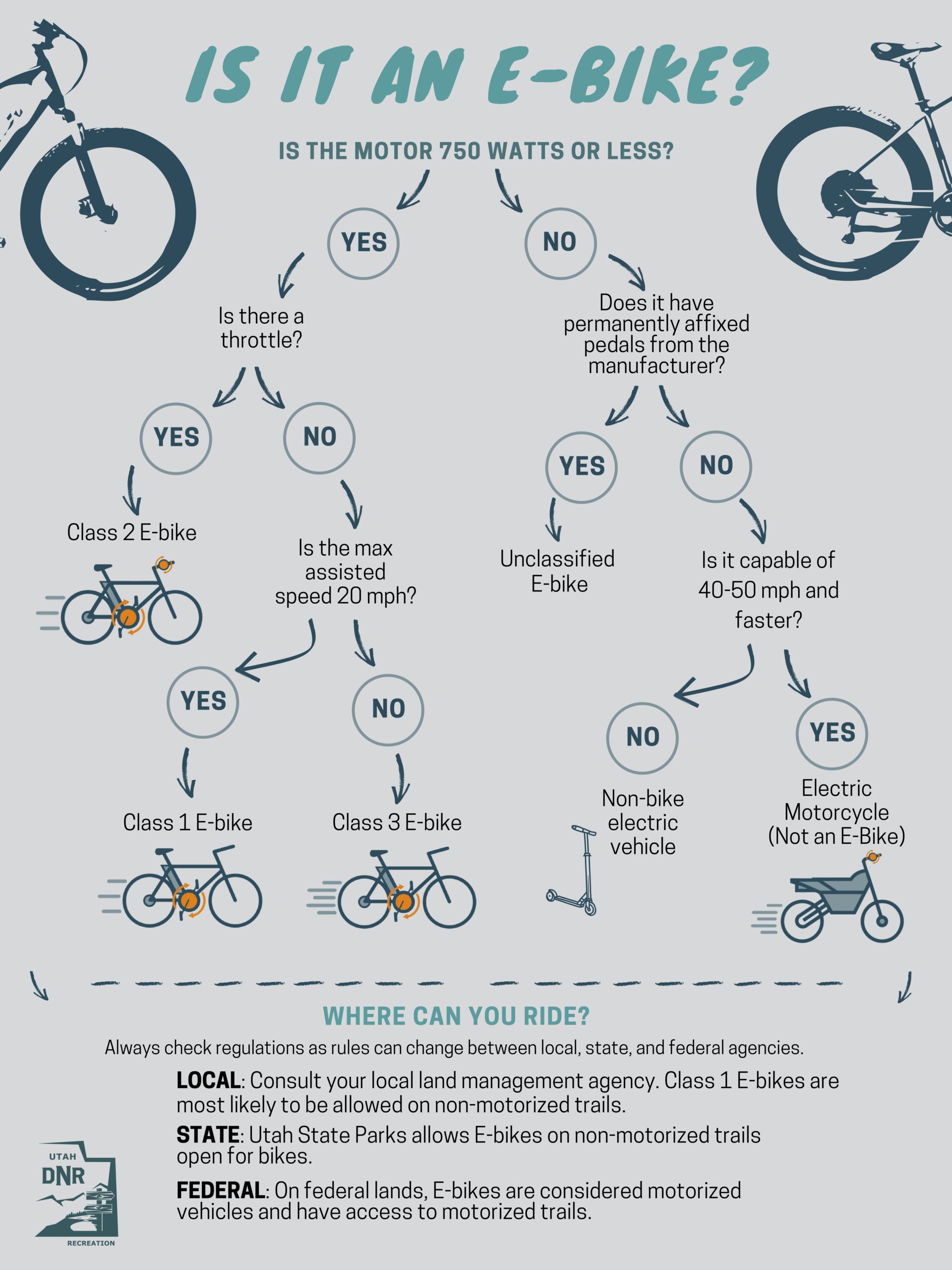 E-Bike clarification. Image courtesy:
For parents trying to navigate the confusion, officials recommend asking a few simple questions:
Does it have pedals that actually work?Is it limited to typical e-bike speeds (under ~28 mph)?Is it classified as a Class 1, 2, or 3 e-bike?Was it sold as a bicycle, or as a dirt bike?
If the answer points toward high speed, throttle-only use, or off-road design, it likely falls into the e-motorcycle category and is not street legal.
The new law also includes a youth safety course requirement, aimed at helping families better understand these distinctions before problems arise.
The Utah Division of Outdoor Recreation has created an online flowchart that will help you determine whether you own an e-bike or e-motorcycle.
What enforcement could look like
In Summit County, officials say the law opens the door for a shift from education-first messaging to more visible enforcement, especially heading into summer.
Talbot noted that enforcement might include citations issued to parents, referrals to juvenile court, and impounding the vehicle.
“It’s a motor vehicle,” Talbot said. “If any other motor vehicle was being operated by an unlicensed driver, more specifically in an unsafe manner, we typically would impound that vehicle, and it’s the same for these e motorcycles.”
A balance between safety and recreation
Officials emphasize they are not trying to take away outdoor recreation.
“We support kids being out having fun,” Talbot said. “We have great recreation opportunities here. But we also have a responsibility to make sure people are doing this safely.”
The sentiment was shared by multiple TownLift Instagram followers who, in response to a call for reader responses on the issue, largely said they support children being outside but want to support community safety.
The Sheriff’s Office says it has spent years working with local schools, Park City Police Department, and Basin Recreation to develop education strategies.
But with injuries rising, including recent high-profile crashes, officials say stricter enforcement may be necessary.
“We can’t be having kids out there getting hurt,” Talbot said. “That’s our responsibility.”
What’s next
As warmer weather approaches and school lets out, officials expect usage and enforcement to ramp up.
“This is new for everyone — parents, kids, and law enforcement,” Talbot said about enforcement tactics. “We’re going to continue adjusting as we go.”
For now, the message is simple: understand the difference, follow the law, and prioritize safety.
Similar Reads On TownLift