At the entrance to Amsterdam’s Vondelpark, a couple of tourists are strolling along the wide path when, out of nowhere, a black bike comes racing past just in front of them.
“Oh my god,” cries the young woman in alarm. Both try to quickly reach the safety of the other side of the path, while e-bikes whiz past them on both sides.
Scenes like this have become a daily reality in Amsterdam, affecting far more than just unsuspecting tourists.
“It’s a jungle out here,” says Henk, who sells drinks in the park. “The worst are the fat bikes.”
These low-slung, often black bikes with oversized tyres can reach speeds of up to 50 kilometres per hour, turning them into a menace for pedestrians and fellow cyclists alike.
The city administration in Amsterdam is now stepping in, moving to impose restrictions on fat bikes.
Cycling paradise in peril
Bicycles are as much a part of Dutch culture as tulips and cheese.
There are more bikes than people in the Netherlands, and around two-thirds of the population cycle regularly – covering an average of 267 kilometres each week.
E-bikes are becoming increasingly common, too: roughly one in three Dutch residents now owns one.
But with the rise of battery-powered bikes, the idyllic image of Dutch residents cruising leisurely on classic “granny bikes” has begun to fade.
Many e-bikes now travel well above the official speed limit of 25 km/h, disrupting the calm of traditional cycling routes.
Fat bikes, in particular, are hard to miss with a long, low saddle and oversized tyres measuring about 10 centimetres – the very feature that gives them their name.
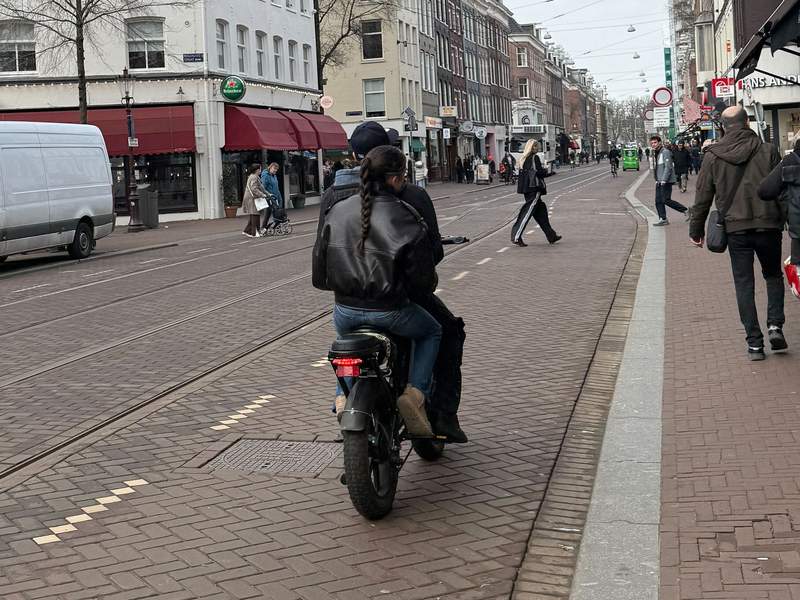
This trendy bike is particularly popular with older children and teenagers. They often race in pairs, mobile phones in hand, along cycle paths and through parks – and without helmets.
“That children are allowed to ride them is madness,” says 60-year-old Loes, who no longer cycles into the city centre. “You don’t hear them coming at all, and then it’s too late: you’re simply knocked down.”
More kick than your average e-bike
Fat bikes often pack far more powerful motors than standard e-bikes. With a simple twist of the throttle, they can reach 40 or even 50 km/h – without the rider pedalling even once.
Their speed and agility have made them popular not only with enthusiasts but also, according to police, with criminals.
Complaints about reckless riding are rising – as are the numbers of serious accidents.
In 2024, around 15,000 people required hospital treatment following e-bike accidents. Fat bikes were involved in at least 5,000 of these cases, half of them with riders under 16. Tragically, more than 100 people did not survive.
Figures for 2025 are not yet available.
Minimum age and compulsory helmets
Local Dutch authorities are stepping up efforts to rein in fat bikes. Enschede, in the east of the Netherlands, became the first city to announce a ban on fat bikes in its city centre.
Amsterdam is now following suit, planning riding restrictions in certain areas – including the popular Vondelpark.
“Every week I receive reports from Amsterdammers who no longer dare to cycle and are begging me to ban fat bikes,” says Melanie van der Horst, the city councillor responsible for transport.
A ban on fat bikes is also right at the top of the new government’s wish list in The Hague. Parliament is also considering measures such as a minimum riding age of 16, compulsory helmets and fat bike-free zones.
Legal experts, however, are sceptical. “This is a hopeless path,” concludes a government-commissioned report. Special rules for fat bikes would likely not hold up in court – after all, a fat bike is essentially just an e-bike with thicker tyres.
Transport lawyer Rembrandt Groenewegen also doubts the effectiveness of such targeted rules. “Manufacturers will then try to circumvent the rules and simply produce ‘skinny bikes’ with thinner tyres,” he says.
In the long term, only measures applying to all e-bikes would be effective, he believes.
Retailers threaten legal action
Manufacturers and retailers are already threatening legal action. The problem isn’t the bikes themselves but the often young riders, fat bike retailer Armando Muis told the Amsterdam newspaper Het Parool.
Either there should be rules for all e-bikes, or none at all, he said, adding: “Why not a lower speed limit of 20 km/h, a number plate or a compulsory helmet?”
The cyclists’ association echoes the sentiment, questioning what the new rules would actually achieve. Speeds over 25 km/h are already prohibited, as is cycling while holding a mobile phone – yet enforcement is rare, they say.
Quality control is another concern. Many fat bikes with overpowered motors and poor brakes are imported from China and sold online at rock-bottom prices starting around €650.
Technically, these bikes aren’t legal, but enforcement is virtually non-existent, the association argues.
One potential solution is a compulsory helmet rule, which could curb the fat bike craze. Advocates point to positive experiences with mandatory helmets for moped riders.
Traffic lawyer Groenewegen also suspects that a helmet rule might make riding a fat bike less trendy: “A helmet messes up your hair. For young people, that may be enough to put them off.”
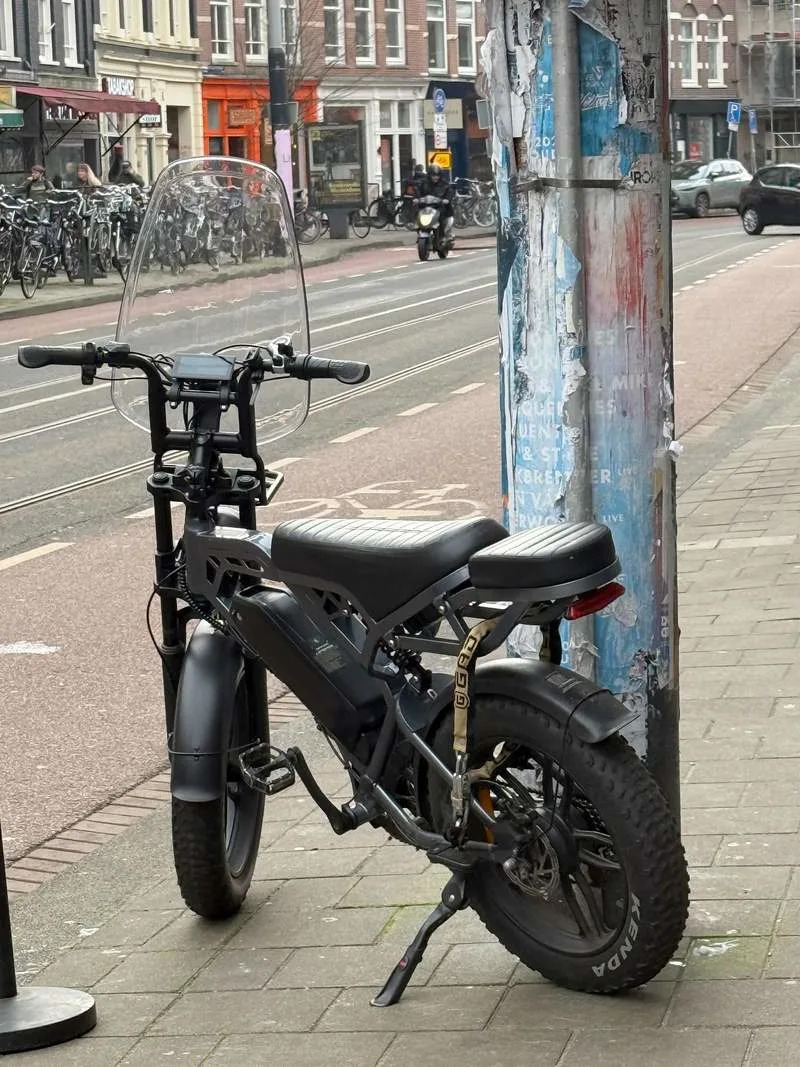
Bicycles are as much a part of Dutch culture as tulips and cheese. But with the rise of e-bikes, the idyllic image of residents cruising leisurely on classic “granny bikes” has begun to fade. As accidents increase, Amsterdam plans to crack down on super-sized fat bikes. Annette Birschel/dpa
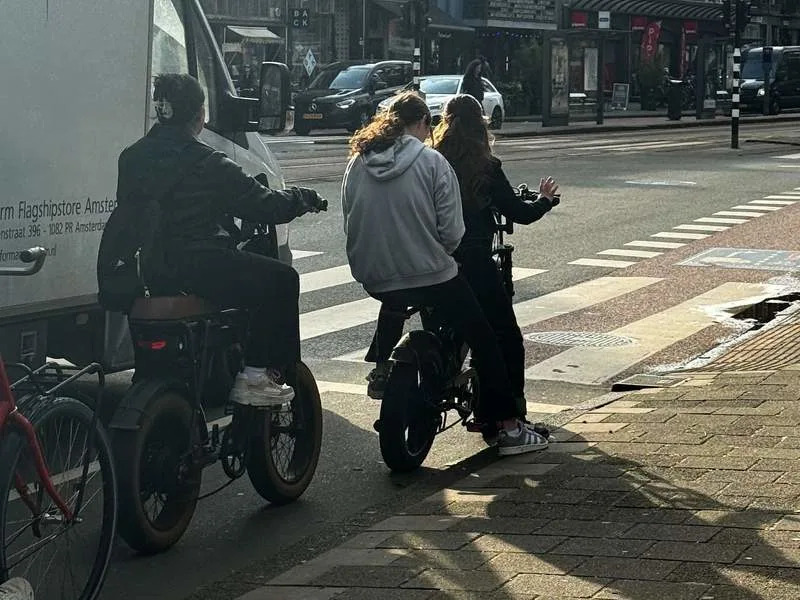
Fat bikes are particularly popular with older children and teenagers. They often race in pairs, mobile phones in hand, along cycle paths and through parks – and without helmets. Annette Birschel/dpa