The Expanding Role of Golf Carts Beyond the Course
Golf carts, once limited to golf courses, are now widely used across resorts, airports, gated communities, industrial facilities, and urban environments. Their compact size, low speed, and ease of operation make them an ideal solution for short-distance transportation.
With the growing emphasis on sustainable mobility and cost-efficient transportation, electric golf carts are gaining popularity as an eco-friendly alternative to conventional vehicles. Their ability to operate with zero emissions and low noise levels makes them suitable for both recreational and commercial applications.
As adoption expands across multiple sectors, the Golf Cart Market is experiencing steady growth. According to Mordor Intelligence, the market was valued at USD 2.44 billion in 2026 and is projected to reach USD 3.24 billion by 2031, registering a CAGR of 5.81% during the forecast period.
The Role of Golf Carts in Modern Mobility
Golf carts are small motorized vehicles designed primarily for short-distance travel. They are typically powered by electric batteries or internal combustion engines and are widely used in controlled environments such as golf courses, campuses, and private communities.
In recent years, their application has expanded to include tourism, hospitality, airports, industrial sites, and urban mobility solutions. Their versatility and low operating costs make them a practical choice for transporting people and goods over short distances.
Market analysis indicates that electric golf carts account for a significant share of the market, driven by increasing environmental awareness and the shift toward clean energy solutions.
Technological Advancements in the Golf Cart Market
Technological innovation is enhancing the performance, efficiency, and functionality of golf carts. Manufacturers are focusing on improving battery technology, vehicle design, and user experience.
Several Golf Cart Market trends are shaping the industry
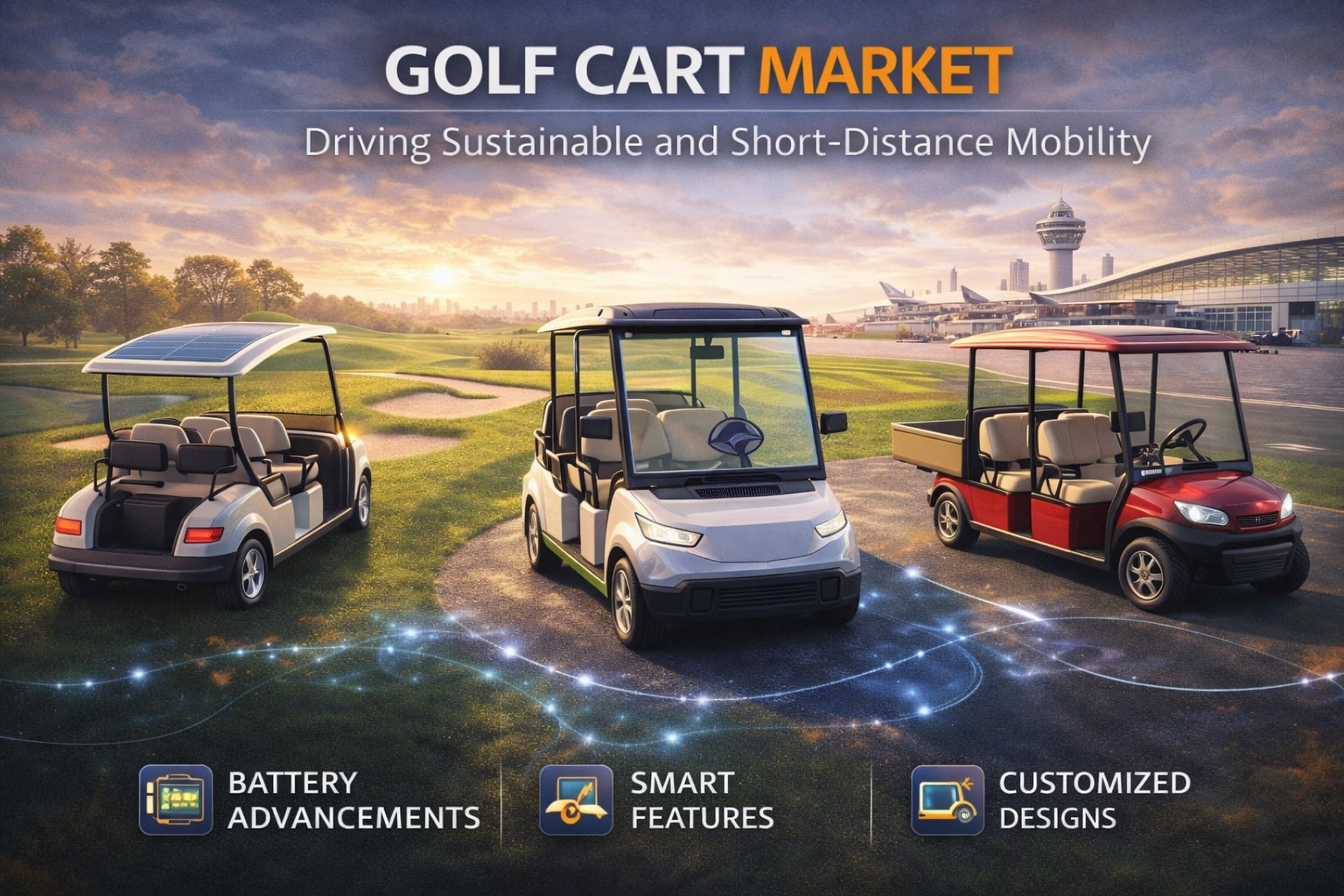
Advancements in battery technology
Lithium-ion batteries are increasingly replacing traditional lead-acid batteries due to their longer lifespan, faster charging capabilities, and improved energy efficiency.
Integration of smart features
Modern golf carts are equipped with features such as GPS systems, digital displays, connectivity solutions, and advanced safety features, improving both convenience and operational efficiency.
Customization and multi-purpose designs
Manufacturers are offering customizable golf carts designed for specific applications, including passenger transport, cargo handling, and utility services. These designs enhance versatility across different industries.
Regional Trends Influencing the Golf Cart Market
Demand for golf carts varies across regions based on lifestyle trends, infrastructure development, and application areas.
North America dominates the market
North America holds the largest share of the Golf Cart Market, supported by a high number of golf courses, widespread use in gated communities, and strong demand from the hospitality sector.
Asia Pacific witnessing growth
Asia Pacific is expected to witness steady growth, driven by increasing tourism, expansion of golf courses, and rising adoption in commercial and industrial applications.
Europe focusing on eco-friendly mobility
Europe is gradually adopting electric golf carts as part of sustainable transportation initiatives, particularly in tourism and recreational sectors.
The Future of the Golf Cart Market
The demand for compact, energy-efficient vehicles is increasing as industries and communities seek cost-effective and sustainable mobility solutions.
With advancements in battery technology, growing adoption of electric vehicles, and expanding applications beyond golf courses, the Golf Cart Market is expected to grow steadily in the coming years.
As urban mobility evolves and sustainability becomes a priority, golf carts will continue to play an important role in short-distance transportation across diverse environments.