Europe Mountain Bikes Market Report Summary
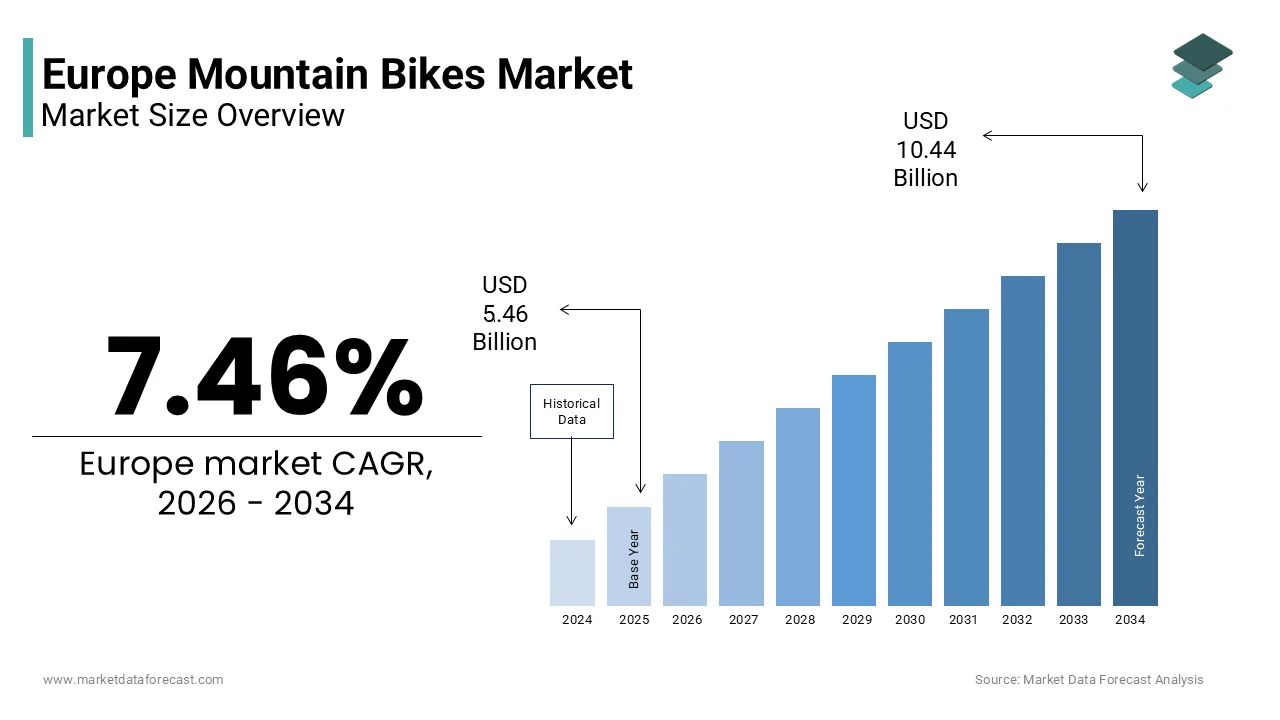
The Europe mountain bikes market was valued at USD 5.46 billion in 2025, is estimated to reach USD 5.87 billion in 2026, and is projected to reach USD 10.44 billion by 2034, growing at a CAGR of 7.46% during the forecast period. Market growth is driven by increasing participation in outdoor recreational activities, rising health and fitness awareness, and growing interest in adventure sports across Europe. The expansion of cycling infrastructure, along with the rising adoption of electric mountain bikes, is further supporting market demand. In addition, favorable government initiatives promoting eco friendly transportation and active lifestyles are contributing to sustained market growth.
Key Market Trends
Rising popularity of outdoor recreational and adventure activities is driving demand for mountain bikes.
Increasing adoption of electric mountain bikes is enhancing performance and accessibility.
Growing investment in cycling infrastructure and trails is supporting market expansion.
Rising health and fitness awareness is encouraging cycling as a preferred activity.
Technological advancements in bike design, suspension systems, and materials are improving performance and durability.
Segmental Insights
Based on type, the cross country segment was the largest and held 36.9% of the Europe mountain bikes market share in 2025. This dominance is attributed to its versatility, lightweight design, and suitability for a wide range of terrains and riding conditions.
Based on riding type, the outdoor riding segment accounted for 91.5% of the Europe mountain bikes market share in 2025. The segment’s growth is driven by increasing interest in trail riding, adventure tourism, and nature based activities.
Based on end users age, the adults segment held 64.4% of the Europe mountain bikes market share in 2025, supported by higher purchasing power, lifestyle preferences, and growing participation in cycling sports.
Regional Insights
The Europe mountain bikes market is experiencing strong growth across key countries, supported by rising cycling culture and infrastructure development.
Germany was the largest contributor, accounting for 26.2% of the Europe mountain bikes market share in 2025, driven by well developed cycling infrastructure, strong consumer demand, and increasing adoption of electric bikes.
Competitive Landscape
The Europe mountain bikes market is highly competitive, with major players focusing on product innovation, performance enhancement, and expansion of electric bike offerings to strengthen their market position. Companies are investing in advanced materials, suspension technologies, and digital integration to meet evolving consumer preferences. Prominent players in the Europe mountain bikes market include Specialized Bicycle Components, Trek Bicycle Corporation, Giant Manufacturing Co Ltd, Scott Sports SA, Canyon Bicycles GmbH, Merida Industry Co Ltd, Santa Cruz Bicycles, Yeti Cycles, Pivot Cycles, Rocky Mountain Bicycles, Cannondale Bicycle Corporation A Dorel Industries brand, Kona Bicycles, Shimano Inc, SRAM LLC, Fox Factory Holding Corp, Bosch eBike Systems, Yamaha Motor Co Ltd eBike Systems, Accell Group N V, Derby Cycle AG, and GT Bicycles A Dorel Industries brand.
Europe Mountain Bikes Market Size
The Europe mountain bikes market size was valued at USD 5.46 billion in 2025 and is projected to reach USD 10.44 billion by 2034 from USD 5.87 billion in 2026, growing at a CAGR of 7.46%.
Mountain bikes are specifically engineered for off-road cycling over rough terrain, featuring sturdy frames, wide knobby tires, and advanced suspension systems. This sector has evolved from a niche sporting activity into a mainstream recreational and commuting phenomenon, driven by the diversification of bike categories including cross-country, trail, enduro, and downhill models. The definition now heavily integrates electric assist technologies, known as e-MTBs, which have reshaped user demographics by making steep terrains accessible to older riders and those with lower fitness levels. According to the European Cyclists’ Federation, the European Union has established a vast network of marked cycling routes, with a significant portion dedicated to mountain biking trails across the Alps, Pyrenees, and Carpathians. This extensive infrastructure supports a vibrant ecosystem of guided tours, bike parks, and competitive events that fuel demand. As per Eurostat, cycling participation rates in countries like Germany and the Netherlands have reached elevated levels, reflecting a strong cultural embrace of cycling. The market is characterized by a strong emphasis on technological innovation, such as carbon fiber frames and smart connectivity, alongside a growing commitment to sustainability in production processes. The current scenario reflects a shift towards premiumization, where consumers prioritize durability and performance features over entry-level pricing, driven by the increasing complexity of trails and the desire for enhanced riding experiences.
MARKET DRIVERS Expansion of Dedicated Trail Networks and Bike Parks
The aggressive expansion of dedicated trail networks and professionally managed bike parks is primarily driving the growth of the Europe mountain bikes market. Governments and private entities are investing heavily in creating diverse terrain options ranging from beginner flow trails to expert downhill courses, making the sport accessible to a broader demographic. According to the International Mountain Bicycling Association, Europe has added new single-track trails, which is significantly enhancing the riding experience and attracting both locals and tourists. This infrastructure development reduces barriers to entry by providing safe, well-maintained environments where riders can practice without navigating unmarked or hazardous natural paths. The presence of lift-accessible bike parks in major mountain ranges like the Alps has revolutionized the sport, allowing riders to maximize their time on the descents and tackle more challenging runs. As per tourism boards in Austria and Switzerland, visits to bike parks have increased, directly correlating with higher sales of specialized downhill and enduro bikes. Furthermore, the standardization of trail difficulty ratings helps consumers select appropriate equipment, driving demand for specific bike categories tailored to different skill levels. The continuous improvement of facilities ensures a steady stream of enthusiasts who require high-performance machines to fully utilize these advanced tracks.
Technological Advancements in E-Mountain Bikes
The rapid evolution of battery technology and motor performance in electric mountain bikes (e-MTBs) is further boosting the Europe mountain bikes market expansion. Modern lithium-ion batteries now offer extended ranges, while compact mid-drive motors provide seamless power assistance that mimics natural pedaling dynamics. According to industry technical reports from Bosch and Shimano, the latest generation of e-bike motors delivers enhanced torque, enabling riders to conquer steep ascents and technical sections with minimal effort. This technological leap has democratized mountain biking, allowing older adults, individuals with physical limitations, and less fit enthusiasts to participate in the sport alongside experienced riders. As per retail surveys, e-MTBs now account for a significant portion of mountain bike sales in key European markets like Germany and France. The improvement in charging speeds further enhances usability for daily commuters and weekend warriors alike. Furthermore, the integration of smart connectivity allows riders to monitor battery health, adjust power modes via smartphone apps, and track performance metrics, adding a layer of digital convenience that appeals to tech-savvy consumers. These advancements have shifted the perception of e-MTBs from novelty items to serious off-road machines, driving sustained demand across diverse consumer segments.
MARKET RESTRAINTS High Initial Costs and Economic Volatility
The prohibitively high initial cost of advanced mountain bikes, particularly high-end e-MTBs and carbon fiber models is hampering the Europe mountain bikes market growth. Premium mountain bikes often retail for prices exceeding 4000 EUR, with top-tier e-models reaching upwards of 10000 EUR, placing them out of reach for many potential buyers facing economic uncertainty. According to Eurostat, discretionary income in several European households has contracted due to inflationary pressures, leading to a postponement of large-ticket recreational purchases. The complex supply chains and expensive raw materials required for high-performance components such as electronic shifting systems and hydraulic disc brakes further inflate manufacturing costs, which are passed on to the end user. As per retail associations, unit sales for bikes priced above 3000 EUR have declined compared to the previous year, reflecting consumer hesitation. Additionally, the total cost of ownership includes ongoing expenses for maintenance, insurance, and accessories, which can deter first-time buyers. The economic volatility exacerbated by energy crises and geopolitical tensions has made consumers more cautious, prioritizing essential expenditures over luxury hobbies. This financial barrier restricts the market to a narrower demographic of affluent enthusiasts, slowing down the broader adoption of mountain biking as a mass-market activity despite growing interest.
Regulatory Restrictions and Access Conflicts
Conflicts over land use and access rights pose a substantial restraint on the Europe mountain bikes market, as increasing restrictions on where riders can legally operate limit the utility and appeal of owning a mountain bike. In many European regions, tensions between mountain bikers, hikers, farmers, and conservationists have led to the closure of popular trails and the imposition of strict zoning laws. According to environmental advocacy groups, informal trails in protected natural areas across Europe were closed or restricted due to concerns about soil erosion, wildlife disturbance, and user safety. These closures fragment the riding network, forcing enthusiasts to travel longer distances to find legal riding spots, which decreases the frequency of use and discourages new adopters. As per local municipality records, fines for unauthorized trail usage have increased, creating a climate of fear and uncertainty among the riding community. The lack of clear, unified regulations across different regions complicates matters, as rules vary significantly even within the same country. This regulatory fragmentation makes it difficult for manufacturers and retailers to promote the sport confidently, knowing that access issues could render a purchased bike unusable in certain areas. The ongoing struggle for legitimate trail access undermines the growth potential of the market by limiting the practical opportunities for engagement.
MARKET OPPORTUNITIES Growth of Bike Tourism and Adventure Travel
The development of trans-European cycling routes offers a promising opportunity for the Europe mountain bikes market by connecting disparate regions into a cohesive network that attracts long-distance adventurers. Initiatives like the EuroVelo network are expanding to include more off-road segments, creating epic itineraries that span multiple countries and diverse landscapes. According to the European Cyclists’ Federation, the completion of new mountain bike-specific legs in the EuroVelo system is expected to attract more cyclists in the coming years. These long-distance routes stimulate demand for versatile, durable mountain bikes capable of handling mixed terrains and carrying luggage for multi-day trips. As per tourism operators, packaged bike touring holidays have seen rising bookings, with participants often purchasing high-end equipment specifically for these journeys. The economic impact on rural communities along these routes encourages local investment in bike-friendly amenities such as repair stations, accommodation, and guided services, further enhancing the ecosystem. Furthermore, the promotion of these routes through digital platforms and international marketing campaigns raises the profile of mountain biking as a viable travel mode. According to travel agencies, adventure travelers are willing to spend more on gear that ensures reliability and comfort over long distances. By capitalizing on this trend, manufacturers can target a lucrative segment of travelers seeking immersive outdoor experiences, driving sales of specialized touring and adventure mountain bikes.
Sustainability and Circular Economy Initiatives
The shift towards eco-friendly manufacturing processes is a compelling opportunity for the Europe mountain bikes market to align with growing consumer demand for sustainable products. Manufacturers are increasingly adopting green practices such as using recycled aluminum, bio-based resins for carbon fiber, and water-based paints to reduce the environmental footprint of production. According to sustainability reports from leading bike brands, the use of recycled materials in frame production has increased, appealing to environmentally conscious consumers who prioritize ethical consumption. This transition not only enhances brand reputation but also opens up new market segments among younger demographics who are highly attuned to climate issues. As per consumer surveys, many European cyclists are willing to pay a premium for bikes produced with sustainable methods. Furthermore, the implementation of energy-efficient factories and renewable energy sources in manufacturing reduces operational costs and carbon emissions, aligning with corporate social responsibility goals. The certification of products with eco-labels provides a competitive edge in retail environments, distinguishing sustainable brands from conventional competitors. According to retail partners, shelves dedicated to green products have seen faster turnover rates, validating the commercial viability of this approach. By leading the charge in sustainability, companies can secure long-term loyalty and differentiate themselves in a crowded marketplace.
MARKET CHALLENGES Supply Chain Disruptions and Component Shortages
The Europe mountain bikes market faces a persistent challenge due to its heavy dependency on global supply chains for critical components such as semiconductors, rare earth magnets, and specialized alloys. Disruptions in the supply of electronic chips used in e-bike motors and display units have caused significant production delays and inventory shortages. According to industry supply chain analyses, the lead time for key electronic components has increased, forcing manufacturers to postpone product launches and limit production volumes. The concentration of rare earth mineral processing in non-European regions exposes the market to geopolitical risks and trade tariff fluctuations, creating uncertainty in cost structures. As per logistics providers, shipping container rates and port congestion continue to impact the timely delivery of frames and wheels from Asian manufacturing hubs. These bottlenecks result in inflated prices and limited availability, frustrating consumers and retailers alike. The inability to secure consistent supplies of high-grade aluminum and carbon fiber further exacerbates the situation, constraining the ability of manufacturers to meet surging demand. According to production forecasts, a portion of potential sales was lost due to component shortages. Until supply chains are diversified and localized to a greater extent, the market will remain vulnerable to external shocks that hinder growth and stability.
Safety Concerns and Accident Liability
The rising incidence of mountain biking accidents and the increasing severity of injuries is another significant challenge to the Europe mountain bikes market. As bikes become faster and trails more technical, the risk of high-speed crashes and serious trauma has escalated, raising concerns among public health officials and insurance providers. According to hospital emergency data from several European countries, admissions related to mountain biking injuries have increased, with a notable rise in head trauma and orthopedic fractures. This trend has sparked debates about the necessity of mandatory helmet laws and protective gear, which could deter casual participants if perceived as overly burdensome. The high cost of medical treatment and rehabilitation associated with severe injuries also places a burden on healthcare systems, prompting calls for greater accountability from bike manufacturers and trail operators. As per insurance firms, premiums for personal liability coverage for mountain bikers have risen, reflecting the heightened risk profile. The negative publicity surrounding fatal accidents can dampen public enthusiasm and discourage families from taking up the sport. According to safety organizations, a lack of formal training and risk awareness among new riders contributes significantly to accident rates. Addressing these safety concerns requires a concerted effort in education, infrastructure design, and equipment standards to ensure the sport remains enjoyable and safe.
REPORT COVERAGE
REPORT METRIC
DETAILS
Market Size Available
2025 to 2034
Base Year
2025
Forecast Period
2026 to 2034
CAGR
7.46%
Segments Covered
By Type, Riding Type, End User, End User Age, End User Gender, and Region
Various Analyses Covered
Global, Regional, & Country Level Analysis; Segment-Level Analysis; DROC, PESTLE Analysis; Porter’s Five Forces Analysis; Competitive Landscape; Analyst Overview of Investment Opportunities
Regions Covered
UK, France, Spain, Germany, Italy, Russia, Sweden, Denmark, Switzerland, Netherlands, Turkey, and the Czech Republic
Market Leaders Profiled
Specialized Bicycle Components, Trek Bicycle Corporation, Giant Manufacturing Co. Ltd., Scott Sports SA, Canyon Bicycles GmbH, Merida Industry Co., Ltd., Santa Cruz Bicycles, Yeti Cycles, Pivot Cycles, Rocky Mountain Bicycles, Cannondale Bicycle Corporation (a Dorel Industries brand), Kona Bicycles, Shimano Inc. (key component supplier), SRAM LLC (key component supplier), Fox Factory Holding Corp. (key suspension supplier), Bosch (eBike systems), Yamaha Motor Co., Ltd. (eBike systems), Accell Group N.V., Derby Cycle AG, and GT Bicycles (a Dorel Industries brand).
SEGMENTAL ANALYSIS By Type Insights
The cross country segment led the market by holding 36.9% of the regional market share in 2025. The dominance of cross country segment in the European market is attributed to the versatility of these bicycles, which are suitable for both competitive racing and recreational trail riding across the diverse terrains found throughout the continent. The extensive network of maintained forest trails and fire roads in countries like Germany and France that perfectly suit the efficiency and speed of cross country bikes is further propelling the dominance of cross country segment in the European market. According to the European Cyclists’ Federation, a majority of marked off-road routes in Central Europe are classified as moderate difficulty, aligning precisely with the design intent of cross country models. These bikes offer a balanced geometry that appeals to a broad demographic ranging from fitness enthusiasts to weekend adventurers. The second critical driver is the lower barrier to entry regarding cost and physical demand compared to gravity-focused disciplines. As per retail sales data, entry-level and mid-range cross country bikes account for a significant portion of all unit sales in the region, reflecting their accessibility to new riders. Furthermore, the integration of electric assist systems into cross country frames has expanded their appeal, allowing riders to cover greater distances without exhaustion. According to e-bike manufacturers, cross country variants represent a large share of e-MTB sales, which is indicating their dominance in the electrified segment as well.
On the other end, the all mountain segment is estimated to witness the fastest CAGR of 10.6% over the forecast period in the European market owing to the rising popularity of bike parks and the desire among riders for a single bicycle capable of handling both steep climbs and aggressive descents. The proliferation of lift-accessible bike parks across the Alps and Pyrenees that encourage riders to tackle more technical terrain that requires robust suspension and durable components is further boosting the growth of the all mountain segment in the regional market. According to tourism reports from Austria and Switzerland, visitor numbers to dedicated mountain bike parks have increased, directly correlating with a surge in demand for all mountain bikes designed for such environments. The second significant driver is the technological convergence where all mountain bikes now offer performance levels previously reserved for specialized downhill machines while retaining climbing efficiency. Advances in suspension kinematics and lightweight materials have made these bikes incredibly versatile, appealing to riders who want one quiver-killer bike for all conditions. As per industry reviews, all mountain models received the highest consumer satisfaction scores due to their adaptability. Additionally, the influence of professional enduro racing series has popularized this style of riding, which is inspiring amateurs to upgrade to capable all mountain rigs to emulate their idols on local trails.
By Riding Type Insights
The outdoor riding segment accounted for the highest share of 91.5% of the European market share in 2025. The leading position of outdoor riding segment in the European market can be credited to the rich natural geography of Europe, which offers vast expanses of mountains, forests, and coastal trails specifically conducive to off-road cycling. The culturally ingrained tradition of outdoor recreation and exploration, where millions of Europeans view nature access as a fundamental right and leisure activity is also contributing to the dominance of outdoor riding segment in the European market. According to Eurostat, a large portion of the EU population engages in outdoor sports at least once a month, with cycling being the most popular activity. The sheer availability of public lands and protected national parks provides an endless playground for mountain bikers without the need for expensive facility fees. The second critical driver is the social aspect of outdoor riding, which often involves group rides, clubs, and organized events that foster community engagement. As per cycling associations, membership in outdoor mountain biking clubs has grown, indicating a strong communal pull. Furthermore, the tourism industry heavily relies on outdoor mountain biking, with regions marketing their natural landscapes to attract visitors who bring or rent bikes for outdoor adventures. According to hospitality sectors in alpine regions, cycling tourists contribute significantly to local economies during summer months, which is reinforcing the infrastructure support for outdoor riding.
However, the indoor riding segment is emerging as the fastest-growing niche and is anticipated to expand at a CAGR of 13.3% over the forecast period owing to the increasing adoption of smart trainers, virtual riding platforms, and the need for year-round training solutions unaffected by weather conditions. The technological advancement of interactive software that simulates real-world trails with high fidelity that allow riders to experience European mountain passes from the comfort of their homes is boosting the expansion of the indoor riding segment in the European market. According to fitness technology firms, subscriptions to virtual cycling platforms in Europe have grown, driven by improved graphics and realistic resistance algorithms. The second major factor is the changing lifestyle patterns where urban dwellers face time constraints and unpredictable weather, making indoor sessions a practical alternative for maintaining fitness. As per health and wellness surveys, many cyclists now incorporate indoor training into their weekly routine to ensure consistency regardless of rain or snow. Additionally, the rise of esports and virtual competitions has gamified indoor riding, attracting a younger demographic interested in competitive gaming aspects of cycling. According to event organizers, participation in online mountain bike challenges has doubled, which is creating a new ecosystem that drives sales of compatible bikes and smart equipment.
By End Users Age Insights
The adults segment held the major share of 64.4% of the regional market in 2025 due to the combination of higher disposable income, physical capability, and the use of mountain biking as a primary form of fitness and stress relief. The economic capacity of this demographic to invest in high-quality equipment, as adult riders typically purchase mid-to-high-end bikes rather than entry-level models is also aiding the leading position of the adult segment in the European market. According to the European Commission, households headed by adults aged 30 to 50 allocate the largest portion of their leisure budget to sporting goods, including premium bicycles. The second critical driver is the health consciousness prevalent among working-age adults who seek active hobbies to counteract sedentary office lifestyles. As per public health organizations, cycling is the preferred aerobic exercise for many European adults, driving consistent demand for reliable mountain bikes. Furthermore, the social culture of adult riding groups and corporate team-building events fosters a sense of community that encourages participation and equipment upgrades. According to cycling clubs, adult membership constitutes the majority of total members, highlighting their central role in the ecosystem. The versatility of mountain bikes for both commuting and weekend adventures also makes them a practical choice for this age group.
However, the seniors segment is estimated to grow at a healthy CAGR of 10.1% over the forecast period in the European market owing to the widespread adoption of electric mountain bikes (e-MTBs) which mitigate physical limitations and allow older adults to continue riding challenging terrains. The aging population structure in Europe, where the number of active seniors is increasing, coupled with a desire to maintain an active lifestyle well into retirement are also propelling the growth of the seniors segment in the European market. According to the United Nations Economic Commission for Europe, the population aged 65 and over is expected to represent a significant portion of the total by 2030, creating a vast potential customer base. The second significant driver is the perception of e-MTBs as a tool for social inclusion and mental well-being, enabling seniors to ride alongside younger family members and friends without feeling left behind. As per healthcare studies, regular low-impact cycling improves cardiovascular health and joint mobility in older adults, leading to medical recommendations for the activity. According to retailers, sales of e-MTBs to customers over 65 have increased notably in recent years. Additionally, specialized programs and guided tours catering specifically to senior riders are emerging, providing safe and supportive environments that encourage participation. This convergence of demographic trends and technological enablement positions the senior segment for exceptional growth.
REGIONAL ANALYSIS Germany Mountain Bikes Market Analysis
Germany dominated the mountain bikes market in Europe with 26.2% of the regional market share in 2025. The growth of Germany in the European market can be credited to its robust manufacturing base and deep-rooted cycling culture. The German market is characterized by a high density of well-maintained forest trails and a strong preference for premium quality engineering in bicycles. A key driving factor is the country’s extensive network of signposted hiking and biking paths, which spans thousands of kilometers according to the German Hiking Association, providing ample opportunities for mountain biking across diverse landscapes. The second critical driver is the strong domestic presence of major component manufacturers and bike brands that foster innovation and keep the local market supplied with cutting-edge technology. As per the German Bicycle Industry Association, e-MTB sales in Germany represent a significant portion of mountain bike transactions, reflecting a rapid shift towards electrification among consumers. Furthermore, government subsidies for electric bicycles have lowered the entry barrier for potential buyers, accelerating market penetration. The cultural emphasis on environmental sustainability and healthy living further reinforces the demand for non-motorized transport and recreation. This combination of infrastructure, industrial strength, and policy support cements Germany’s position as the primary engine of the European mountain bike industry.
France Mountain Bikes Market Analysis
France held a promising share of the Europe mountain bikes market in 2025. The growth of France in the European market is attributed to its majestic alpine ranges and a thriving bike park tourism sector. The French market is defined by the synergy between world-class natural terrain and a highly developed hospitality industry that caters specifically to mountain bikers. The presence of iconic mountain ranges like the Alps and Pyrenees, which host some of the most famous bike parks in the world, attracting large numbers of visitors annually is also boosting the mountain bikes market growth in France. According to the French Ministry of Sports, investment in mountain bike infrastructure including lifts and trails has increased to accommodate growing tourist numbers. The second significant driver is the strong organizational framework provided by the French Cycling Federation, which promotes competitive events and grassroots programs that nurture talent and interest from a young age. As per tourism boards, cycling tourism generates substantial revenue for rural French communities, incentivizing local businesses to support the sport. Additionally, the French government’s active promotion of soft mobility through financial incentives for e-bike purchases has boosted domestic sales. The blend of spectacular geography, professional event hosting, and state support ensures France remains a pivotal hub for mountain biking enthusiasm and commerce.
Italy Mountain Bikes Market Analysis
Italy is anticipated to account for a prominent share of the Europe mountain bikes market during the forecast period owing to its dramatic topography ranging from the Dolomites to the Apennines, a passionate cycling heritage and the integration of mountain biking with gastronomy and cultural tourism, which is creating a holistic experience that attracts diverse demographics. The renowned trail networks in regions like Trentino-Alto Adige and Tuscany that offer varied terrain suitable for all skill levels and are meticulously maintained by local communities is also driving the Italian market growth. According to the Italian Cycling Federation, the number of registered mountain bikers in Italy has grown, driven by a resurgence in outdoor activities post-pandemic. The second critical driver is the strong domestic manufacturing sector specializing in high-performance carbon fiber frames and components, which keeps the local market at the forefront of technological advancements. As per industry exports, Italian-made mountain bikes are highly sought after globally, reinforcing local pride and consumption. Furthermore, the prevalence of gran fondo and endurance events that include off-road segments has popularized mountain biking as a serious sporting pursuit. According to event organizers, participation in Italian mountain bike races has reached new highs. This fusion of natural beauty, industrial excellence, and competitive spirit sustains Italy’s strong standing in the European market.
United Kingdom Mountain Bikes Market Analysis
The United Kingdom is estimated to witness a healthy CAGR in the Europe mountain bikes market during the forecast period owing to a rugged landscape, a dense population of enthusiastic riders, and a vibrant community of independent bike brands. The accessibility of vast moorlands, forests, and mountainous regions in Scotland, Wales, and Northern England that provide free and open access for mountain biking is also driving the UK market expansion. According to British Cycling, membership numbers for off-road disciplines have increased, reflecting a booming interest in the sport despite challenging weather conditions. The second critical driver is the innovative spirit of the UK startup scene, which has produced numerous successful niche brands focusing on bespoke frames and custom components. As per retail analysts, the UK has one of the highest per capita spends on cycling accessories in Europe, indicating a dedicated and knowledgeable consumer base. Additionally, the development of purpose-built trail centers managed by forestry commissions has standardized the riding experience and made it safer for families. According to visitation records, these centers have seen steady growth. This combination of natural assets, community drive, and entrepreneurial energy keeps the UK as a key player in the European landscape.
Switzerland Mountain Bikes Market Analysis
Switzerland is anticipated to account for a notable share of the Europe mountain bikes market druing the forecast period. Factors such as the high average transaction values, status as a premier destination for luxury and high-performance mountain biking, a focus on quality over quantity, with consumers willing to pay a premium for top-tier equipment and exclusive riding experiences are driving the market growth in Switzerland. A key driving factor is the unparalleled alpine infrastructure including cable cars and gondolas that provide easy access to high-altitude singletrack, which is making extreme riding accessible to a wide audience. According to Swiss Tourism, international visitors engage in mountain biking in Switzerland annually, contributing significantly to equipment rental and sales revenues. The second critical driver is the high disposable income of the Swiss population, which supports the purchase of advanced e-MTBs and custom-built machines. As per luxury retail reports, Switzerland has the highest average price per unit for mountain bikes sold in Europe. Furthermore, the strict maintenance standards for trails and the integration of biking into public transport networks enhance the user experience. According to the Swiss Federal Office for Spatial Development, bike-friendly policies have led to increased daily utility cycling on mountain bikes. This environment of affluence, precision, and superior infrastructure positions Switzerland as a high-value market within the region.
COMPETITIVE LANDSCAPE
The competition in the Europe mountain bikes market is intensely fierce characterized by a mix of established legacy manufacturers and agile new entrants vying for dominance through innovation and brand loyalty. Major players leverage their extensive distribution networks and deep engineering expertise to offer comprehensive product ranges that cater to every skill level and budget. The landscape sees frequent product launches featuring advanced electric assist technologies and smart connectivity features as companies race to capture the growing e-MTB segment. Competitive pressure is heightened by the need to balance premium pricing with affordability while navigating complex supply chain constraints and raw material volatility. Sustainability has emerged as a critical differentiator where brands compete to prove their environmental credentials through green manufacturing and recycling initiatives. This dynamic environment forces continuous investment in design technology and customer experience as participants strive to capture market share in a sector driven by passion and performance.
KEY MARKET PLAYERS
Some of the notable key players in the Europe mountain bikes market are
Specialized Bicycle Components Trek Bicycle Corporation Giant Manufacturing Co. Ltd. Scott Sports SA Canyon Bicycles GmbH Merida Industry Co., Ltd. Santa Cruz Bicycles Yeti Cycles Pivot Cycles Rocky Mountain Bicycles Cannondale Bicycle Corporation (A Dorel Industries brand) Kona Bicycles Shimano Inc. (Key Component Supplier) SRAM LLC (Key Component Supplier) Fox Factory Holding Corp. (Key Suspension Supplier) Bosch (eBike Systems) Yamaha Motor Co., Ltd. (eBike Systems) Accell Group N.V. Derby Cycle AG GT Bicycles (A Dorel Industries brand) Top Players in the Market Accell Group stands as a dominant force in the Europe mountain bikes market with a diverse portfolio including brands like Scott and Ghost that cater to various rider segments globally. The company contributes significantly to the international scene by driving innovation in electric assist technology and lightweight frame materials. Recently Accell has strengthened its position by investing heavily in direct to consumer sales channels and expanding its service network across major European cities. They have also launched new sustainable manufacturing initiatives to reduce carbon footprints in their production facilities. These strategic moves ensure they remain competitive against emerging digital native brands while maintaining strong relationships with traditional retail partners. Their focus on integrating smart connectivity into bikes further solidifies their reputation as a forward thinking leader in the global cycling industry. Cube Bikes operates as a leading German manufacturer renowned for producing high performance mountain bikes that blend cutting edge engineering with exceptional value for money. Their global contribution involves setting benchmarks in suspension design and e-bike integration which influences industry standards worldwide. To fortify their market stance the company recently expanded its production capacity in Germany to mitigate supply chain disruptions and ensure faster delivery times. They have also partnered with top professional racing teams to test and validate new technologies under extreme conditions before releasing them to the public. Furthermore Cube has enhanced its digital presence by launching an immersive online configuration tool that allows customers to customize their bikes extensively. These initiatives demonstrate their commitment to quality and customer satisfaction ensuring they maintain a loyal following among serious enthusiasts and casual riders alike. Trek Bicycle Corporation maintains a formidable presence in the Europe mountain bikes market through its premium brands and extensive dealer network that spans the continent. The company contributes to the global market by pioneering advancements in carbon fiber technology and proprietary suspension systems that redefine ride quality. Recent actions to strengthen their position include the acquisition of key component suppliers to secure critical parts availability and reduce dependency on external vendors. They have also introduced comprehensive subscription models for e-bikes which lower the entry barrier for new customers and create recurring revenue streams. Additionally Trek has invested in expanding its retail experience centers to offer test rides and expert fitting services that enhance the buying journey. This holistic approach to product development and customer engagement solidifies their status as a top tier player capable of adapting to evolving market dynamics and consumer preferences effectively. Top Strategies Used by Key Market Participants
Key players in the Europe mountain bikes market primarily employ strategies focused on vertical integration to control supply chains and ensure consistent component availability. Companies are heavily investing in research and development to innovate in electric drive systems and lightweight materials that enhance performance. Another major strategy involves expanding direct to consumer sales channels alongside traditional retail networks to capture higher margins and gather valuable customer data. Brands are also prioritizing sustainability by adopting circular economy practices such as recycling programs and eco-friendly manufacturing processes. Additionally, participants engage in strategic sponsorships of professional racing teams and events to build brand prestige and validate product durability. These approaches collectively aim to foster loyalty improve operational resilience and differentiate offerings in a highly competitive landscape.
MARKET SEGMENTATION
This research report on the European mountain bikes market has been segmented and sub-segmented based on categories.
By Type
Downhill Freeride Dirt Jumping Cross Country All Mountain Others
By Riding Type
By Application
By End Users
Beginners or Intermediate Riders Advanced Riders
By End Users Age
Kids or Teenagers Adults Seniors
By End Users Gender
By Country
UK France Spain Germany Italy Russia Sweden Denmark Switzerland Netherlands Turkey Czech Republic Rest of Europe