 Photo Courtesy: Autorepublika.
The partnership between Rivian and Volkswagen is entering a crucial phase, coinciding with the increasing importance of software in a carmaker’s future, alongside engines, platforms, and sheetmetal.
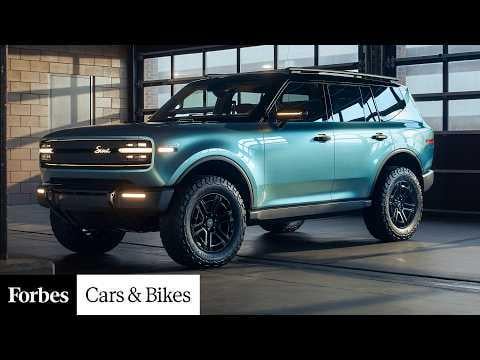
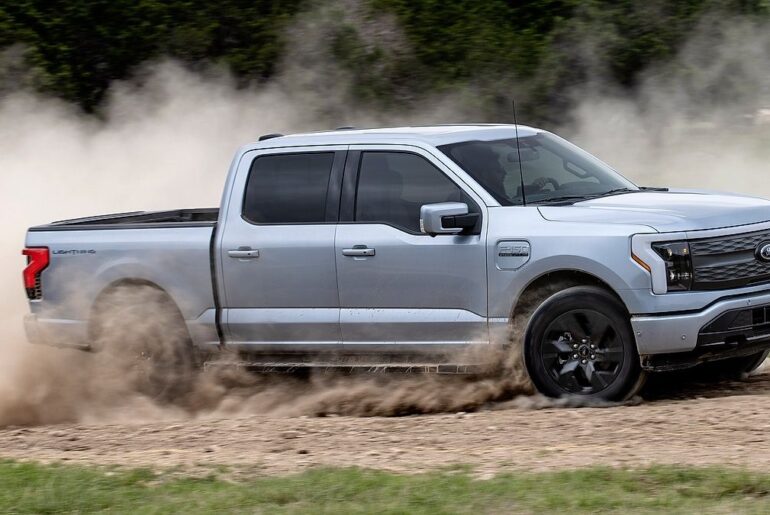
Their joint technology effort has now delivered one of its clearest results yet. Volkswagen Group and Rivian confirmed that their joint venture, RV Tech, has successfully completed winter testing of its new software-defined vehicle architecture, using the Volkswagen ID. EVERY1 referenced the vehicle along with Audi and Scout test vehicles.
That milestone does not mean the car is ready for immediate production, but it does mean the program has moved beyond theory and into validated real-world development.
 Photo Courtesy: Autorepublika.
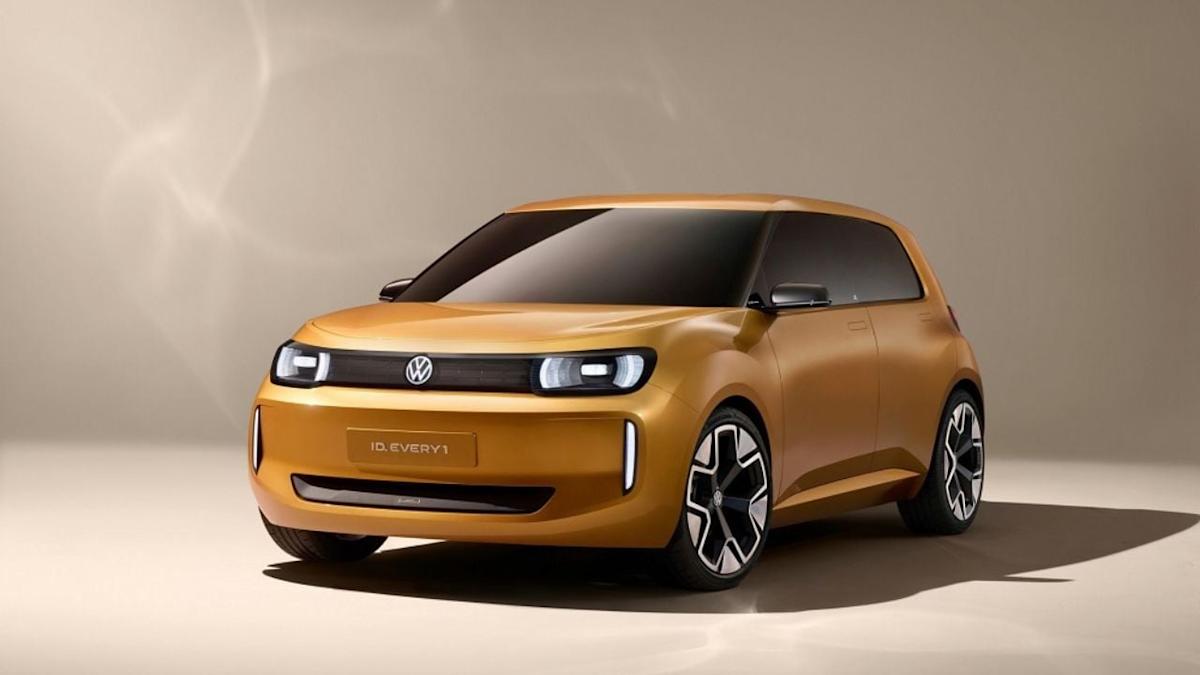
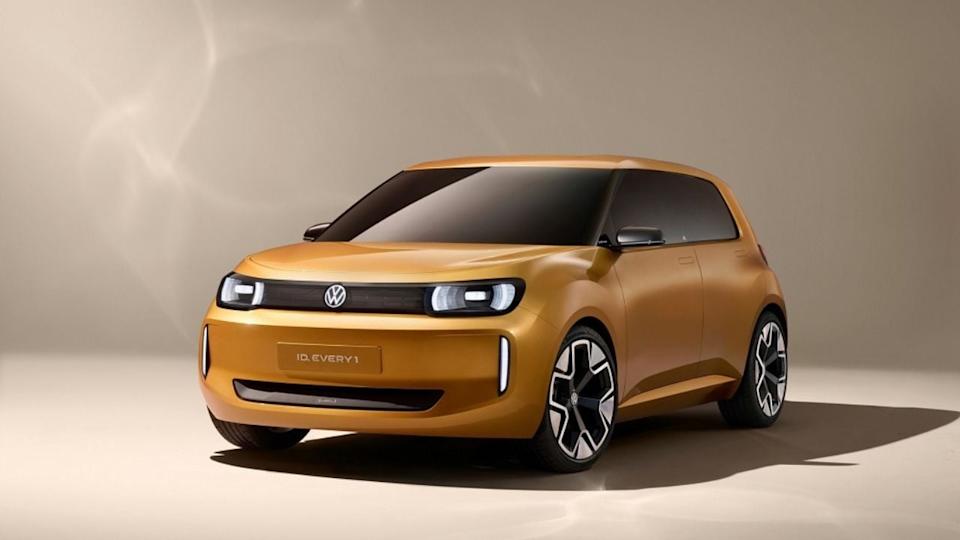
The vehicle at the center of this phase is the Volkswagen ID. EVER1, a small electric city car, is expected to become one of the first Volkswagen Group models to use the new Rivian-based architecture when production begins as early as 2027.
Volkswagen says the winter test vehicle used provisional bodywork, so it should not be treated as the final production design. Even so, its role is highly significant. The ID.EVERY1 is shaping up to be the first major demonstration of how Rivian’s zonal electrical architecture can be adapted for a high-volume Volkswagen Group product.
That matters because this architecture is meant to support a new generation of software-defined vehicles, or SDVs, in which many key vehicle functions depend on centralized software and can be improved over time through over-the-air updates.
Volkswagen says the system is being developed not only for its core VW brand but also for Scout and Audi, and it is intended to support features such as advanced automated driving and continuously updated infotainment systems.
Photo Courtesy: Autorepublika.
The testing program was split across two very different environments. In Phoenix, Arizona, engineers finalized core software functions and prepared the reference vehicles. In Arjeplog, Sweden, those same systems were pushed through harsh winter conditions involving snow, ice, and extreme cold.
Volkswagen says the teams specifically validated how hardware and software work together in areas such as all-wheel drive, traction control, driving performance, and over-the-air functionality. Hundreds of tests and validation cycles were completed before the program was signed off.
This is especially important for Volkswagen because software has been one of the group’s most persistent weak spots in recent years. Reuters noted that CEO Oliver Blume turned to Rivian in part because Volkswagen’s own Cariad software unit had struggled badly enough to hurt the competitiveness of several EV programs. For Rivian, the stakes are just as high. The company needs outside capital and broader technology licensing success as it works toward launching the R2 and pushing closer to profitability.
The successful completion of this phase also unlocked another major financial step. Volkswagen had already agreed in late 2024 to invest up to $5.8 billion in Rivian and the joint venture by 2027. Reuters reported that the newly completed milestone brings Rivian closer to its next $1 billion funding tranche in 2026, while Volkswagen’s original transaction framework said further investments would be tied to technical, operational, and financial milestones.
Photo Courtesy: Autorepublika.
What makes this partnership so interesting is that it reflects a broader shift across the industry. Legacy automakers and newer tech-forward companies are increasingly being pushed toward each other by the cost and complexity of software development. Volkswagen brings scale, production depth, and global reach.
Rivian brings a modern electrical architecture and software stack that Volkswagen believes can help it move faster and compete more effectively with companies such as Tesla and BYD.
If the early results are any indication, this partnership is becoming more than a rescue mission for one side or a licensing deal for the other. It is starting to look like a real industrial blueprint for the next era of the car business. And if the ID.EVERY1 becomes the first high-volume proof of concept, it may end up being remembered as the small car that marked a very big turning point for both companies.
This article originally appeared on Autorepublika.com and has been republished with permission by Guessing Headlights. AI-assisted translation was used, followed by human editing and review.
Read More