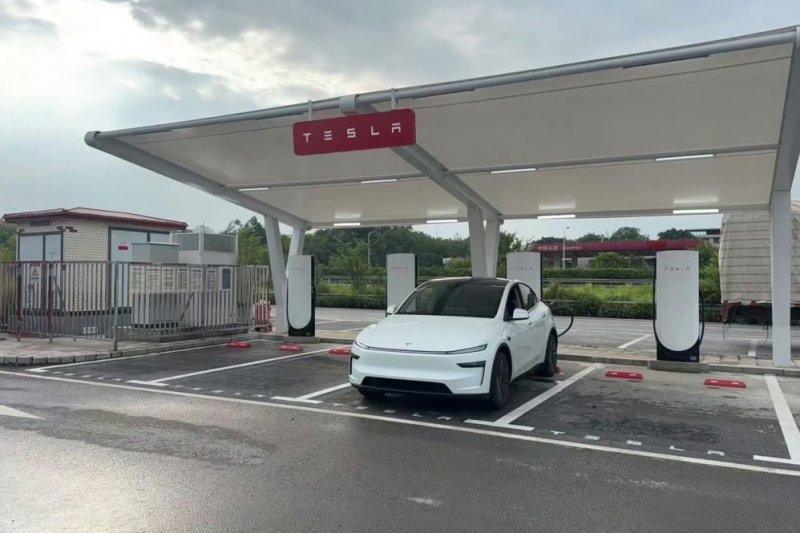
Tesla has once again emerged as the world’s leading seller of fully electric vehicles, regaining momentum in early 2026 after facing growing competition and a temporary loss of its top position last year.
The company reported global deliveries of more than 358,000 electric vehicles in the first quarter of 2026, marking a year on year increase and signaling a recovery phase for the US based automaker.
This rebound has helped Tesla reclaim its status as the top pure electric vehicle producer globally, overtaking rivals that had briefly surged ahead.
How Tesla regained the top position
Tesla’s return to the top is largely driven by a combination of production efficiency, strong global demand for its core models, and improved performance in key markets such as China and Europe.
Sales of Tesla’s China made vehicles rose notably, supported by export demand and stabilizing global conditions.
The company’s flagship models, particularly the Model Y, continue to dominate global EV rankings, maintaining strong appeal among consumers due to pricing, range, and software integration.
At the same time, Tesla has focused on scaling production and streamlining its lineup, concentrating on high volume models rather than a broader portfolio.
What challenges Tesla still faces
Despite reclaiming the top spot, Tesla’s position is far from secure. Competition in the electric vehicle market has intensified significantly, especially from Chinese manufacturers such as BYD.
BYD previously overtook Tesla as the world’s top EV seller in 2025, driven by strong domestic demand and rapid expansion.
Even in 2026, Tesla’s market share in key regions has shown signs of pressure, with declining shares reported in both China and Europe.
Additionally, Tesla’s latest quarterly results, while improved, still fell short of analyst expectations, highlighting ongoing concerns about growth sustainability.
Why Tesla continues to lead
Several structural advantages explain Tesla’s continued leadership in the electric vehicle sector.
First, the company benefits from a highly optimized global production network, including major facilities in the United States, China, and Europe.
Second, Tesla maintains a strong brand identity associated with innovation, performance, and cutting edge technology.
Third, its ecosystem, including software updates, charging infrastructure, and autonomous driving development, provides added value beyond the vehicle itself.
These factors allow Tesla to remain competitive even as rivals close the gap in pricing and technology.
What role key models play
Tesla’s dominance is closely tied to the success of its mass market vehicles. The Model Y, in particular, has consistently ranked as the world’s best selling electric car and even became the best selling car globally across all categories in recent years.
Meanwhile, the Model 3 continues to contribute significant sales volumes, although it faces increasing competition from newer models offered by other manufacturers.
Tesla has also begun phasing out some of its older premium models, such as the Model S and Model X, to focus on future technologies and higher volume production.
What this means for the global EV market
Tesla’s regained leadership reflects broader trends in the electric vehicle market. Demand for EVs continues to grow globally, with millions of units sold annually and projections indicating rapid expansion over the next decade.
However, the market is becoming increasingly competitive, with new entrants and established automakers investing heavily in electric mobility.
Chinese manufacturers, in particular, are reshaping the industry by offering lower cost vehicles and advancing battery technology.
As a result, the race for global EV leadership is becoming more dynamic, with positions shifting more frequently than in previous years.
Is Tesla’s lead sustainable
The key question now is whether Tesla can maintain its regained leadership.
On one hand, the company’s scale, technology, and brand give it a strong foundation. On the other hand, growing competition, shifting consumer preferences, and evolving regulatory environments present ongoing challenges.
Tesla is also undergoing a strategic transition, placing greater emphasis on artificial intelligence, autonomous driving, and robotics, which could reshape its business model in the long term.
Conclusion
Tesla’s return to the top of global electric vehicle sales marks an important moment in an increasingly competitive industry. It demonstrates the company’s resilience and ability to adapt, even as rivals gain ground.
However, the broader landscape suggests that leadership in the EV market is no longer guaranteed. Instead, it is becoming a rapidly evolving contest, where innovation, pricing, and global strategy will determine who stays ahead.