 Photo Courtesy: Autorepublika.
Canada’s decision to allow a limited number of Chinese-built EVs into its market at lower tariffs has opened a fresh and potentially volatile chapter in North American auto trade. Instead of calming the electric vehicle landscape, the move has sharpened tensions with the United States, where the Trump administration has already made clear that it sees Chinese connected vehicles as both an economic and national security problem.
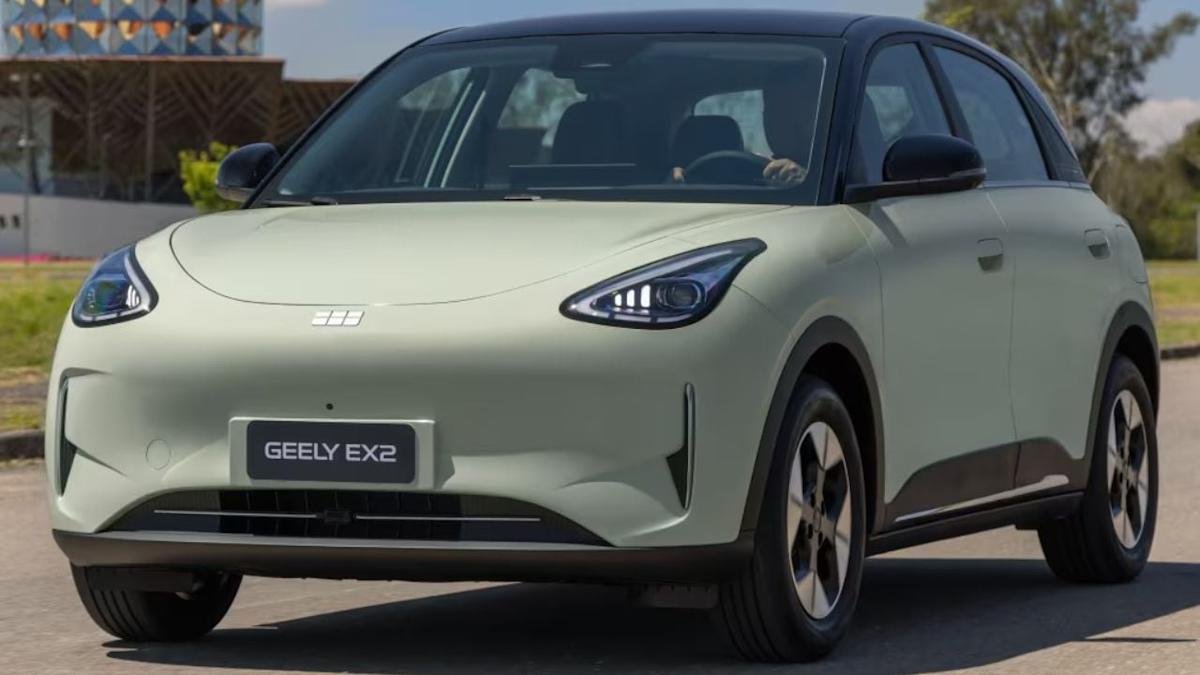
Under the January agreement with China, Canada said it would allow up to 49,000 Chinese-made EVs a year at a 6.1% tariff, down from the 100% surtax it imposed in 2024.
 Photo Courtesy: Geely
The strongest signal so far has come from U.S. Ambassador to Canada Pete Hoekstra, who said Chinese-made EVs may be allowed into Canada but will not be allowed to cross into the United States. That stance fits with a broader U.S. policy already in place.
A final rule published in January 2025 bars the import of connected vehicles with certain Chinese or Russian hardware and bars the sale in the U.S. of connected vehicles incorporating covered Chinese or Russian software, reflecting Washington’s concern that modern vehicles can collect and transmit sensitive data. In other words, this is not just a tariff fight. It is also a technology and security fight.
That still leaves an important practical question unresolved. Hoekstra’s public remarks were blunt, but the exact mechanics of enforcement at the border have not been fully explained in public. The uncertainty matters because Canada and the United States remain deeply intertwined in auto manufacturing, and a rule aimed at blocking Chinese-made EVs could create confusion for Canadian owners who regularly cross the border.
At the same time, U.S. officials have continued to emphasize that vehicles built in Canada with largely North American content remain a different issue from finished Chinese-made EVs entering through Canada.
Photo Courtesy: BYD.
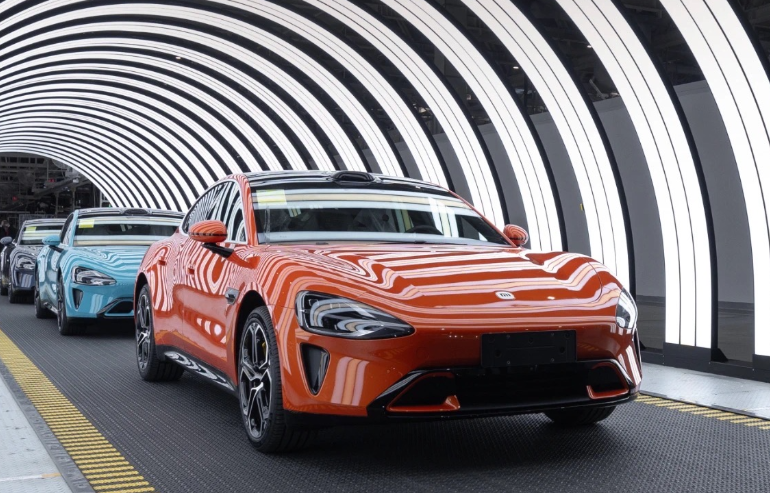
Canada’s move is part of a larger global shift that traditional automakers can no longer ignore. China has already surged past Japan to become the world’s top vehicle exporter, and Chinese EV makers are pushing into more overseas markets with a mix of low prices, strong technology, and faster development cycles. BYD remains the clearest symbol of that expansion. Reuters reported this week that the company is highly confident it can reach 1.5 million overseas sales in 2026, even as competition at home continues to squeeze margins.
That is what makes the Canadian decision so sensitive. Even with a quota in place, the opening creates a foothold for Chinese-built EVs in North America at a time when Washington wants the opposite. Mexico has already been dealing with a growing Chinese auto presence, and Reuters has reported that Chinese automakers are also exploring factory space there. From the U.S. perspective, the concern is that affordable Chinese EVs could gain a larger regional presence before American and traditional foreign brands have fully addressed the lower-priced end of the market.
Photo Courtesy: Geely.
That last point may be the most important one. Chinese automakers are not changing the global market only because they are Chinese. They are changing it because they are increasingly competitive where the next big battle will be fought: more affordable EVs with modern software, strong features, and usable range. In the United States, that part of the market is still relatively thin.
GM has said the relaunched Chevrolet Bolt will start just under $30,000, the Bezos-backed Slate pickup is targeting the mid-$20,000s, and Kia has just unveiled the smaller EV3 for the U.S. as part of a new push toward lower-priced EVs. Even so, Reuters reported this week that U.S. EV demand has weakened sharply since the federal tax credit expired, showing just how fragile this market still is.
Whether Chinese EVs ever officially reach U.S. showrooms is almost beside the point now. Their rapid global expansion is already forcing the rest of the industry to react. Canada’s decision has simply made that pressure much harder to ignore. For automakers across North America, the message is becoming clearer by the month: the next phase of competition will be shaped not only by tariffs and trade policy but also by who can deliver genuinely compelling EVs at prices ordinary buyers can actually afford.
This article originally appeared on Autorepublika.com and has been republished with permission by Guessing Headlights. AI-assisted translation was used, followed by human editing and review.
Read More