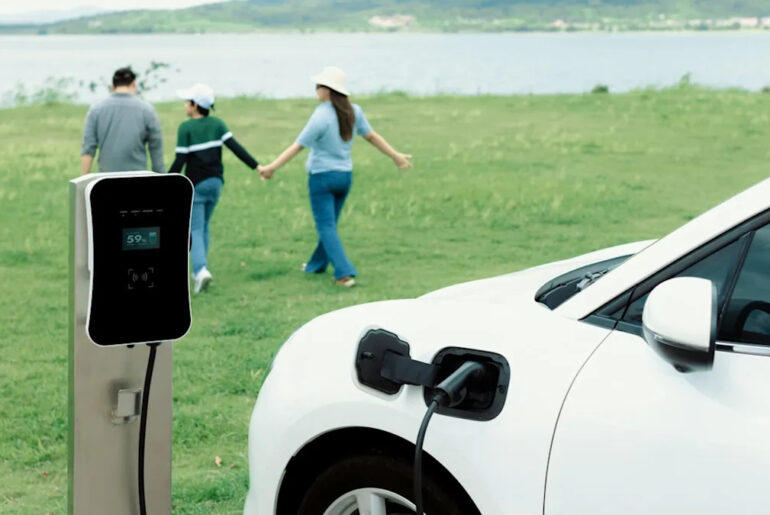
There’s a war in the Middle East and oil prices are shooting up. At least one group should be feeling smug: electric-car drivers, who can sail past closed petrol pumps and plug into a charger. Better yet, they can charge at home, where it’s cheaper still.
Since the Strait of Hormuz gummed up, Google search interest for EVs has jumped, according to research group New AutoMotive. Inquiries about buying electric cars have risen 36 per cent at Octopus Electric Vehicles. And industry-watchers predict new car registration figures for March, due out this week, to show particularly strong EV sales.
The big question is: will fears about the rising cost of oil translate into a sustained stampede to go electric? Since 2022, UK carmakers have been set stringent quotas on EVs as a proportion of total sales. For cars, those quotas started at 22 per cent and have now risen to 33 per cent. The problem is that EV sales are running at only about 24 per cent of new registrations. The whole industry is flunking the challenge.
There’s tougher territory ahead. The quotas ramp up sharply in the coming years, with failure to comply triggering fines. Manufacturers can borrow credits from rivals who are comfortably hitting the quotas, but this loophole is set to tighten. So far, carmakers have chucked an estimated £10 billion on “incentives” over the past two years to shift stock — double what they might typically spend to move petrol and diesel cars.
Small wonder, then, that carmakers are squealing to ministers that they are losing money hand over fist on EVs and these quotas — the Zero Emission Vehicles (ZEV) mandate — need to be relaxed.
Labour has long maintained it will review the ZEV mandate in 2027, but, as we reported last week, discussions about revisions are already under way. As the policy is also a matter for the devolved governments, work is not expected to happen in earnest until after the local elections in May.
There are sound reasons why the government may be resistant to giving ground to the carmakers. The ZEV mandate is a core net-zero policy and one of the biggest levers available to ministers. The ZEV mandate is a core net-zero policy and one of the biggest levers available to ministers. It’s not an easy lever to pull, for sure, but it’s arguably easier than rewiring the entire grid or getting EDF to finish a nuclear power station.
And yet take-up of EVs has been lower than expected, for a variety of reasons. Upfront costs for EVs remain high, hence the return of subsidies; “range anxiety” about a battery holding its charge persists; as does “charge anxiety”, about whether you can find a charge point that actually works. Add a stagnant economy that hasn’t made people feel flush enough to make the switch, and you can see why EV demand isn’t growing as fast as the quotas demand.
A prolonged energy crisis may well correct some of this, powering demand for EVs in the medium term. But it’s not likely to do much for electric cars’ high upfront costs, especially if supply chains are disrupted by the war and raw material prices rise.
In which case, pragmatism should be the order of the day. It makes sense for ministers to revise those sales targets if they continue to lag reality for the rest of the year. The government has already shown flexibility, revising the rules last year to extend the life of hybrid sales and reducing the fines for non-compliance.
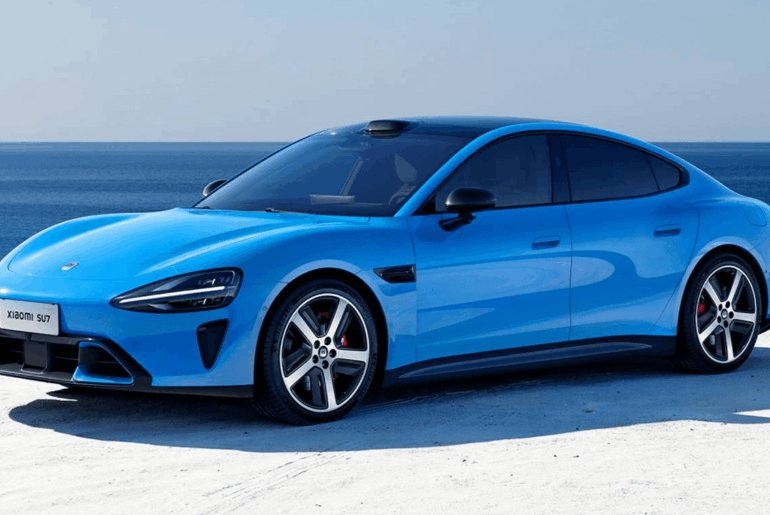
None of this is to suggest that EVs aren’t the future. China is leading the way, and the rest of the world is likely to follow. Carmakers have EVs to sell and more models in the pipeline. But there needs to be flexibility if a policy is stumbling.
Some may ask: if we want to protect our homegrown industry, why aren’t we setting protectionist measures on cheap Chinese EVs, as the EU has done? It’s an argument Jo Bamford makes in relation to buses, elsewhere in the section.
But those same Chinese EVs are accelerating the transition. A better course for the UK would be convincing the Chinese to make some cars here, repeating the success of Nissan in the Eighties. A far-fetched idea? Perhaps. Britain currently struggles to compete with Europe on labour and energy costs. But enticing a new manufacturer to these shores would be a coup for jobs and the supply chain — the sort of thing a prime minister looking for a legacy might like to jump on.
Suggestion box
Last week I used our Sunday Times Business newsletter to write about our inaugural Reviving the City event. The purpose of the campaign is to energise debate about the London stock market and the health of our capital markets.
Readers were generous in their responses. Sir Richard Olver, former chairman of BAE Systems, stressed the importance of getting pension funds to invest more in the stock market. And he pointed out that it was imperative to back more spinouts from our top universities that aren’t Oxford and Cambridge.
One reader suggested that the financial services industry needed to work harder in gaining the trust of investors. Another wondered whether there was a way to cap the downside risks for retail investors of owning shares by splitting it with the fund manager.
One correspondent suggested that, alongside basic numeracy, the capital markets should be taught in schools. A laudable aim — I salute the teacher who tries to engage a room of 14 year olds on this topic.
Keep the suggestions coming.
jon.yeomans@sundaytimes.co.uk
Rishi Sunak is away