Gasgoo Munich- Power battery maintenance, once an afterthought, is now taking center stage as a critical concern for both the industry and consumers.
Recently, the “Interim Measures for the Management of Recycling and Comprehensive Utilization of Waste Power Batteries for New Energy Vehicles”—jointly issued by six departments including the Ministry of Industry and Information Technology—officially took effect.
The new rules integrate the repair process into a closed-loop lifecycle management system, shifting the power battery aftermarket from unregulated expansion toward a standardized order.
As the first wave of vehicles falls out of warranty, repair demand is surging. The policy implementation effectively ends the entrenched “replace-only” model at the institutional level, while continuous technological breakthroughs are making cell-level repairs a reality.
Driven by these forces, the fragmented aftermarket landscape is being dismantled, accelerating the formation of a more standardized and sustainable ecosystem for battery maintenance.
Is the “Lifetime Warranty” Era Fading?
The China Passenger Car Association (CPCA) recently released March market data: new energy passenger vehicle retail sales hit 902,000 units, capturing a 52.9% penetration rate, while internal combustion engine vehicles totaled 801,000 units, accounting for 47.1%.
This marks a historic first: monthly sales of new energy vehicles have consistently outpaced those of traditional fuel cars in China.
Yet, despite the rising penetration of new energy vehicles, consumer anxiety has not fully dissipated.
Among concerns over range, charging infrastructure, and resale value, maintenance—specifically for power batteries—remains the most sensitive and persistent pain point for consumers.
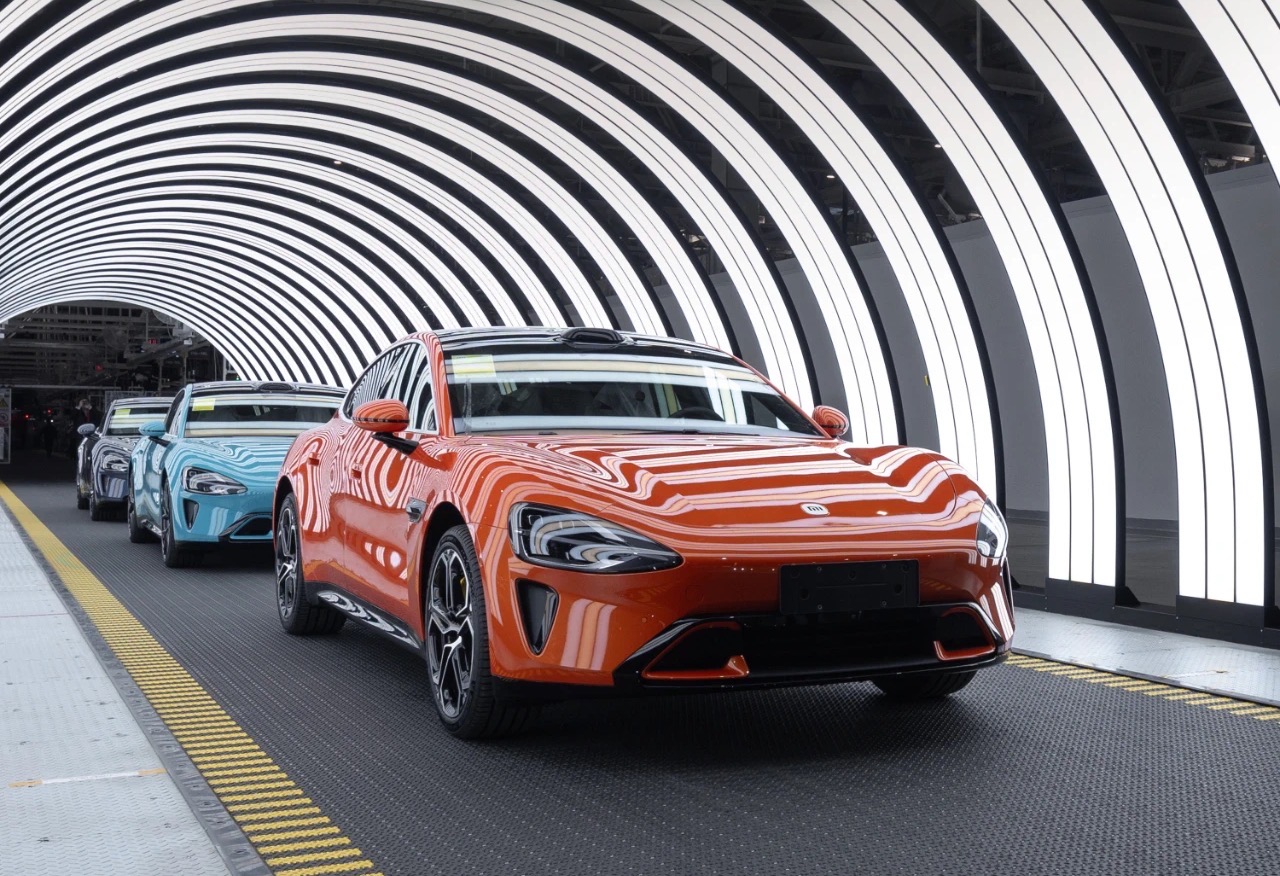
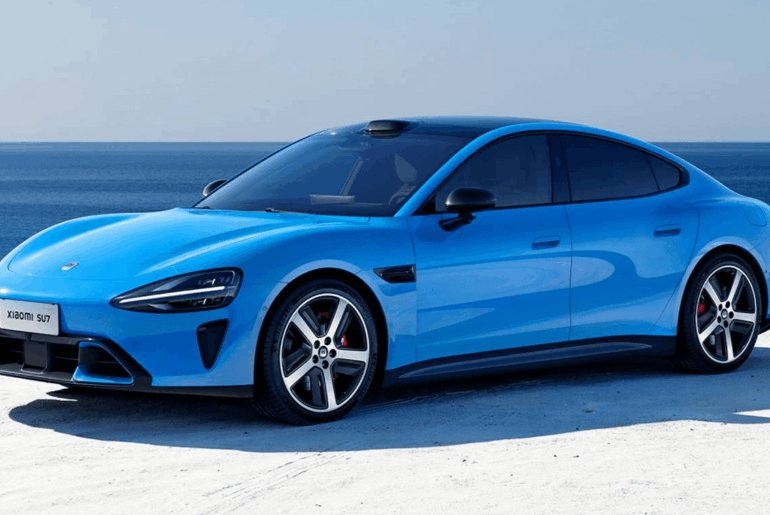
Image Source: Xiaomi EV
To woo buyers, numerous brands have rolled out eye-catching after-sales policies like “lifetime warranty for the three-electric system” as a key selling point.
Take the new Geely Boyue REV, a long-range range-extended SUV launched on March 31. Its limited-time warranty offer grants lifetime coverage for the three-electric system to the first non-commercial owner, alongside a six-year or 150,000-kilometer vehicle warranty.
In the current market, this is far from an isolated case.
However, the actual execution of these “three-electric” warranties reveals underlying concerns.
For one, new energy vehicles evolve rapidly, with new models launching almost annually. Suppliers cannot stock spare parts for a specific model indefinitely, making it difficult to honor lifetime warranty commitments.
Furthermore, for new energy brands that have already faded from the market, a lifetime warranty on the three-electric system is effectively meaningless.
Gasgoo recently spoke with a WM Motor EX5 owner. Regarding news that WM Motor had declared it was “back from the dead” and partially reactivated some vehicle systems, the owner’s tone was mixed.
“It feels a bit like embers reigniting. But even if they really reignite, I doubt many would dare to buy the car now. People have a basic understanding of NEV brands today. Before, the market hadn’t shaken out, so it was hard to tell who was good and who wasn’t. Now it’s different—the name WM Motor has already been tarnished.”
Speaking of his own experience, he said the car’s quality is still decent, and he handles issues at the dealership. But that three-electric lifetime warranty promised at the time? It definitely won’t be honored.
“The motor made a strange noise before. I was too lazy to fix it, and then it just resolved itself,” he lamented. “Now, if it’s a minor problem, you don’t need to fix it; if it’s a major one, you can’t get it fixed.”
HiPhi, Enovate, Aiways… a batch of once-promising new force brands are now bankrupt or stalled.
Their owners face a shared dilemma: when the three-electric system fails, who repairs it? Who stands behind the warranty?
One owner quipped helplessly: “I bought the car for the lifetime warranty. Now that the brand is gone, the warranty has turned into ‘lifetime self-reliance.’”
Gasgoo has learned that because original factory warranties are long—minimum six to eight years, with lifetime warranties not uncommon—independent repair shops see limited demand outside of authorized OEM and battery manufacturer networks, despite the rapid growth in NEV production and sales.
Automakers are also tightening their “lifetime warranty” policies. Among mainstream players, some have narrowed coverage from the entire vehicle to just the three-electric system or added a red line of 20,000 kilometers or less annually.
The cooling of the industry is not a simple reduction of benefits, but an inevitable turning point from unregulated expansion to mature standardization. Behind it lies a deep interplay of cost, technology, competition, and regulation.
One industry analyst noted: “Early automakers traded ‘lifetime warranty’ for market share, but as the first batch of vehicles comes out of warranty, repair costs are beginning to erode profits. Tightening policies now is essentially the industry paying the price for its past radicalism.”
Who Is Carving Up the Power Battery Repair Market?
According to data from the Traffic Management Bureau of the Ministry of Public Security, China’s new energy vehicle ownership reached 43.97 million by the end of 2025, accounting for 12.01% of the total vehicle population. Of these, battery electric vehicles totaled 30.22 million, representing 68.74% of the NEV fleet.
As ownership grows, so does the NEV aftermarket. Qianzhan Industry Research Institute predicts a compound annual growth rate of 20% from 2024 to 2029, with the market scale sprinting toward 2.9 trillion yuan by 2029.
Wang Hao, founder of Electric Workshop, told Gasgoo that based on current power battery technology, product design, and business sources, several problems plague the repair sector:
Most repair enterprises lack professional capabilities. This includes a shortage of specialized zones and equipment for NEV and battery testing and repair, as well as technicians without necessary qualifications—typically requiring both a “Special Operations Work Permit – Low Voltage Electrical Work” from emergency management authorities and a “Professional Capability Assessment Certificate for New Energy Vehicle Inspection and Repair” from transportation authorities. Furthermore, they lack after-sales authorization from OEMs or battery makers, and receive little support regarding workflow processes, technical standards, or warranty backing.
This suggests the power battery repair market remains a blue ocean ripe for development. The massive NEV aftermarket has already attracted numerous players vying for entry.
Against this backdrop, some battery manufacturers are building aftermarket service brands, using specialized battery services as a wedge to seize the high ground in the after-sales market. As early as August 2024, CATL officially launched its aftermarket service brand, “Ningjia Service.”
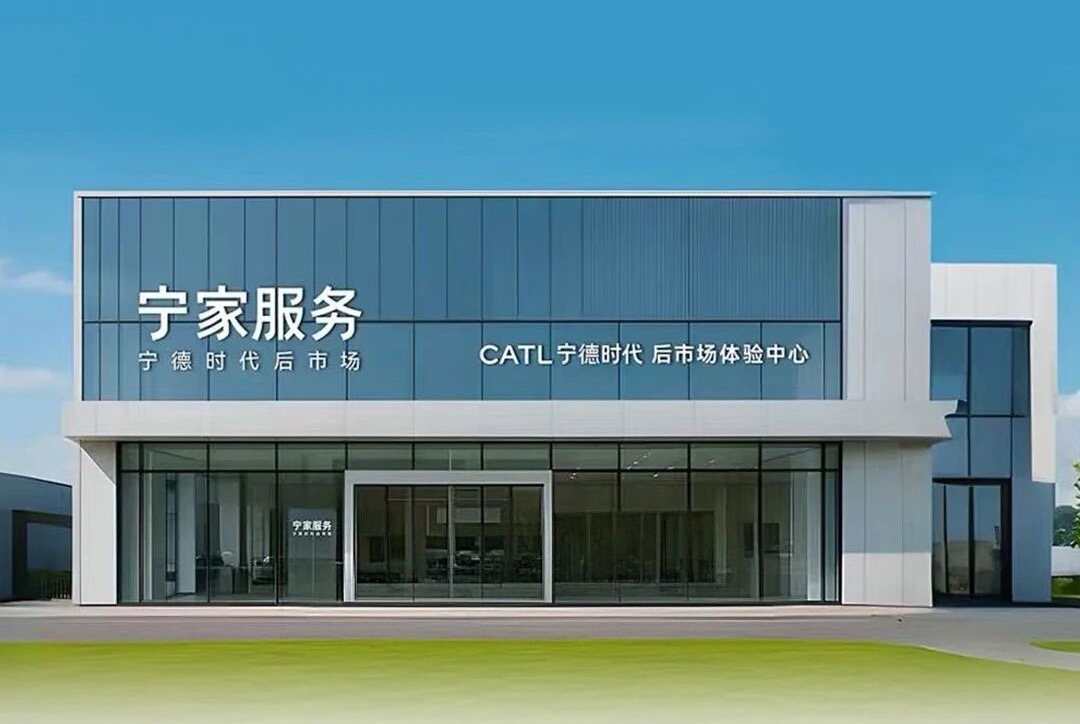
Image Source: CATL
“Ningjia Service” covers the full lifecycle of new energy products, including battery repair, maintenance, testing, extended warranty, used vehicle trading, and battery recycling. It has also expanded into battery insurance, replacement, and educational services related to new energy.
To date, CATL has established 668 domestic after-sales service stations and 219 overseas stations.
Earlier this year, Shenzhen Shanxin Power Technology Co., Ltd. (hereinafter “Shanxin Power”) also launched the chain brand “Xinchi Anyangche.” The brand plans to achieve a “100 Cities, 1,000 Stores” goal by 2026, building 1,000 domestic outlets and launching 11 overseas locations.
Additionally, Shanxin Power unveiled a “CTP Automatic Repair Production Line” for power batteries. This line covers eight core processes—including baking, capacity grading, freeze debonding, milling and cleaning, and laser welding—enabling the non-destructive disassembly of cells and structural adhesive in CTP battery packs.
Gasgoo understands that Shanxin Power’s business model is more open, aiming to bridge the entire NEV aftermarket ecosystem.
This ecosystem primarily consists of three sectors: first, automakers and battery manufacturers, where Shanxin Power obtains authorization to handle in-warranty business; second, mobility service operators like DiDi and Amap, where Shanxin helps ensure battery reliability and cost-efficiency for vehicles covering 200,000 to 600,000 kilometers; and third, insurance companies, where Shanxin helps lower costs through battery repair and recycling.
However, Wang Hao told Gasgoo that while the new “Interim Measures” require automakers and battery companies to adopt easily detachable designs and disclose disassembly technical information to repair firms, this does not simply equate to most repair enterprises possessing the capability to repair batteries instead of replacing them. Nor should it be interpreted as a strict ban on “mandatory pack replacement.”
Easy to Enter, Hard to Break Through
“Looking at the actual operations of some brands that have already entered the market, they have largely failed to meet initial expectations,” Wang Hao said. “Key issues include slow network expansion and high construction costs; service projects that can be practically adopted are limited, resulting in long payback cycles; and a narrow market positioning that faces competition from both authorized OEM channels and existing aftermarket players.”
In fact, service brands pushed by battery manufacturers may find themselves in a situation where “high ideals, but a stark reality.” Despite holding the cards on technology and supply chains, they are constrained by partnerships with automakers and face competition from aftermarket firms, making it difficult to achieve ideal results.
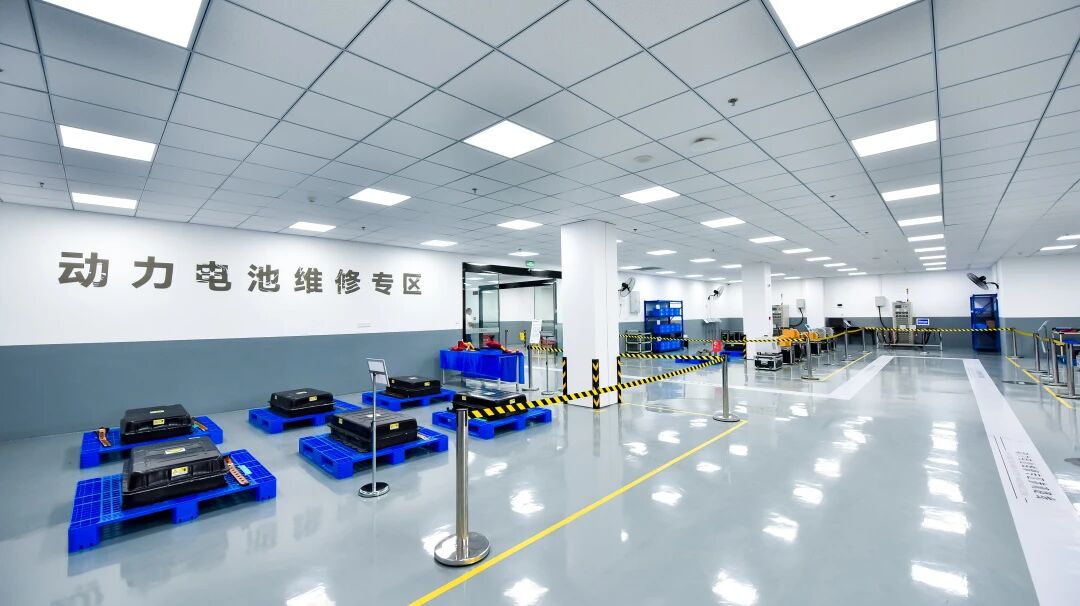
Image Source: CATL
Wang Hao noted that for battery manufacturer-led service brands to succeed in after-sales, they need the following:
First, regarding branding, they must establish a differentiated positioning and increase promotion to build a professional and credible image among NEV users—achieving a status at least on par with authorized OEM service channels.
Second, regarding technology and supply chains, they should be fully disclosed and open to franchise outlets. Currently, restricted by agreements between battery makers and automakers, access is limited to a very narrow scope, making it difficult to satisfy the diverse demands of the aftermarket.
Third, regarding market and customer openness, a stable client base and business sources are crucial—especially collaboration with insurance companies and sufficient C-end user demand. Currently, C-end users prioritize authorized OEM networks or traditional aftermarket leaders. Insurers seek premium contributions, open technical information, and open supply chains—conditions battery manufacturers struggle to meet in the short term, making ideal cooperation difficult.
Fourth, regarding service network construction, whether serving dispersed C-end users or cooperating with insurance clients, battery repair brands need a professional network with multi-city coverage and a professional operating system. These brands are just entering the market, and network development and system optimization take time, meaning they may struggle to meet market needs in the short term.
Industry forecasts suggest 2026-2028 will see a peak of new energy vehicles falling out of original warranty. Theoretically, 3 to 5 million vehicles annually are expected to enter non-authorized service networks. Meanwhile, as the installed base of various battery manufacturers continues to rise, service demand within the warranty period is also growing steadily.
According to the “Interim Measures,” NEV manufacturers must implement extended producer responsibility, bearing the main duty for recycling waste power batteries and establishing a sound recycling network. Currently, mainstream automakers have partnered with qualified recyclers to achieve a closed-loop “sales-use-recycling” service.
However, many repair enterprises are unaware of these requirements and fail to execute accordingly in practice. Industry standards for NEV repair services are gradually being refined.
Relevant standards already issued include the “New Energy Vehicle After-sales Service Specification,” “GBT16739 Conditions for Operation of Automotive Repair Business: Part 1 Automotive Repair Enterprises,” “GBT 44510-2024 Technical Requirements for New Energy Vehicle Maintenance and Repair,” “JTT1344-2020 Technical Specification for Maintenance, Inspection, and Diagnosis of Pure Electric Vehicles,” and “Technical Conditions for Completion of Power Battery Repair.”
Wang Hao noted that technical information disclosure and parts supply chains—closely tied to NEV battery repair—remain under the monopolistic control of automakers and battery manufacturers.
The market situation is shifting. Reportedly, Shanxin Power has already secured authorization from Dongfeng Motor. On the battery manufacturer side, the first batch of service providers signed by “Xinchi Anyangche” hold comprehensive authorization, covering almost all mainstream battery brands in the market.
Conclusion: Who Will Win the 100-Billion-Yuan Race?
Policy “hard constraints” are taking shape, the industry’s “wild growth” is receding, “repair over replacement” technologies are spreading, and a “multi-party game” among players is unfolding.
Power battery repair stands at a historic turning point. In this transformation, no one will win easily. Only those enterprises that truly integrate technology, channels, users, and insurance resources—and build a professional, credible, and efficient service network—will be able to carve out their own path in this hundred-billion-yuan market race.