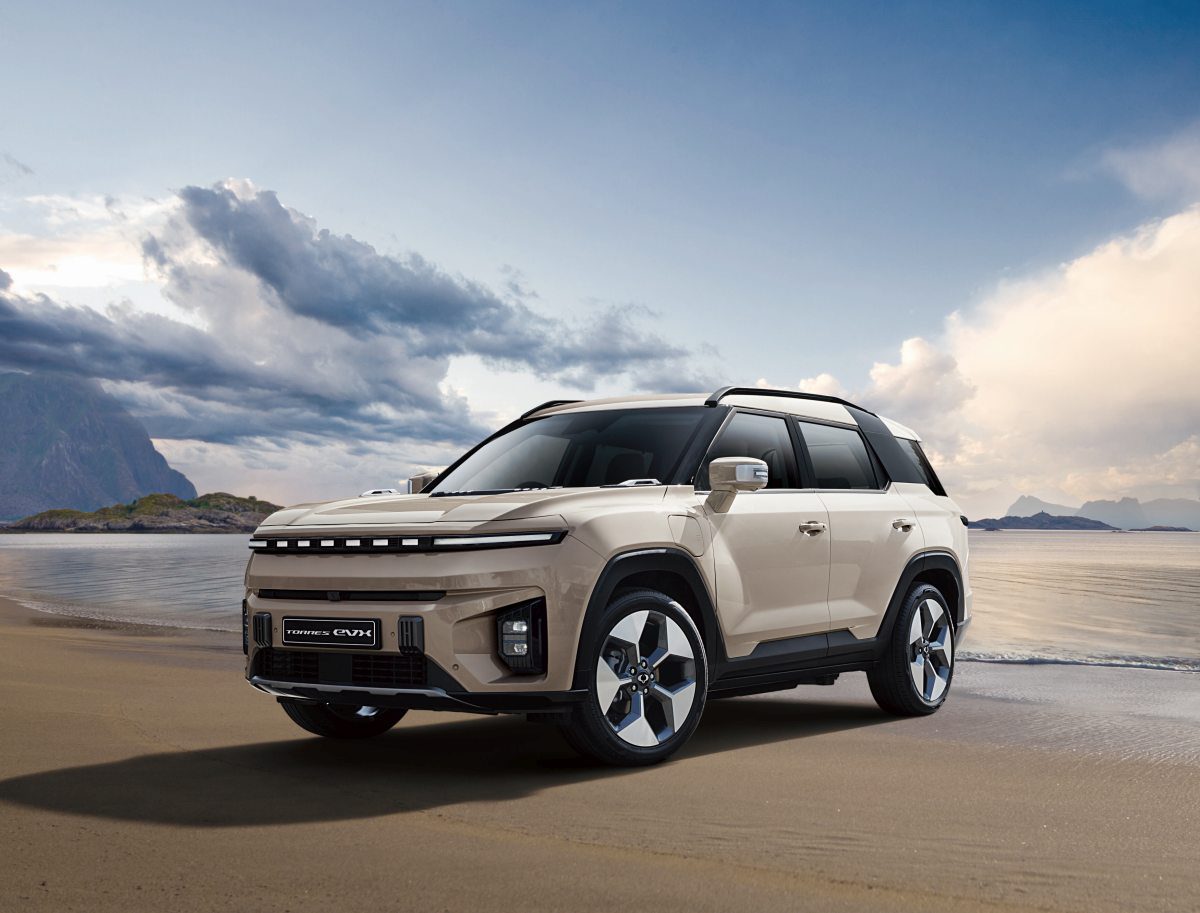
The South Korea car maker KGM has been busy. Along with the arrival of its all-electric ute, the Musso, there has also been the Torres EVX SUV.
It is classified in Australia by VFacts as a ‘Medium SUV’, but it actually feels larger than that – although the VFACTS categories do seem biased towards under-describing vehicle sizes: in Europe, the Torres comfortably fits into their Large SUV category.
The Torres SUV is sold here in petrol, hybrid and full-electric versions. (Note: this article covers only the full-electric EVX version).
If you’re wondering – KGM is the new name for long-established Korean vehicle manufacturer, SsangYong. As to why new owners KG Group decided to rename a relatively well-known brand in a market becoming flooded with new-kid-on-the-block three letter acronym Chinese manufacturers – who knows.
However, as Ssangyong, KGM has many decades of vehicle building experience and is now a factory-backed outfit here. (After years of different distributors shuttling the brand around in terms of marketing and price segment).
That manufacturing experience does show in the way that the Torres EVX is put together, drives and how the ADAS functions work to assist (and not particularly annoy), plus in the well-laid out driver’s display with easy-to-read speed and driving range data.
In the driver’s seat
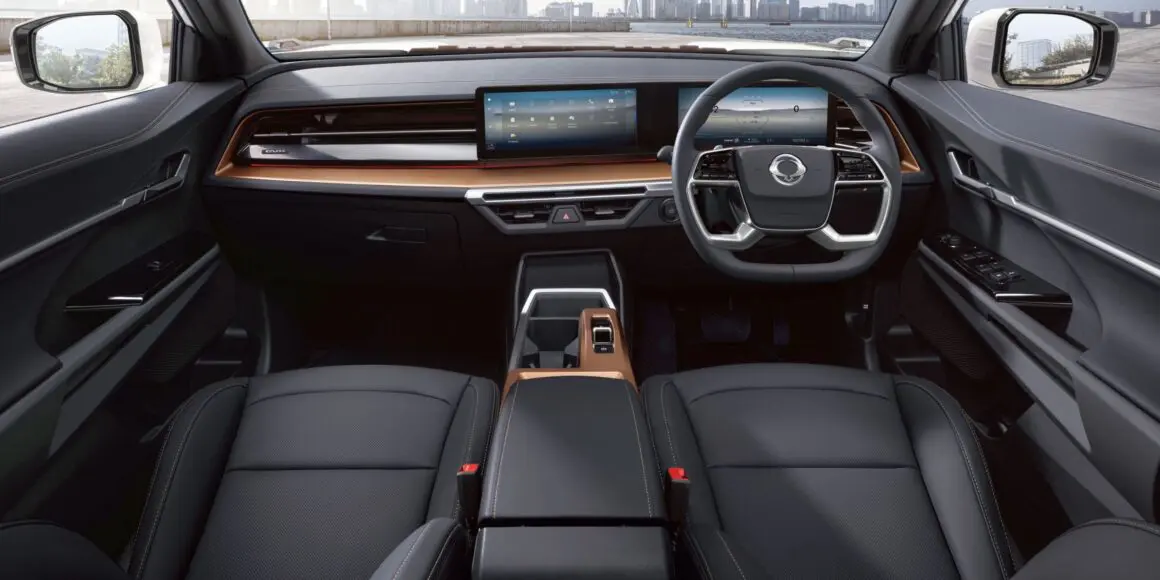
 KGM Torres EVX interior front. Image: KGM Australia
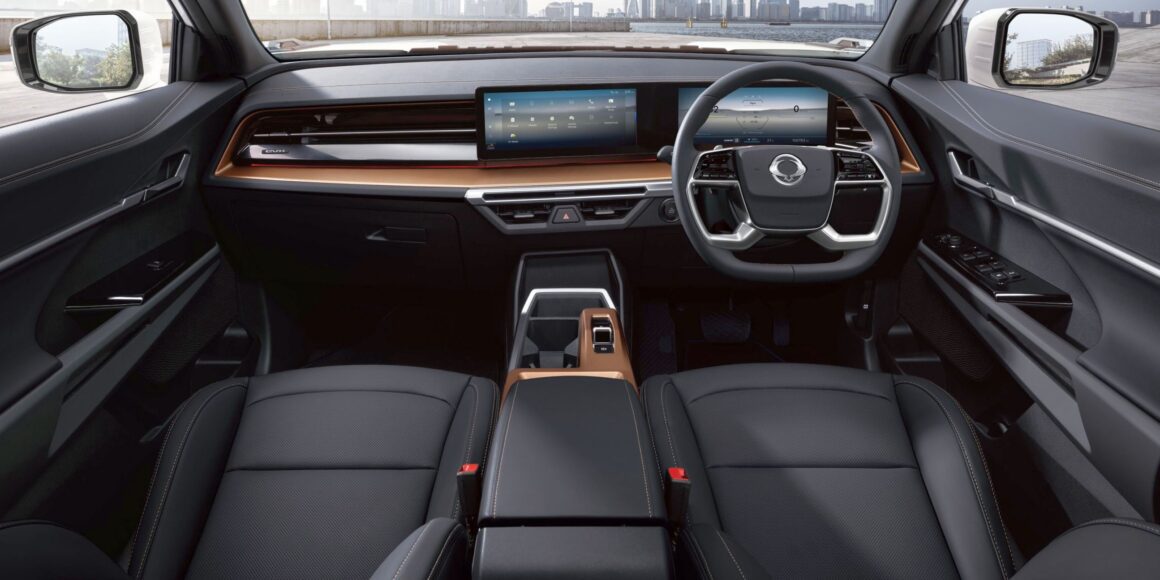
The twin flat screen dash in the Torres reflects the evolving Korean school of cockpit layout (AKA Hyundai and Kia) and are identical in layout to the Musso EV.
Sadly, neither the Torres EVX or the Musso EV include any dash buttons. This is somewhat made up for with full-function stalks for indicators/lights and wipers, as well as the many steering wheel buttons for most standard functions including radio, phone, drivers display information and adaptive cruise control.
Missing though was the rather useful programmable ‘Favourites’ the Musso EV steering wheel includes. Another slightly annoying ‘feature’ was the limited choice of background to the displays in the Torres EVX: none of them gave particularly good contrast to the driver’s display data – the three on offer were stylised landscapes that cut through the middle of the speed readout.
You did quickly adapt to it, but it would have ben nice to have plain light and dark background options too. On minor quibbles (and like the Musso EV ute) the touchscreen was slow to start up, but once driving it did respond faster than in the ute.
As the Torres EVX doesn’t offer inbuilt navigation (as is offered as an option overseas), you will need to use Android Auto or Apple CarPlay if wanting to map a route.
However, Android Auto worked well and connected easily – albeit through a wired connection. Bluetooth for the phone is possible too – but was limited to 30 contacts. If you want to use the phone to it’s full potential, you will need to plug in!
Seating adjustment is 8-way and fully electric, including adjustable lumbar support – plus the steering wheel is provided with both reach and rake adjustment. Between all those I found it easy to find a comfortable driving position. In addition, the front seats are both heated and ventilated.
Drive modes included Eco, Comfort and Sport. Eco was somewhat laggy in response, Sport was almost twitchy in its throttle response … with Comfort proving to be the Goldilocks, easy-to-live-with option. Personally, I’d suggest settling on that and forget the others.
Interior
Like the Musso EV ute, the cabin is trimmed all-round in dark colours with the potential to give a slightly ‘cave-like’ feel. Countering that was the ample glass all-round plus an openable glass sunroof over the front seats. Thankfully (unlike many sunroofs lately) the Torres EVX sunroof is provided with a (manually operated) sliding sun-shade.
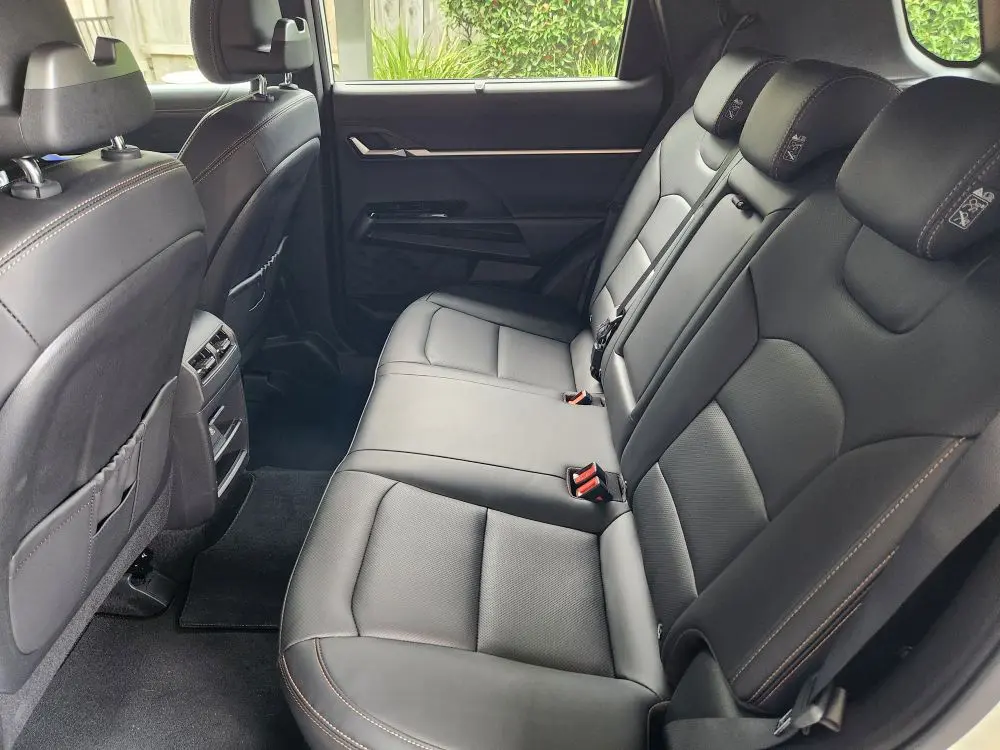
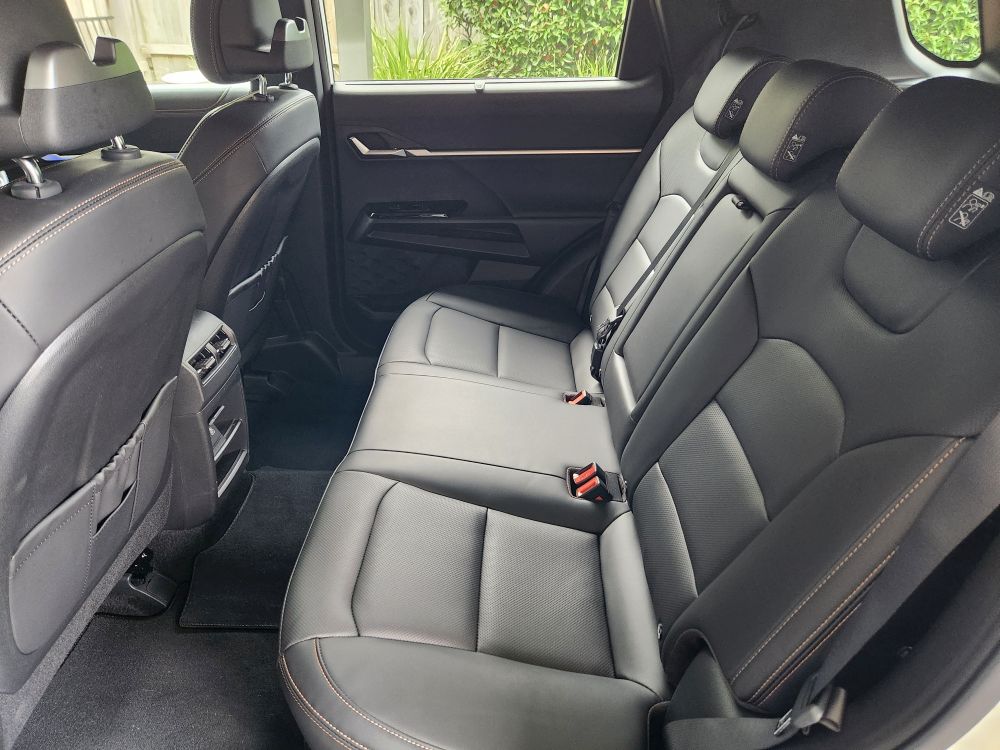 KGM Torres EVX rear seat. Image: B Gaton
Rear seating for three is comfortable with good headroom and legroom – provided the front-seat occupants are not overly tall. If the front seats are fully slid back, the rear seat legroom would be a bit cramped for taller occupants. Both outer rear seats are ventilated and the rear seat backs can be reclined up to 32.5 degrees.
Driving
As mentioned earlier, the Torres EVX is not small – nor is it a sports car. Within those constraints, I found it easy to drive with good visibility all-round (amply assisted by a 360 degree ‘helicopter’ view, as well as guide lines in the rear-view screen when reversing).
With an around 8 seconds 0 to 100km/h time, the 152kW motor does a good job providing a good level of acceleration …. without being blisteringly unnecessary. (Unlike that found in some family SUVs. Why some manufacturers find it necessary to offer sub 5 sec 0 to 100 km/h times in family transport baffles me!)
Mind-you, with that muted (by EV standards) power, even in dry weather I found taking off the line a slight juggling act to get anything beyond a relaxed take-off without the front wheels slipping.
Probably a compromise to keep the Torres to a price-point: the choice of Nexan rubber does leave a bit to be desired there. (As an example, the Nexans fitted to my 2019 Kona electric had the same problem, but this disappeared when I eventually swapped to the later version’s OEM fitted Michelin tyres).
ADAS
As mentioned earlier, the Torres EVX comes with all the usual ADAS (Advanced Driver Assistance Systems) features. These operate much the same as its stablemate, the Musso EV ute. As such I would classify them as fitting into the ‘Assist’ category (as opposed to the second ‘A’ in ADAS potentially being one of Advise, Assist, Annoy or Aggravate!)
Like the Musso EV, it does emit the odd unnecessary ‘bing and bong’, however they are neither intrusive, nor ridiculously nervous. They are also easy to differentiate by tone regarding what they’re alerting the driver of.
Also, like the Musso EV, the steering assist function is a tad maddening on Australian country roads (where moving within a lane to avoid potholes and dead kangaroos are a way of life, and being steered back towards them ‘unhelpful’) – the nudges are simple to turn off with a long press of an easily accessed steering wheel located button.
Charging and range:
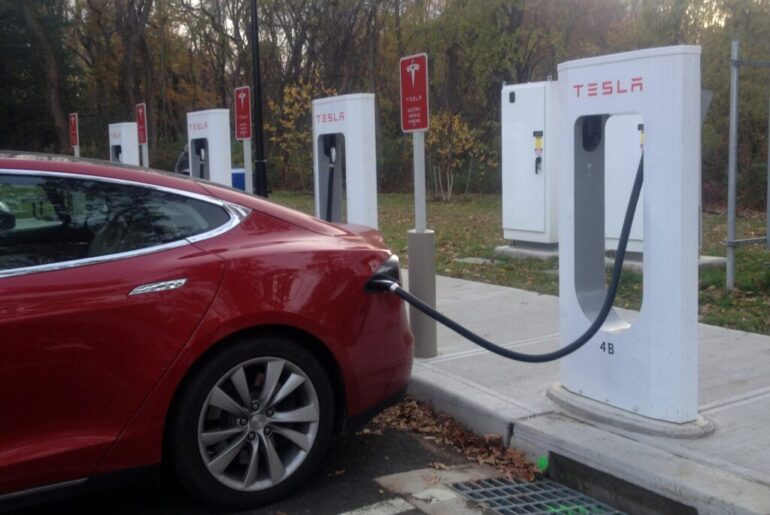
AC charging is 7kW single phase and 10.5kW three phase. DC charging is up to 130kW, with the charge port located on the front left-hand guard, making it easy to access kerbside chargers.
I note this as some brands (often ones from left-hand drive countries) place it on the right-hand side. For those, you either have to park facing the wrong way around to place the charge socket next to a kerbside charger (which is illegal in most Australian jurisdictions), or risk having the charge plug wiped-out by passing vehicle/bicycle traffic.
With better aerodynamics than a ute, the driving range is around 10% more than the Musso 2WD and comes in at 462 km WLTP. In my time with the Torres EVX, I would say that range is quite achievable for general use – although I would expect perhaps 10% to 15% less for extended 100+ km/h highway driving. Approximate charging times for the Torres EVX are given in the table below:
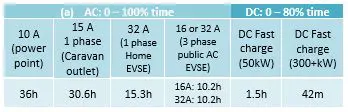
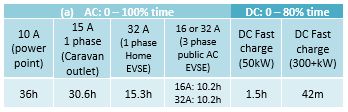 KGM Torres EVX – approximate charge times
Summing up:
Like the Musso EV ute, for those who have the use for one, this is worth looking at. If you have a need for a medium to large SUV to regularly carry lots of luggage and/or multiple large adults and/or tow up to 1.5t, the Torres EVX ticks a lot of boxes.
At $58,000 on-the-road (in Victoria – check other states for variations in on-road costs) it is certainly not the cheapest – although it is also not the most expensive. A list of current medium SUVs and their basic specifications currently available in Australia (ranked by price) is given below:
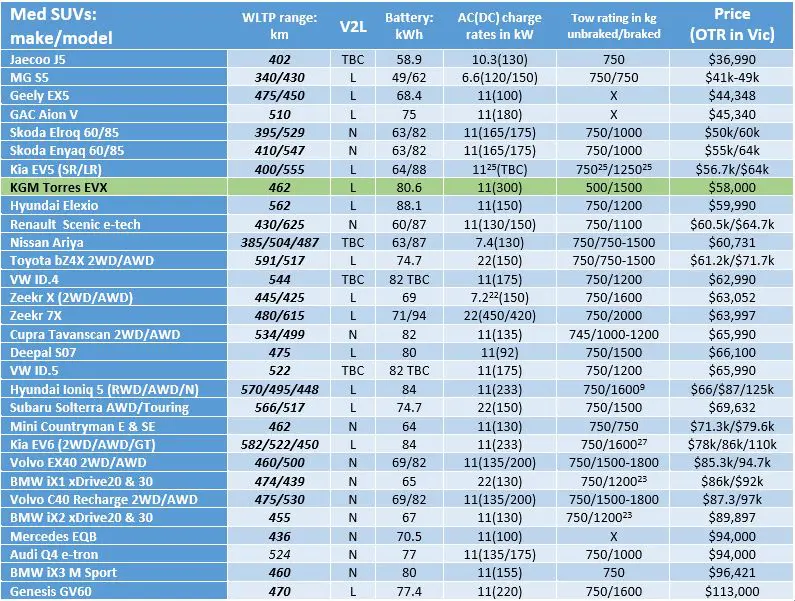
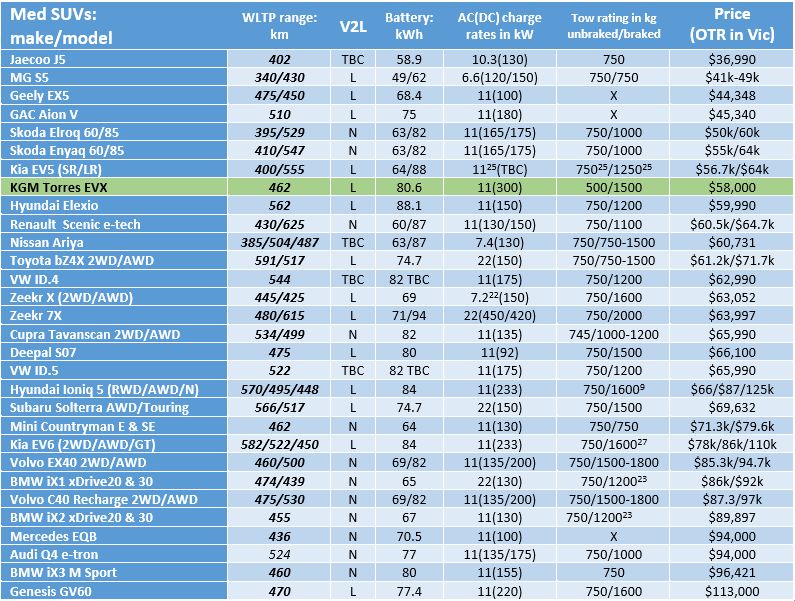 Current medium SUV competition to KGM Torres EVX. Source: https://www.aeva.asn.au/info/
As to whether it competes well in price and features with the plethora of existing and new brands and models in the medium SUV category is something you’ll have to decide for yourself. I would suggest its worth adding to your test driving shortlist though.
If you do buy one: beware, you may end up spending a lot of time explaining to people that KGM is not one of the new-kid-on-the-block three letter acronym automotive brands!
Specifications:
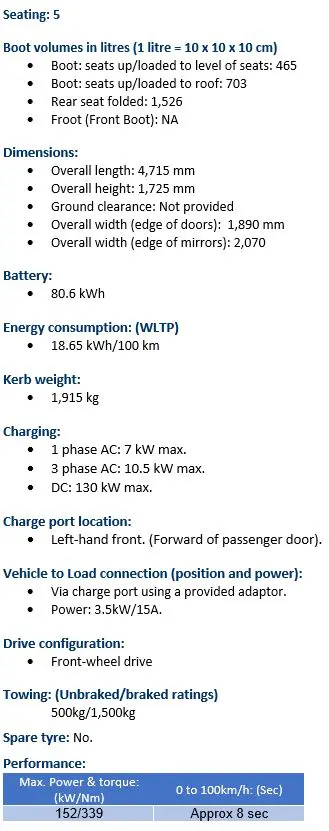
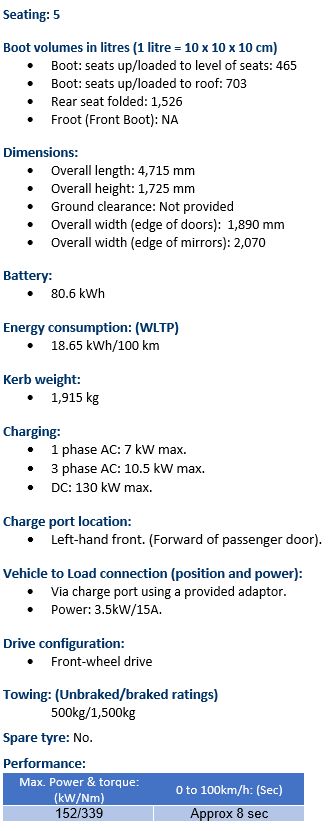 KGM Torres EVX specifications

Bryce Gaton is an expert on electric vehicles and contributor for The Driven and Renew Economy. He has been working in the EV sector since 2008 and is currently working as EV electrical safety trainer/supervisor for the University of Melbourne. He also provides support for the EV Transition to business, government and the public through his EV Transition consultancy EVchoice.