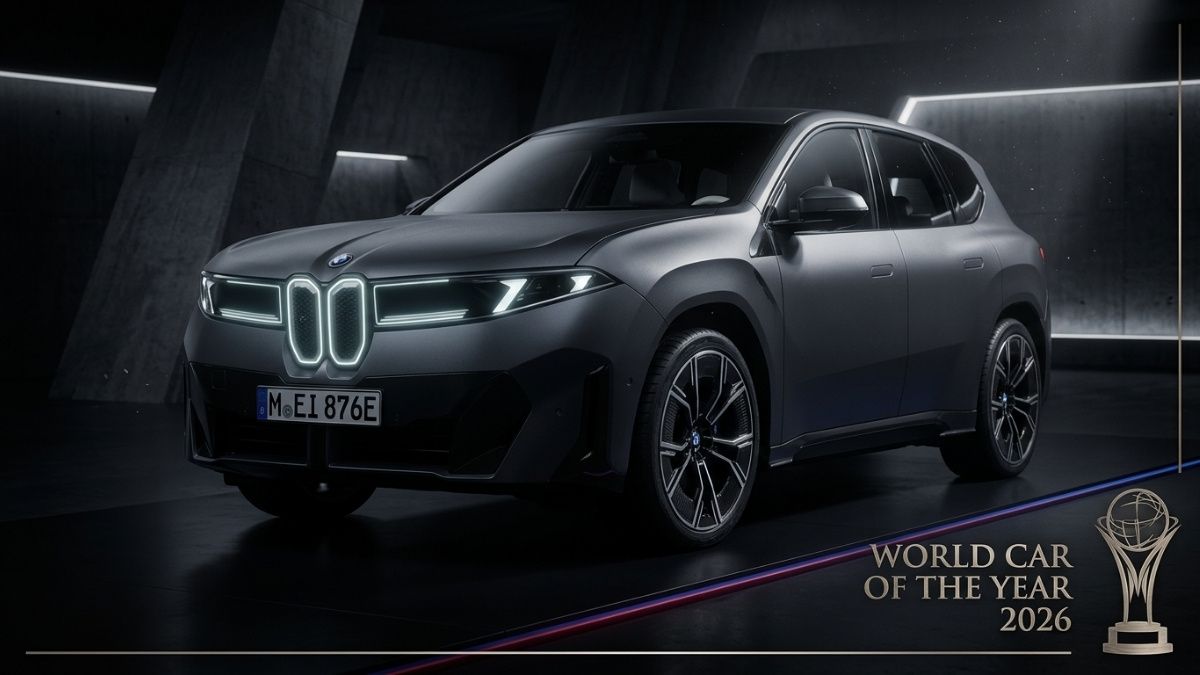
The New York International Auto Show has always been a theater for the dramatic, but the 2026 World Car of the Year (WCOTY) awards delivered a plot twist few saw coming. In a year defined by fierce competition and a cooling global EV market, the all-electric BMW iX3 didn’t just win; it dominated. By securing both the prestigious World Car of the Year title and the World Electric Vehicle of the Year award, BMW has sent a clear message to the industry: the “Ultimate Driving Machine” has successfully translated its soul into the digital, electric age.
This double victory is particularly significant because it represents a “major upset” against a field of competitors that many thought were more “disruptive.” For years, the narrative has been that legacy automakers were struggling to keep pace with EV-first startups and aggressive Chinese manufacturers. The iX3’s win flips that script, suggesting that the refinement, dealer networks, and manufacturing consistency of a century-old brand still hold immense value.
A Field of Giants: The Competitors
To understand the magnitude of this win, one must look at the rivals the iX3 had to overcome. The 2026 finalists included heavy hitters like the Audi Q6 e-tron, the Kia EV9 (a previous darling of the awards circuit), and the highly anticipated Rivian R2.
The Kia EV9, for instance, had set a high bar for three-row electric SUVs, offering a blend of value and technology that seemed unbeatable. Meanwhile, the Audi Q6 e-tron shared the high-performance PPE platform, positioning it as a direct mechanical threat. That the BMW iX3 managed to emerge victorious over such a diverse and capable field suggests that the WCOTY jurors—a panel of 100+ international automotive journalists—saw something in the BMW that went beyond mere specifications. It wasn’t just about the fastest 0-60 time or the largest screen; it was about the cohesive execution of a premium vehicle.
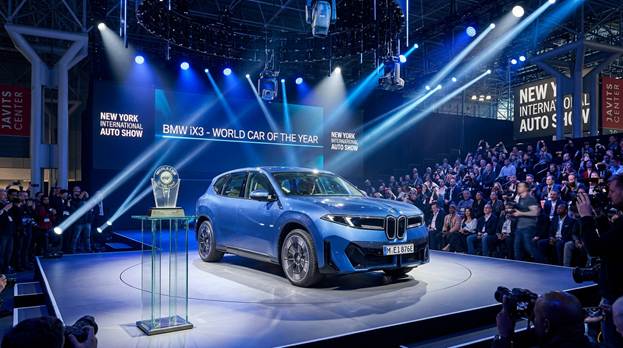
Did BMW Legitimately Earn the Crown?
Whenever a legacy brand wins a major award, skeptics point toward brand heritage or marketing muscle. However, a deep dive into the official BMW Group announcement reveals the technical rigor behind this victory.
BMW’s win is legitimate because they solved the “EV identity crisis.” Many EVs feel like rolling computers—sterile and disconnected. The iX3, built on the “Neue Klasse” principles, retains the BMW driving dynamics that enthusiasts crave while achieving efficiency levels that rival Tesla. BMW moved away from the “compliance car” mindset of earlier electric efforts and treated the iX3 as a flagship product. According to J.D. Power, the shift toward this dedicated architecture allowed for better packaging and range, addressing the primary criticisms of previous models.
The Unique Advantages of the iX3
What specific “X-factors” led to this victory? First is the efficiency and charging architecture. The 2026 iX3 utilizes a 800-volt system that allows for lightning-fast charging, addressing the “range anxiety” that still plagues many potential buyers.
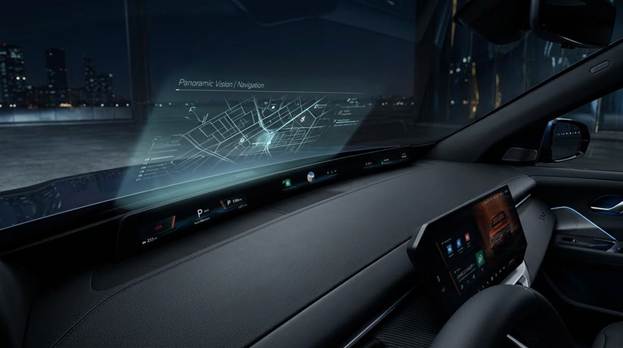
Second is the interior philosophy. BMW’s “Panoramic Vision” head-up display, which projects information across the entire width of the windshield, represents a genuine leap in HMI (Human-Machine Interface) design. It is safer than looking down at a tablet and more immersive than traditional dashboards.
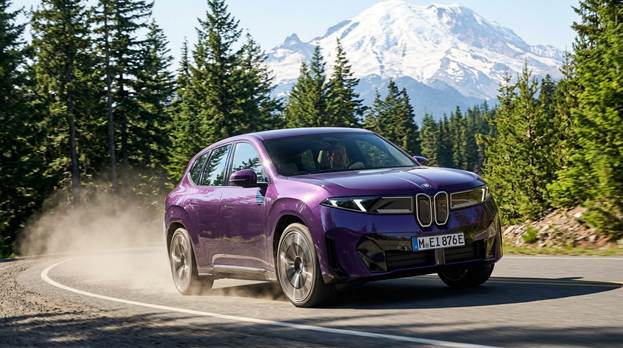
Third, and perhaps most importantly, is the handling. By utilizing a specialized chassis that lowers the center of gravity while maintaining the brand’s signature 50/50 weight distribution, BMW has created an EV that doesn’t feel heavy. It feels agile. As noted by Car and Driver, the integration of software-defined driving dynamics allows the car to mimic the feel of a traditional sport sedan while providing the instant torque of an electric motor.
BMW’s EV Trajectory: From Outlier to Leader
BMW’s journey to this award hasn’t been a straight line. They were an early pioneer with the i3, a car that was arguably too far ahead of its time. Following that, they took a more conservative approach, offering “flexible” platforms that could accommodate gas, hybrid, or electric powertrains.
Today, that gamble seems to be paying off. While other manufacturers are pivoting back to hybrids in a panic, BMW’s “Power of Choice” strategy allowed them to scale EV production as demand dictated. Their current lineup, including the i4, i5, and i7, has been consistently praised for build quality and reliability, areas where some EV-only startups have faltered. According to Reuters, BMW has seen stronger EV sales growth than many of its German rivals, proving that their transition is not just a marketing exercise, but a successful business pivot.
The prognosis for the future is even brighter. The iX3 is just the vanguard of the “Neue Klasse” wave. By 2027, BMW expects these dedicated electric models to make up more than half of their global sales. The win in New York serves as a powerful validation of this roadmap.
Who Should Buy the BMW iX3?
The BMW iX3 is not for the person who wants a “gadget on wheels.” It is for the driver who wants a luxury SUV that happens to be electric.
The Tech-Savvy Professional: If you value seamless integration, the iX3’s software suite – which learns your routines and optimizes routes based on real-time charger availability—is a game-changer. The Former X3 Owner: If you love the size and utility of the traditional X3 but are ready to leave the gas station behind, this is the most natural transition on the market. The Sustainability-Conscious Enthusiast: BMW has made significant strides in using secondary materials and green energy in production. This car allows you to drive a high-performance vehicle without the “carbon guilt.”
They should consider it because it offers a “no-compromise” experience. You get the prestige of the BMW badge, the security of an established service network, and the most advanced electric drivetrain currently available in the premium SUV segment.
Good News in a Time of Flux
The timing of this win is critical. Currently, the EV market is experiencing a “correction.” Early adopters have already bought in, and the mass market is showing signs of hesitation due to infrastructure concerns and high price points.
The iX3 winning World Car of the Year is good news because it proves that desirability is the best antidote to market stagnation. When an EV is simply a better car—not just a better “electric” car—the conversation shifts from “Should I get an EV?” to “I want that car.” This win encourages other manufacturers to focus on driving dynamics and build quality rather than just chasing the largest battery size. It provides a blueprint for how the industry can reignite interest in electrification through excellence rather than mandates.
Wrapping Up
The BMW iX3’s victory as the 2026 World Car of the Year and World Electric Vehicle of the Year is a watershed moment. It marks the point where legacy craftsmanship and future technology finally harmonized. BMW didn’t just win because they built a good electric SUV; they won because they built a vehicle that honors its heritage while embracing a zero-emission future.
For the consumer, the iX3 represents the safest and most exciting “bet” in the current EV landscape. For the industry, it is a reminder that in the race for the future, the “Ultimate Driving Machine” is still the one to beat. Whether you are a tech enthusiast or a die-hard petrolhead, the iX3’s double victory is a signal that the electric era has finally truly arrived, and it looks—and drives—better than we ever imagined.
Disclosure: Images rendered by Artlist.io
Rob Enderle is a technology analyst at Torque News who covers automotive technology and battery developments. You can learn more about Rob on Wikipedia and follow his articles on TechNewsWord, TGDaily, and TechSpective.
Follow us today…