With media reports indicating that SpaceX has filed its IPO paperwork, all eyes are on Elon Musk’s rocket launching and satellite building firm (1).
While the company’s notoriety may largely be due to its space-faring endeavors, it has also recently absorbed another key Musk firm. In February, SpaceX acquired xAI, which is known for the chatbot Grok (2). And last year, the social media platform X, formerly known as Twitter, was acquired by xAI.
Given this series of mergers, it’s not surprising that industry watchers are now asking whether another mega-merger is on the horizon: Will Elon Musk merge Tesla and SpaceX, after SpaceX goes public?
The terms of the SpaceX and xAI merger weren’t disclosed, but media reported the deal was the biggest merger of all time, with the company valued at $1.25 trillion (3).
The deal came after Tesla announced it would invest $2 billion in xAI in January. On an earnings call after the investment was announced, Musk described how xAI could hypothetically act as an “orchestra conductor” organizing robots in a factory (4).
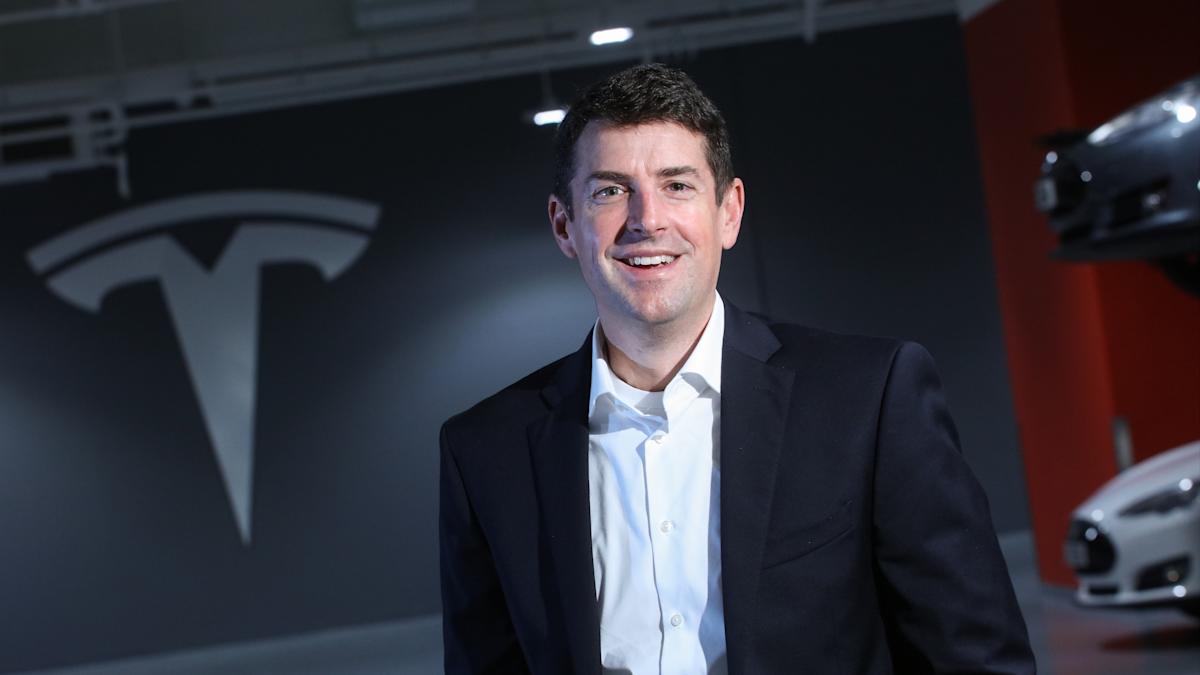
Amid SpaceX’s incoming IPO, a former Tesla president spoke to The Prof G Pod about why he thinks there is a “higher than 50% chance” that Musk would merge Tesla with SpaceX (5).
Jon McNeill, CEO of DVx Ventures, told the podcast that Musk’s organizing principle is “simplicity.”
McNeill gave three reasons why he thinks Tesla may become a part of SpaceX, and qualified that he didn’t have any inside knowledge.
His first reason was that it’s “easier to run one public company than two.” He said that this simplicity would solve some problems, leading to his second reason.
He also said that Tesla is essentially becoming an “autonomy company, in terms of humanoid robots and car robots,” which rely on AI for their operating systems. So combining the firms would “put the AI resources closer to the application at Tesla.”
His third reason for believing the firms will likely merge is that there has been talk of Musk’s “frustration” with his portion of Tesla’s capitalization table — “he wants more” — and given his “significant” ownership of SpaceX, a merger would “solve the problem of who the majority shareholder is at Tesla.”
Read More: 5 essential money moves to make once you’ve saved $50,000
McNeill also commented on the reported valuation target of $1.75 trillion that SpaceX is seeking (6). He said that if you “add up the pieces,” SpaceX has “90% market share in launch, and [let’s] call it 99% market share in satellite internet,” which are monopoly positions. He characterized xAI as “competing in the world of the […] trillion dollar valuations of OpenAI.”
He said that when you put those pieces together, “you’ve got to depend, I think, a lot on retail investors to look past any fundamental financial metrics on what would justify that valuation, which I think is why they’re reserving a third of the IPO for retail.”
“I think they need that retail demand, not only for the valuation, but […] this is going to be the largest capital raise in history with $75 billion. So, they’re going to need everybody from institutions to retail investors coming to the table to fill in that book. That’s a big, big order book.”
When asked whether, given SpaceX’s revenue and “the fact that Tesla’s sales are not that great right now,” the idea of paying “extraordinary” prices for these incoming shares made McNeill uncomfortable, he responded that he’s “never met somebody as good at ‘the promote’ as Elon.”
McNeill said that Musk has “an ability to get people to defy financial logic around these valuations.”
“I’ve learned not to bet against the guy, but he is unique in his ability to get people to look past financial metrics and financial fundamentals.”
Join 250,000+ readers and get Moneywise’s best stories and exclusive interviews first — clear insights curated and delivered weekly. Subscribe now.
We rely only on vetted sources and credible third-party reporting. For details, see our editorial ethics and guidelines.
The Wall Street Journal (1); BBC (2); CNBC (3), (6); Motley Fool (4); YouTube (5)
This article provides information only and should not be construed as advice. It is provided without warranty of any kind.