Craig from Bloomberg noted that Tesla’s (TSLA) future hinges on autonomous vehicles and humanoid robots, which remain concepts while the actual vehicle delivery business just missed expectations with 358,000 units in Q1 2026 versus Wall Street’s 372,000 projection.
Tesla delivered 358,000 vehicles in Q1 2026, a sharp decline from the Q3 2025 record of 497,099 units, while automotive revenues fell 10% for full-year 2025 and net income plunged 64% year-over-year to $840 million despite operating expenses rising 39% due to AI and R&D spending.
Tesla’s $1.35 trillion valuation assumes successful execution on Cybercab production and FSD monetization, but prediction markets price only 13% odds on a California robotaxi launch by June 30, 2026 and 14% odds on Optimus shipping by year-end, leaving the company vulnerable if near-term automotive sales deteriorate further.
A recent study identified one single habit that doubled Americans’ retirement savings and moved retirement from dream, to reality. Read more here.
I’ve been watching Tesla’s delivery numbers pretty much every quarter for years now, and this one landed with a thud.
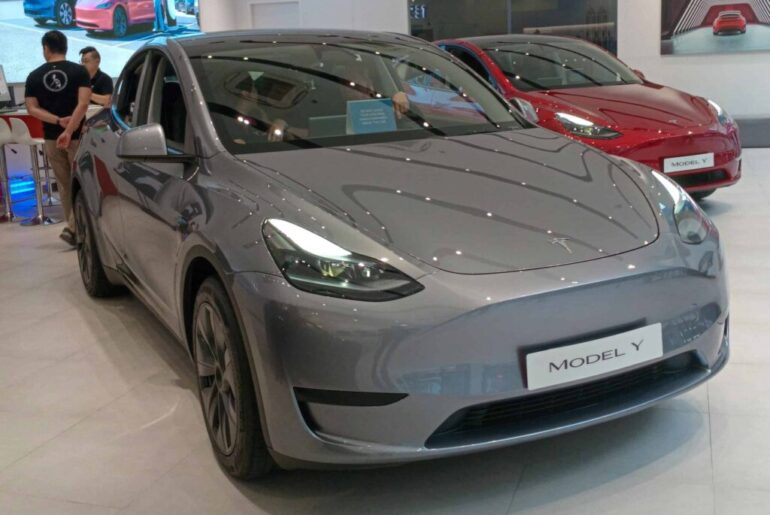
Tesla delivered 358,000 vehicles in Q1 2026, missing Wall Street’s expectation of 372,000, and Bloomberg’s Global Business Editor Craig cut right to the heart of it on air.
Read: Data Shows One Habit Doubles American’s Savings And Boosts Retirement
Most Americans drastically underestimate how much they need to retire and overestimate how prepared they are. But data shows that people with one habit have more than double the savings of those who don’t.
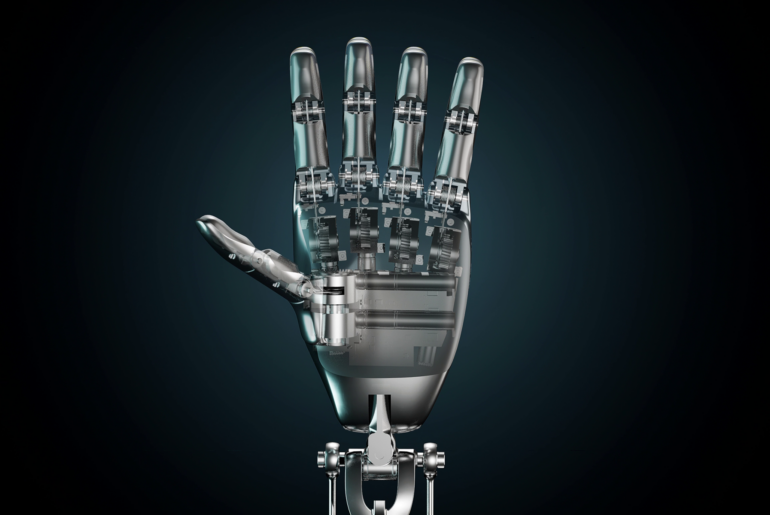
Yeah, this is still what pays the bills, right? Everyone is excited about robo taxis. They’re excited about humanoid robots. But those are still really concepts. And we don’t have a robot actually that Tesla is selling.
Tesla, Inc. (NASDAQ:TSLA) is carrying a valuation that prices in a future of autonomous fleets and humanoid robots. The present looks different.
Expectations had already been trending lower going into the report, making the miss by a fairly substantial margin an even bigger disappointment. At its peak, Tesla has come close to half a million vehicles in a quarter, Q3 2025 hit a record 497,099 units, which makes 358,023 feel like a significant step back.
The automotive business is still the engine here, not a footnote. Automotive sales generated $16.75 billion of Tesla’s $24.90 billion in Q4 2025 revenue. Full-year 2025 told a similar story: automotive revenues declined 10% for the full year, and total revenue came in at $94.83 billion, down 3% year-over-year.
Story Continues
Craig flagged real headwinds beyond just demand softness: U.S. policy uncertainty around EV tax credits, the current White House’s lack of enthusiasm for EVs, and challenges outside the U.S. The prediction markets agree with the skeptical read, only 13% confidence in a California robotaxi launch by June 30, 2026, and just 14% odds on Optimus shipping by year-end.
I don’t think Craig is making a long-term bear case on Tesla. What I read in his framing is something more precise: the AI narrative is real, but it doesn’t insulate the company from the reality of disappointing car sales today. Operating expenses rose 39% year-over-year in Q4 2025, driven by AI and R&D investment, while net income fell 64% year-over-year to $840 million. You’re funding tomorrow’s AI dreams with today’s car margins.
Elon Musk’s own Q4 earnings call shows the tension.
On the robotaxi fleet, he acknowledged “in terms of taxi vehicles carrying paid customers, I think we’re well over 500 at this point between the Bay Area and Austin.” Five hundred vehicles. Against a company valued at $1.35 trillion.
If you believe Tesla executes on Cybercab volume production, scales FSD into a genuine revenue line, and turns 1.1 million FSD active subscriptions into a recurring software business, the current valuation has a path. If the car business keeps slipping while the AI timeline stretches, their valuation becomes very hard to defend. Craig’s reminder is worth keeping close: the bills still come due in the automotive segment, every single quarter.
All that said, history has shown time and time again. You don’t bet against Elon Musk. Even if his timing is wrong by half a decade.
Most Americans drastically underestimate how much they need to retire and overestimate how prepared they are. But data shows that people with one habit have more than double the savings of those who don’t.
And no, it’s got nothing to do with increasing your income, savings, clipping coupons, or even cutting back on your lifestyle. It’s much more straightforward (and powerful) than any of that. Frankly, it’s shocking more people don’t adopt the habit given how easy it is.