Early-stage talks highlight potential Chinese investment in Canada’s auto sector as tariffs reshape North American manufacturing strategy.
On the Dash:
Stellantis’ early-stage talks with Leapmotor highlight how global partnerships are accelerating as automakers adapt to shifting tariffs and EV demand.
Uncertainty around U.S. trade policy and potential restrictions on Chinese-linked vehicles could complicate cross-border sales and long-term planning.
Canadian officials and industry leaders are emphasizing full local production, signaling that supply chain localization and labor considerations will play a critical role in any final agreement.
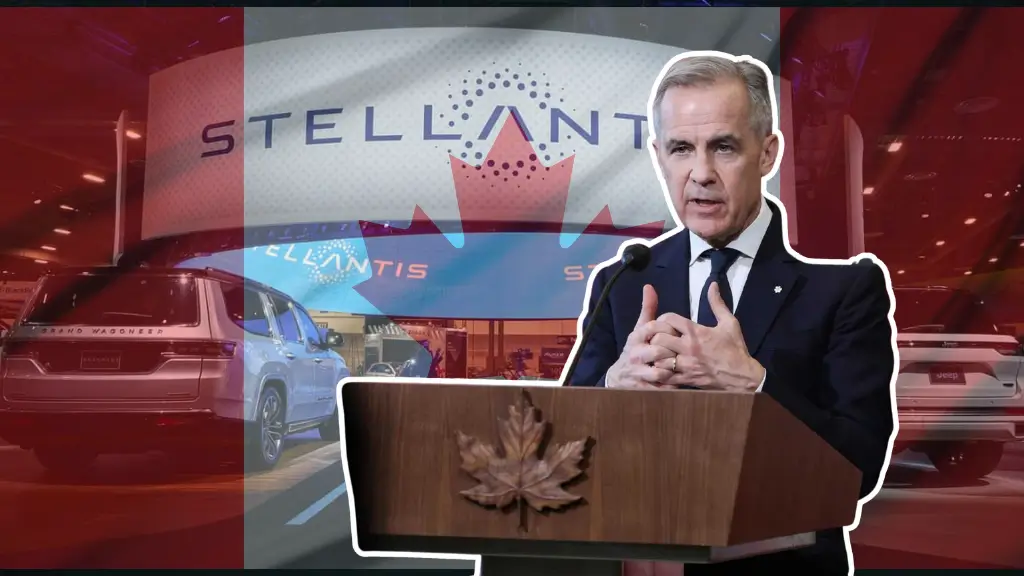
Stellantis is in early discussions with Zhejiang Leapmotor Technology to build EVs in Canada, according to people familiar with the matter, signaling how quickly the global auto industry is shifting following Canada’s move to ease tariffs on Chinese-made EVs.
If finalized, the project would mark the first major Chinese auto investment in Canada since Prime Minister Mark Carney reached a January agreement with President Xi Jinping to reduce tariffs. Canada’s government confirmed it is in talks with Stellantis to produce Chinese EVs at a plant in Ontario and aims to attract joint-venture investment within three years.
The discussions center on Stellantis’ idled Brampton, Ontario, assembly plant, where about 3,000 unionized workers have been laid off for years. The facility had been slated to produce a new Jeep SUV before Stellantis shifted production to a U.S. plant following President Trump’s tariff announcements.
Those tariffs have disrupted the integrated North American auto sector and raised concerns in Washington. Especially since Trump previously warned of 100% tariffs on Canadian goods if the country serves as a channel for Chinese vehicle exports into the U.S.
Notably, Stellantis, which owns a 20% stake in Leapmotor, has expanded its global EV strategy through joint ventures, including planned production in Spain, Brazil, and Malaysia. Some of those operations rely on “knockdown kits,” where vehicles are largely assembled in China before final assembly abroad.
Meanwhile, Canadian officials and industry stakeholders are pushing for full local production. Labor groups and suppliers warn that reliance on imported kits could threaten domestic jobs, with Canada’s auto parts sector supporting 200,000 jobs.
Government officials said any deal would require strong labor standards, secure software, and a localized supply chain. Stellantis said it is still evaluating options for Brampton and remains focused on a long-term, sustainable Canadian footprint.
It remains unclear whether vehicles produced under such a partnership would be permitted to enter the U.S., as regulators move to restrict imports tied to Chinese technology.