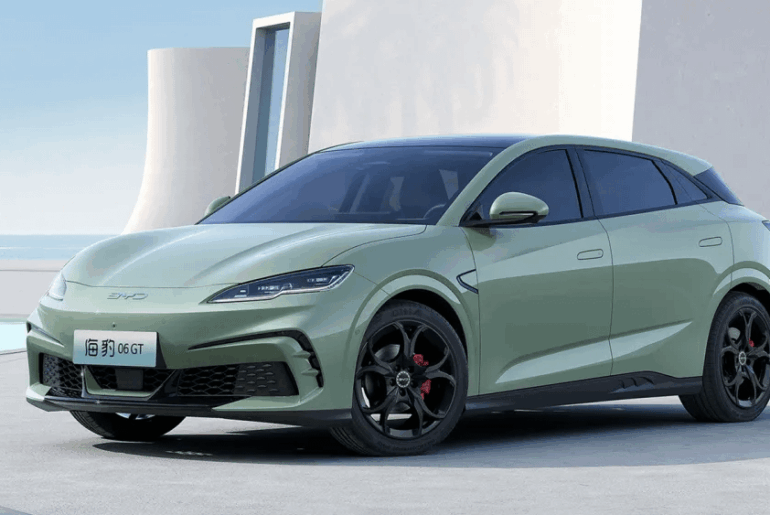
Even as ‘range anxiety’ diminishes with newer models, StadtBus Dormagen (link in German) unveiled a very special idea for a range extender for 1 April 2026: the so-called ‘Passenger Energy Interfaces’ (PEI). These were set to be installed in the five new battery-electric buses operated by the public transport provider as range extenders – using the smartphones of passengers. According to initial calculations, just five passengers with smartphones could extend the range of an electric bus by up to eleven kilometres by contributing power from their devices to the bus batteries.
The energy transfer was designed to happen wirelessly and automatically during the journey via the PEIs, with each device contributing only 8 to 10 percent of its battery capacity. In effect, smartphones would act as power banks for the dynamic charging of e-buses. In a follow-up post, StadtBus Dormagen later thanked everyone who had puzzled over, smiled at, or even offered their ‘battery tribute’.
Ionity robot reparks charging station blockers
Fast-charging provider Ionity has devised a novel solution for electric vehicle drivers who block charging stations after their charging session. While the industry has primarily responded with blocking fees, Ionity introduced QBOT, a newly developed autonomous robotic system designed to optimise traffic flow at charging stations and maximise the availability of its high-power charging (HPC) points. QBOT repositions vehicles that occupy a charging bay but are not actively charging, ensuring smoother operations across all locations. The system also serves as a reminder of proper charging etiquette for EV drivers.
Ionity provided technical details: if a parking space is occupied by a non-charging vehicle for more than three minutes, the system alerts QBOT, which activates automatically. Equipped with 360° LiDAR, twelve cameras, and high-resolution ultrasonic sensors, the robot navigates with centimetre precision to the vehicle. The EV is gently lifted and moved within the premises at a controlled speed of 5 km/h to an assigned parking space. QBOT can also disconnect the HPC charging cable after the charging session, ensuring it poses no obstacle. Finally, the company clarified: “If you do not encounter a QBOT at an IONITY Location today, it is not due to a system error. It is simply the date. We wish you a very happy April 1.”
Mandatory petrol canisters in electric vehicles
Fleet consultant Marc-Oliver Prinzing from Carmacon surprised his LinkedIn followers (link in German) with an emergency regulation allegedly announced by the Federal Ministry of Transport. Electric vehicle drivers would be required to carry a 5-litre petrol canister to assist stranded internal combustion engine vehicles. According to government sources, the proposal was prompted by an increasing number of breakdowns caused by drivers running their tanks empty to save money. Non-compliance would result in fines and potential sanctions for companies. However, the proposal was met with scepticism in the industry. “Observers described it as a profound intervention in existing mobility logistics and a new role for electromobility as a safeguard for the remaining combustion engine fleet,” Prinzing noted, before inviting readers to a free expert workshop on 1 April.
Diesel air fresheners for electric van drivers
This joke is actually a bit older, as Ford had already offered a petrol scent as a perfume when launching the all-electric Mustang Mach-E GT. In 2024, the Finnish Kia importer gave electric vehicle buyers an air freshener with a petrol scent. Now, commercial vehicle manufacturer Farizon has joined the trend with a twist – announcing on the 1 April ‘a specially developed ‘Eau de Diesel’ that instantly transports Farizon’s electric van drivers back to the era of pungent combustion engine vans.
For those missing the characteristic sound of diesel engines, the company also developed a ‘Nostalgia Mode’ for its electric vans. This mode plays a continuous diesel roar through the cockpit speakers, with the pitch adjusted to match acceleration, while integrated haptic seat vibrators replicate the bone-shaking vibrations once transmitted through the vehicle’s structure.
Dating at the charging station
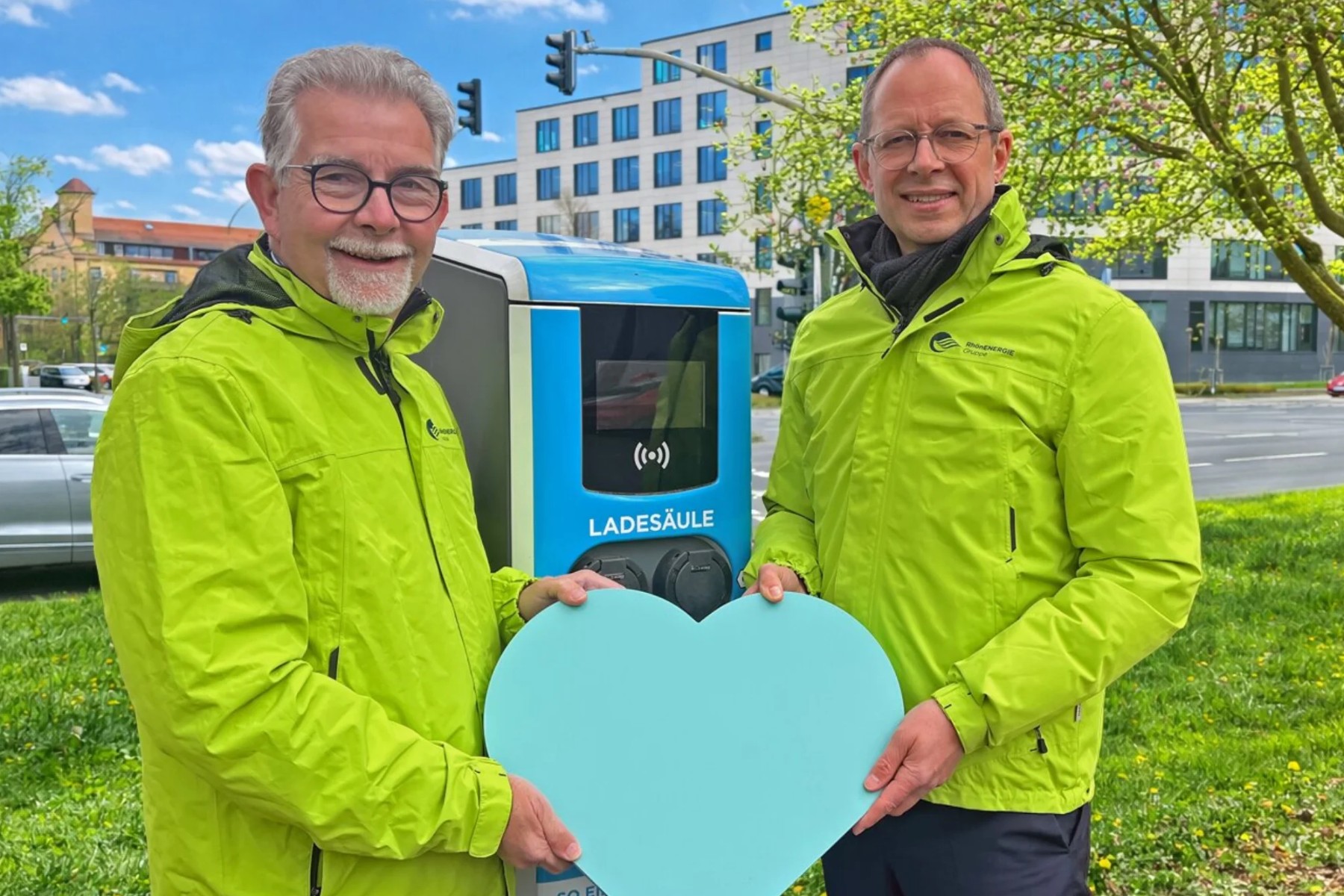
Charging provider RhönEnergie (link in German), however, is not promoting diesel romance but focusing on human connections instead. With its new ‘Herzschlag’ (Heartbeat) app, every charging station was set to become a meeting zone – and perhaps even the place for true love on 1 April. The app’s principle was that, as soon as an EV is plugged into the charging station, the adventure begins. Using sensors, AI-powered mood analysis, and an optional ‘flirt factor’, the charging station identifies potential matches. The system then suggests spontaneous connections—complete with an icebreaker (“You’re charging at 11 kW? So am I… Coincidence?”).
Martin Heun, spokesperson for the RhönEnergie Group’s management board, explained the inspiration behind the innovation: “We asked ourselves: if energy is already flowing, why not between people too? The answer is our new Herzschlag app. Our charging stations now measure not just electricity but also chemistry.” In Heun’s view, charging stations for electric vehicles are the most romantic meeting places since the invention of office coffee machines.
Selected ‘experience charging stations’ were set to enhance the atmosphere further – with integrated ambient lighting, soft background music, and thematic settings ranging from ‘After-Work Chill’ to ‘Romantic Under Current’. Internal tests reportedly yielded promising results: many dates were arranged in a pilot group, and in one case, a couple even purchased a shared wallbox.
 Charging stations with a vending machine
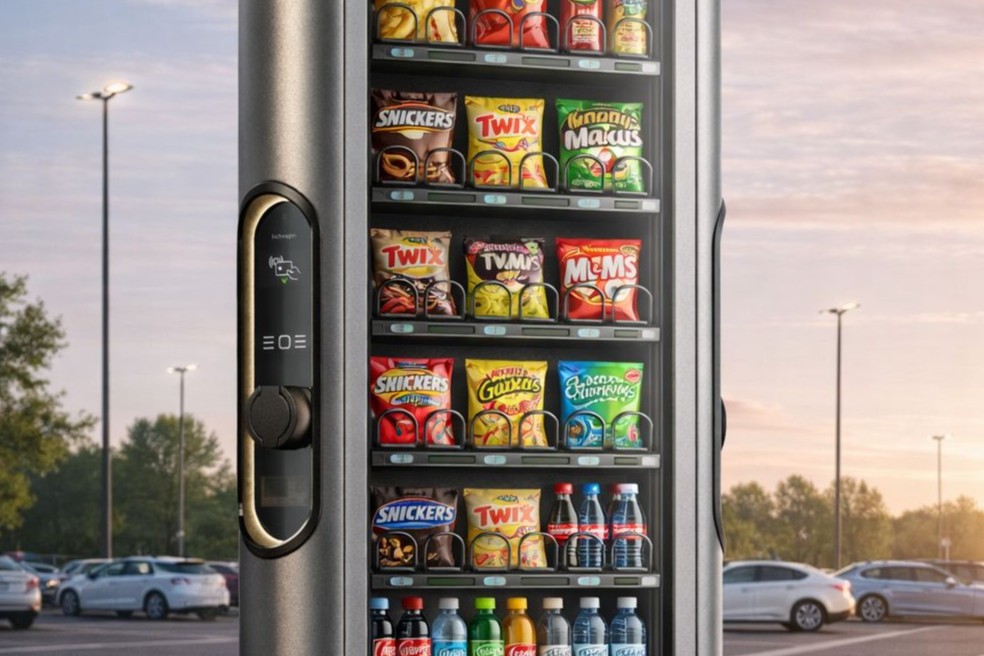
Finally, what belongs together is growing together: or so charging station provider Technagon must have thought when observing the trend of snack vending machines at charging parks. Technagon introduced the TE SNACK 8, which allows not only EVs to ‘recharge’ but also their passengers. Or, as the company put it: “The first charging solution that provides energy for both people and vehicles.” Bon appétit and see you next 1 April!