Autoblog and Yahoo may earn commission from links in this article.
Twenty-six years ago, the Toyota Prius came to the US with two simple missions: to be affordable and to be efficient. The Honda Insight was first, and it was less expensive and had a whacky design language for the time, but it was less practical—it only had two doors, and no room for the kids. The Prius, however, did. It was slow to take off, but once it did, people had a hard time looking back. It wasn’t the sexiest car on the road, but it was the most efficient. And people were very, very glad to have them once the gas crisis hit.
Kristen Brown (Kristen Brown)
Fast forward to 2026, and I get the sense that Prius owners of this decade probably feel the same as those from 2000: exceptionally grateful. The XSE Nightshade PHEV I drove was rated at 48 mpg, and the HEV version is rated at 52 mpg. The base model can get up to 57 mpg. There’s nothing else on the road that gets that good of mileage for the price. The Prius starts at $28,550 for the front-wheel-drive HEV, and the priciest model is the XSE Premium PHEV, starting at $40,470. My tester, the model below, had a sticker price of $41,350 due to a few add-ons, such as the larger screen ($617), a fixed glass roof ($1,000), and floor mats ($319). After driving it around town for a week, here’s why I think that price is absolutely more than fair.
Related: Road Ethos Launches: The New Automotive Lifestyle Site You Should Read
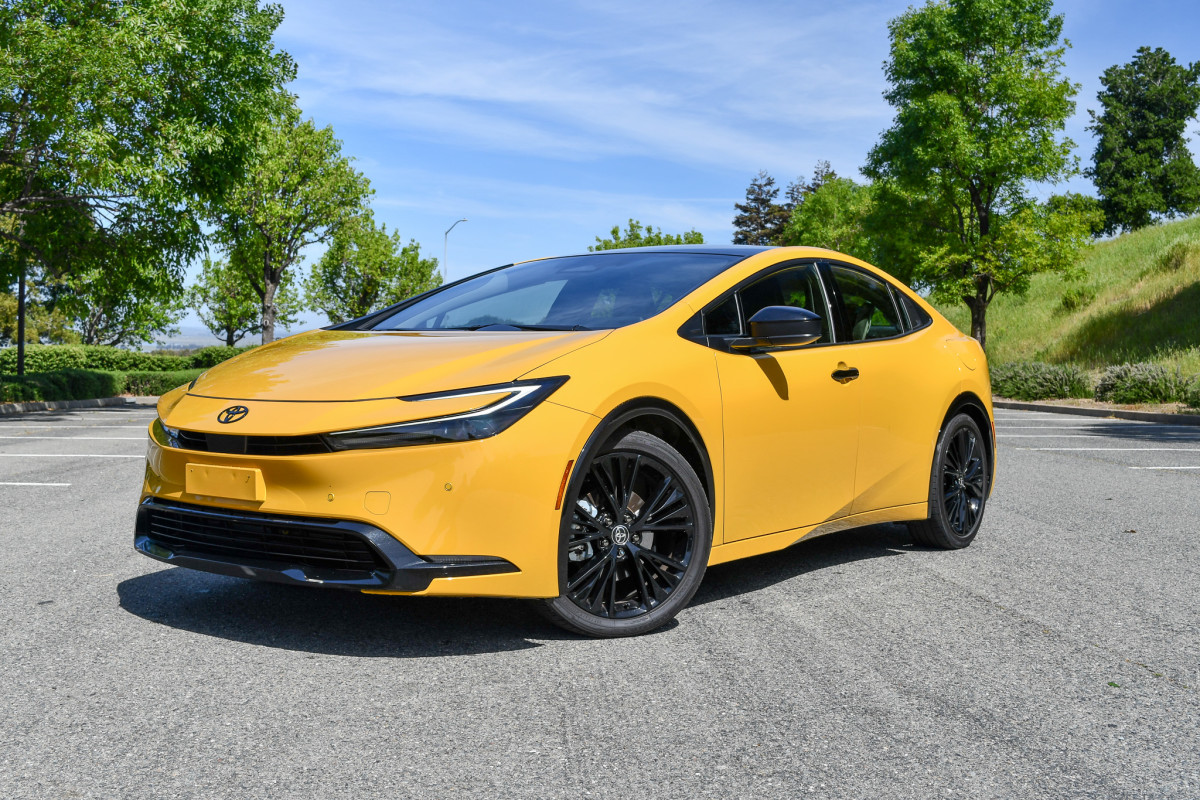
The refresh helps it look more expensive than it is—especially in yellow
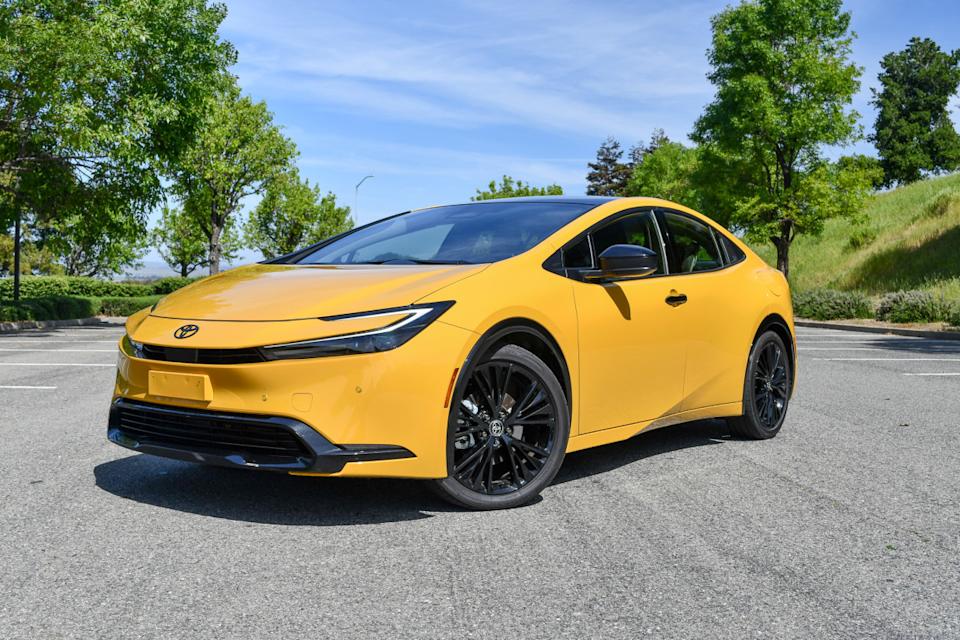
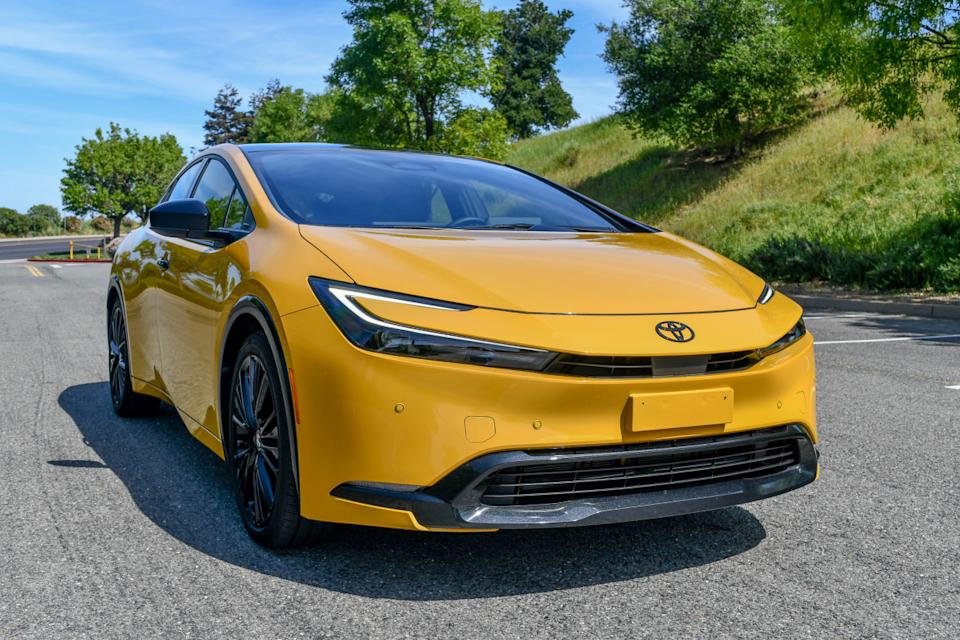
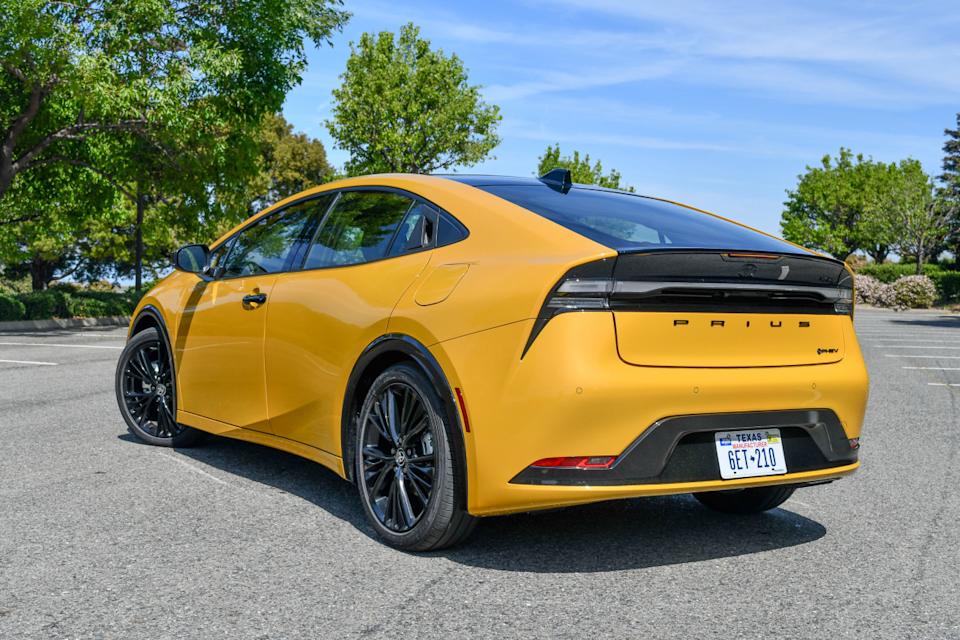
I’ve said this before, but the Prius was never known for being handsome. Anyone who’s ever bought a Prius has done so for the mileage, not to match their aesthetic. This generation, though, is arguably the most attractive yet, with the refreshed front fascia, the inclusion of Toyota’s hammerhead headlight design, sharp black exterior accents on the door handles, side mirrors, and wheel well cladding with black badging, giving it a sleek and modern stealth vibe that, somehow, works perfectly with the Prius. Finally, the Prius has personality and style attached to the moniker.
Kristen Brown (Kristen Brown)
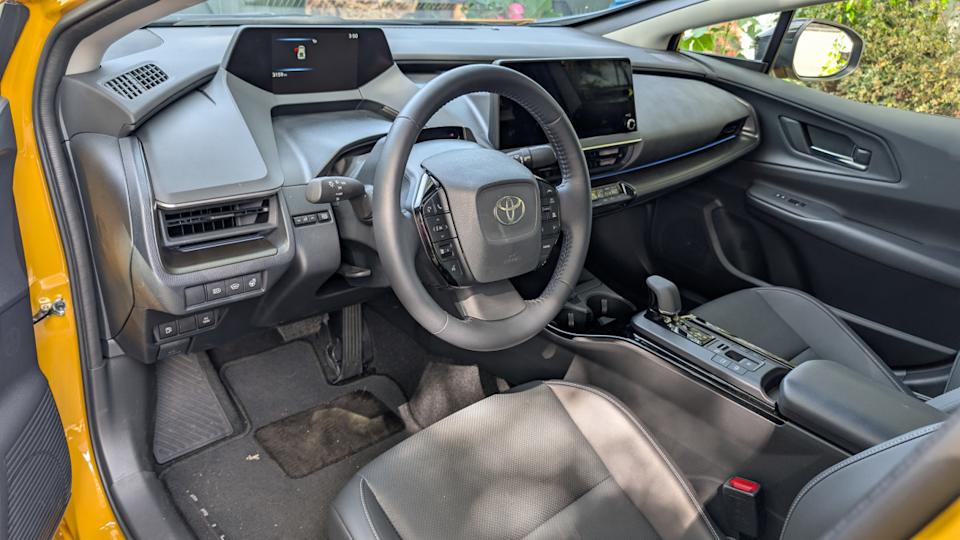
The interior helps reinvent the Prius, too. It still suffers from the drabness I associate with many Toyotas’ interiors (save for the 4Runner and Tacoma), but it’s so much better than previous generations. I have a personal beef with whoever decided to put the driver’s information screen so far behind and above the steering wheel, because it made it hard to see and adjust the steering wheel in a way that didn’t block a portion of the screen, and I wasn’t a fan of how far the dashboard came away from the firewall, or how it was impossible to see the hood (making you reliant on parking assist tech).
Kristen Brown (Kristen Brown)
But I adored the faux carbon fibre that came with the Nightshade model, and the subtle, almost unnoticeable LED strips under the A/C vents and just above the glovebox. At night, it adds so much to the ambiance and livens up the otherwise pretty bland interior by quite a bit. The larger, more vibrant touchscreen helped make the Prius feel posh and tech-forward, and I liked the wireless charger being a vertical slot you slide your phone into a lot more than I thought I would. Especially since you can turn the charging on or off. The fixed glass sunroof added a lot of curb appeal, too, since it matched well with the black-on-yellow look. If you want a Prius to be cool, I feel like it has to be yellow.
It’s meant for commuting, but the family can’t fit—just barely
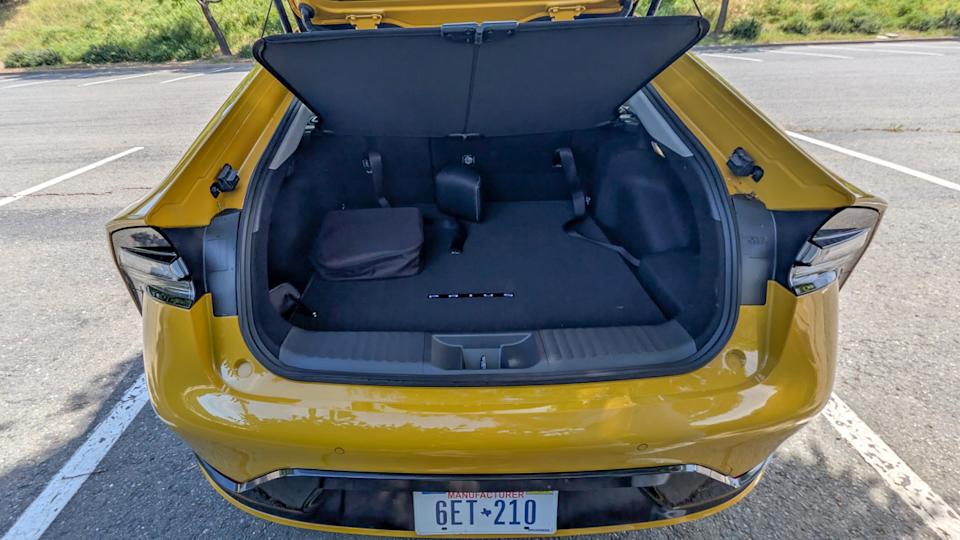
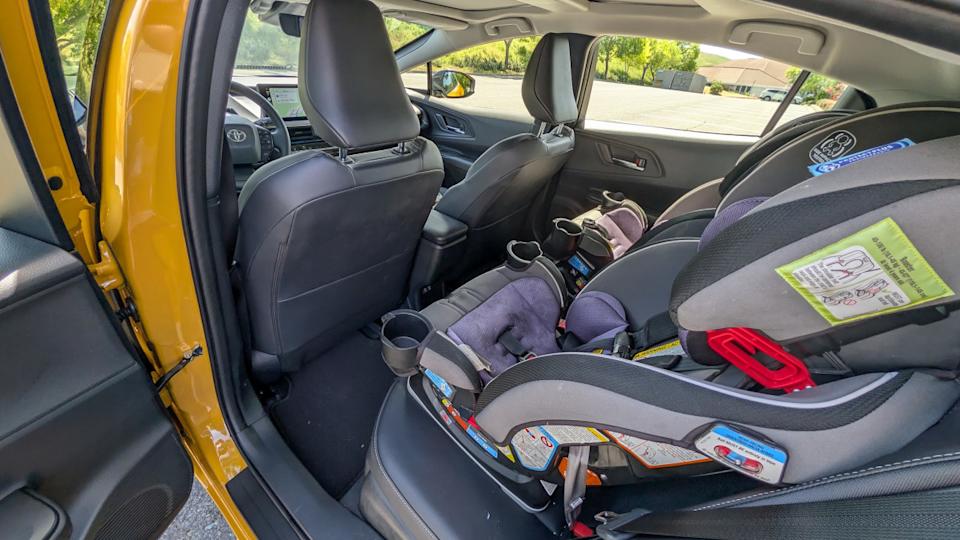
The Prius is practical, sure, but I’d never recommend replacing your mid- or full-size SUV with one. But, to be fair, I tested the Prius with my two car seat-bound toddlers. Both are front-facing, so they don’t take up as much space as rear-facing seats would—but the real estate, which is decent for adults and older kids, was noticeably eaten up. The trunk space is reasonable, too, but it’s worth noting that while there’s a good amount of floor space, there is a serious lack of vertical space because of the sloped rear hatch. So, it would work well for grocery hauls, golf bags, maybe a small suitcase or two, but I can’t see a double stroller fitting back there once you try to shut the door.
Kristen Brown (Kristen Brown)
Instead, I see it being perfect for the other half of a couple who has to commute five days a week. Since you wouldn’t need the rear seats during the week, they could be used to hold a gym bag, a lunch bag, a purse, or to hang your blazer on while you’re stuck in traffic listening to your podcast. And then the trunk could be where you keep the gym bag during work hours. On the weekend, when you and the family go to the beach, you can put the kids in there. But I wouldn’t say it’s fit for full-time kid-hauling.
Kristen Brown (Kristen Brown)
Especially since the rear seats lack kid-friendly features such as dedicated air vents or sun shades. Sun shades, though, can be bought aftermarket for pretty cheap, to be fair. The lack of air vents back there just reinforces my theory that Toyota knows people aren’t buying it to haul the kids.
Related: I Hate Priuses, but the 2026 Prius Plug-In Changed My Mind. Here are Five Reasons Why.
The mileage, undoubtedly, is where the Prius PHEV truly shines
“Prius” is synonymous with “excellent mileage.” By now, everyone knows that. It was literally engineered and designed to be the best. And, shocker, almost thirty years later, it’s still the best. Nothing has come close, except for maybe the hybrid Camry, which can get up to 46 mpg. During my time with it, after my PHEV battery ran dry, which gave me a 44-mile headstart, I averaged about 45.3 mpg around town with short bouts on the highway. I was very, very impressed. I’d drive over 250 miles within about five days, and I had barely used half a tank of gas. Instead of dreading the amount of gas I’d be burning going to the store because I forgot an ingredient at the store, I didn’t sweat it at all. I’m not exaggerating one bit when I say I’ve uttered the words, “It’s okay, I’ll go—I’ve got the Prius this week.”
Kristen Brown (Kristen Brown)
And in a place like the San Francisco Bay Area, where the average cost of regular-grade gas is over $6, that makes a humongous difference in how you look at driving. Being able to go further for a lot longer, for a lot less per month, helps take a lot of weight off your shoulders. Especially if you have a long commute you do during the week.
Final thoughts: The Prius is worth its weight in gold
Go ahead, name another hybrid under $45,000 that gets over 45, sometimes up to 57 mpg, depending on the configuration. I’ll wait. There are many efficient hybrids out there today, but none have mastered efficiency like the Toyota Prius. And with this generation’s updated exterior and interior design, it’s also a handsome hybrid. In summary, the Toyota Prius is efficient, affordable, and attractive. What else could you want from it? Even if it was $45,000, I’d say it was worth the money. But the fact that it isn’t $45,000 makes it a very, very valuable asset.
This story was originally published by Autoblog on Apr 1, 2026, where it first appeared in the Reviews section. Add Autoblog as a Preferred Source by clicking here.