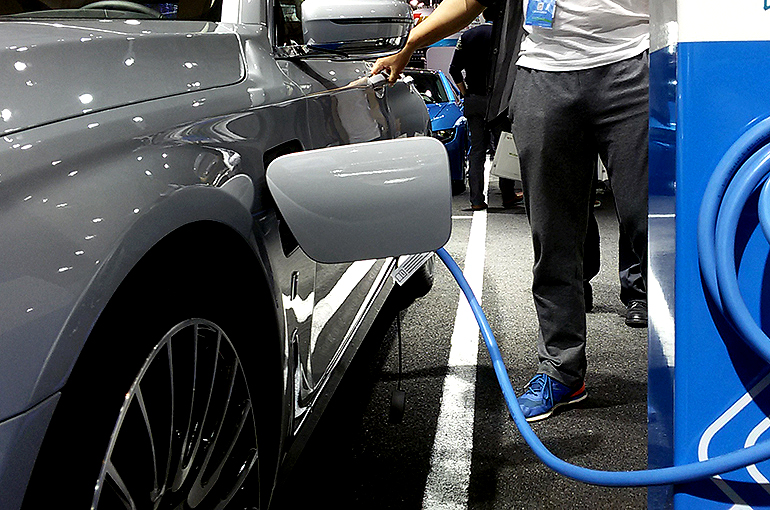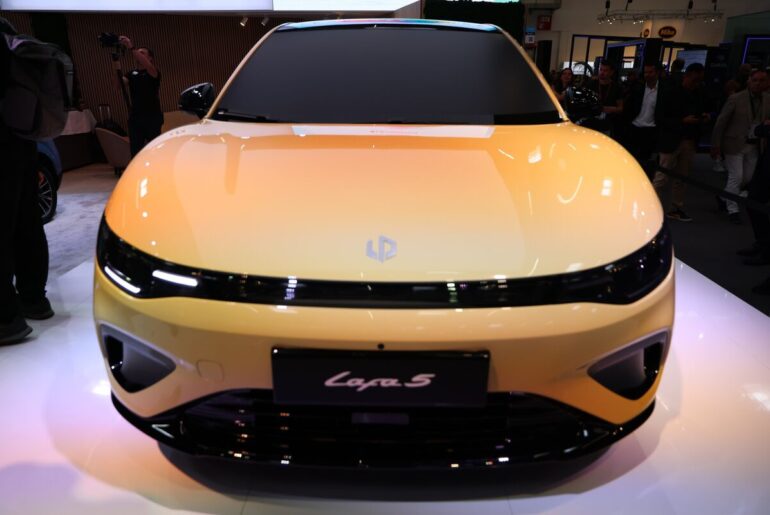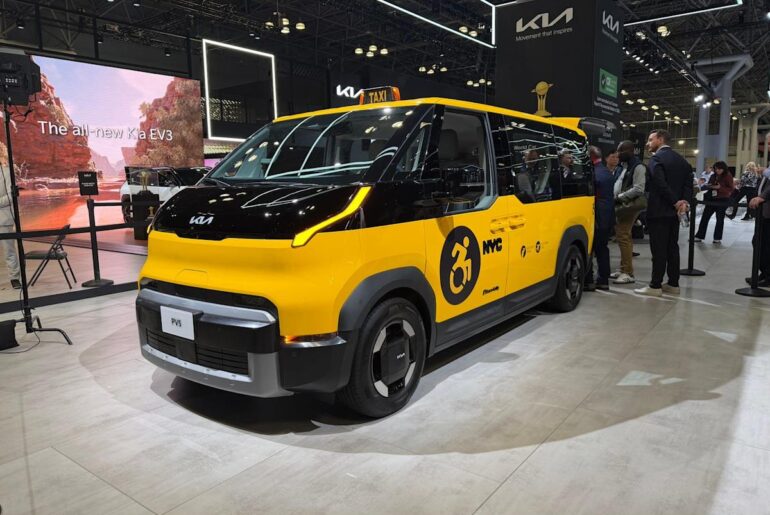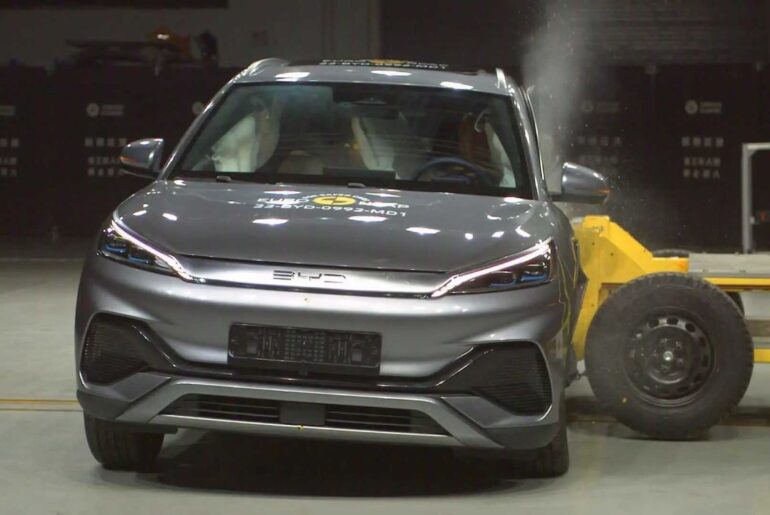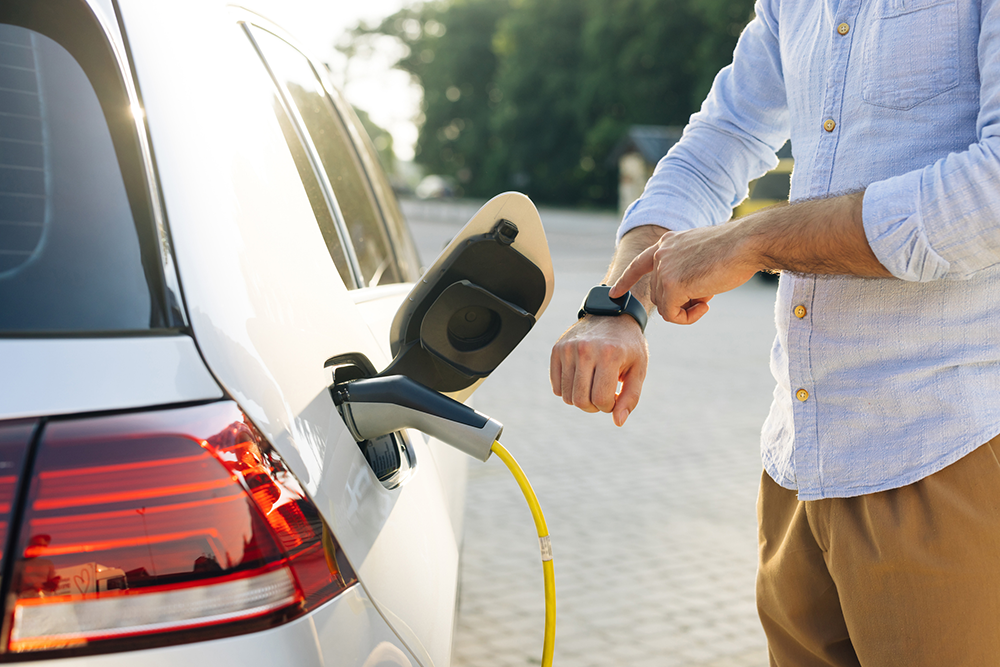
There’s a distinctive glow of virtue that emanates from people recharging their electric cars in public places. I call it the Light of the Charge Brigade. In the run-up to Easter, I spent two hours observing the phenomenon at Fleet Services on the M3.
It was mostly men doing the charging. They’ve cracked the EV way of life, and are very pleased with themselves. A sparklingly fulfilled man called Paul was driving from Colchester to Seaton in Devon in his Skoda Enyaq with a carload of friends. He’d planned this stop for a first charge and Pret elevenses. Later he was planning to stop at Montacute House in Somerset for a late lunch and a second charge on one of the National Trust’s chargers. The reason for the second charge was he knew it would be tricky to find a charger over the busy weekend.
Here Paul was, executing his carefully laid plan. It did mean the journey was going to take a whole day
‘You must plan your journey,’ all EV owners advise. And here Paul was, executing his carefully laid plan. It did mean the journey was going to take a whole day and would involve two expensive restaurant-type experiences. But he and his passengers were in their mid-sixties and looked quite well-off.
They’ll need to be well-off, if this week’s warning from EV companies comes true: that, thanks to 38,000 per cent increases in their own energy bills, they’re going to pass on massive price rises to customers.
A young family in a rented Tesla (£300 a month) were on their way from Southend to Cornwall. They had stopped at one of the Tesla chargers, those stylish red-and-white oblongs with a hole in the middle like a Henry Moore sculpture. The father was tucking into a fajita wrap on the verge, while the children watched a film on the dashboard screen. This charge would take half an hour – so quick! – and would cost £14.
One couple had been told that their Peugeot E2008, now on 56 per cent, was going to take two and a half hours to reach full charge. They went into the service station dining area and bedded down with lattes.
Another Tesla driver was comatose in the driving seat, happy to be doing nothing for 50 minutes, because this was a company car and the company was paying for his time. Less happy was the husband at the Applegreen charging station who couldn’t get internet connection. His wife sat scowling in the passenger seat, clearly only half-resigned to this new futuristic existence.
Then it started to rain. The EV charging areas don’t have roofs, so there’s no way your phone won’t get wet as you hold it over the QR code, trying to get your app to recognise the machine and your car. But still the men seemed to be enjoying themselves. The glow of ecological virtue trumped any inconvenience. Proud to be early adopters, they know EVs are the future. They relish the good things about their cars: their cleanness, their cheapness when charged at home overnight, the simplicity of their engines, and the way they can accelerate from 0 to 30mph in one second.
Luckily, it wasn’t a Bank Holiday, as it will be this Easter weekend, because on those days, service station carparks are swamped. There’s usually no official queuing system for charging. People push in when they see a space; the wait for anyone behind them is then long. Fights break out. And pity anyone whose phone has died, because you need a lot of apps to drive an electric car. There are at least nine worth having if you want to be able to charge wherever you end up: Ionity, Applegreen, Gridserve, Tesla, BP Pulse, Evolt Network, Shell, Believ and Pod Point. It is likely that more of us may soon have to grapple with these.
Life isn’t necessarily easier once home. An EV is all very well if you have off-street parking. But the nine million or so of us who live in terraced houses or flats, without our own ‘driveway’ in which to install a charging point, will find the EVs exhausting. A neighbour in London who has one tells me she fixates on the lamppost on her street because it has a Shell charger on it. She is waiting to pounce when the space next to it becomes free. It might take days. The lamppost charger gives her car a paltry eight miles of charge for every hour of charging. To charge a car from a 13-amp socket takes 43 hours.
Treasure, while you can, the privilege of taking two minutes to fill up with petrol: no need for an app, no need to stop for coffee. Most of the EV owners I talk to tell me that they enjoy stopping for a hot drink, and ‘a rest on a journey is no bad thing’, and by the way, Teals services near Yeovil is particularly good for coffee, EV charging and organic sausage rolls.
But not everyone is thrilled with their choice. One man I spoke to, an architect who commutes between London and Devon, was less than delighted with his electric Citroën Berlingo, when it comes to both the range and the charging (which already costs about £50 a go). ‘We were told the car has a range of 200 miles,’ he said, ‘but in the small print it says this may vary due to a number of factors. The truth is, you should not buy one of these things if you regularly go for a journey of over 160 miles. If you drive on a motorway, it uses up more charge. In the winter, we switch off the heating and wear driving gloves and blankets to save battery.’ He felt he was mis-sold. But a ‘warranty issue’ will only be accepted if the car’s range is less than 70 per cent of what it claims to be.
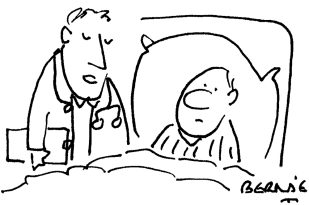
‘Let me put it this way – if you have any Premium Bonds, draw them out now.’
He has installed a home charging point, which doesn’t work. ‘The green light comes on but it doesn’t charge.’ And he has Zapmap, of course. That’s the app without which an EV driver cannot function. It tells you your nearest charging point. Or at least it’s supposed to. But, late for a family funeral in Lowestoft recently, with his charge very low, he was directed by Zapmap to the remote carpark of the Birds Eye factory, which turned out to be ‘for staff only’, and closed.
This is our future: spending hours of our lives in carparks on the edges of towns. If the high water-mark of speed for human beings was Concorde, the low water-mark is this new era of 20mph speed limits, battery-sapping traffic jams on boundary roads of LTNs, driving slowly on motorways for maximum battery life, and having to stop for at least two meals, just as people did in the age of the stage coach. The English have always loved describing their journeys. Naming the obscure charging stations you’ve stopped at brings a whole new angle to this art.

Event
Coffee House Shots Live: The local elections breakfast briefing