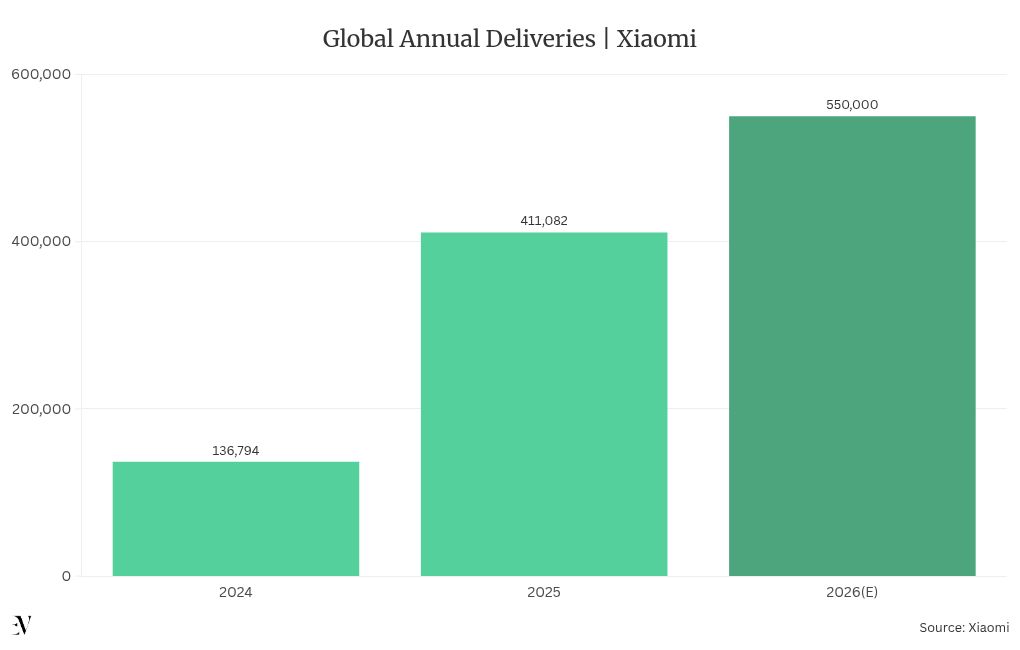
Xiaomi has recruited two senior Tesla veterans in recent weeks as the Chinese tech giant prepares to nearly triple its monthly production rate to meet an ambitious 2026 delivery target of 550,000 vehicles.
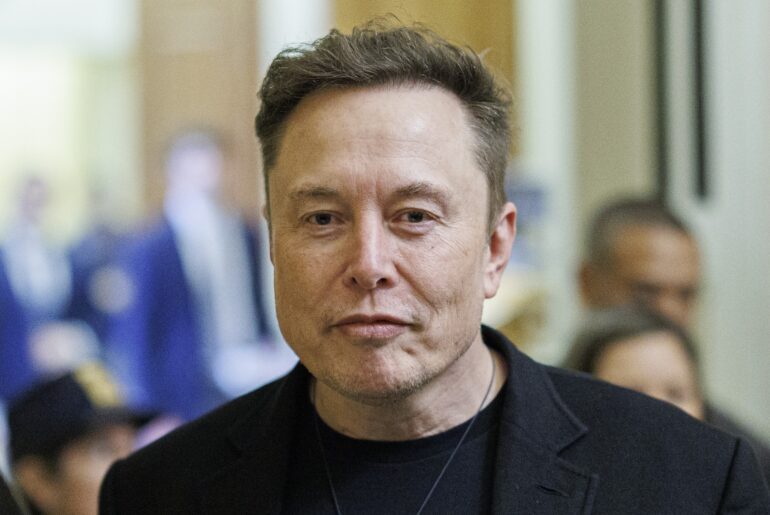
Kong Yanshuang, former General Manager of Tesla China, joined the tech giant in early March to take charge of automobile sales, replacing Li Xiaorui as head of the automotive division’s retail operations — according to local media outlet Jiemian News.
Separately, Song Gang, who served as VP of Manufacturing at Tesla‘s Shanghai Gigafactory and led the construction and capacity ramp-up of the facility, is also set to join Xiaomi.
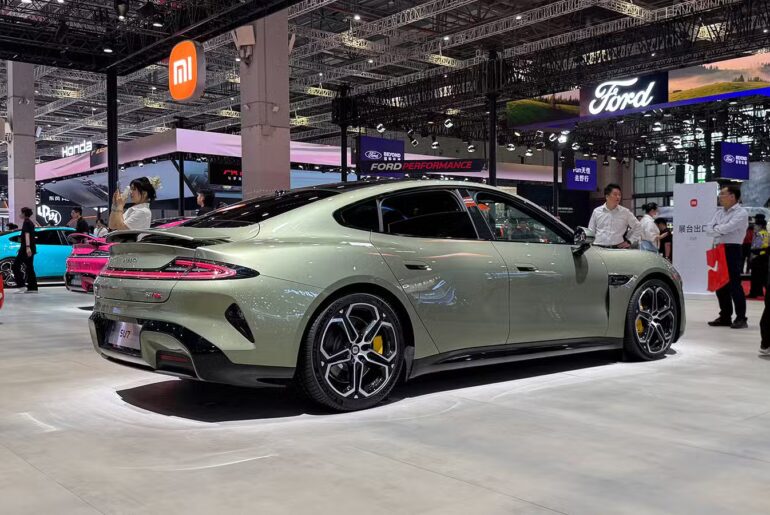
Xiaomi is preparing to debut multiple new models this year, including an executive version of its sedan — the SU7L, featuring a longer wheelbase — and two extended-range electric SUVs, the YU8 and YU9, with five- and seven-seat configurations respectively.
Kong Yanshuang
Kong served as General Manager of Tesla’s South China region before being promoted to China Regional General Manager, where she oversaw the expansion of service outlets across major cities including Guangzhou and Shenzhen as well as into lower-tier markets.
Between 2022 and 2023, she was the public-facing executive representing Tesla China in media events, discussing performance milestones at the Shanghai Gigafactory and new model introductions.
In May 2024, she was reassigned to lead sales in the Shanghai region during a broader management reshuffle at Tesla.
At Xiaomi, Kong has been placed in the company’s general staff — a core department that assists CEO Lei Jun in formulating and overseeing group strategy.
A person close to Xiaomi told Jiemian that it is “extremely rare for new employees to directly join the general staff,” reflecting both the value placed on the hire and the company’s urgency to improve its retail capabilities.
Song Gang
Song spent over six years at Tesla, joining in 2018 after stints at General Motors and Ford. He is widely credited with leading the buildout of the Shanghai Gigafactory, which became Tesla’s highest-volume production facility globally.
He departed Tesla on December 18, 2024, and joined Envision Energy five days later as Senior Vice President of Integrated Supply Chain. He is now moving to Xiaomi Auto, according to Blue Whale Technology.
His hire is directly tied to Xiaomi’s production scaling challenge.
The company delivered approximately 79,000 vehicles in the first quarter of 2026, based on the March deliveries announced earlier this Wednesday.
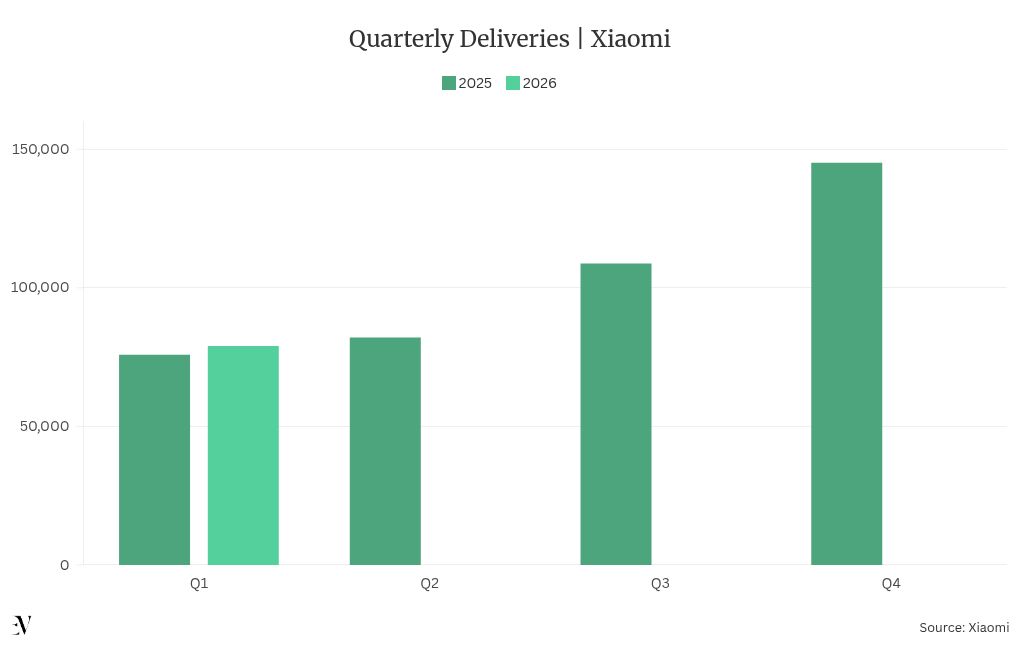
To hit the 550,000 annual target set by Lei Jun, monthly deliveries from April onward must average roughly 52,000 units — nearly 2.6 times the current rate and above the previous monthly peak of 50,000 set in December 2025.
Xiaomi is expanding its factory network to support the ramp. Its Phase I and Phase II plants in Beijing are operating at full capacity with annual output of approximately 300,000 to 330,000 vehicles.
A Phase III facility began operations after the Chinese New Year with designed capacity of 150,000 units per year.
A fourth factory in Wuhan is scheduled to begin production in May, adding another 150,000 units of annual capacity, according to local media.
Xiaomi’s Auto Business
The tech firm entered the EV market in March 2024 with the SU7 sedan and delivered 410,000 vehicles last year, generating 106.1 billion yuan in automotive revenue — recording its first full-year operating profit of 900 million yuan in the segment.
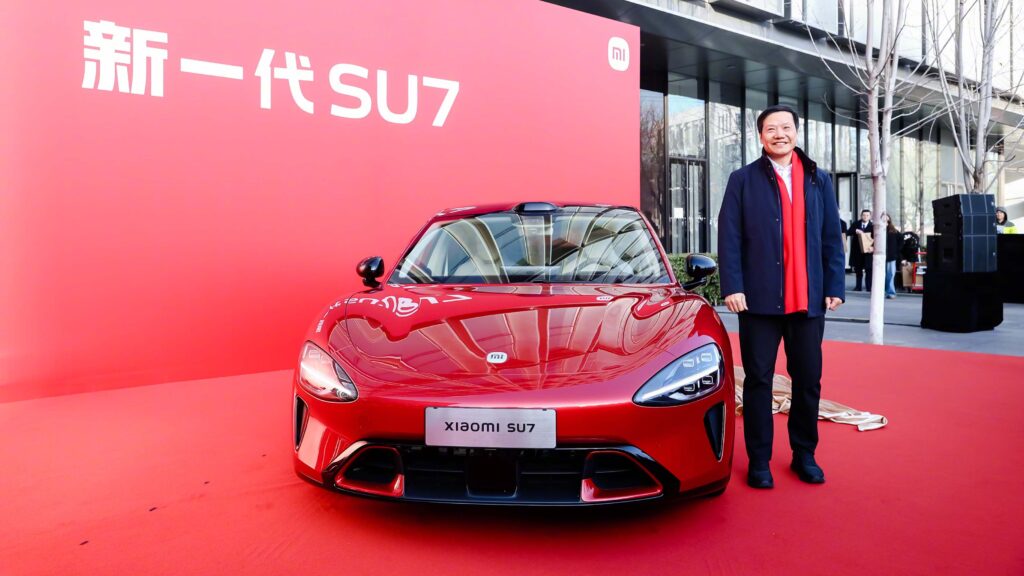
The company launched the second-generation SU7 on March 19, securing 30,000 locked orders within four days.
In March, the brand delivered more than 20,000 units, with the new SU7 accounting for over 7,000.
The first-quarter total of approximately 79,000 vehicles represents 14.3% of the 550,000-unit annual target — leaving a significant ramp required across the remaining nine months.
Management has cautioned that 2026 automotive margins may not exceed 2025 levels, citing the rollback of purchase-tax subsidies and intensifying competition in premium sedan and large SUV segments.
Upcoming Models
Xiaomi’s upcoming extended-range vehicles would mark the brand’s first models with an internal combustion engine, expanding beyond the fully electric powertrain used in the SU7 and YU7.
The seven-seat YU9 is expected to debut in the first half of the year.
Earlier this week, an undisguised Xiaomi YU7 GT was spotted undergoing testing at Germany’s Nürburgring, as the launch of the high-performance variant nears.
The sighting comes as the company prepares for international expansion — with 2027 designated as its “first year of overseas” sales and a new research and development centre already established in Munich.