BEV and PHEV registrations surge as fuel price anxiety reshapes buying behaviour
NZ New Passenger Power Source – March 2025 vs March 2026
New passenger registrations by power source
March 2025 vs March 2026 – market share shift
March 20258,382 registrations
March 202610,063 registrations
BEV
PHEV
Hybrid
Petrol
Diesel
Plug-in share of new passenger market (BEV + PHEV)
BEV
PHEV
Source: NZTA Motor Vehicle Register. EVs & Beyond / Auto Media Group
Plug-in electric vehicles accounted for 33.9 percent of all new passenger registrations in March 2026, a step-change from 10.6 percent in March last year that underscores the extent to which the Iran-driven fuel crisis is accelerating New Zealand’s electrification trajectory.
New vehicle registrations totalled 14,910 units in March, a 25.1 percent increase on the same month last year, with passenger registrations accounting for 10,063 units and the commercial sector contributing 4,847.
Within the passenger market, 2,303 battery electric vehicles and 1,107 plug-in hybrids were registered. BEV registrations alone were up 286 percent year-on-year, while PHEVs rose 273 percent. Combined with non-plug-in hybrids, which added a further 3,223 units at 32.0 percent market share, two out of every three new passenger vehicles registered in March had some form of electrified powertrain.
Pure petrol and diesel vehicles accounted for just 33.7 percent of new passenger registrations, the first time that figure has fallen below the combined plug-in share.
Tesla reclaims the lead, but the pack has changed
Tesla registered 538 new BEVs in March, with the Model Y accounting for 480 of those to become the single highest-selling model in the new passenger market for the month. That represents a near-fourfold increase on the 145 BEVs Tesla registered in March 2025 and arrives amid a global backdrop of brand controversy and falling sales elsewhere.
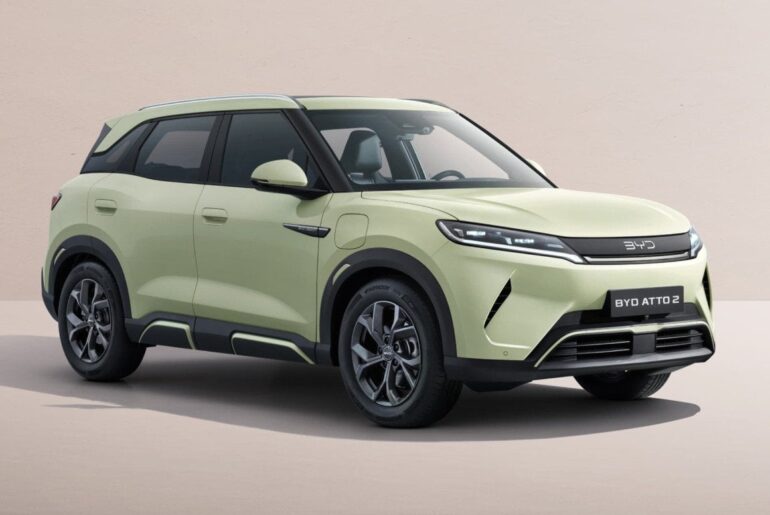
BYD followed with 424 BEV registrations, spread across the Atto 1 (112), Sealion 7 (105), Atto 2 (105) and Atto 3 (98). Country manager Warren Willmot told media during the month that BYD New Zealand was “completely sold out” and had travelled to China to secure additional stock, with wait times stretching to 90 days from the previous seven.
The most striking change in the BEV landscape is the arrival of brands that did not exist in the New Zealand market 12 months ago. Dongfeng registered 336 BEVs in March, making it the third-largest BEV brand in the country off a standing start. The Dongfeng Box, a compact urban EV, accounted for 260 of those registrations. Leapmotor (91 units across the C10 and B10), Zeekr (65, led by the 7X), Omoda (65, all E5), Jaecoo (35, all J5) and GAC (33, all Aion V) are all brands that either had zero or negligible presence in March 2025.
MG continued to perform strongly with 200 BEV registrations, led by the ZS (85) and S5 (71), while Geely contributed 54 units through the EX5. Toyota’s bZ4X recorded its strongest month yet at 59 units.
Among the established premium players, Mini registered 76 BEVs (Aceman 44, Cooper 31), Kia managed 67 (EV3 35, EV5 20) and Polestar had 30. BMW dropped from 57 in March 2025 to 25.
NZ New Passenger BEV Registrations by Make – March 2025 vs March 2026
New passenger BEV registrations by make
March 2025 vs March 2026 – top 16 brands
March 2026
March 2025
Mar ’26 total BEV
2,303
+286%
Source: NZTA Motor Vehicle Register. Passenger BEV = body types hatchback, saloon, station wagon, convertible, sports car. EVs & Beyond / Auto Media Group
PHEV market transforms with new Chinese entrants
The PHEV segment has undergone an equally dramatic transformation. BYD led with 222 registrations, anchored by the Sealion 5 (125 units) and Sealion 6 (63). Mitsubishi placed second with 170, the Eclipse Cross contributing 117 of those.
The expansion of PHEV line-ups from Chinese brands is reshaping the middle of the table. Chery, already established in the New Zealand market, registered 137 PHEVs across its Tiggo 8 (60), Tiggo 7 (47) and Tiggo 9 (30) plug-in variants. Jaecoo, Chery’s companion brand, added 102 units through the J7. GWM’s Haval H6 accounted for 96 of the brand’s 105 PHEV registrations. Geely’s Starray EM-I contributed 49 units in its first full month of sales.
Lexus registered 66 PHEVs, split between the NX (46) and RX (20), while Denza made its market entrance with 34 units across the B5 (21) and B8 (13).
By comparison, in March 2025 the entire PHEV segment consisted of 297 registrations, led by MG’s HS (42), Mitsubishi Outlander (22) and BYD Sealion 6 (30). The segment has nearly quadrupled in 12 months.
Commercial electrification broadens beyond the Shark
In the commercial segment, plug-in vehicles took a combined 10.2 percent of new registrations, up from 6.1 percent a year ago.
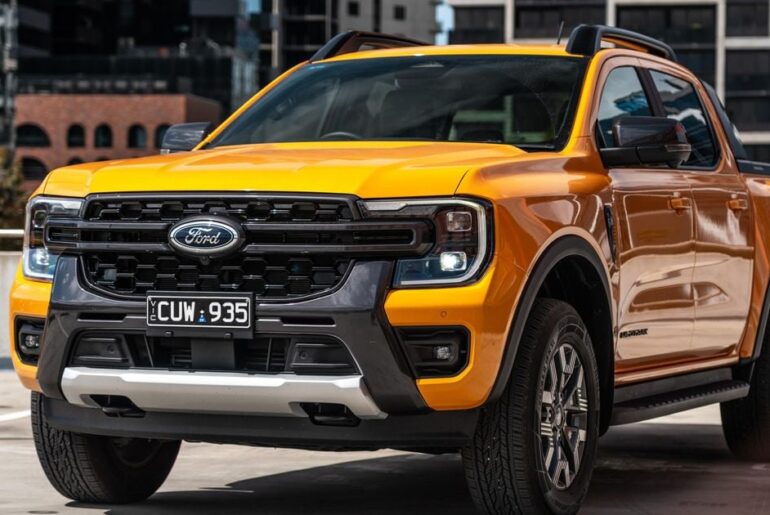
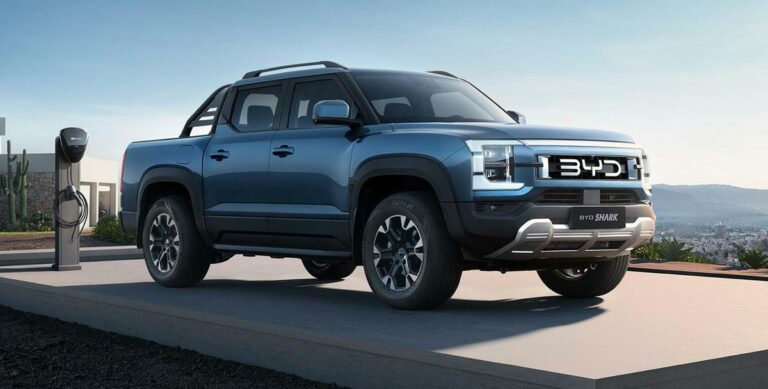
The BYD Shark 6 PHEV remains the dominant electrified commercial vehicle at 220 registrations, up from 167 in March 2025. But the arrival of the Ford Ranger PHEV at 88 units represents a significant development. Ford’s decision to electrify New Zealand’s perennial bestselling vehicle gives fleet buyers an option from a brand many have long relationships with. GWM’s Cannon PHEV added 23 units.
On the BEV side, commercial registrations grew from 45 to 162. CRRC led with 43 registrations across its electric bus range, followed by Geely’s Riddara RD6 electric ute at 42 units and LDV at 39 (eDeliver 3 and eDeliver 9). Volvo registered four FM electric trucks.
Used imports: the Leaf tide swells
Used import BEV registrations surged from 129 in March 2025 to 613, a 375 percent increase. The Nissan Leaf accounted for 448 of those, up from 103 a year ago, consistent with its longstanding dominance of the used import EV channel. Tesla Model 3 used imports jumped from 12 to 55, while BYD Atto 3 (26 units) and Peugeot e-208 and e-2008 models (a combined 18 units) added further diversity to the used import mix.
Used import PHEVs rose from 58 to 110, with Mitsubishi Outlander PHEVs accounting for the majority at 74 units.
Power source shift: the new normal
Looking at the overall new passenger power source mix, the shift from March 2025 to March 2026 is stark. BEVs moved from 7.1 percent to 22.9 percent of registrations. PHEVs went from 3.5 percent to 11.0 percent. Non-plug-in hybrids held relatively steady at 32.0 percent, down slightly from 35.7 percent.
Pure petrol fell from 44.3 percent to 28.1 percent. Diesel dropped from 6.4 percent to 5.6 percent.
In the commercial market, diesel remains dominant at 70.3 percent but is down from 80.0 percent a year earlier, with non-plug-in hybrids (primarily Toyota HiLux and HiAce hybrid variants) taking 19.3 percent.
Whether this pace of change is sustained will depend on how long fuel prices remain elevated and whether supply can keep pace with demand. BYD’s stock pressures suggest the latter is already a constraint. But the direction is unmistakable: March 2026 was the month plug-in vehicles moved from the margins to the mainstream of the New Zealand new vehicle market.