If you haven’t heard of an Aion, you may have heard of GAC. If you haven’t heard of GAC, you’ll probably be somewhat familiar with them in the coming months and years, with the Chinese automative giant pledging to open 100 dealerships nationwide in Australia within the next 5 years.
In the meantime, GAC have launched the Aion UT. An electric hatchback that arrives on Australian shores following the launch of the mid-sized electric SUV the Aion V.
The timing of UT’s arrival could hardly be better, with very few options in the Australian electric hatchback segment, particularly when compared to the vast options available in the mid-size SUV class.
So far, we’ve got the likes of the BYD Atto 1, Dolphin, MG4, GWM Ora, and Hyundai Inster competing in the small electric car segment, so there is definitely room for more. The Driven was on hand at the media lunch of the Aion UT to see what it has to offer.
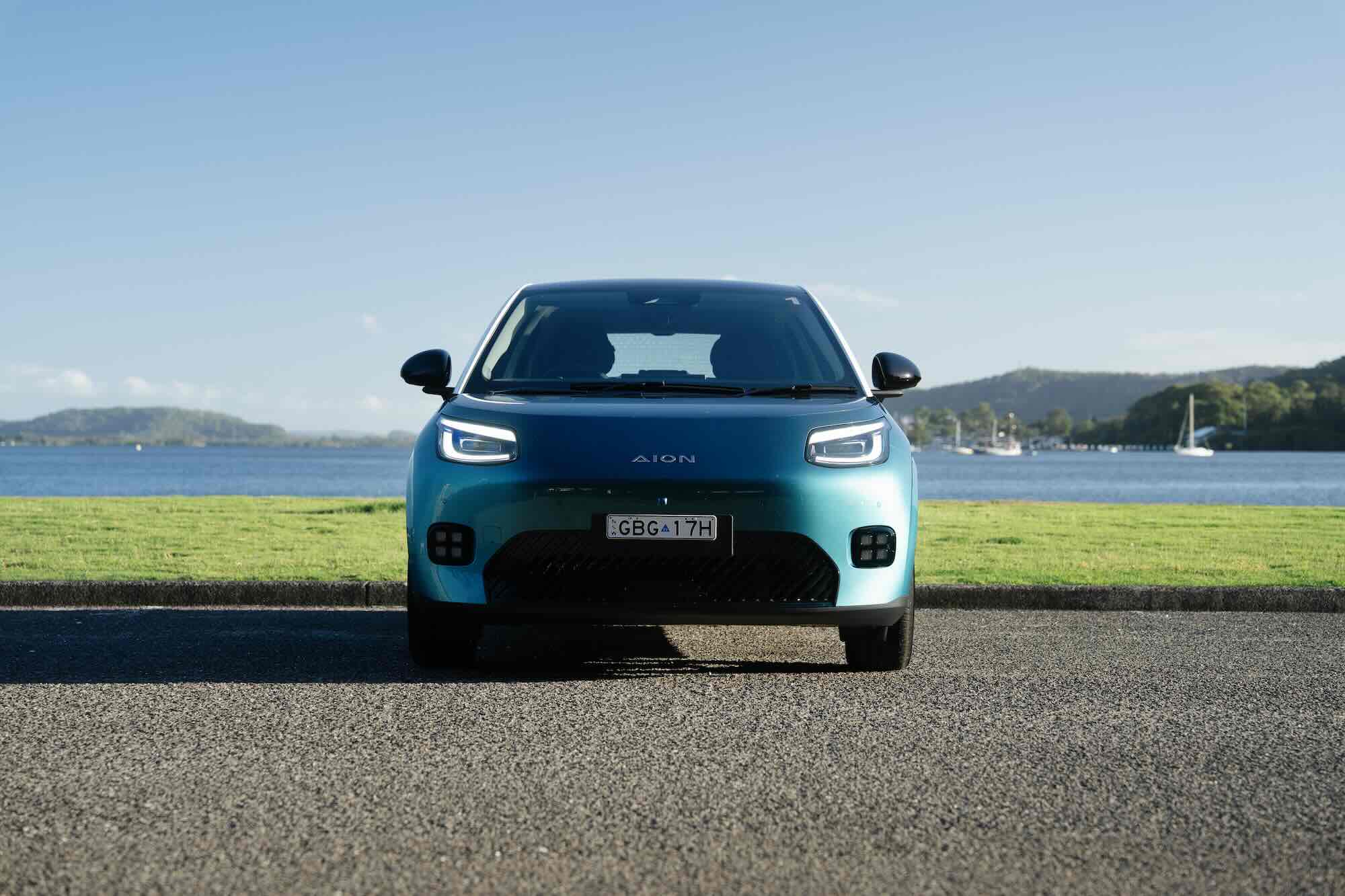
At a glance, the Aion UT looks like exactly what it is – a compact, city-focused EV designed to slot neatly into urban life. Despite its small appearance, the UT packs in a 2,750mm wheelbase, which is unusually long for something this size. The result is a cabin that feels unexpectedly generous.
Inside and you get the usual minimalist, button-less layout found often in electric vehicles, particularly form Chinese brands. GAC say the UT has an Italian design curated by GAC’s team in Milan, and you can sense the Italian influence through the soft touch materials found across the cabin – something rarely found in entry-level hatchbacks.
A small instrument cluster sits in front of the driver, accompanied with a 14.6 central screen. Wireless Apple Carplay and Android Auto comes standard (as it should). The top spec also gets wireless phone charging, driver seat ventilation, a powered tailgate, and a panaramic sunroof, and power-folding side mirrors.
Under the hood and both variants are exactly the same. A 150kW front-wheel drive with a 60kWh LFP battery, with a claimed 430 km WLTP range – not bad for a hatch. AC charging caps at 11kW, with the DC charging speed peaking at 87kW – not class-leading but with a 60kWh battery that still allows for 30-80% in under 25 minutes.
Driving the UT and you start to really understand the appeal. It’s just easy, and the ride quality is surprisingly good. On the drive from Sydney up to the Central Coast, the UT soaked up bumps in a way that feels more small European SUV than budget EV. Steering is light, but responsive enough.
I don’t feel like I’m in a hatchback on the F3, trying to keep up with rest of the 100km/h traffic. To the contrary I find myself enjoying the ease of which I outpace some supposedly more performance-focused SUVs and utes.
The UT looks unpretentious, and is priced accordingly. It starts at $31,990 (before on-roads) for the base Premium, rising to $35,990 for the Luxury. In the context of other electric hatchbacks currently on sale, that’s a sharp position. Early buyers can also access introductory drive-away pricing of $30,990 for the base and $35,990 for the Luxury, along with a bundled 22kW wall charger.
It’s not trying to be the most exciting EV on the market, and it doesn’t need to be. What the Aion UT does is make a strong case for what an affordable electric car in Australia can look like – practical, well-equipped, comfortable, with enough range to make it more than just a city runabout. All for less than an entry-level Toyota Yaris, and at a time where EVs are looking more appealing than ever.