Your support helps us to tell the story
From reproductive rights to climate change to Big Tech, The Independent is on the ground when the story is developing. Whether it’s investigating the financials of Elon Musk’s pro-Trump PAC or producing our latest documentary, ‘The A Word’, which shines a light on the American women fighting for reproductive rights, we know how important it is to parse out the facts from the messaging.
At such a critical moment in US history, we need reporters on the ground. Your donation allows us to keep sending journalists to speak to both sides of the story.
The Independent is trusted by Americans across the entire political spectrum. And unlike many other quality news outlets, we choose not to lock Americans out of our reporting and analysis with paywalls. We believe quality journalism should be available to everyone, paid for by those who can afford it.
Your support makes all the difference.Read more
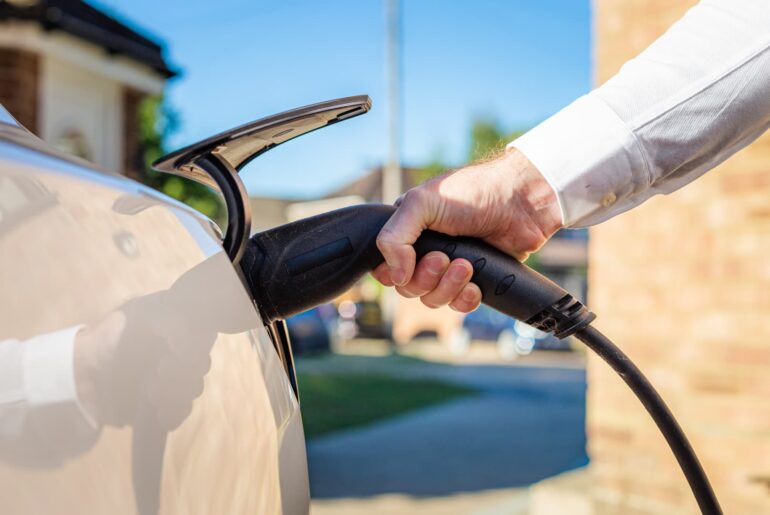
The great British road trip is being reimagined for the electric age, with new figures revealing that the UK now has nearly twice as many public EV chargers as petrol pumps – even if most drivers don’t realise it yet.
More than 118,000 public charge points are now available nationwide compared with around 60,800 fuel pumps, according to new data released alongside the government-backed Electric Road Trip campaign. Yet 71 per cent of adults surveyed still believe the opposite is true, underlining just how far perception lags behind reality.
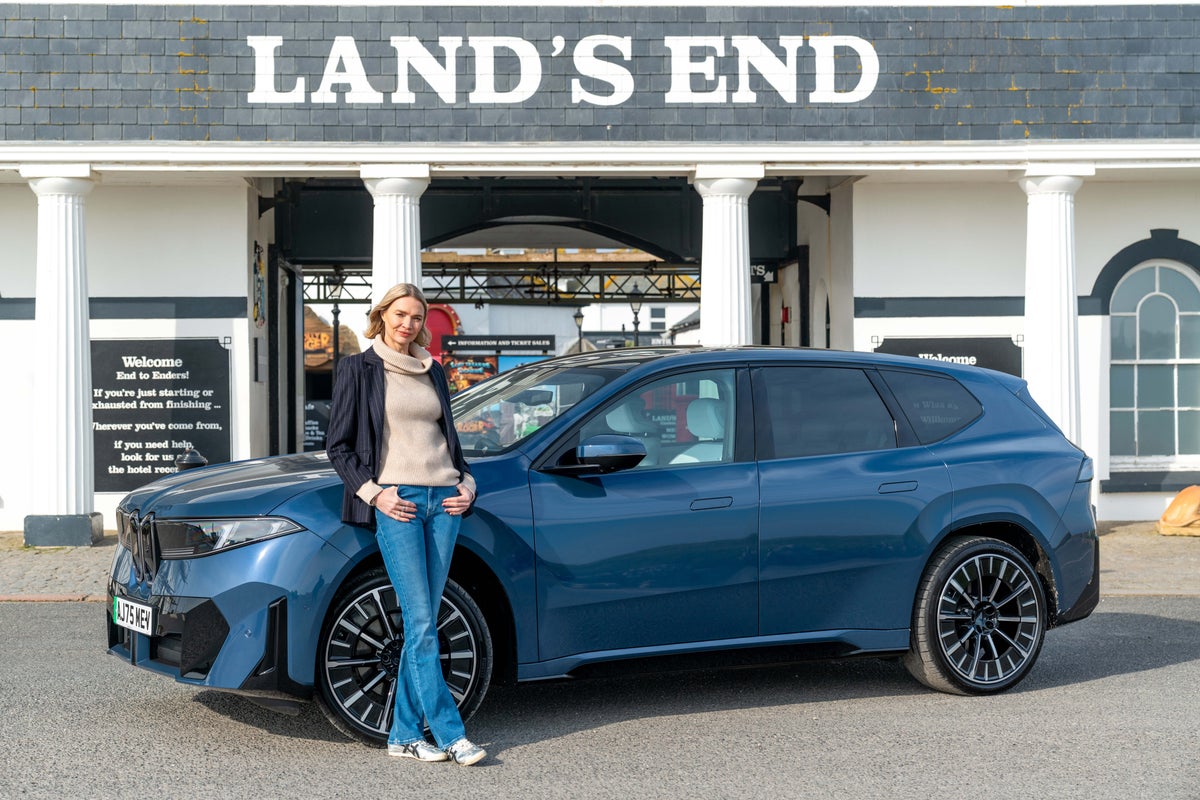
Fronting the campaign is model-turned-motoring-expert Jodie Kidd, who has teamed up with the Department for Transport to show drivers just how widespread – and varied – the UK’s charging network has become.
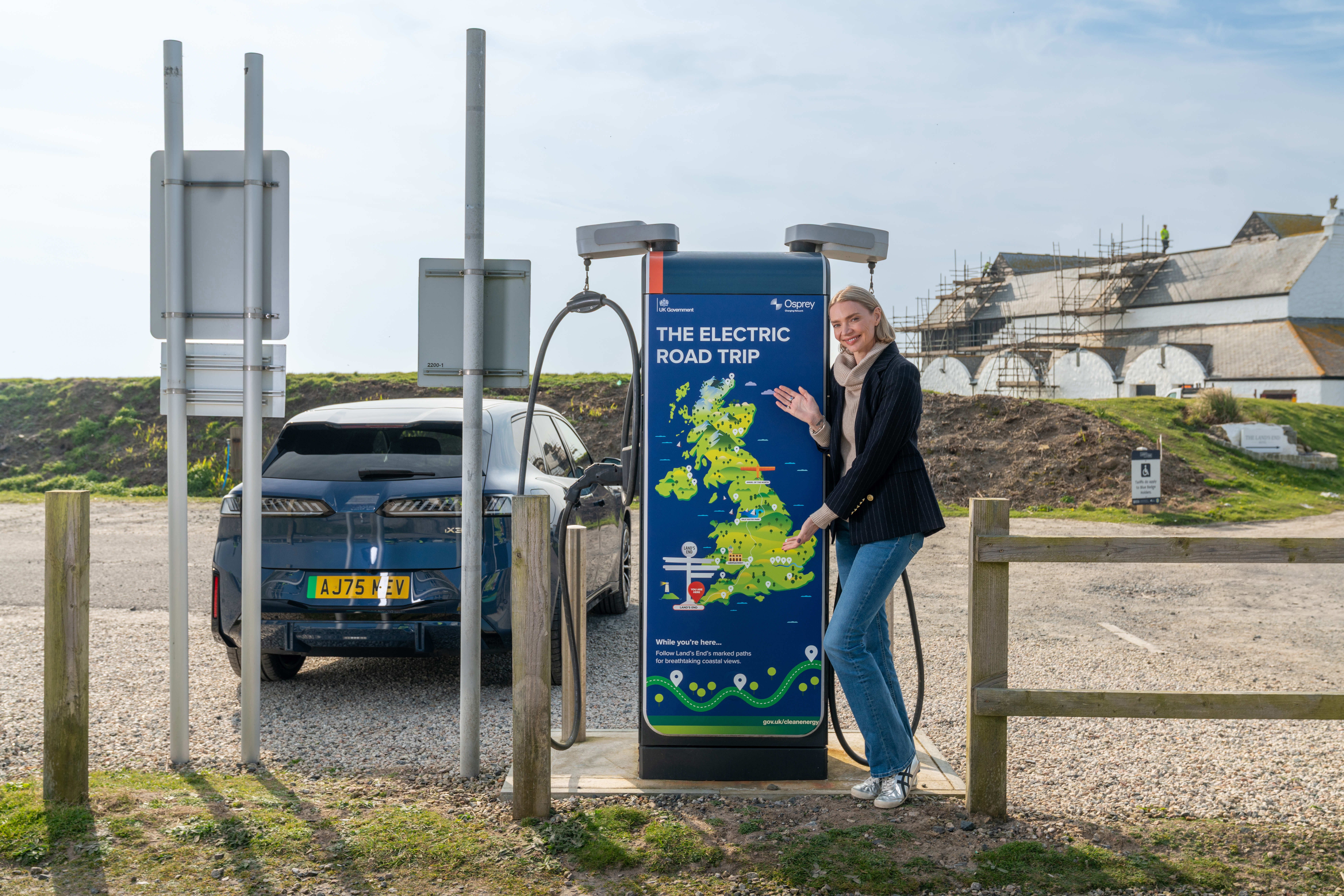 More than 118,000 public charge points are now available nationwide compared with around 60,800 fuel pumps (Lewis Harrison-Pinder/PinPep)
For Kidd, the message is rooted in her own experience of switching to electric. “I just think that the tech, the practicality and the ease of use is making more and more sense,” she said. “Everything is catching up and the manufacturers are producing fantastic cars now.”
The Electric Road Trip, from Land’s End to the Angel of the North, has been designed to highlight not just motorway services, but a growing network of chargers in rural locations, tourist hotspots and everyday destinations. Specially-wrapped charge points mark key stops along the way, including sites operated by Osprey, Be.EV and Fastned, with additional partners such as Believ, Gridserve, PodPoint, Source, RAW Charging and Total Energies also involved.
The aim is to tackle one of the biggest remaining barriers to EV adoption – confidence in charging. More than a third (35 per cent) of non-EV drivers say easier access to charging would encourage them to switch, while 22 per cent still believe chargers are limited to motorway services and supermarkets.
Kidd believes many drivers are working from outdated impressions of EV ownership. “They might have dipped their toe into the electric world a number of years ago and then kind of went, ‘Oh, I went to a charging point and it wasn’t working’ and it might’ve put a bit of a bad taste in their mouth,” she said. “But the change that has happened in such a small amount of time is so extraordinary.”
That change has been particularly evident in the rapid rollout of infrastructure. “I didn’t actually know this fact until I did this campaign that there are almost double the amount of charging points in the UK than there are petrol pumps,” she said. “That was quite something.”
Her own move into EVs has been gradual. Living in the countryside means she still relies on conventional vehicles for heavier duties, but increasing time spent in London and higher mileage made electric a more logical choice.
“It just made much more sense and was a little bit smarter and cost-effective,” she said, explaining how her day-to-day driving has shifted towards EVs.
That shift is not just about convenience, but about the broader driving experience. “I find it a very smooth, peaceful environment,” Kidd said. “I just love the simplicity really. You just get in it and you just go.”
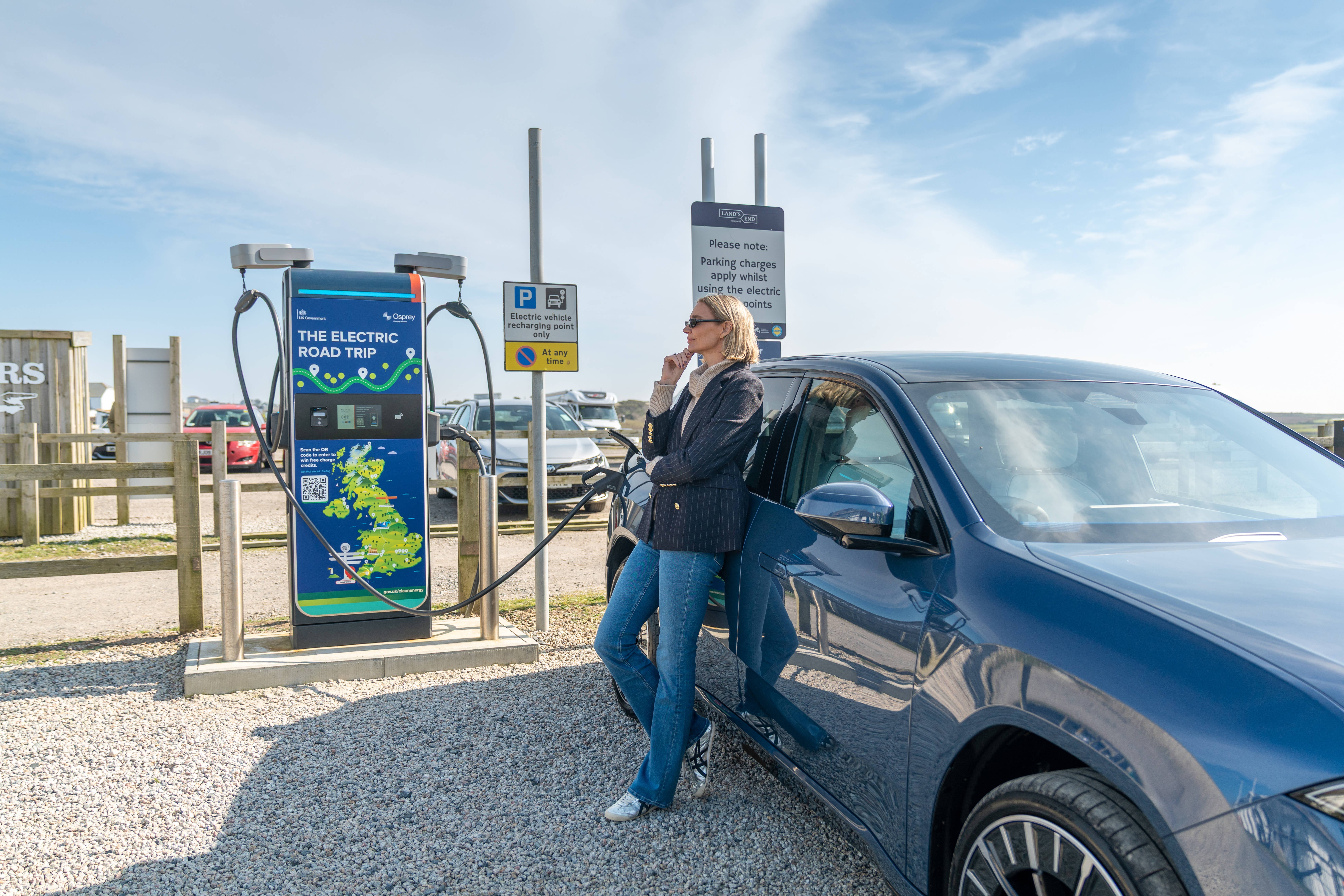 Jodie Kidd finds driving an EV more relaxing (Lewis Harrison-Pinder/PinPep)
The campaign also aims to reframe how drivers think about longer journeys. Rather than simply proving that EVs can handle distance, it highlights how they can change the nature of the trip itself.
“I love doing a long road trip – you’re just not in a rush, you’re just on an adventure,” Kidd said. “It’s just lovely knowing that you can stop off at these really beautiful scenic places and little villages.”
That more considered pace, she suggests, can make journeys more enjoyable. “It’s just a general mindset change, isn’t it?” she said. “We’re so used to just getting in and shooting off, that actually taking a bit of time and really enjoying the journey and planning a route, it puts a lot more enjoyment into doing a long road trip.”
It also opens up opportunities beyond traditional motorway stops. Increasingly, chargers are appearing in places such as pubs, hotels and rural attractions – something Kidd is embracing herself.
“I’m about to put a charging spot at my pub and a lot of pubs do,” she said. “If you just do a little bit of investigation, there’s some beautiful little road trips that you can take – it’s a good excuse to stop off and have lunches in lovely places.”
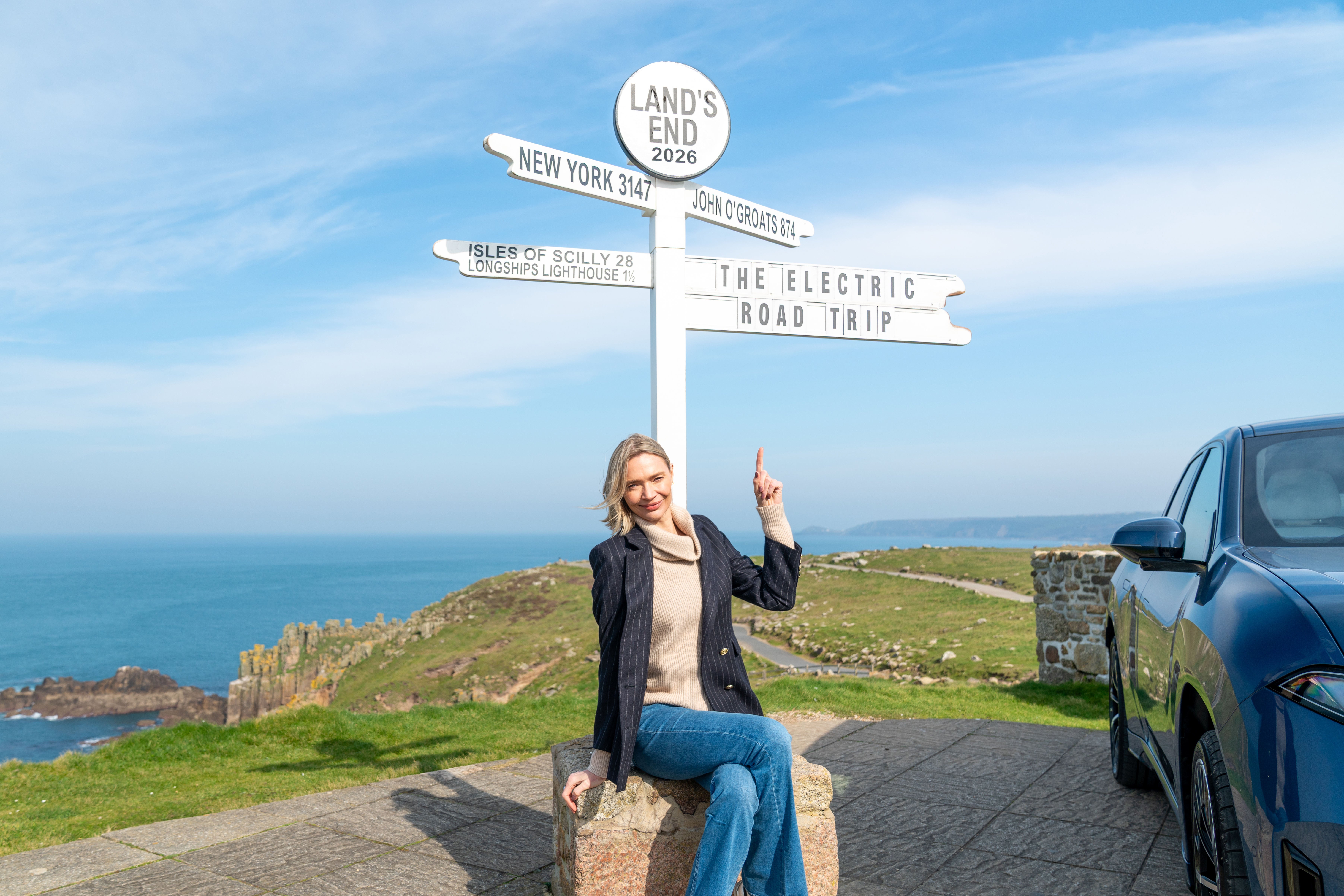 Jodie Kidd thinks we should get off the motorway and explore Britain more in our electric cars (Lewis Harrison-Pinder/PinPep)
That shift in behaviour could have wider benefits too, encouraging drivers to explore more of the country. “Any excuse to go into little villages or just have an explore – it’s has been a real kind of game-changer for me,” she said.
Of course, some challenges remain. The variety of charging networks and apps can still be confusing for new users, although Kidd suggests this is largely a matter of familiarity.
“It’s like learning something new,” she said. “Once you get it and you understand it, it’s a breeze.”
She also plays down concerns about queues and availability. “I’ve never had that problem,” she said, while acknowledging that infrastructure issues did exist in earlier years.
For those still hesitant about going fully electric, she points to plug-in hybrids as a stepping stone. “I think they’re a really good middle place,” she said. “So that you can understand what it’s like to charge… and eventually go full EV.”
The government is backing that transition with funding and incentives. Decarbonisation minister Keir Mather said: “Industry asked us to back the EV revolution and that’s exactly what we’re doing. Just last year, we announced £600m to roll out hundreds of thousands of chargers across the UK, building on the 118,000 already available – that’s nearly twice as many chargers as fuel pumps.
“We’re also making it more affordable than ever to make the switch, with our Electric Car Grant cutting the upfront cost of EVs by up to £3,750, helping households access savings of up to £1,400 on running costs.”
For Kidd, though, the key takeaway is how far things have already come. “It’s exciting,” she said. “The infrastructure is there, the manufacturers are there. It’s all coming into place and the range and charge anxiety, is just lessening.”
And for drivers willing to embrace a slightly different approach to travel, she believes the rewards go beyond simply getting from A to B.
“It’s almost like it’s just slowing down and relaxing,” she said. “And I think we’ve kind of lost that. Doing this has really set that familiar pattern of what a road trip was when I was a youngster.”
In other words, the electric road trip may not just represent the future of motoring – it could also mark a return to a more relaxed, more enjoyable way of travelling with an added boost to local businesses that embrace EV charging, too.