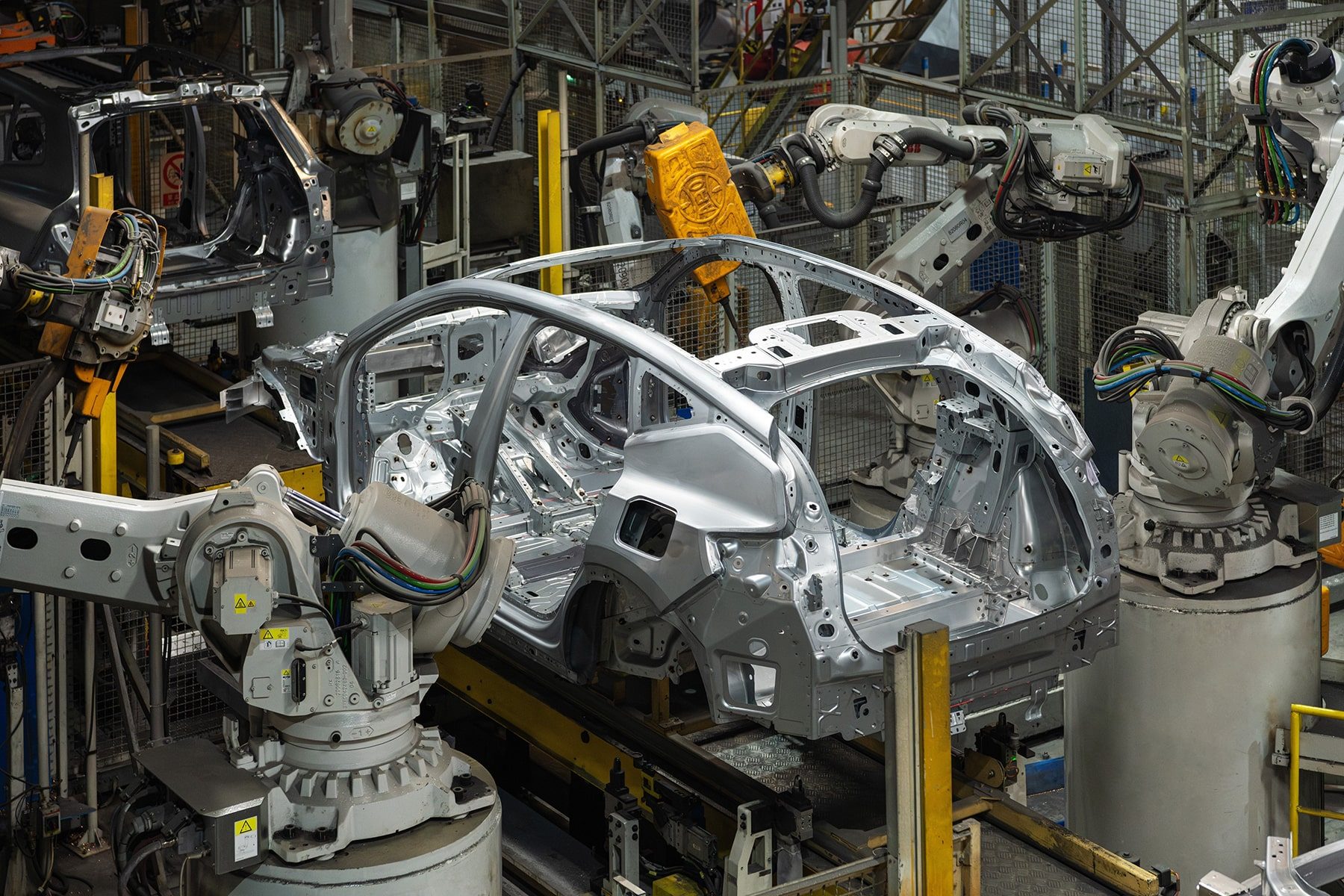
The Polestar 3 for global markets will in future be produced exclusively in the USA. Volvo Cars and Polestar plan to consolidate production of the battery-electric vehicle (BEV) at Volvo’s Ridgeville plant near Charleston. As a result, the model will no longer be manufactured in Chengdu, China, where it has been produced since early 2024. The second production line at Volvo’s Ridgeville plant became operational six months later.
Volvo and Polestar have not explicitly stated their reasons for this move. However, Volvo has indicated that it aims to strengthen the strategic importance of its US plant as a key production site for both Volvo Cars and Polestar. The core motivations are likely cost reduction and tariff avoidance: the company notes that its global production structure, with sites in China, Europe, and the USA, allows it to ‘optimise plants for maximum efficiency’. This suggests that operating two Polestar 3 production lines across two continents was not efficient. Additionally, high tariffs are imposed on Chinese EV exports to Europe and other global regions.
What is clear is that Volvo’s US plant is already the global production hub for the fully electric Volvo EX90. The EX90 is based on Volvo Cars’ SPA2 architecture, which also underpins the Polestar 3. “Consolidating global Polestar 3 production in Charleston enhances efficiency for both companies and underscores our confidence in the plant and its role in our production structure,” said Håkan Samuelsson, CEO of Volvo Cars. “The US is a very important market for Volvo Cars, both to support our growth ambitions as well as a strategic production site to meet regional and export demands.”
In addition to producing the Polestar 3 in the USA, Volvo Cars has announced plans to manufacture the mid-size SUV Volvo XC60 in South Carolina. This model is available as a plug-in hybrid or mild hybrid. Furthermore, before 2030, a new ‘next-generation hybrid model’ will be introduced at the Ridgeville plant. This suggests that Volvo Cars is not entirely confident in the success of purely battery-electric vehicles in the US market in the coming years.
Production will focus on models that promise profitability. According to Volvo Cars, the company has invested $1.3 billion in its South Carolina plant over the past decade. The facility currently has an annual production capacity of 150,000 vehicles. “Together with its factories in Europe and China, the Charleston plant has an important role in Volvo Cars’ future growth plans and its increased focus on regional tailoring of products,” the brand emphasised.
volvocars.com, media.polestar.com