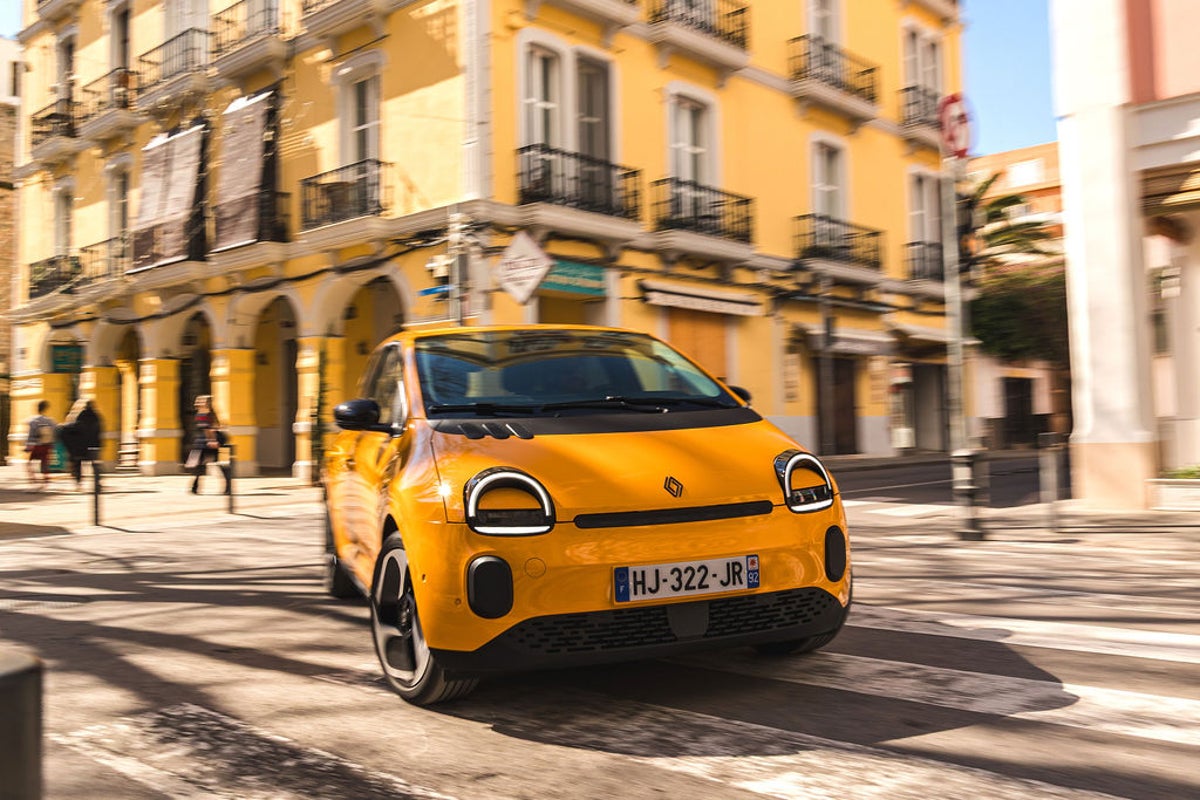
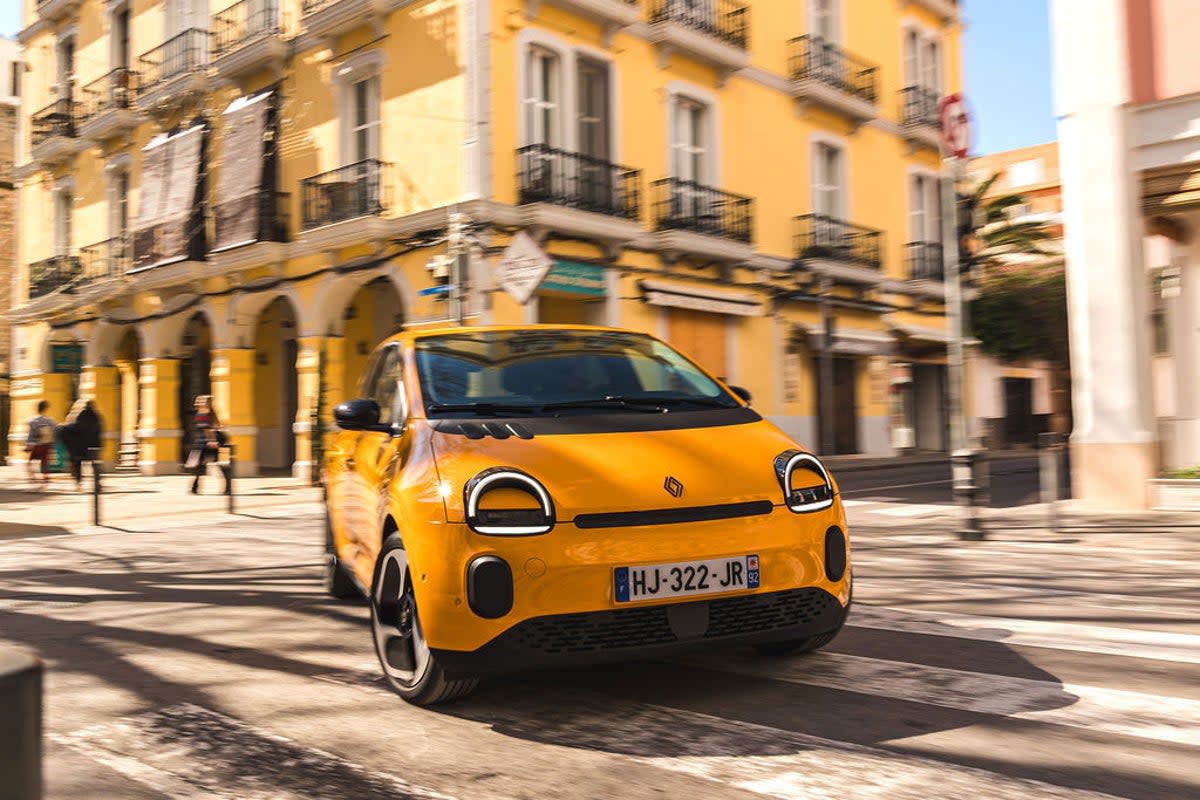
The new Renault Twingo could arrive in the UK with prices starting from around £19,000 (Renault)
While much of the EV market has drifted upwards in size, weight and price, Renault has gone back to basics with the new Twingo – and in doing so, it might just have nailed what many buyers actually want. This is exactly the sort of car the electric revolution has been missing.
The original 1992 Twingo didn’t just compete in the A-segment, it reimagined it. Simple, clever and full of character, it became one of Renault’s biggest success stories, with more than 4.1 million sold worldwide. Even in the UK, where it was never officially sold, there are still around 240 left-hand-drive originals quietly running around today.
Now Renault is attempting to pull off the same trick again, but this time with electricity. And crucially, it’s doing so at a price point that could genuinely shift the market. Targeting a starting price below £20,000 – and potentially dipping under £17,500 if government incentives come into play – the Twingo E-Tech Electric is pitched squarely at buyers who’ve been priced out of EVs until now.
What makes this even more interesting is how Renault has achieved it. By working with its ACDC development centre in China, the company has delivered the car in just 100 weeks, openly admitting it has “learnt from the best”. The result is a fascinating blend of Chinese development speed and European design and engineering.
And it shows. The Twingo doesn’t feel like a stripped-out budget car. Instead, it feels like something designed with intent – a car that’s been created by people who wanted to make something cheerful, useful and genuinely appealing. It’s got a friendly face that almost looks like it’s smiling, a nod to the original car, and a design full of little details that give it real personality.
At just 3.79 metres long, it’s compact. Yet thanks to a clever 2.49-metre wheelbase, it offers interior space that rivals larger cars. And perhaps most importantly, it feels like a car that understands its purpose. This isn’t trying to be everything to everyone. It’s trying to be exactly what a modern city car should be – fun, usable, efficient – and that clarity comes through strongly.
How we tested
I’ve spent plenty of time with the Twingo, crawling all over the car in a studio in Paris before being invited to Ibiza for my first drive. My route took in the towns and country lanes of the island, where I tested the car over a wide variety of road surfaces and at different speeds. As the car will be ideal for use in built-up areas, I spent much of my time driving through towns – even testing the car’s parking abilities in a shopping centre car park. I checked on the car’s efficiency, its practicality and predicted pricing to come to a verdict that you can trust.
Renault Twingo E-Tech Electric: From £19,000 (estimated), Renault.co.uk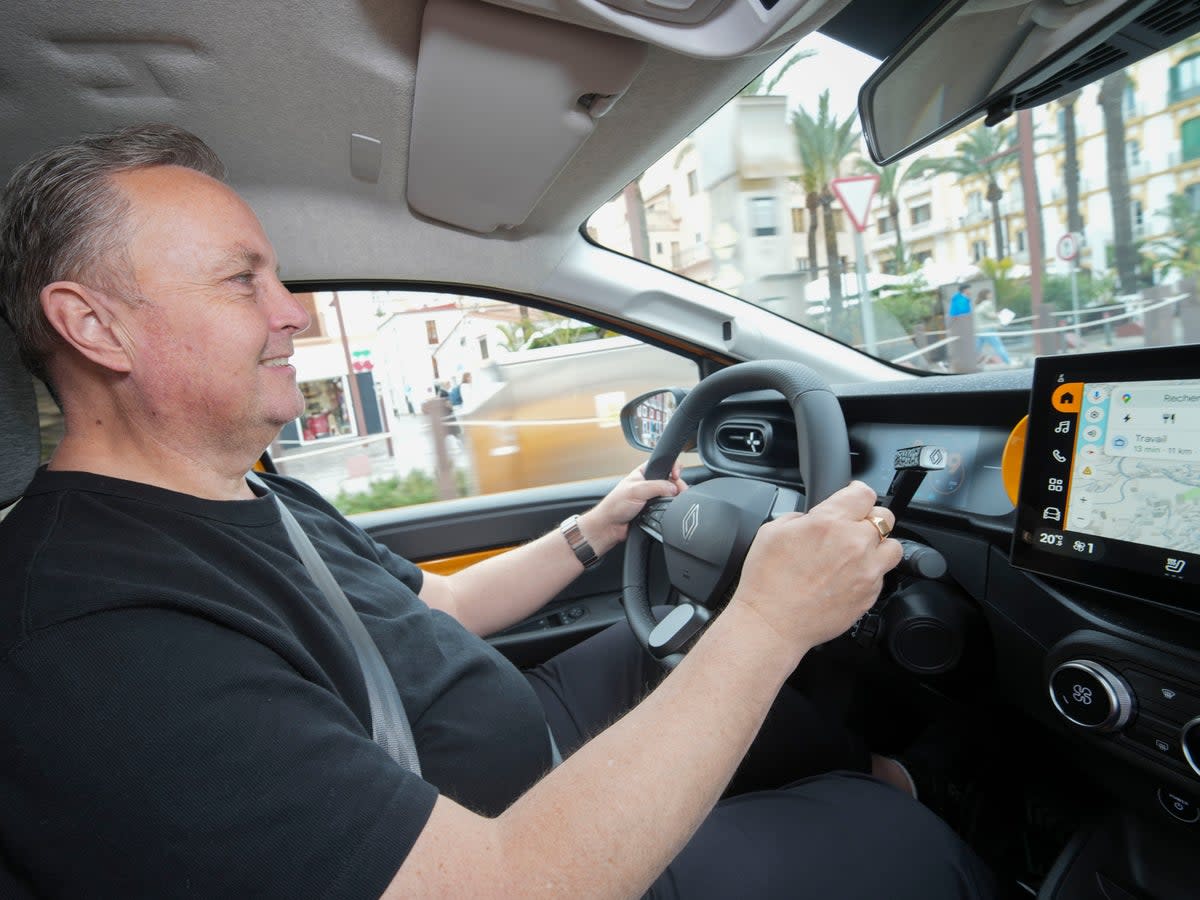
The new all-electric Renault Twingo managed to put a big smile on Steve Fowler’s face (Renault/Jed Leicester)
Independent rating: 10/10
Pros: Clever packaging; impressive tech for the class; strong efficiency; fun design; excellent urban usability
Cons: Some cheap-feeling materials; delayed UK arrival
Renault Twingo specs
Price from: £19,000 (estimate)
Maximum claimed range: 163 miles
Maximum charging rate: 50kW DC, 11kW AC, 10-80 per cent in around 30 minutes
Power: 82bhp (0-62mph in 12.1 seconds)
Battery, range, charging, performance and drive
Renault has taken a refreshingly sensible approach to the Twingo’s powertrain. Instead of chasing headline-grabbing numbers, it’s focused on delivering the right balance of performance, efficiency and cost. The result is a 27.5kWh LFP battery paired with an 82bhp motor and a claimed maximum range of up to 163 miles.
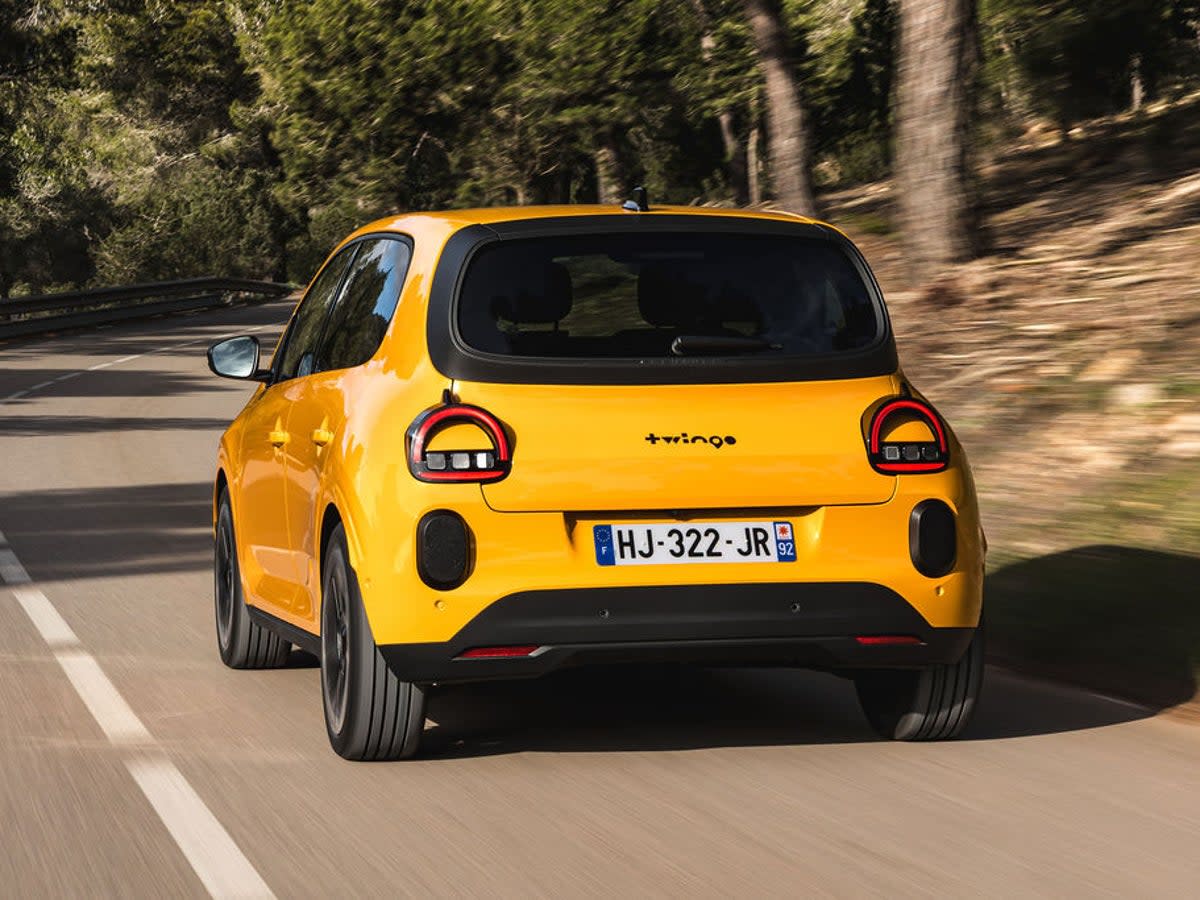
The new Renault Twingo’s design takes cues from the 1992 original. The ‘bat ears’ above the rear lights improve aerodynamic efficiency (Renault)
On paper, that might not sound like much. In reality, it feels spot on. This is a car designed for the way people actually use their vehicles, not for winning spec-sheet battles. Renault says the average daily mileage is around 22 miles, meaning most owners will only need to charge once or twice a week.
Efficiency is where the Twingo really impresses. With a claimed consumption of 5.1 miles per kWh it’s right up there with the most efficient EVs. And importantly, that figure feels realistic; even with a mix of relaxed driving and more enthusiastic runs on the roads around Ibiza, the range held up well and didn’t feel optimistic.
Performance is another area where the numbers don’t tell the full story. Yes, 0-62mph takes 12.1 seconds, but that’s almost irrelevant in a car like this. What matters is how it feels at lower speeds, and here the Twingo shines. The 0-31mph time of 3.85 seconds gives it a genuinely lively feel in town, making it quick off the line and easy to slot into gaps in traffic – there was even a slight bit of wheelspin when I was being a bit too enthusiastic away from the line.
Out on the road, the driving experience is surprisingly polished. The ride is particularly impressive, staying composed and comfortable despite the short wheelbase. On smoother roads it feels genuinely refined, and even when pushed a bit harder over bumps it maintains a sense of balance that you might not expect at this price.
The steering is responsive and nicely weighted, helping the car feel agile and easy to place. Combine that with a turning circle of just 9.87 metres and it becomes incredibly manoeuvrable, making tight urban driving and parking feel effortless.
There are a few minor compromises. At higher speeds there’s a touch of wind noise, and the windscreen angle means the view forwards is quite shallow. One-pedal driving works well but could offer a bit more initial bite when lifting off at speed.
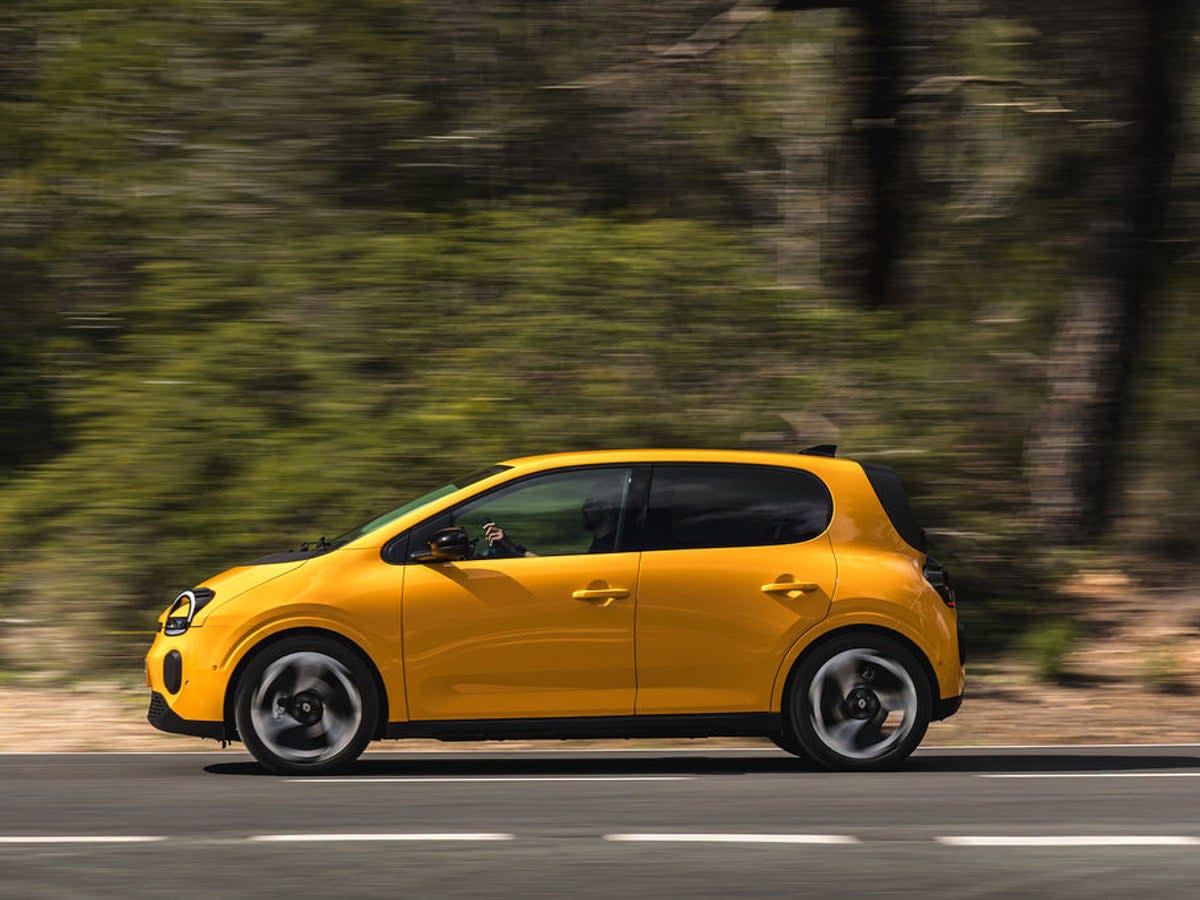
Despite being just 3.79 metres long the Twingo offers decent interior space thanks to a 2.49-metre wheelbase (Renault)
Charging is straightforward and well judged, though. You get 50kW DC charging for a 10-80 per cent top-up in around 30 minutes, plus 11kW AC capability and bi-directional charging that can power external devices – even your home.
All of which adds up to a car that feels perfectly tuned to its intended role.
Interior, practicality and boot space
Inside, the Twingo continues to impress with its mix of clever packaging and playful design. Despite its compact exterior, it feels surprisingly spacious, particularly in the front where there’s a good sense of airiness and plenty of adjustment in the steering wheel for both reach and height – something that’s not always a given in cheaper cars.
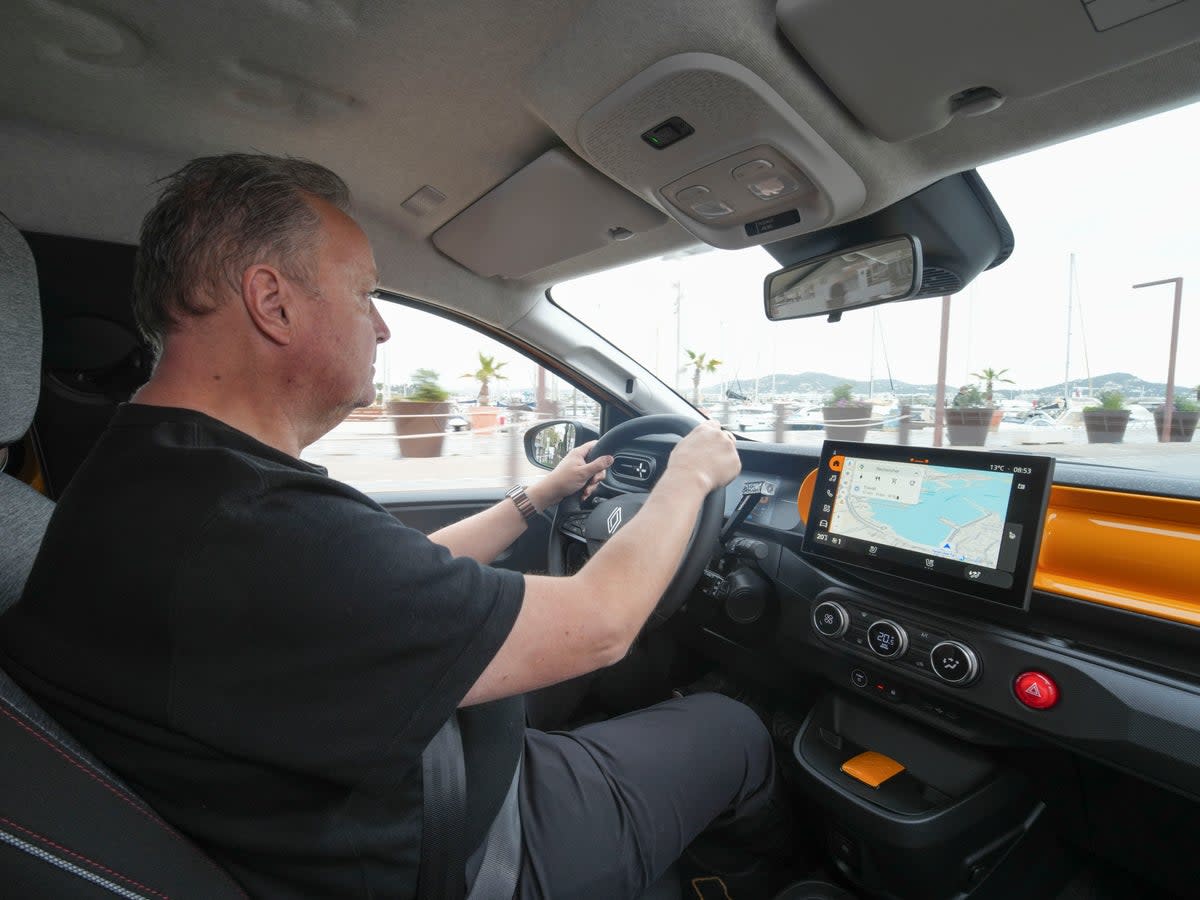
The Twingo interior uses body-coloured panels to make things even more cheerful inside (Renault/Jed Leicester)
Material quality is a bit of a mixed bag, but that’s hardly a surprise at this price point. There are plenty of hard plastics, yet they’re offset by thoughtful design touches like the speckled dashboard finish and body-coloured panels across the dash and doors, which help lift the overall feel of the cabin.
Storage is one of the car’s real strengths. There’s a decent-sized glovebox, lots of useful cubbies and trays, and clever solutions like 3D-printed accessories for phone cable storage. The centre console includes rubberised surfaces to stop items sliding around, although the hard plastic tray ahead of the passenger could do with a grippier finish as things will move about and rattle.
Rear space is better than you might expect for a car of this size. I’m nearly six foot tall and it’s possible for someone the same size to sit behind me – just. Access is a bit tight, though, and the rear windows pop out rather than wind down.
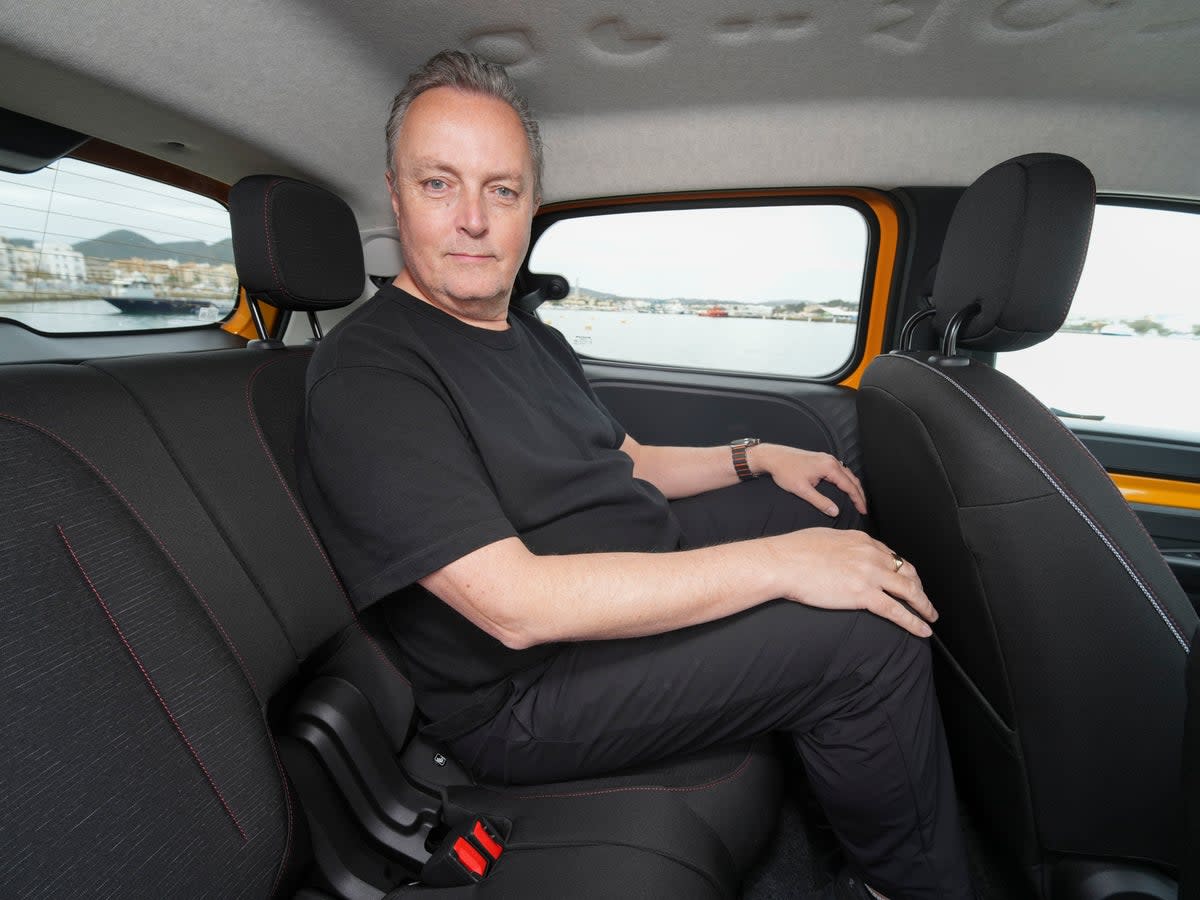
There’s adult-size rear legroom behind a front seat set for a six-foot tall driver (Renault/Jed Leicester)
The sliding rear seats are a useful feature, moving by up to 17cm to prioritise either passenger space or boot capacity. It’s a simple idea, but one that makes a real difference in everyday use. So, boot space ranges from 260 to 360 litres depending on how you configure the rear seats, with a 50 litres of underfloor storage for extra practicality.
There are a few quirks worth noting. Like the front and rear suspension, the steering column appears to be shared with another model and includes a slightly odd protrusion where the ignition barrel used to be – the Twingo gets a button on the dash. And the lack of a dedicated park button on the gear selector means you have to select neutral and find a somewhat-hidden parking brake low down on the centre console – it could do with some bright paint or a bit of light to help you find it.
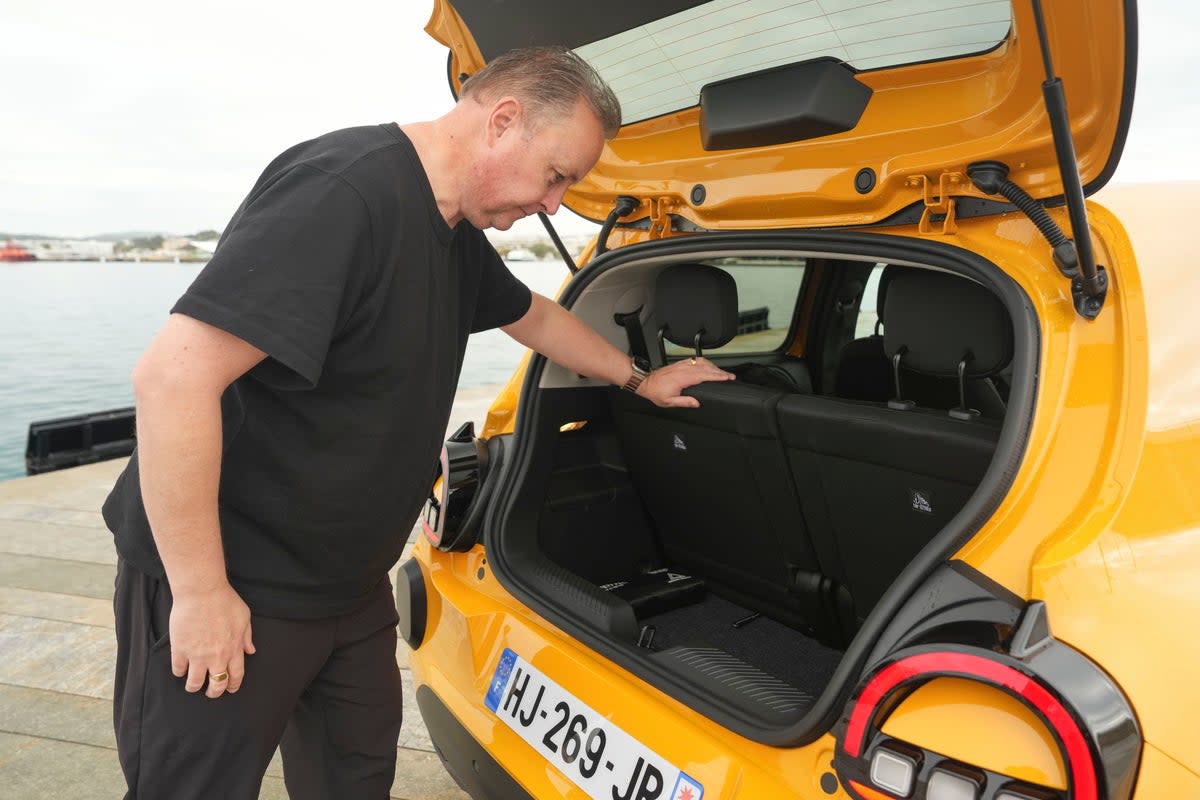
The rear seats move by up to 17cm so boot space ranges from 260 to 360 litres (Renault/Jed Leicester)
The doors also shut with a slightly tinny sound, and there was a minor rattle on my test car, but these are relatively small issues in what is otherwise a cleverly designed and highly usable interior.
Technology, stereo and infotainment
This is where the Twingo really starts to feel like something special. For a car at this price point, the level of technology on offer is genuinely impressive.
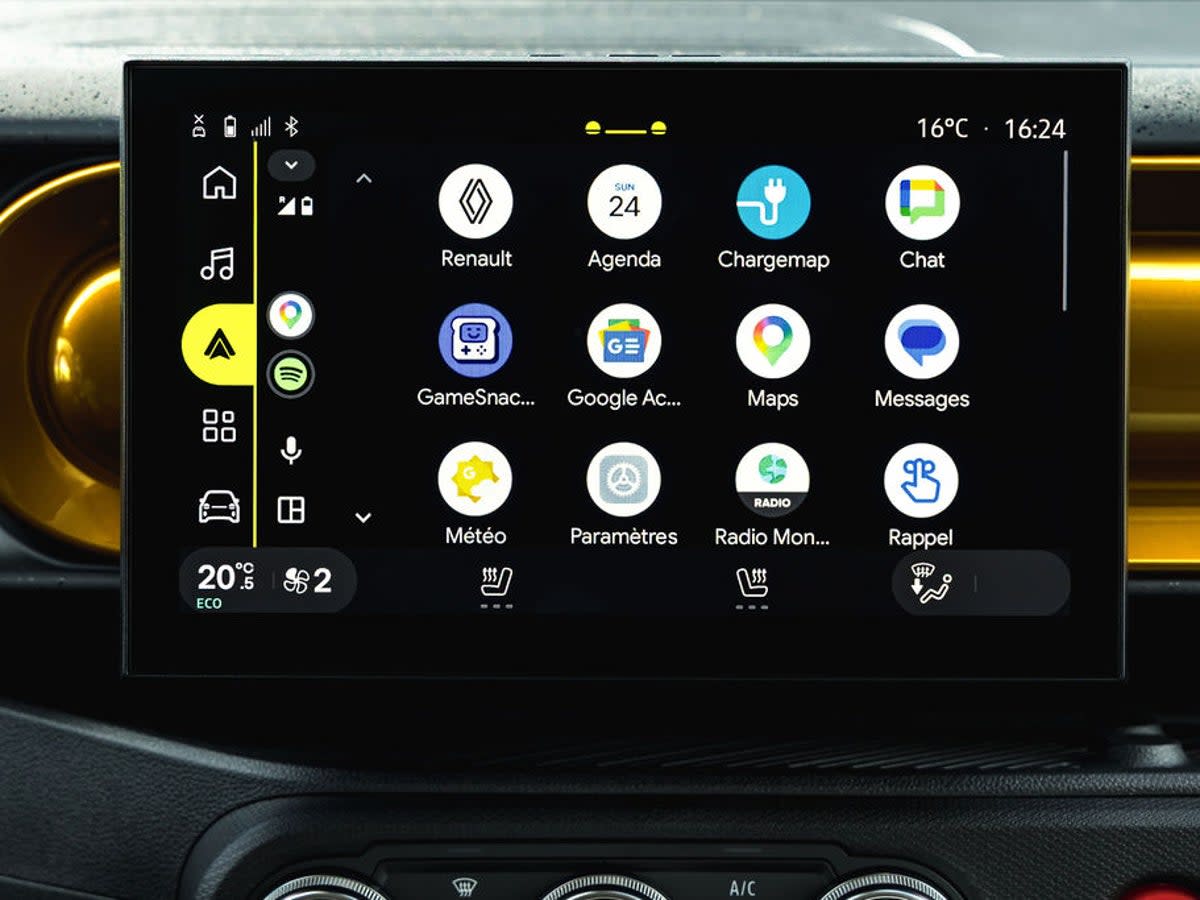
The Renault Twingo features a 10-inch touchscreen with Google built in (Renault)
The dual-screen setup combines a 7-inch instrument display with a 10-inch central touchscreen, giving the cabin a modern, high-tech feel that you wouldn’t normally associate with a small city car. Both get funky Twingo graphics, too.
More importantly, it comes with Google built in – a first for this segment. That means native Google Maps, Google Assistant and access to a wide range of apps, all integrated seamlessly into the system. In use, it works exactly as you’d hope, with navigation that feels intuitive and well suited to everyday driving.
Apple CarPlay also works without issue, and switching between systems is straightforward. Looking ahead, Google’s Gemini AI assistant will bring more natural voice interaction, while Renault’s own Reno assistant is designed to help with everything from charging to general queries.
The audio system is another highlight. The six-speaker Arkamys setup delivers strong bass, plenty of detail and impressive separation, especially for a car of this size. The sound profiles developed with Jean-Michel Jarre add a slightly unexpected level of sophistication.
There are also some nicely judged physical controls. The large air-conditioning dials are easy to use, while the bold hazard warning button – designed to resemble a piece of candy – adds a bit of character to the cabin.
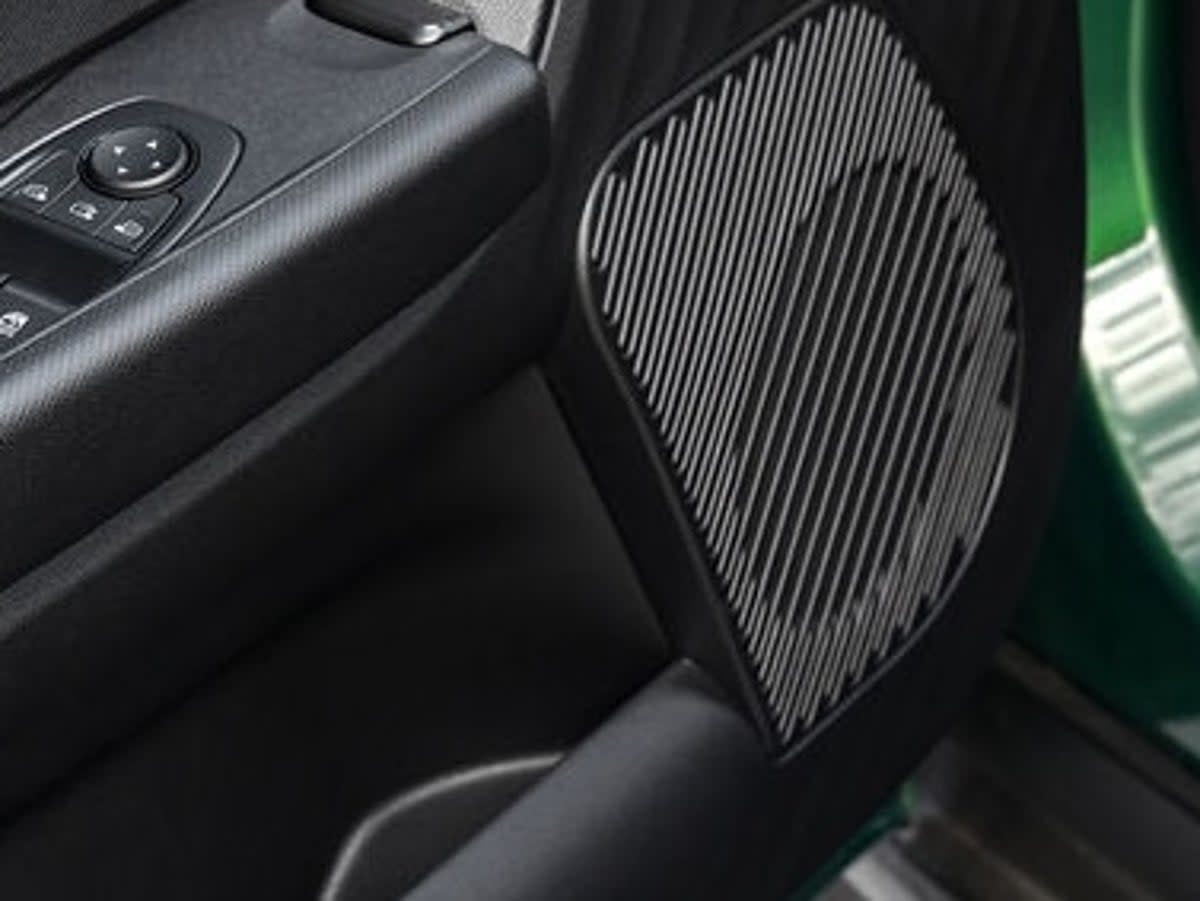
The Arkamys audio system in the new Renault Twingo is seriously impressive for a small, affordable car (Renault)
There are a couple of downsides. There’s no wireless charging, and the sole volume control is on Renault’s long-standing stalk behind the steering wheel, which can feel a bit old school.
Even so, the overall tech package is a major strength and one of the things that really sets the Twingo apart.
Prices and running costs
If Renault delivers on its pricing promise, this could be one of the most disruptive EVs on the market. The target is a starting price below £20,000, and reading Renault’s body language I reckon it could land at around £19,000.
If the Twingo qualifies for the government’s Electric Car Grant (and it should), that could mean a drop to under £17,500, making it one of the most affordable electric cars available. Higher-spec versions are still expected to remain accessible – I reckon around £21,000 for better-equipped models before any grants.
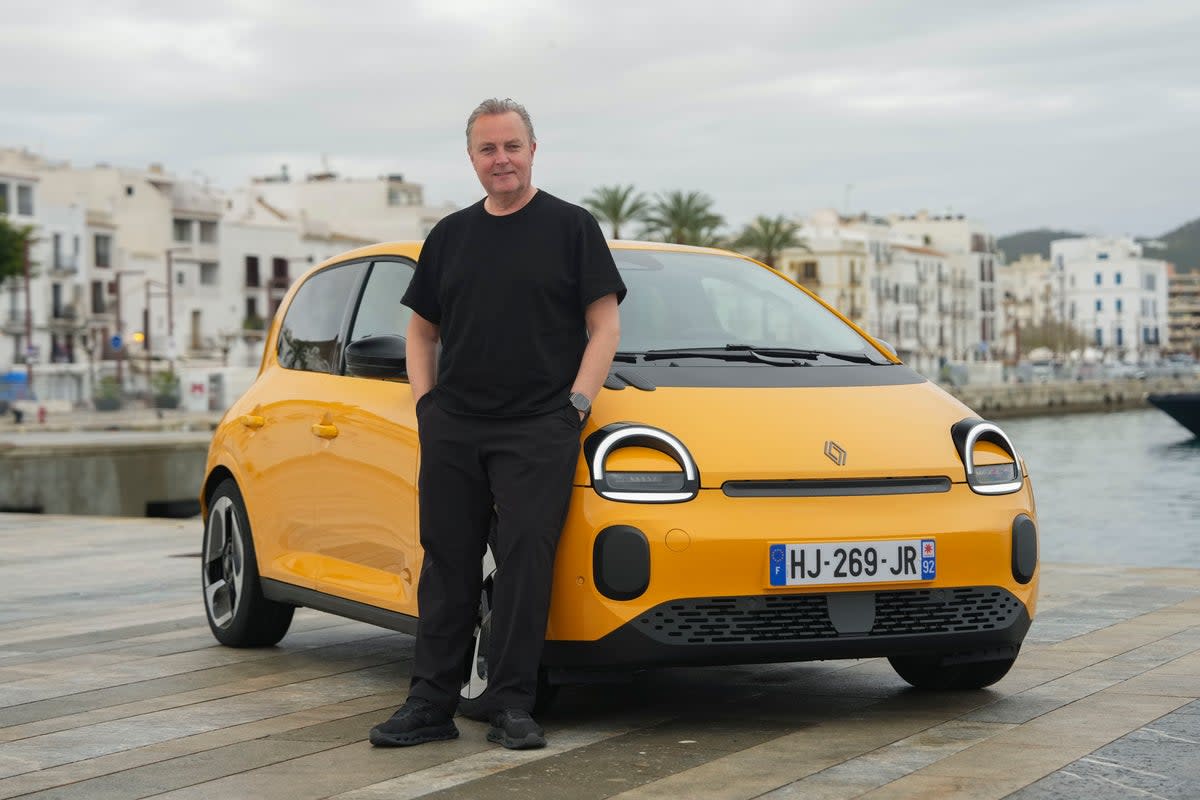
The new Renault Twingo is the best car Steve Fowler has driven so far in 2026 (Renault/Jed Leicester)
Running costs should be low thanks to the car’s efficiency and relatively small battery. The use of LFP technology helps reduce costs while improving durability, and Renault claims the Twingo produces 60 per cent less CO2 over its lifecycle compared with the previous petrol version.
Maintenance is also simplified, with longer service intervals and connected features that help manage upkeep through the My Renault app.
The biggest frustration is timing. Despite already being on sale in some markets, UK buyers will have to wait until late 2026 or early 2027 due to delays in right-hand-drive development. It’s a frustrating delay for what feels like a very relevant car right now – you can get in early with Renault’s R-Pass that gets you a few benefits but won’t cut the wait.
The verdict: Renault Twingo E-Tech Electric
Put simply, the new Renault Twingo is the best car I’ve driven so far in 2026. It feels like a genuinely important car – not because it’s chasing big numbers or trying to be the fastest or the longest-range EV, but because it focuses on what actually matters.
It’s compact, efficient and easy to use, yet it offers technology and practicality that rival larger, more expensive cars. And it does all of that at a price point that could finally make EV ownership accessible to far more people.
What stands out most is the thinking behind it. This is a car that feels like it’s been designed with real intent – to be useful, affordable and enjoyable in equal measure.
If Renault gets the pricing right, this could be one of the defining electric cars of the decade.
Renault Twingo rivalsFAQsHow long does it take to charge?
The Twingo offers a claimed maximum range of up to 163 miles. It supports 50kW DC fast charging, allowing a 10-80 per cent charge in around 30 minutes, along with 11kW AC charging for everyday use.
How much does it cost – is it worth it?
With a projected starting price of around £19,000 – potentially lower with incentives – and strong efficiency, the Twingo represents very competitive value in the small EV market.
Does Renault replace batteries for free?
Final UK warranty details are yet to be confirmed, but Renault is expected to offer coverage in line with its current electric models, including separate battery warranty cover for up to eight years.
Why trust us
Our team of motoring experts have decades of experience driving, reviewing and reporting on the latest EV cars, and our verdicts are reached with every kind of driver in mind. We thoroughly test drive every car we recommend, so you can be sure our verdicts are honest, unbiased and authentic.
With more than 30 years of experience, Steve Fowler is one of the UK’s best-known automative journalists. Steve has interviewed key industry figures, from Tesla’s Elon Musk to Ford’s Jim Farley, and is a judge for both Germany’s and India’s Car of the Year Awards, as well as being a director of World Car of the Year. When it comes to electric vehicles, Steve reviews all the latest models for The Independent as they launch, from Abarth to Zeekr, and he uses his expert knowledge of car buyers’ needs to provide a comprehensive verdict.