Korean auto giant targets 41,000 EV sales in China’s fiercely competitive, domestic-led market
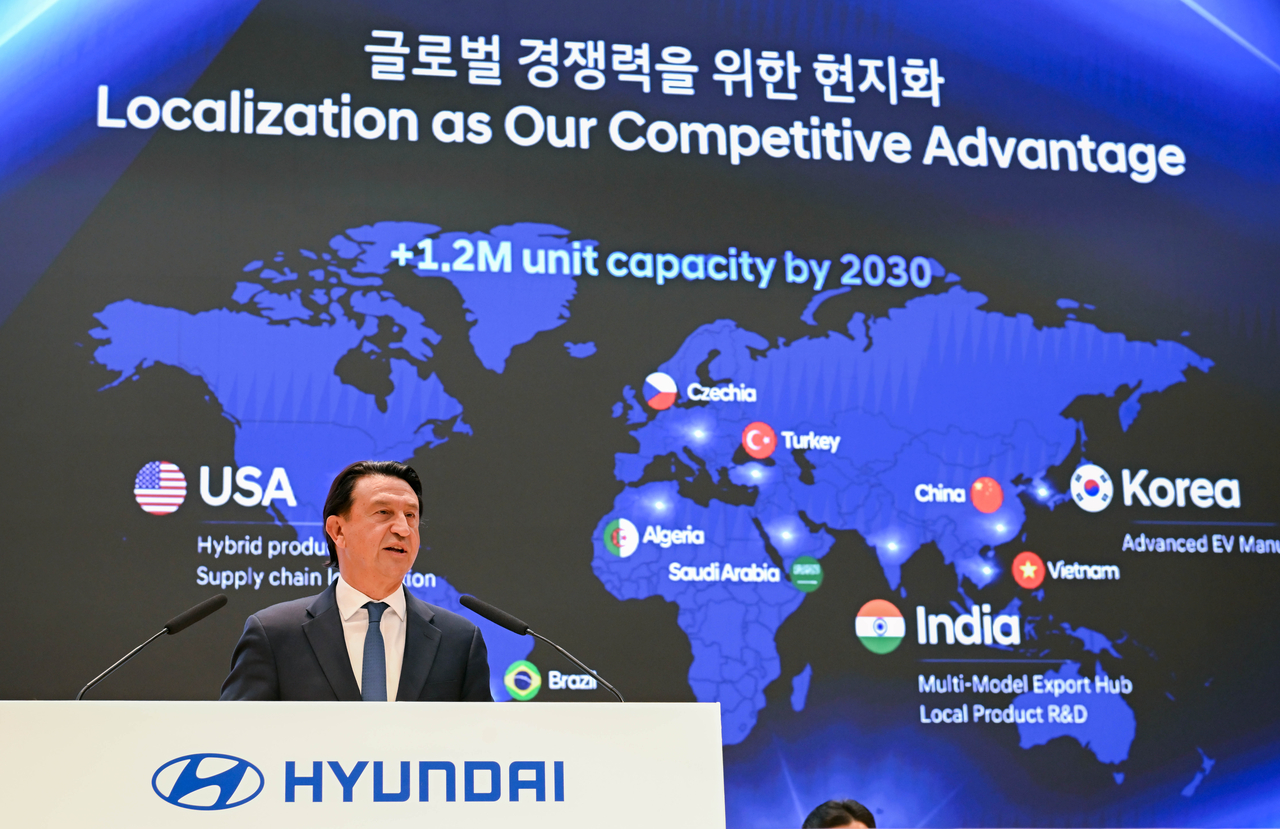 Hyundai Motor Company CEO Jose Munoz speaks during a shareholders’ meeting held at the company’s Seoul headquarters in Gangnam on Thursday. (Hyundai Motor Group)
Hyundai Motor Company is ramping up its electric vehicle push in China, setting an aggressive target to sell more than 40,000 eco-friendly vehicles this year as it seeks to reduce reliance on the US market amid rising tariff pressures.
According to industry sources Monday, the automaker plans to boost production of eco-friendly vehicles at its joint venture, Beijing Hyundai, to 41,500 units in 2026 — a more than 33-fold increase from a year earlier. As a result, such models are expected to account for about 20 percent of total output, up sharply from just 0.6 percent last year. Production of conventional internal combustion vehicles, by contrast, is set to decline by nearly 10 percent.
Hyundai is also targeting total annual sales of 218,000 units in China this year, up 10.8 percent from 2025. The figure stands in stark contrast to its more conservative global production growth forecast of 0.5 percent. It outpaces targets for major markets such as North America and India, both at 3.1 percent, and Europe, where output is expected to decline slightly. The divergence underscores Hyundai’s renewed focus on China as a key growth market.
The company aims to expand its China lineup with 20 new models over the next five years, with electric vehicles expected to anchor the portfolio. It is preparing to begin mass production of a China-dedicated electric sedan, codenamed “EA1c,” in June, while gearing up to showcase its electrification strategy at April’s Beijing Motor Show, the country’s largest auto exhibition.
The strategic pivot comes as China’s auto market rapidly shifts toward electrification, led by domestic players such as BYD and Geely. Demand for internal combustion vehicles continues to decline, with sales projected to fall nearly 20 percent this year to 9.05 million units, according to the China Passenger Car Association.
Hyundai is also looking to offset growing pressure in the US, where tariff risks have weighed on profitability. The company is estimated to have incurred roughly 1 trillion won ($661 million) in additional quarterly costs last year due to trade-related factors, prompting a broader recalibration of its market strategy.
Despite the renewed push, Hyundai’s EV efforts in China have so far struggled to gain traction. Its China-only model, Elexio, launched under the “In China, for China, to the World” strategy, sold just 569 units in the four months following its debut. While the model combines competitive performance with locally sourced components such as lithium iron phosphate batteries, it has yet to break through in a market dominated by domestic brands.
Industry experts say pricing remains a major hurdle. Chinese automakers benefit from lower battery costs — typically around 27–28 percent of total EV costs for companies like BYD, compared with roughly 40 percent for most competitors — allowing them to engage in aggressive price competition. This dynamic has intensified price wars in the market, with some vehicles sold below cost.
“Hyundai faces inherent pricing disadvantages in China, even with local production,” said Kim Pil-su, a professor of automotive engineering at Daelim University. “It is caught between low-cost domestic brands and premium European manufacturers, making positioning particularly challenging.”
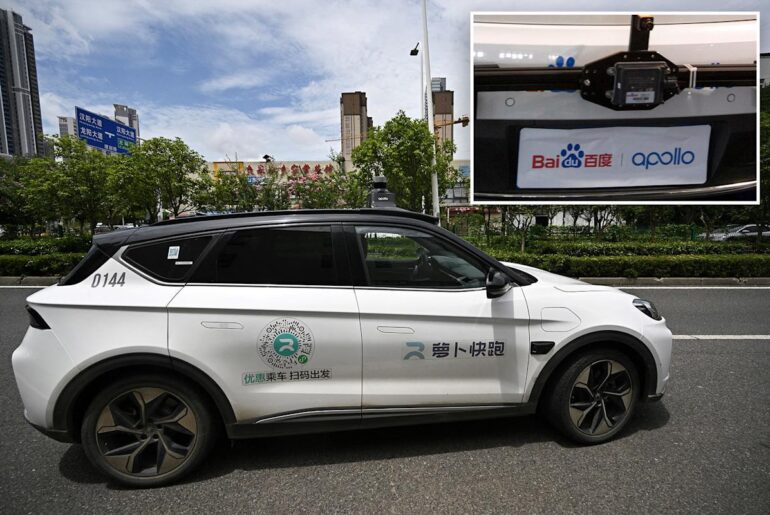
To strengthen its competitiveness, Hyundai Motor and its affiliate Kia are expanding partnerships with Chinese tech firms Baidu and Tencent to enhance in-vehicle infotainment and connected services.
Analysts say Hyundai must go further by reshaping its brand identity in China — moving away from its legacy as a foreign automaker and toward a more technology-driven image centered on software-defined vehicles and autonomous driving capabilities.
As China’s EV market continues to expand amid intensifying competition, Hyundai’s ability to execute this shift will be key to turning its ambitious targets into meaningful gains.
hyejin2@heraldcorp.com