As the fuel crisis hits, going electric is becoming an increasingly enticing option for households and industries.
This has triggered a wave of interest in electric vehicles (EVs), with carsales seeing week-on-week EV searches increase by 76.7 per cent in the week the Iran war commenced. BYD, Tesla, Polestar and Zeekr attracted the most attention.
This led to EV searches tripling in March when compared to February data.
NRMA saw similar behaviours, reporting that the use of “electric vehicle” as a Google keyword surged 900 per cent on Monday March 23, while NRMA website traffic for “electric utes” and “electric SUVs” also jumped.
A recent carsales survey saw EV consideration – non-EV owners open to buying an EV – rise 19 per cent (to 55 per cent) from a November 2025 survey. Pricing concerns have dropped from 48 per cent to 44 per cent between the two surveys.
Carsales data services director Ross Booth said he expected EV uptake to increase if fuel prices continued as they were.
“Consumer sentiment can shift quickly, but transaction data and advertised prices usually take longer to adjust,” he said. “Over time, however, the laws of supply and demand still apply; if higher fuel costs persist, we would expect increased interest in more fuel efficient and electric vehicles to gradually flow through to used pricing.”
EV fever is feeding other parts of the sector as well, with NRMA Insurance seeing a 15 per cent rise in EV insurance enquiries in the two weeks to March 23 compared to the same period in February.
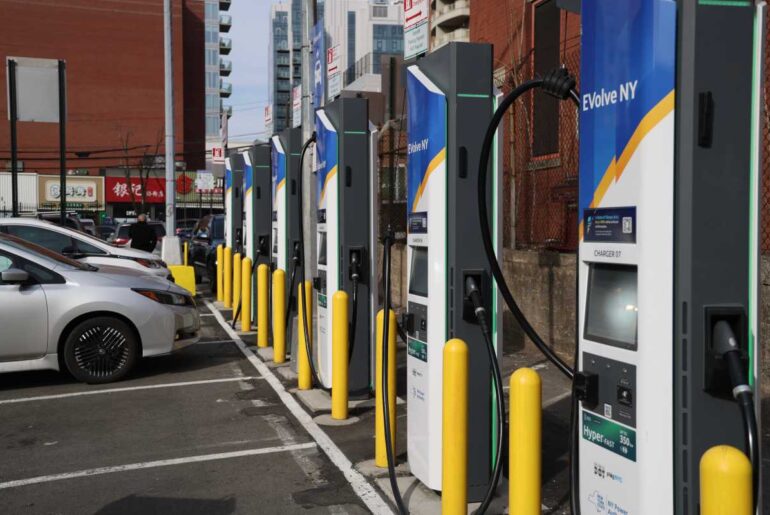
Usage of NRMA’s public EV charging network increased 19 per cent in the week ending March 22, with a 30 per cent uptick on the Monday alone.
“We’ve seen a clear uplift in utilisation, and the network is performing as intended with capacity to support further EV uptake,” NRMA head of capital works and network operations Ian Cosgrove said.
NRMA has charging stations strewn across Australia, with distinct concentration in New South Wales and Victoria.
Elsewhere, Australia recently completed its first end-to-end all-electric freight delivery, with an all-electric Windrose prime mover transporting a load of consumer products from Sydney to Canberra
The vehicle achieved an 84 per cent reduction in energy costs from a diesel prime mover travelling on the same route, with the trip completed on a single charge and 25 minutes faster than a diesel truck.
Whether or not surging EV interest is sustainable or just a sugar hit remains to be seen. Either way, people and industry are increasingly cottoning on to the benefits of going electric.
Subscribe to Energy and discover all you need to know about the energy transition.