Ministers have started a review of electric car sales quotas, raising expectations that the UK will reverse one of the government’s flagship green policies.
Government officials have begun laying the groundwork for a new approach that may result in changes to the zero-emission vehicle (ZEV) mandate.
One senior industry source said extensive discussions were now taking place between bosses and civil servants.
Another said that carmakers had been asked for detailed production plans for future models of battery (BEV) and plug-in hybrid electric vehicles (PHEV) between now and 2035. A third said they were buoyed that the government had “started to listen”.
A government spokesman said: “We recognise manufacturers are facing challenges, but we’ve shown we are adaptable before, and are beginning conversations to inform the planned review of the ZEV mandate, to be published by early 2027.”
Nevertheless, he added: “It has never been easier or cheaper to own an EV, especially against the backdrop of high and fluctuating prices at the pumps.”
The ZEV mandate came into force in 2024, stipulating that 22 per cent of new cars had to be zero emission that year. This increased to 28 per cent in 2025, and to 33 per cent this year. The trajectory then accelerates, hitting 80 per cent in 2030, by which point sales of new petrol and diesel cars will be outlawed. Hybrid car sales will be allowed until 2035.
The policy has been blamed for the UK registering its lowest vehicle production since 1952 last year. Car production fell 17 per cent in February, figures published on Friday revealed. Proponents of electric vehicles and environmentalists have urged the government to stay its course, however.
Whitehall sources pointed out that the government had been willing to flex the ZEV mandate in April last year following the imposition of US tariffs.
Failure to comply with the mandate leaves manufacturers liable for a £12,000-a-car penalty. Instead, they have heavily discounted sticker prices. Such discounts cost carmakers £10 billion over the first two years of the ZEV mandate, according to the Society of Motor Manufacturers and Traders (SMMT).
Last year, the European Union announced it would push back its 2035 deadline to outlaw the sale of petrol and diesel cars. Eight in ten cars built in the UK are exported, 54 per cent of which are shipped to the EU.
Officials from the government’s business and transport departments are racing to complete the review so that its findings can be published in the first few weeks of next year. Industry chiefs are holding out hope that the review can be expedited and published this year to avoid 2027’s sales quota of 38 per cent being implemented.
BMW and Vauxhall owner Stellantis is understood to be among the biggest critics of the ZEV mandate. Jaguar Land Rover (JLR) — which is preparing to unveil the first of a series of all-electric models after halting production of its electric-only I-Pace in 2024 — is also said to harbour concerns over the pace at which sales quotas will ramp up over the coming years.
Officials within the business department are keen to attract overseas carmakers to commence production in the UK in order to boost economic growth. However, multinational carmakers have highlighted the need for a different ZEV mandate framework before investing.
Furthermore, because the ZEV mandate was introduced through a statutory instrument and implemented by the devolved administrations, the substantive work of the review will not be carried out until after the May elections in Scotland and Wales.
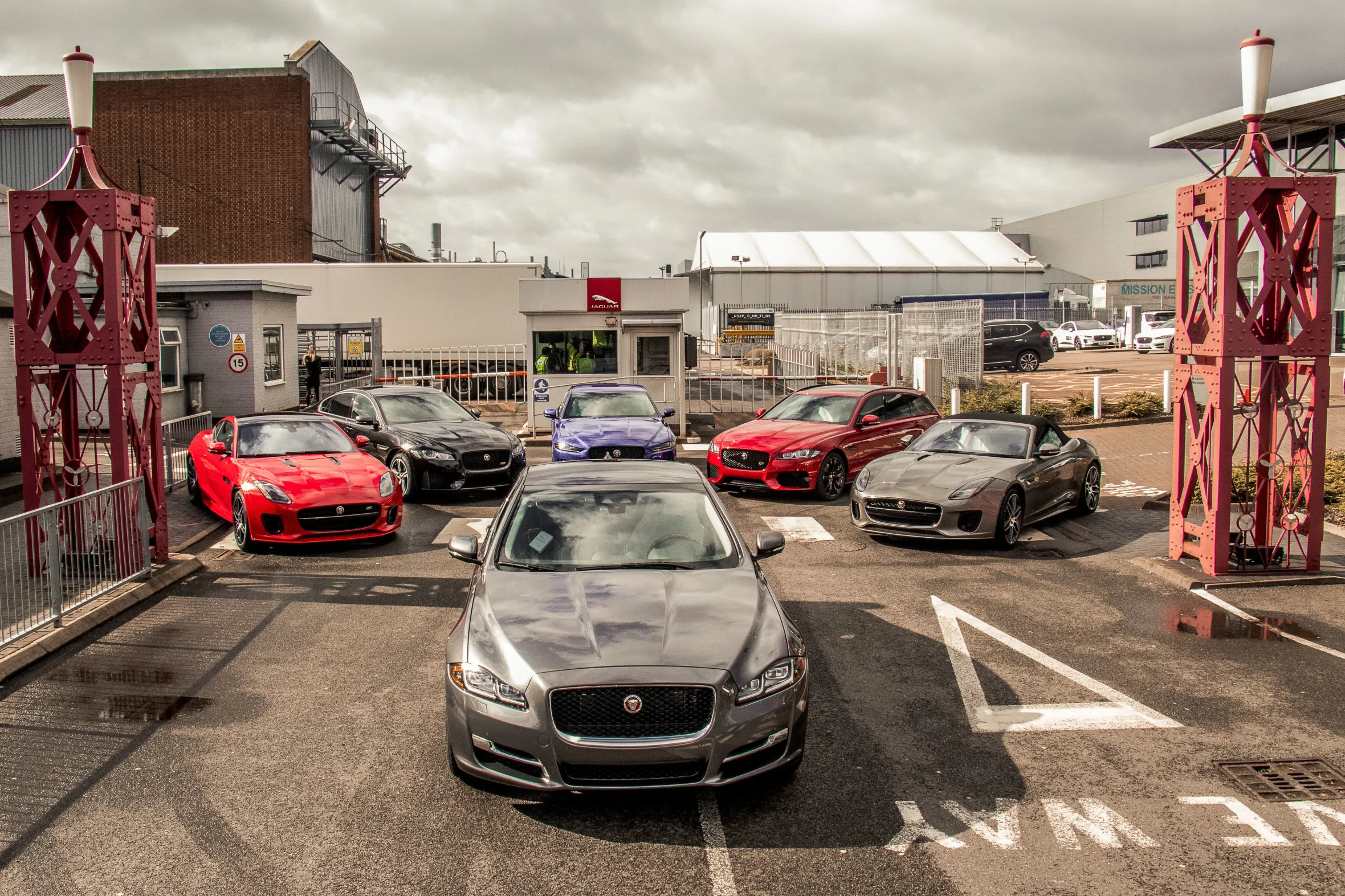 Disruption is feared at JLR’s Solihull site PA:Press Association
Meanwhile, JLR is hoping to avoid a fresh crisis as suppliers brace for manufacturing lines to grind to a halt in the West Midlands.
The company confirmed on Thursday that it would pause production of its Range Rover and Range Rover Sport models at the Solihull plant until April 8 — an extension of a traditional five-day Easter weekend shutdown.
However, large suppliers to JLR have told staff to expect the shutdown to continue until at least April 13. And there now are fears of a repeat of the disruption at the end of last August when JLR’s global operations ground to a complete halt because of a cyberattack.
The latest setback stems from a fire at Norwegian firm Raufoss Technology, which specialises in supplying lightweight aluminium chassis components to the automotive industry.
As a “single-source supplier”, Raufoss is believed to be the only firm that distributes aluminium chassis components, such as suspension parts and bumper systems, to JLR. Suppliers expect this to affect certain models “for several weeks”. The Raufoss fire took place at 3:30am on March 5. There were no injuries among the company’s workforce of 180 people.
A JLR spokesman said: “Due to a parts supply challenge … we are temporarily pausing production on certain vehicle lines at our Solihull manufacturing facility. We are working closely with that supplier to resolve the issue as quickly as possible and minimise any impact on our clients or our operations.”
Raufoss did not comment further.