Support CleanTechnica’s work through a Substack subscription or on Stripe.
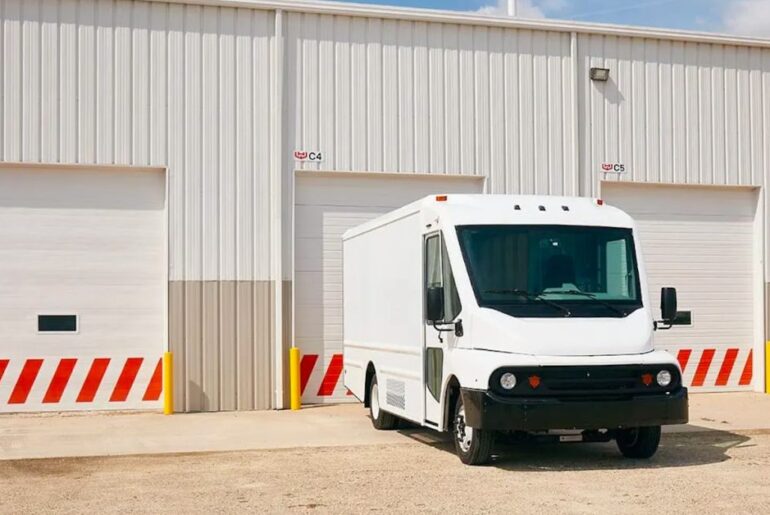
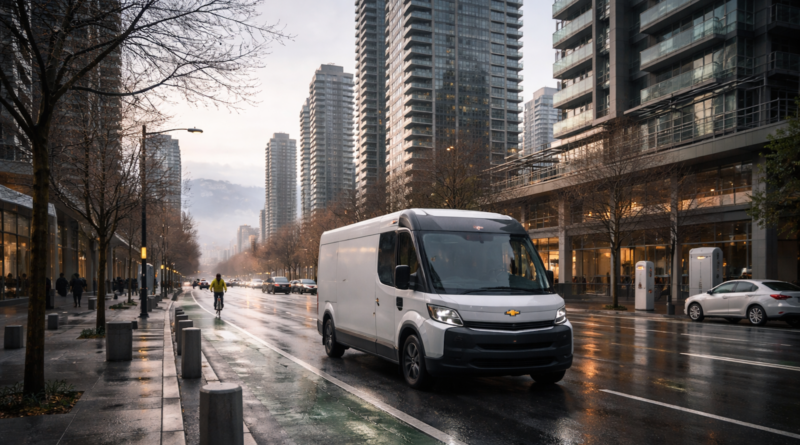
I see BrightDrop vans regularly in Vancouver. That is one of the many small pleasures of living in a city that functions as a pocket of the future. Battery buses show up before they are common elsewhere. Heat pumps are ordinary. Public charging is part of the furniture. Electric delivery vans are on the street often enough that they stop feeling novel. BrightDrop fit that pattern for me. The vans looked like a sensible next step in urban logistics, a vehicle class that should be one of the easiest to electrify because the routes are predictable, the daily mileage is manageable, and the vehicles tend to return to base. That made it surprising to discover that BrightDrop was effectively a dead product. What looked from the street like an emerging normal turned out to be a commercial dead end.
That surprise matters because BrightDrop was not a science project. It was General Motors’ attempt to build a modern electric delivery platform for the North American market. The vehicle had serious payload, up to 614.7 cubic feet of cargo volume, and a claimed range of up to 272 miles in the configuration Chevrolet highlighted for fleets. In theory, that should have been enough to make it attractive for parcel delivery, service fleets, and urban freight. In practice, Reuters reported that GM halted BrightDrop production in Ontario in April 2025 because demand was weaker than expected, with only 274 vans sold in the first quarter of 2025 versus 256 in the same quarter a year earlier. For a major automaker with a dedicated plant, that is not a launch curve. It is a warning flare.
The easy story would be that electric vans do not work. That is the wrong story. The better story is that the North American market did not create the conditions under which this class of vehicle could win at scale. That matters because in China, electric vans in the same broad urban logistics category are not a curiosity. They are mainstream. The International Council on Clean Transportation reported that new energy urban logistics vehicles in China reached 45.2% market penetration in 2024, up from 37.1% in 2023. For the light-duty subgroup at 3.5 tons gross vehicle weight and below, the segment closest to BrightDrop-like delivery work, penetration reached 59% in 2024. China did not prove that electric delivery vans are hard. China proved they can become normal.
That divergence is worth taking seriously because logistics is not a side issue. It is part of the cost structure of the economy. Parcels, retail replenishment, service calls, and urban deliveries all ride on light commercial vehicles. If one economy finds a way to push the cost of those movements down while another keeps paying more for vehicles, more for fuel, and more for maintenance, the difference compounds. It shows up in delivery margins, warehouse economics, retail prices, and the competitiveness of domestic supply chains. A van is not just a van. It is a moving node in a larger system of economic efficiency.
The first reason China pulled ahead is that it got to the right part of the market first. Urban logistics is one of the cleanest use cases for batteries in road transport. Stop-start driving favors regenerative braking. Predictable routes make charging easier to plan. Depot return lowers infrastructure complexity. Daily mileage is often well within the range of modern battery vans. These are not edge cases. They are ordinary attributes of city freight. When ICCT identified urban logistics as the most electrified major commercial vehicle category in China, that was not an accident. It was the segment where technology fit the duty cycle. BrightDrop also targeted a favorable duty cycle, but it entered a market where the supporting economics and operating structures were less mature.
The second reason is simpler. China got the vehicles cheap enough. The International Energy Agency’s Global EV Outlook 2025 argues that China’s scale in batteries, vehicle manufacturing, and supply chains pushed EV prices down across the market. In the passenger segment, the IEA notes that two-thirds of battery electric cars sold in China in 2024 were cheaper than equivalent internal combustion vehicles. That exact claim is for passenger cars, not vans, but the industrial logic carries over. The same battery ecosystem, supplier depth, and manufacturing scale that drove down passenger EV costs also changed the economics of commercial vans. In North America, BrightDrop arrived as a specialized and costly vehicle. In China, electric vans increasingly arrived as work tools priced for the mass middle of urban delivery.
The cost differences become clearer when you compare actual vehicles. Chevrolet’s site lists the BrightDrop with a starting price after cash offers of $46,425. A Farizon SuperVan with a 106 kWh battery and a range of up to 247 miles in UK-market materials sits around the equivalent of the mid-$30,000s at market exchange rates when priced from Chinese yuan. This is not a perfect apples-to-apples match. BrightDrop is a larger walk-in step van with a different body architecture and cargo format. But it is directionally useful. North America tried to launch electrification in this segment with a premium-format vehicle. China flooded the segment with more conventionally shaped and less expensive vans first. That is how markets usually tip. They do not tip on the back of the most specialized product. They tip when the mainstream option gets cheap enough.
The third reason China pulled ahead is that it did not rely on vehicle price alone. Cities and national policy tilted the operating environment toward electric freight. ICCT’s China work points to explicit city targets and green freight pilots. Shenzhen targeted 113,000 new energy urban logistics vehicles in service by 2025. Chengdu targeted 80% of urban logistics vehicles on the road being new energy by 2025. In the top 10 Chinese cities for urban logistics vehicles, the average new energy penetration rate reached 74% in 2024. In the top 20 cities for light-duty new energy commercial vehicles, penetration ranged from 25% to 89%. That is a system pushing in one direction. In North America, the operating environment was more fragmented. Fleets had to do more of the work themselves, one procurement decision at a time, while policy support moved in and out of focus.
Charging matters as well, but not in the way people often talk about it. Delivery vans are not passenger cars. They do not need a public fast charger on every corner to work. They need depot charging, route confidence, and a broad sense that the ecosystem is real. China built that ecosystem. The IEA says that about two-thirds of global growth in public chargers since 2020 has occurred in China, which now has about 65% of the world’s public charging stock. That level of deployment does not just support vehicles. It lowers perceived risk for operators, drivers, and financiers. It signals permanence. North America has public charging, of course, but it has not built the same density, scale, or psychological certainty around electrified transport.
Then there is the total cost of ownership question, which is where the story becomes less policy oriented and more about money. In China, the spreadsheet is already favorable for many electric vans. Using a Farizon-style electric cargo van against a diesel SAIC Maxus V90 type benchmark, the electric van can carry a higher upfront price but still come out ahead because the operating savings are large. A new V90 was advertised from about $21,560, with fuel consumption as low as 7.6 liters per 100 kilometers. China’s diesel price on March 23, 2026 was about $1.20 per liter based on National Development and Reform Commission-linked reporting and the contemporaneous exchange rate. That means fuel alone costs roughly $9.09 per 100 kilometers. By contrast, a Farizon electric van at around 26 kWh per 100 kilometers, charged at an average Chinese industrial electricity price around $0.088 per kWh, lands at about $2.29 per 100 kilometers. The electric van saves on the order of $6.52 per 100 kilometers on energy. Over 35,000 kilometers a year, that is roughly $2,275 in annual energy savings. Over 10 years, before discounting, that is about $22,752. The entire purchase price gap can disappear in fuel savings alone.
That Chinese result is why electric vans could overwhelm diesel there. The question was not whether the van was cleaner. The question was whether it beat diesel on the numbers. For most fleets, it does. Once maintenance is added, the case improves further. The ICCT’s U.S. commercial vehicle TCO work found battery electric vans had lower maintenance and repair costs than combustion alternatives over a five-year period, and it cited operators such as DHL seeing 20% to 30% maintenance savings in urban freight applications. That pattern is not unique to the United States. Battery electric drivetrains have fewer moving parts, no oil changes, and less brake wear in stop-start duty cycles because of regenerative braking. China made it possible for fleets to see those operational advantages clearly on a financial statement.
The American comparison is more conditional. ICCT’s 2022 analysis of Class 2b and 3 vans in the United States found that over a five-year ownership period, total cost of ownership for battery electric vans ranged from $69,000 to $92,000, compared with about $82,000 for diesel vans and $71,000 for gasoline vans. The key nuance in the study was that a 200-mile battery van was already cheaper to own than a diesel version, while longer-range variants were not always clearly ahead. That is an important clue. The U.S. market could make electric vans work when the vehicles were right-sized and the duty cycle was favorable. It struggled when products carried larger batteries, higher sticker prices, or more specialized formats. BrightDrop was exactly the kind of product that pushed toward the harder end of that equation.
Energy prices also shaped the gap. U.S. average electricity price across sectors was 14.17 cents per kWh in January 2026, while on-highway diesel was $3.52 per gallon in January 2026 according to the U.S. Energy Information Administration. Those prices do favor electrification, but not by enough to erase a large capital cost premium quickly in every case. A bigger, longer-range van with a high sticker price can still struggle to beat diesel on a near-term fleet spreadsheet, especially when resale values, depot upgrades, and procurement conservatism are added. In China, lower electricity prices and more affordable vehicles made the energy arbitrage stronger. In the United States, the fuel savings were real but often not dominant enough.
Policy instability widened the difference. The U.S. commercial clean vehicle credit under Section 45W provided support for commercial EVs, but the policy environment around electrification became less stable in 2025, and the credit was later terminated for vehicles acquired after September 30, 2025 under the July 2025 tax law changes. BrightDrop’s production halt came before that formal termination, so weak demand cannot be blamed on that change alone. But it still mattered. Fleets making multiyear decisions care about policy durability, not just today’s subsidy. China’s market was shaped over years by industrial policy, local targets, procurement support, and urban operating preferences that pointed in the same direction. North America offered some incentives, some charging, some product development, and a lot of uncertainty. Those are not the same thing.
This is where the logistics cost story becomes the important story. If China can buy electric urban delivery vans at prices that are already workable, charge them with lower-cost electricity, maintain them more cheaply, and operate them in cities that favor their use, then the result is not just lower emissions. It is lower cost per delivery mile in dense urban freight. If the United States keeps buying more expensive vans, using more diesel, and converting fleets more slowly, then it is leaving a quiet efficiency gain on the table. The difference may not transform national competitiveness by itself, but it stacks on top of warehouse automation, port electrification, battery manufacturing, and urban freight policy. Small structural advantages compound. Logistics is one of the places where they show up first.
There is also a lesson here about the difference between seeing the future and scaling the future. Vancouver let me see BrightDrop often enough that the vehicle felt established. That was real. Pockets of the future matter because they reveal what is possible early. But they can also mislead. A few visible vehicles in a progressive urban market can create the impression of commercial success when the broader economic system has not aligned. China aligned the system. It made the vehicles, reduced the cost, built the charging, shaped city policy, and let the economics run downhill from there. North America produced a glimpse. China produced a market.
The deeper lesson of BrightDrop’s death is not that GM failed to build an electric van. It is that North America still tends to approach transport electrification as a product story when it is actually a systems story. Vehicles matter, but so do financing, charging, policy durability, urban operating rules, and manufacturing scale. China got enough of those moving together that electric vans started to beat diesel not just on emissions, but on ordinary business arithmetic. That is why electric vans became dominant there and stalled here. And that is why the competitive advantage matters. The country that makes clean logistics cheaper gets cleaner streets and better economics at the same time. The country that treats it as a premium niche gets a few nice sightings in cities like Vancouver, then watches the product disappear.
Sign up for CleanTechnica’s Weekly Substack for Zach and Scott’s in-depth analyses and high level summaries, sign up for our daily newsletter, and follow us on Google News!
Advertisement
Have a tip for CleanTechnica? Want to advertise? Want to suggest a guest for our CleanTech Talk podcast? Contact us here.
Sign up for our daily newsletter for 15 new cleantech stories a day. Or sign up for our weekly one on top stories of the week if daily is too frequent.
CleanTechnica uses affiliate links. See our policy here.
CleanTechnica’s Comment Policy