Introduction
The new BYD Sealion 5 is part of a significant technical shift within Britain’s new car market. It is one being driven almost entirely by a cohort of value brands we simply didn’t have a few years ago, and is likely to markedly alter our expectations for real-world efficiency and metal-for-the-money value that the providers of our daily family transport should offer.
This specifically concerns hybrid powertrains. A new wave of range-extender-style, petrol-electric, mid-sized SUVs has hit the market, made up of cars supplied by Chinese manufacturers competing for value-driven custom, and driven primarily not by their combustion engines but rather by electric motors. Many offer sizeable drive batteries, plug-in functionality and significant electric range.
This test concerns what could be the most notable arrival of all in that new wave. The Sealion 5 is the car that BYD’s already rapidly expanding network of UK dealers expects to supercharge its success. A compact SUV sitting in the popular Qashqai/Sportage segment, it is precisely the right car, claims its maker – with the right hybrid powertrain, offered at the right price – to do meteorically well in 2026. From a standing start, they suggest, it could even become one of the UK’s best-selling cars.
Would it merit such a status? Read on to find out.
Design & styling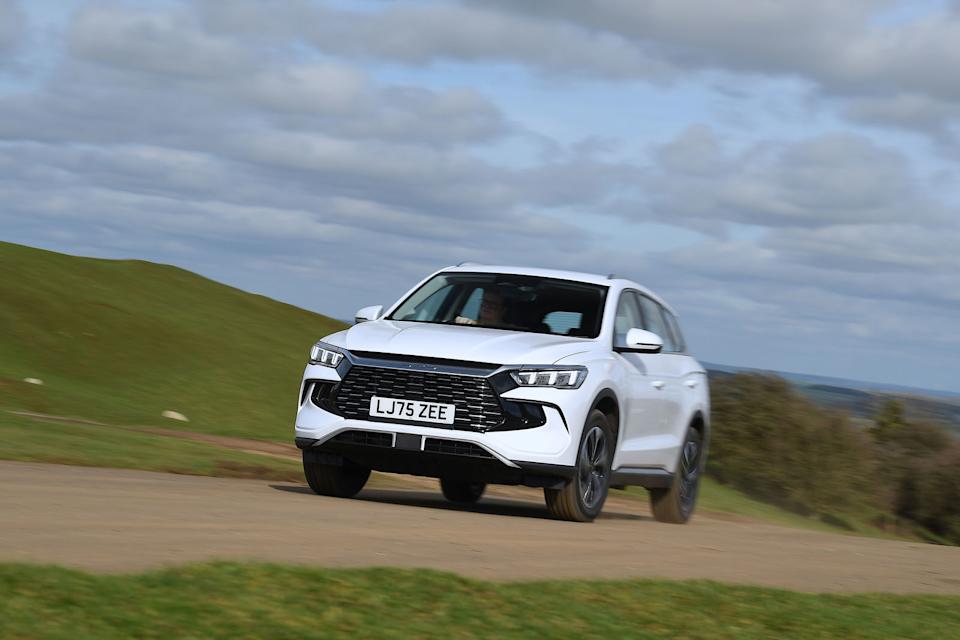
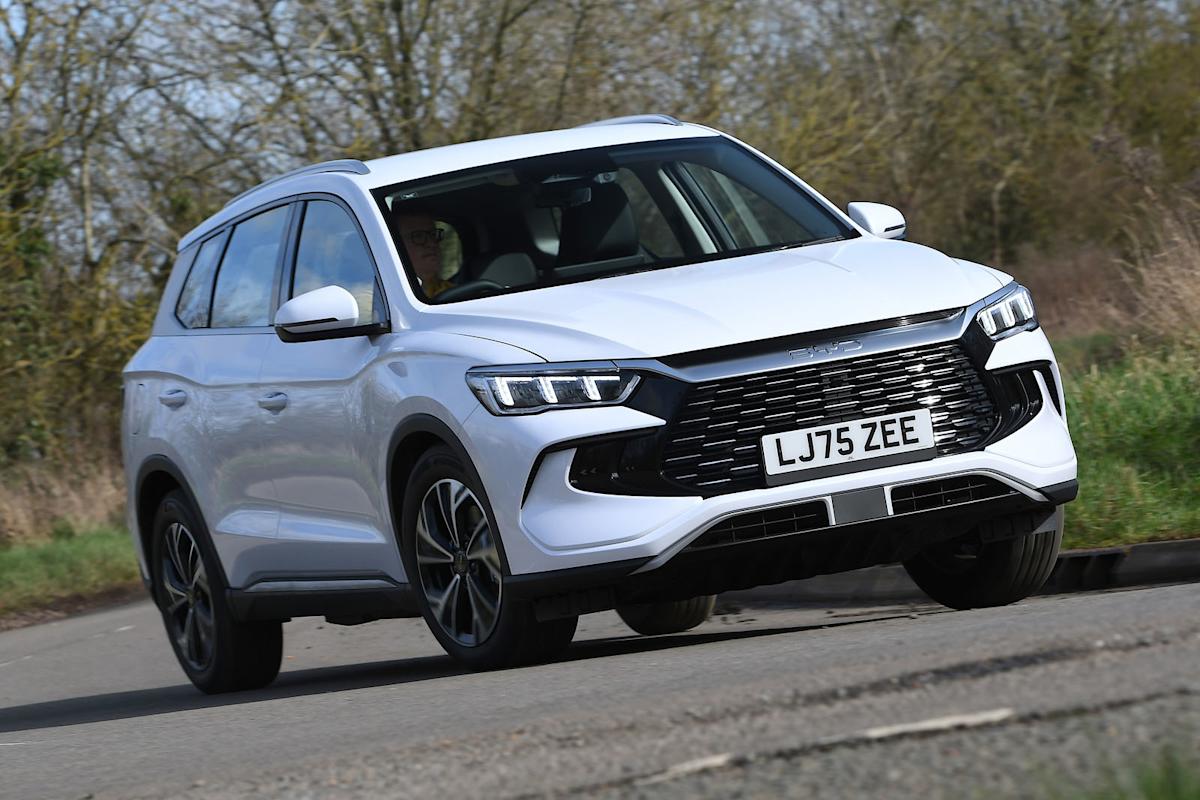
The Sealion 5 is big for its class. Almost 200mm longer than either a Kia Sportage or a Volkswagen Tiguan, it conforms to Chinese-market ‘A+’ class conventions on size more than European segment norms. It lacks the stoutness of visual presence to pass itself off as something comfortably mid-sized (like a Toyota RAV4 or Honda CR-V) and, to our eyes, is also more imitative than other BYD designs we have seen. But you could still see it appealing to families attracted to the most practical option to which their budget might stretch.
Exclusively front-wheel drive, it has a unitary steel chassis, and steel coil springs and all-independent axles front and rear (so there’s no class-typical torsion beam rear suspension here to save cost or make packaging space).
Unlike its close competitors from Omoda, Jaecoo and MG, the Sealion 5 comes only as a ‘range-extender’ plug-in hybrid, using BYD’s DM-i (Dual Motor-intelligent) powertrain. This is a system capable of EV, series hybrid and parallel hybrid running, and it relies on a 194bhp permanent magnet synchronous motor as its primary power source.
Drawing power from one of BYD’s Blade-styled lithium-iron-phosphate drive batteries, of either 13.0kWh or 18.3kWh capacity (we tested the former, in cheaper Comfort spec), that motor typically drives the front wheels directly and all on its own. Once battery voltage is depleted, the car’s 1.5-litre four-cylinder ‘Xiaoyun’ petrol engine comes into play. Although a turbocharged version of this engine is used to power other BYD models, the Sealion 5 gets a normally aspirated, high-compression version with Atkinson-cycle combustion, rated for a very creditable 43% thermal efficiency and producing 95bhp and 90lb ft.
Typically the engine is used as a power generator only, driving the DM-i system’s ‘P1’ motor-generator. Only in circumstances of high power demand, or during higher-speed cruising, does the combustion engine connect to the driven wheels via secondary planetary gearing, contributing to a peak total output of 209bhp.
Weighing a claimed 25kg less than the Design model (which has a bigger drive battery but otherwise the same powertrain), the Comfort-spec car is rated for the better 0-62mph performance of the two but the same ‘battery-depleted’ WLTP fuel economy (51.4mpg).
Our car weighed 1720kg on the proving ground scales: 94kg lighter than the Jaecoo 7 SHS we tested in 2025 but 39kg heavier than the Nissan Qashqai e-Power (itself a range-extender, though not a plug-in hybrid) tested in the same year.
 Interior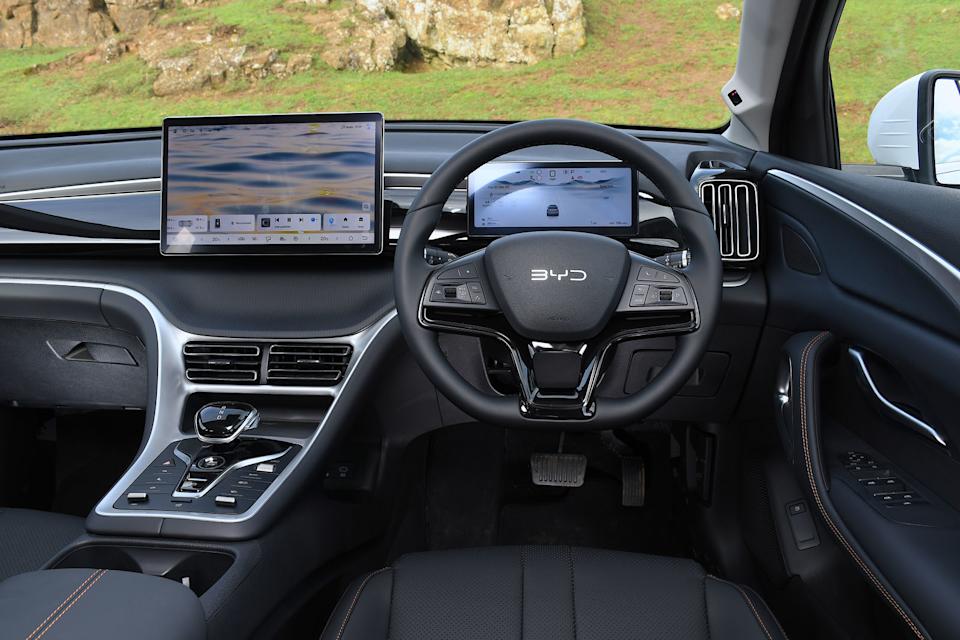
BYD regulars may be familiar with the faintly gluey smell in the Sealion 5’s cabin. It’s not desperately strong but we certainly recognised it, having first encountered the smell in the Dolphin supermini of 2023. Its source is hard to identify, and whether you consider it a problem is likely to depend on how sensitive your nose is.
The car’s ‘vegan leather’ upholstery looks and feels a bit plasticky, and the front seats have integrated-style head restraints that don’t adjust up or down, and didn’t make for an ideally comfortable driving position for taller testers.
The cabin’s wider ergonomic design, meanwhile, is a little adversely affected by a driving position that feels slightly perched and flat in the cushion, and a steering wheel that you can’t quite put at just the right angle without it covering at least part of the 8.8in digital instrument screen ahead of you. The compromise you come to is acceptable and comfortable enough to pass muster, though. The secondary controls are conventional, and all located where you expect them to be. All the usual cabin storage is provided; the door pockets are a little slim, but there’s plenty of space in the centre console, for example.
Material cabin quality is less consistently good than in BYD’s pricier models. While there are a few eye-catching touches (the glassy engine start button and the colourful stitching on the interior door handles), your attention is drawn just as powerfully to more conspicuously cheap finishes (the flimsy-looking air vents and the shiny gloss black trim of the fascia and steering wheel boss). Overall, the interior is marginally more solid and inviting than some Chinese-brand rivals but doesn’t exceed expectations of a budget family SUV.
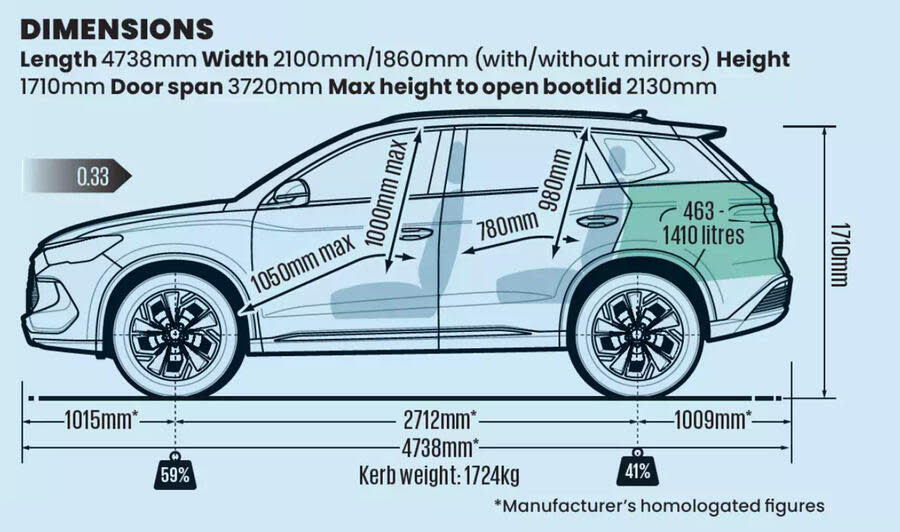
Practicality standards are at least class-competitive, and in some areas better still. While neither the front nor the back row feels particularly wide, there’s decent leg room for adults in the rear, and especially impressive head room even for taller adults.
Boot space is reasonable, although BYD’s design of the storage tray under the boot floor seems a little short-sighted, since you can’t quite squeeze either of the car’s charging cables in there, nor adjust the floor downwards to liberate extra loading capacity. The available space above is a little shallow by class standards but, because the rear cabin is a good size, folding the rear seatbacks opens up more maximum loading length than some rivals offer.
Multimedia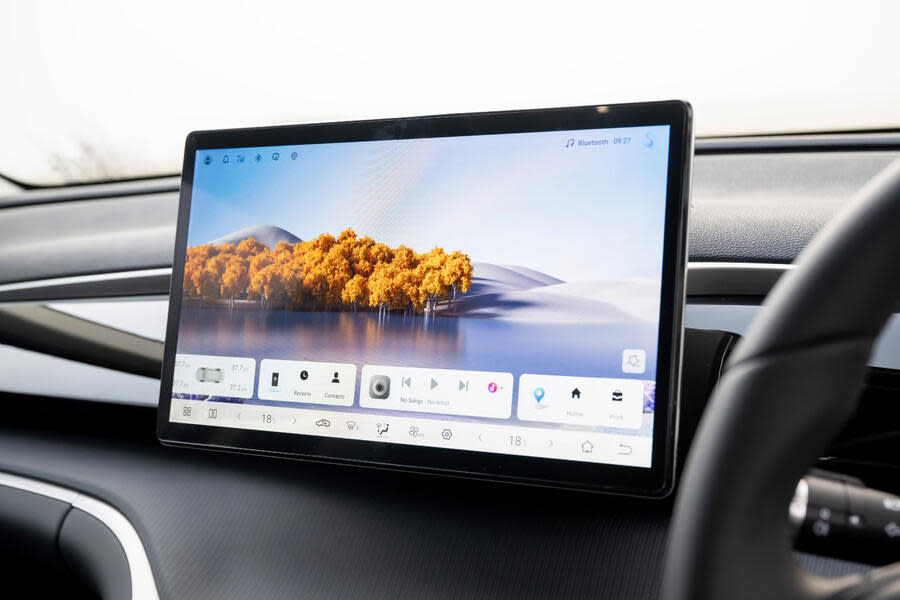
The 12.8in infotainment system on the Sealion 5 is far from the worst of its kind for usability. You can slide tiles across the foot of the home screen that give quick access to various systems and adjustments. There’s a screen of shortcut controls that you can swipe downwards to access (this allows you to turn off some, but not all, of the irksome driver assistance tech, to which we will come). And you can adjust heating and ventilation settings at the base of the display, or by swiping three fingers across the screen (up/down for temperature adjustment, left/right for fan speed), which is certainly less fiddly than any other route.
And yet it remains an annoyance to have to dive so deep into the settings menu to find the energy efficiency displays or charging settings, for instance, or for secondary driving controls for things like the regen and ‘battery save’ mode, which merit proper physical switches (some of the physical switchgear that BYD does provide, for off-road traction control and blindspot monitoring deactivation, seems oddly obscure).
There are still a few too many distractions here, though; too much consideration given to the digital tech for its own sake and not enough for making the driver’s life easy and keeping their eyes on the road.
Engines & performance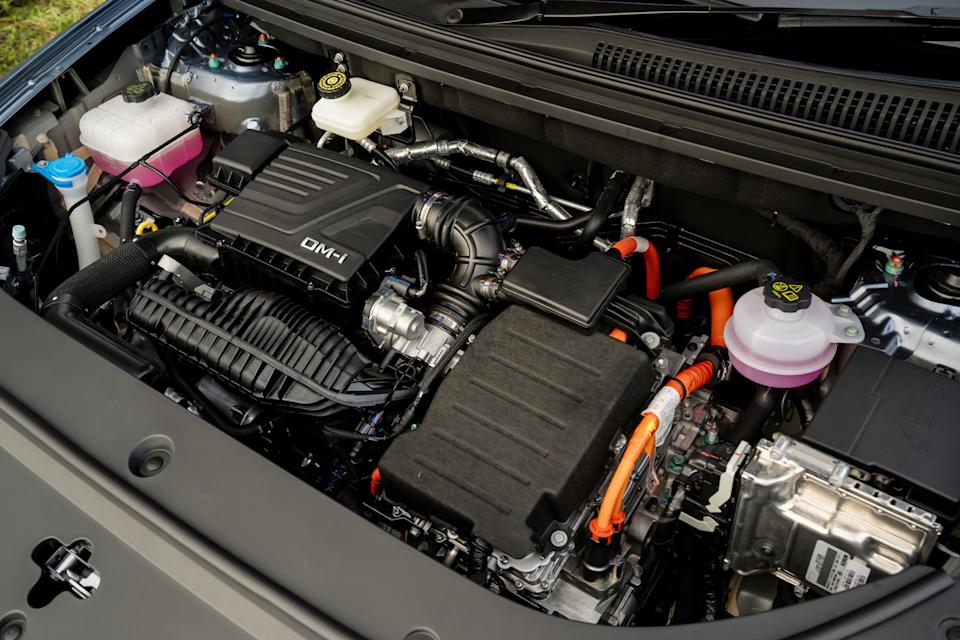
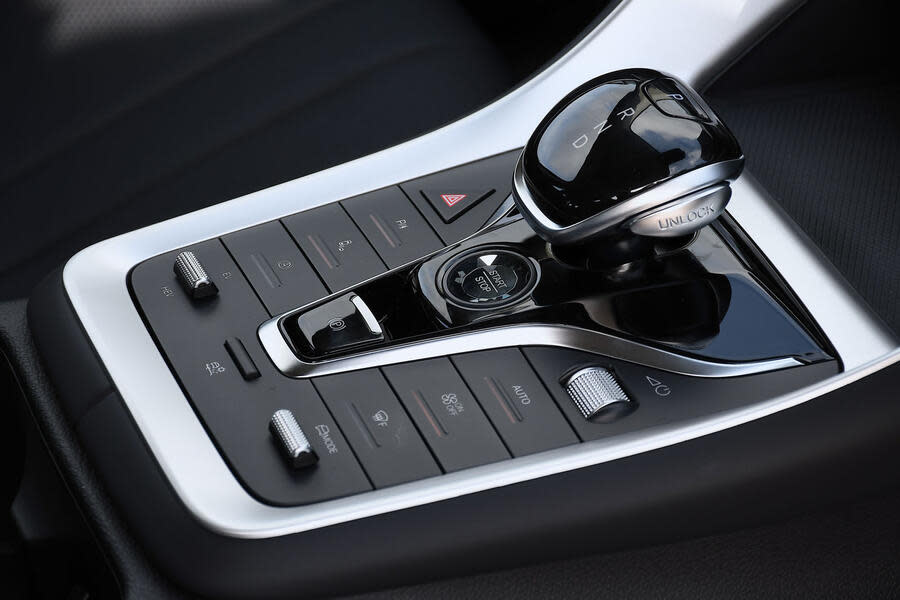
There’s little faff involved in getting the Sealion 5 moving. The chunky drive selector is nudged backwards into ‘D’. There is no ‘S’ or ‘B’ mode, nor are there regen paddles to juggle your brake energy regen with (an omission we would question). It’s apparent, in short, that BYD wanted the car to be straightforward to operate, and for little of the plate-spinning in which its powertrain indulges to become apparent to the driver.
It moves off entirely like an EV. The combustion engine typically stays quiet and at rest at low speeds, assuming there’s at least some usable charge in the drive battery, and the electric motor provides plenty of clean throttle response and accessible everyday driving performance. For proof of that, consider the fact that, in EV mode, the car needs a little over seven seconds to hit 50mph (Nissan Qashqai e-Power: 5.9sec, Dacia Bigster Hybrid 155: 6.9sec). In flooring the accelerator pedal and rousing its combustion engine to help, however, you only trim that by about a second and a half.
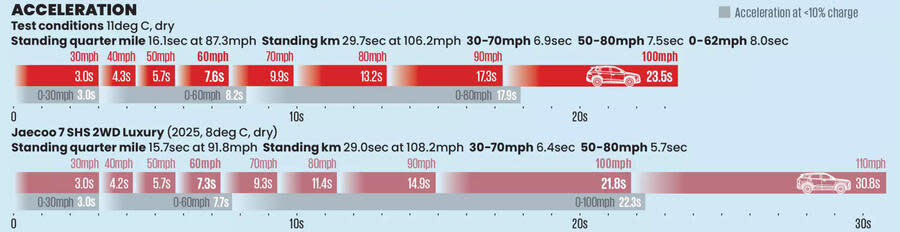
The easy drivability and seamless, accessible torque of an averagely powerful EV is apparent here when the car is running without its engine, which seemingly seldom needs to be spinning to top up the Sealion 5’s performance reserves, at least until you get well out of town and close in on the national speed limit. And mostly, even when the car is operating in series hybrid mode up to about 50mph (when the engine runs as a generator), it remains comparably refined to when in EV mode. The engine only seems to need to spin at medium and low revs to keep the battery topped up, and does so impressively quietly and smoothly.
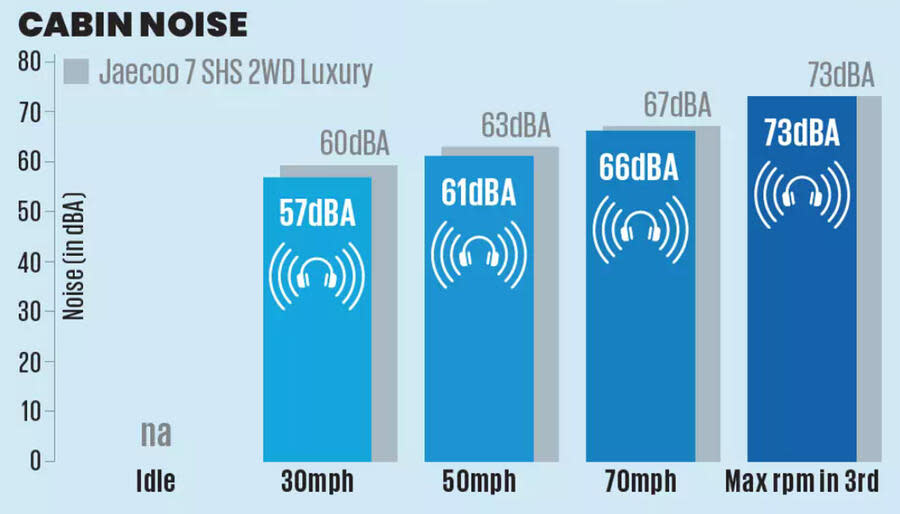
At motorway speeds, however, when the engine connects to the wheels, the 1.5-litre four starts to make a commotion you can feel. Our test car also emitted the occasional ‘hot smell’ from the engine bay through the ventilation system during motorway running, and proved to be slower-accelerating than key rivals (Qashqai e-Power, Jaecoo 7 SHS) from 50-80mph.
 Ride & handling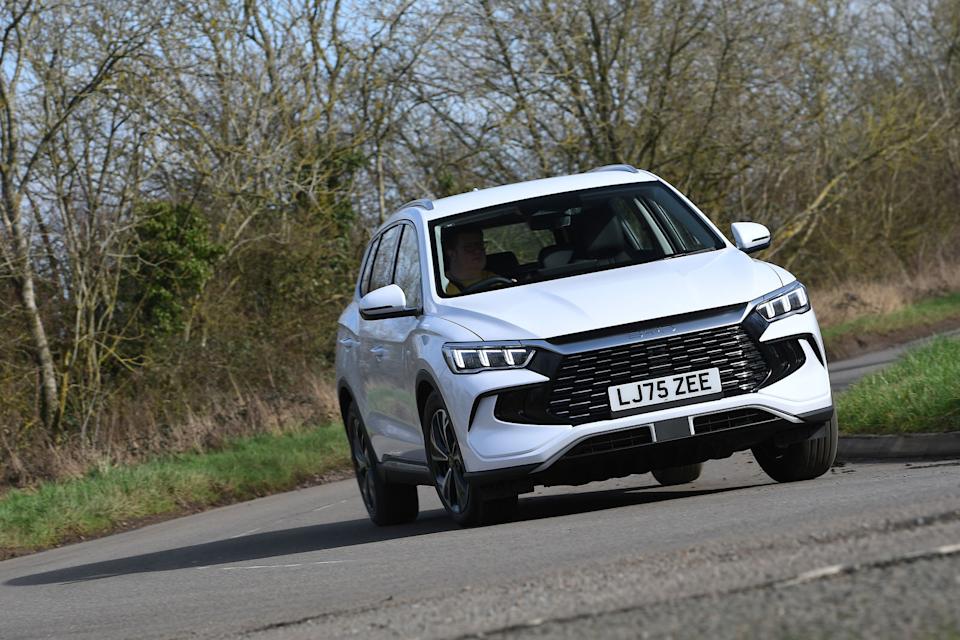
The Sealion 5 passes an adequate standard here, without bothering to go any further than it really needs to. It won’t pleasantly surprise anyone interested in how it rides, handles and steers, but it certainly shouldn’t alarm or offend anyone who just wants competent family transport that won’t attract their attention for the wrong reasons.
There’s an edge of firmness and hollowness about the low-speed ride indicative of a car whose dynamic character hasn’t had that last layer of fine-tuning – or very much spent, per component, on its suspension hardware. There’s a muted sort of monotony of feel, likewise, about the power steering – which is at least predictably weighted and paced. Grip is adequate and decently balanced, however, and body control, steering authority, low-speed agility and high-speed stability are all present and can be depended on.
The Sealion 5 is best at lower speeds, when it feels fairly light on its feet, and as agile and manoeuvrable as any car in its class. That aforementioned firmness in the suspension manifests itself with a slight clunkiness in the secondary ride, and occasionally slapdash wheel control that, over broken urban surfaces and when dealing with big traction or braking forces, can make the rims seem to hop up and down noisily on their tyre sidewalls. There is also a restiveness about the primary motorway ride that speaks to a slightly ‘route-one’ tuning philosophy. You would stop short of calling it uncomfortable; it just feels a bit rudimentary.
 Assisted Driving
BYD’s ADAS functions have struck us as particularly inconsistent when we have tested other models, and that’s still how they seem here. The driver monitoring system is over-sensitive and overbearing, triggered even by a slightly lingering look in the rearview mirror, and the speed limit recognition system is prone to missing posted limits.
But the semi-autonomous intelligent cruise control, by contrast, can keep to the middle of a motorway lane dependably well, and regulate distance to the car in front without being distracted by adjacent traffic. It can be toggled into a more ‘dumb’ mode (without lane keeping) via a physical switch on the steering spoke.
All of the systems default to ‘on’ with every ignition cycle, and all depend on the touchscreen display to be switched off. A swipe-down shortcut menu makes it at least fairly easy to access some of them. The driver monitoring system is hidden away in a different menu entirely, though, making it very tempting to tape over the driver-facing sensor on the A-pillar to disable it permanently.
MPG & running costs
Price has long been an obstacle to the wider adoption of plug-in hybrids, but BYD is clearly out to break down that barrier. The Sealion 5 has become one of few PHEVs available in the UK for under £30,000 (its smaller sibling, the Atto 2 DM-i, will take the PHEV entry point even lower soon). Something comparable from a European brand is likely to cost you close to £40,000.
This really is plug-in family motoring for the price of a regular petrol compact SUV in most other showrooms: on PCP finance, from under £300 a month after a modest deposit, it is cheap even for a Chinese value brand.
At that price, your ability to actually plug it in, and make the running cost savings necessary to recoup the purchase price, clearly matters vastly less. However, our entry-level Sealion 5 Comfort returned an electric test range of 32 miles – enough to make it worth charging at home, and running electrically over short hops, if you’re able. AC recharging at a maximum 3.3kW is a bit disappointing, but the battery typically takes less than four hours to top up.
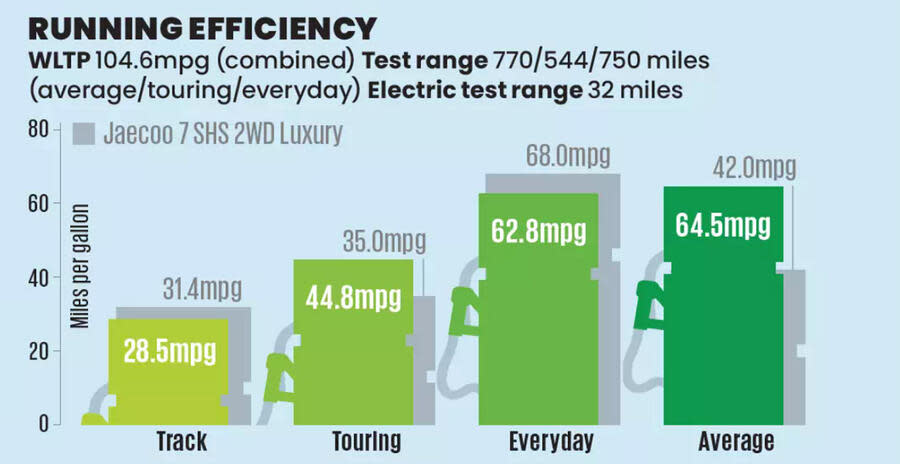
If you’re less easily able to charge, you’ll be more interested to learn that the car returned 62.8mpg on our ‘everyday’ intra-urban efficiency test (which PHEVs undertake with a depleted battery), which suggests that the advantages of a default-electric, series hybrid powertrain over a more typical PHEV in such an environment are clear.
At motorway speed, it returned a less remarkable 44.8mpg (Nissan Qashqai e-Power: 48.8mpg). But, at its best, this is a very economical family car able to cut petrol expenditure considerably in the right circumstances.
Wider test experience suggests that the Design-spec model seems good for about 40 to 45 miles of electric range and a similar 50-60mpg in engine-on running.
Verdict
The Sealion 5 isn’t a BYD like those we have reviewed already. It’s more conventional-looking than, say, a Seal or a Sealion 7, and also feels like a more overtly value-oriented offering than some of its siblings, with fewer quirky or upmarket features.
But by simply existing – being a fairly practical C-segment SUV with a PHEV powertrain that costs under £300 a month – it will win plenty of interest. And it’s worthy of that interest in some ways.
It has creditable drivability and urban refinement, and offers plenty of apparent digital sophistication for the price. It isn’t a particularly inviting bit of design, inside or out, and the only way it will exceed your expectations is on city-centric efficiency, topped up from the mains.
In other respects, this is an okay kind of car – and, for the price, that’s probably all it needs to be.
]]>