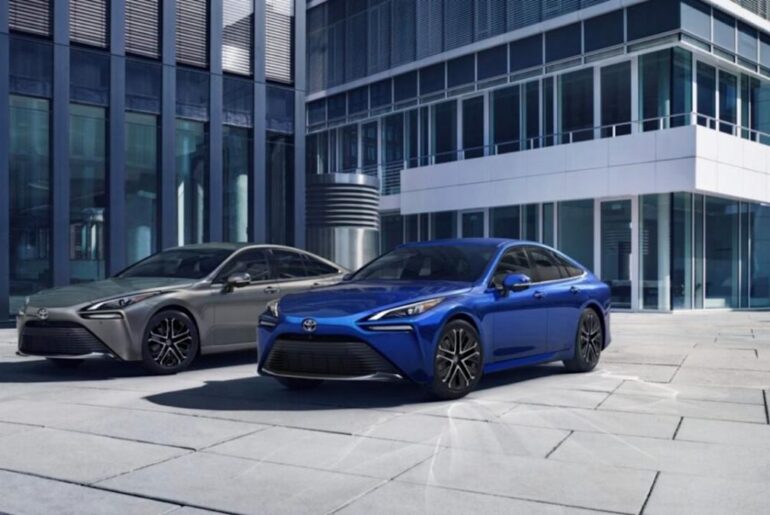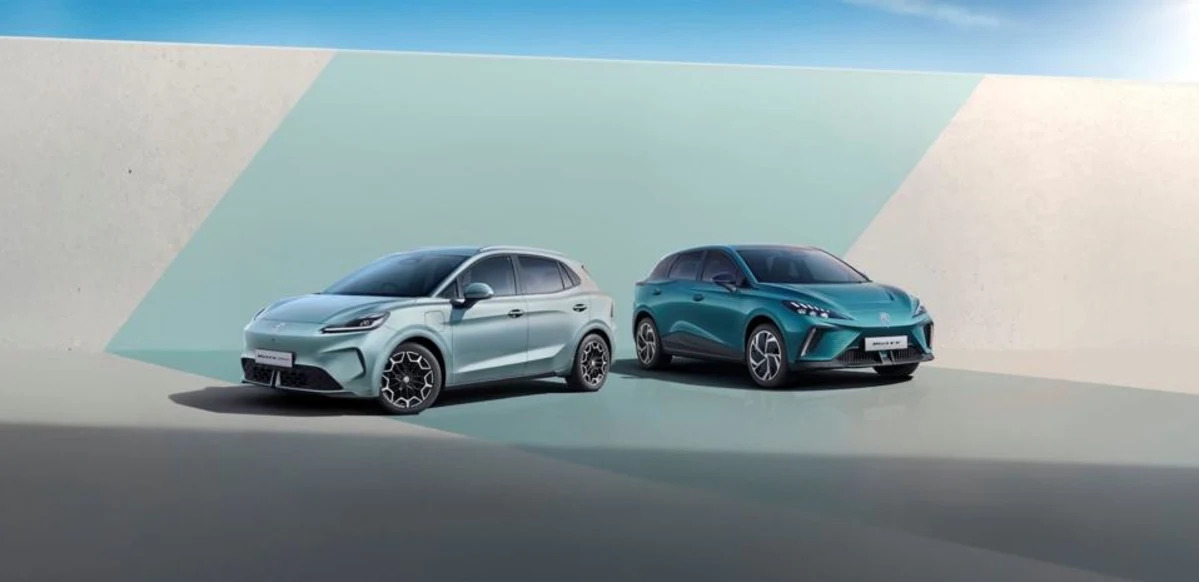
Solid-state batteries have been the holy grail of EVs for years, without ever getting any closer to launch. Now, finally, the first production electric car is set to arrive this year. The MG4 EV Urban will hit the European market in 2026, although its battery isn’t all-solid state, only semi. What’s all the fuss about? At the company’s first European Tech Day, MG’s Global Chief Battery Scientist, Dr Li Zheng, explains why semi-solid-state batteries provide another step forward for EVs.
Why Semi-Solid-State Batteries?
Solid-state batteries have been a focus of attention because they promise improved density, faster charging, and better safety. BMW even reckons the technology could help swing the EV market back in Europe’s favor. The extra density could mean 30-50% more energy capacity for the same weight, or the same capacity with 30-50% lighter batteries. Charging could be up to 80% faster, with less cathode and anode erosion delivering a longer lifespan. The lack of liquid electrolytes promises superior extreme temperature performance, and less volatility makes for a vastly reduced chance of fire.
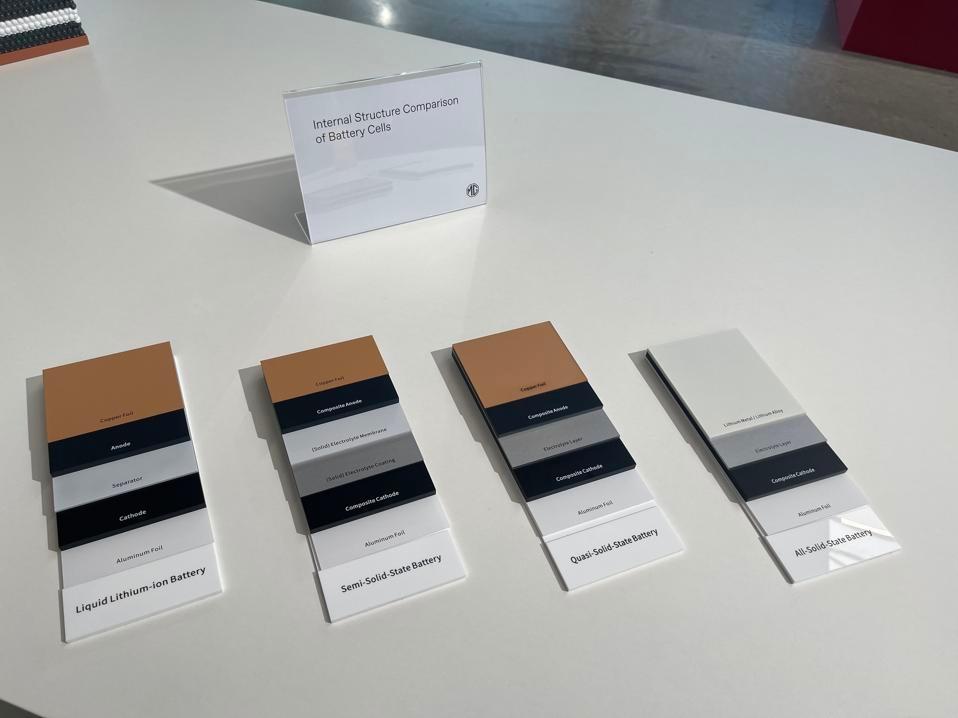
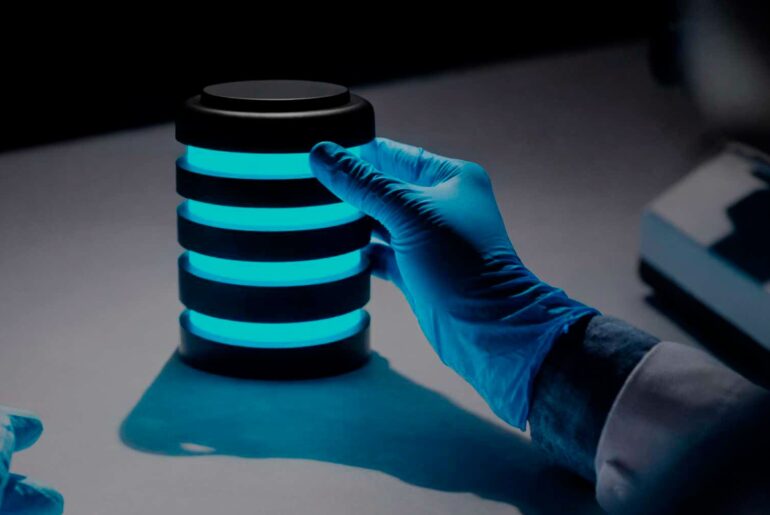
Semi-solid-state batteries have a different internal structure to conventional liquid lithium-ion.
James Morris
MG hasn’t gone all the way to a fully solid-state battery, however. Instead, its battery is “semi-solid-state”, because the electrolyte is only 95% solid. “That means we still have 5% liquid electrodes,” says Dr Zheng. “But traditional batteries have about 20% liquid content. We have reduced the lithium part, because less lithium means less liquid, for higher safety performance.” However, Zheng argues that the remaining 5% of liquid is still necessary to ensure solid conductivity with the cathode and anode.
The first car chosen to receive this technology, which MG is calling SolidCore, is the MG4 EV Urban, launched in the UK at the beginning of year. This was originally pitched as a lower-priced variant of the original MG4 EV, but so far MG hasn’t explained where a model with a semi-solid battery fill fit into the range. In China, an MG4 EV Urban was launched at Auto Shanghai in 2025, with a 53.95kWh semi-solid state battery boasting a range of 530km (329 miles). But this is in the CLTC cycle, which is even more optimistic than WLTP. In practice, the range will be more like 420km (262 miles) WLTP or 350km (218 miles) EPA. However, MG also promises “2C charging”, enabling 30-80% replenishment in 21 minutes with a fast enough DC charger.
Performance Benefits From Semi-Solid-State Batteries
Dr Zheng lists several other benefits. “The power delivery response will be better,” he says. “Alongside faster charging time, low temperature performance will be improved, as well as vehicle acceleration compared to Lithium Iron Phosphate (LFP) batteries.” Dr Zheng explains that semi-solid-state cathodes have a three-dimensional spinel structure, compared to Nickel Cobalt Manganese (NCM)’s two dimensions and LFP’s one, which is what gives SolidCore batteries improved performance. Reliability is allegedly up by 20%, charging speed by 15% in low temperatures, and power delivery improved by 20%, all compared to current battery technology.
Semi-solid-state batteries don’t require one type of chemistry, however. Instead, a range of options can provide different characteristics. “We used Lithium Manganese Oxide (LMO) for the MG4 EV Urban,” says Dr Zheng. “With the second generation, we will introduce some nickel to replace a part of the manganese, so the chemistry is called Lithium Nickel Manganese Oxide (LNMO).” This further improves energy density and charging performance. “In the future, we will use Lithium Manganese-Rich (LMR) chemistry.” This increases density even further compared to LFP. Like the latter, none of these chemistries require cobalt.
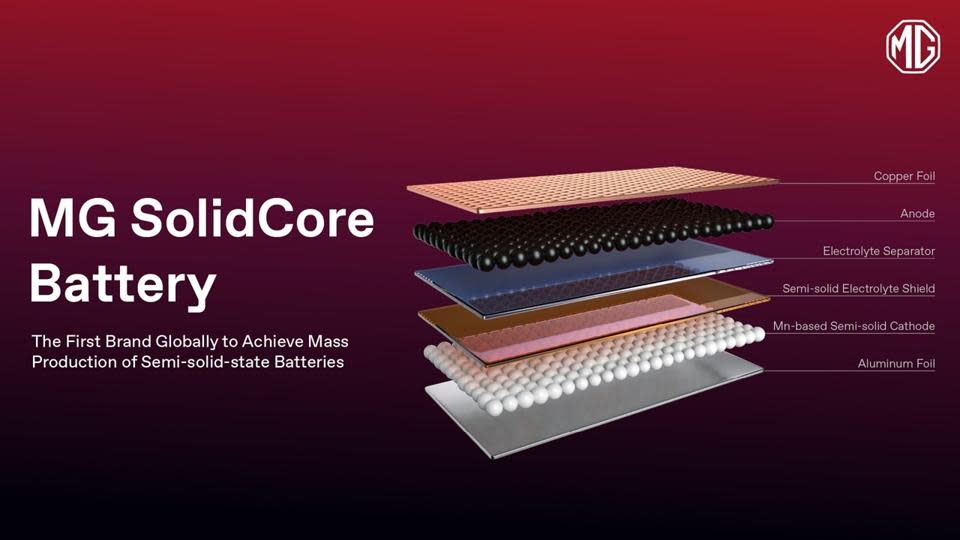
Semi-solid-state batteries still have some liquid electrolyte material.
MG
MG plans to use the most appropriate material for the range and cost required for a given vehicle. These chemistries also enable higher voltages, which vary the density available. “For our first generation the voltage is 3.8V,” says Dr Zheng. “The second LNMO generation is about 4.5V. If we increase the nominal voltage for the single cell, that means we can use less lithium. For the MG4 EV Urban the energy density is similar to LFP, because we focus on the cost balance.” However, MG is targeting a density of 400Wh per kg with future iterations, where current NCM cells sit at around 300Wh per kg and LFP at 160Wh per kg or less. Emerging sodium ion cells are around the same, albeit with much better low temperature and charging performance.
Interestingly, MG wouldn’t have been able to switch to these battery chemistries without the introduction of semi-solid-state technology. “We all know LFP batteries have a very good life, for example, 4,000 or 5,000 charge-discharge cycles,” says Dr Zheng. “If we use LMO in a liquid battery, the endurance may be only 500 cycles because the structure is not stable enough. However, if we use the solid electrolyte layer to maintain stability, we can achieve the normal requirement for an electric vehicle, which is more than 2,000 cycles. In our testing, LMO delivers about 3,000 cycles. That’s enough for our passenger cars now. Manganese materials can only work with semi or all solid-state batteries, not liquid ones.”
Semi-Solid-State’s Future Alongside Solid-State
While to start with MG’s semi-solid-state batteries will coexist with current LFP and NCM designs, in the long run different versions are likely to supersede both. “Our LMO will replace LFP and our LNMO will replace NCM,” says Dr Zheng. But he claims fully solid-state batteries will also enter the market soon. “In the next 5-10 years we think that all solid states and semi solids will coexist, for different vehicles. For top tier vehicles, we need all solid state, and for mass production cars, semi solid is a great choice for good performance and a keen price.”
It all sounds very promising on paper, but the question remains how this will be marketed to end users in the UK and EU in the MG4 EV Urban. The launch model has a 53.9kWh LFP battery offering a 258-mile WLTP range, while the new SolidCore version is expected to have an almost identical capacity so there won’t be much change in range. “The highlight of semi-solid-state is the cold climate capability and more responsive power delivery,” says Dr Zheng. “It’s also much safer than the current state batteries.” In reality, though, many buyers could enjoy the benefits without knowing the full technical details underneath, and just how significant they could be for the development of EVs.