As of this writing, the AAA says the average cost for a gallon of regular-grade gasoline in the U.S. stands at $3.98 per gallon. That’s close to a buck more than it went for a month earlier, with premium going for a whopping average $4.87. Californians pay the most in the nation to keep their cars running, at an average $5.84 for regular, with a high of $6.52 reported in the Golden State’s rural Mono County.
As they say, gas prices rise like a rocket and drop back down like a feather, so no matter how and/or when the ongoing “excursion” in the Middle East plays out, expect fuel costs to remain on the high side. Further exacerbating the issue is that refiners are ramping up production the costlier “summer gas” that’s required to temper tailpipe emissions in warmer weather.
While choosing a more fuel-efficient model is certainly sound advice if you’re already in the market for a new car, truck or SUV or have one that’s just coming off lease, it may not be significantly advantageous to trade-in a vehicle – particularly one that’s already paid for and otherwise meets your needs – solely for the sake of obtaining additional mpg.
Even with gas at $4.00 per gallon, trading in a car that gets 25 mpg for one that’s at a combined 35 mpg city/highway won’t save anywhere nearly enough money in fuel costs to cover a car payment. According to the Environmental Protection Agency’s fuel cost calculator at fueleconomy.com, a motorist driving 15,000 annual miles in mixed city and highway driving would save $700 a year buying a car that gets 10 additional mpg, which comes out to just $58.33 a month.
Those trading, say, a large SUV or pickup truck for a 20 mpg more-efficient ride come out a little better, saving $191.66 per month, but that’s still nowhere near what a typical car payment costs these days.
Nevertheless, for those seeking a more fuel-frugal ride to save money at the pump, I’ve compiled lists of the 10 most efficient gas, gas/electric hybrid and plug-in hybrid models as rated by the EPA and are featuring them below.
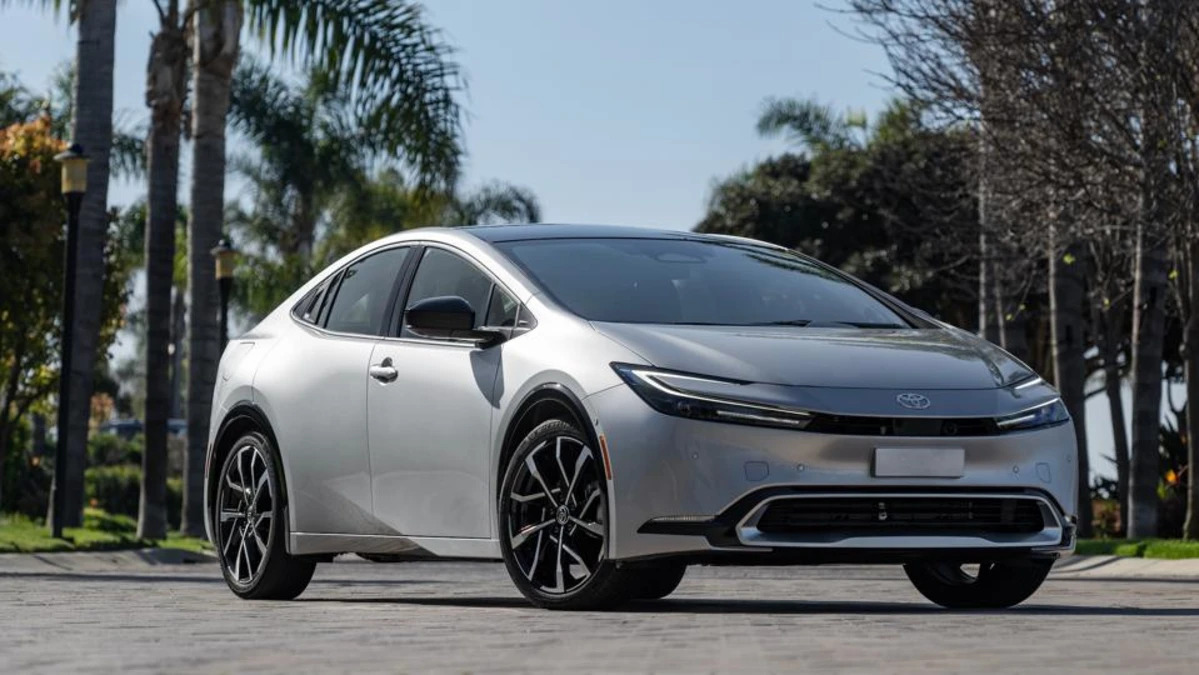
For the uninitiated, a hybrid-powered vehicle pairs a conventional gasoline engine with an electric motor to boost gas mileage to as high as 57 mpg in the Toyota Prius. The electric motor does more of the heavy lifting in this regard in around-town use, with the gas engine shutting down automatically while at idle (like most new vehicles these days), which is why hybrids typically get better mpg ratings in city, rather than highway driving. Hybrids keep the battery charged via a process called regenerative braking that recovers energy that would otherwise be lost by decelerating and braking.
A plug-in hybrid vehicle (PHEV) is essentially a standard hybrid with a larger battery that enables it to run exclusively on battery power for a certain number of miles; this tops out at 45 miles on a full charge in the Toyota Prius PHEV. Once the battery is depleted to a certain point, the vehicle continues to operate as a conventional hybrid under a combination of gas and electric power. Those with modest commutes or who mostly drive locally may only rarely have to visit a gas station.
Of course, the only way for a PHEV to reach its full potential is to be tethered to the grid to recharge the battery. When running exclusively on electricity, a PHEV’s fuel economy is expressed as “MPGe,” which is the EPA’s miles-per-gallon equivalent measurement used for comparison purposes.
In The Meantime…
Regardless of how a vehicle is powered, there are a number of common sense ways a driver can maximize its fuel economy:
Temper the vehicle’s speed, and accelerate and decelerate smoothly; lead-footed driving, jack-rabbit starts and sudden stops waste fuel.
Don’t ride with a foot on the brake pedal; this not only wears out brakes but can also reduce gas consumption by as much as 35 percent.
Get regular tune ups, oil changes and filter replacements to keep the car in top running order.
Have a wheel alignment performed as necessary; improper alignment forces the engine to work harder.
Make sure the tires are inflated to the recommended air pressure.
Remove excess junk from the trunk; reducing a vehicle’s weight is a sure way to bolster its fuel economy.
Check the gas cap to ensure it’s neither broken, missing or is improperly tightened .
Avoid unnecessary idling (assuming the car doesn’t have an automatic stop-start feature), as a vehicle essentially gets zero mpg while running in place.
The Most Frugal Gas, Hybrid and Plug-in Hybrid Cars And SUVs
The following fuel economy estimates for gas and hybrid models are expressed as city driving/highway driving/combined city and highway driving, with the latter based on 45% highway and 55% city use. Plug-in hybrid estimates are expressed as electric-only MPGe/hybrid mpg, with the average range for battery-only driving noted.
The EPA’s annual fuel cost estimates for each model are included for comparison. They’re based on regular-grade gasoline at $3.98 per gallon. Since it’s assumed choosing a more-fuel-efficient model is all about saving money, vehicles that require costlier premium-grade fuel are excluded, as are more-expensive full-electric rides.
Gas
Honda Civic: 32/41/36 mpg; annual fuel cost $1,650
Toyota Corolla: 32/41/35 mpg; $1,700/year
Hyundai Elantra: 31/40/35 mpg; $1,700/year
Nissan Sentra: 31/39/34 mpg;$1,750/year
Volkswagen Jetta: 29/40/34 mpg; $1,750/year
Honda Accord: 30/38/33 mpg; $1,800/year
Kia K4: 29/39/33 mpg; $1,800/year
Toyota Corolla Cross: 31/33/32 mpg; $1,850/year
Nissan Rogue: 29/36/32 mpg; $1,850/year
Hyundai Sonata: 28/38/32 mpg; $1,850/year
Gas/Electric Hybrid
Toyota Prius: 57/56/57 mpg; annual fuel cost $1,050
Hyundai Elantra Hybrid: 51/58/54 mpg; $1,100/year
Kia Niro Hybrid: 53/54/54 mpg; $1,150/year
Toyota Camry Hybrid: 52/49/51 mpg; $1,150/year
Hyundai Sonata Hybrid: 47/56/51 mpg; $1,150/year
Toyota Corolla Hybrid: 53/46/50 mpg; $1,200/year
Honda Accord Hybrid: 51/46/49 mpg; $1,200/year
Honda Civic Hybrid: 50/47/49 mpg; $1,200/year
Honda Prelude: 47/41/44 mpg: $1,350/year
Lexus UX 300h: 46/42/44 mpg; $1,350/year
Plug-In Hybrid
Toyota Prius PHEV: 127 MPGe for 45 miles/52 mpg; annual fuel cost $750
Kia Niro PHEV: 108 MPGe for 33 miles/48 mpg; $900/year
Ford Escape PHEV: 101 MPGe for 37 miles/40 mpg; $1,000/year
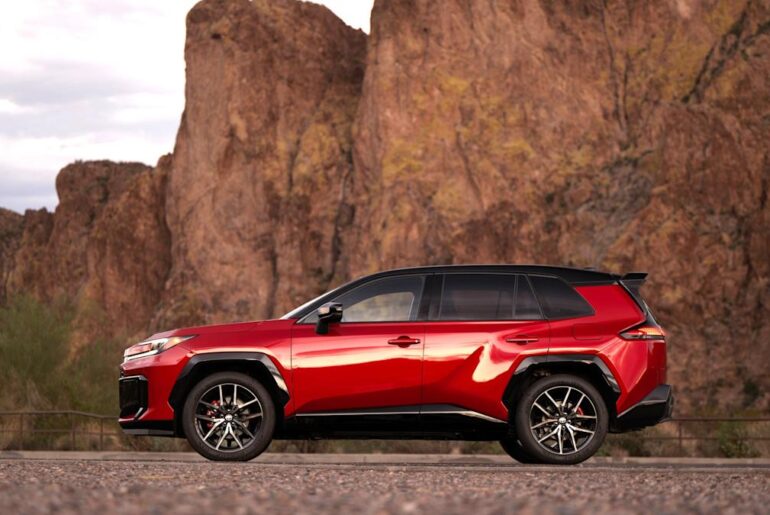
Toyota RAV4 PHEV: 94 MPGe for 42 miles/38 mpg; $1,050/year
Kia Sportage PHEV: 83 MPGe for 33 miles/36 mpg; $1,200/year
Hyundai Tucson PHEV: 77 MPGe for 32 miles/35 mpg; $1,250/year
Kia Sorento PHEV: 74 MPGe for 30 miles/33 mpg; $1,350/year
Lincoln Corsair PHEV: 76 MPGe for 27 miles/33 mpg; $1,350/year
Chrysler Pacifica PHEV: 82 MPGe for 32 miles/30 mpg; $1,350/year
Alfa-Romeo Tonale/Dodge Hornet PHEV: 77 MPGe for 33 miles/29 mpg; $1,400/year
Source: fueleconomy.com