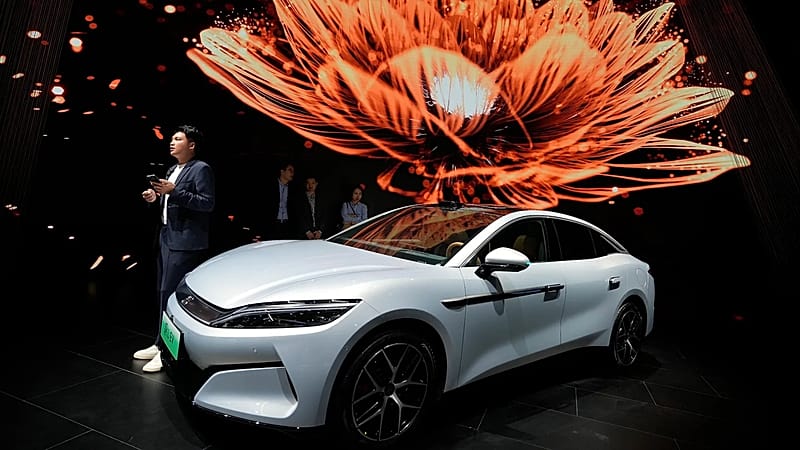
Chinese electric vehicle giant BYD has posted a sharp drop in annual profit, squeezed by fierce domestic competition and a gruelling price war, even after it spent most of 2025 cementing its position as the world’s biggest seller of battery electric vehicles.
BYD’s net profit attributable to shareholders fell 19% in 2025 to 32.6 billion yuan (€4.4bn), down from 40.3 billion yuan the previous year, the company said in a filing to the Hong Kong Stock Exchange on Friday.
Revenue held up better, rising a modest 3.5% to 804 billion yuan (€105bn) — though the headline numbers mask a company navigating a more difficult terrain than its sales volumes suggest.
BYD’s rise to the top of the global EV rankings has been one of the most dramatic stories in the automotive industry.
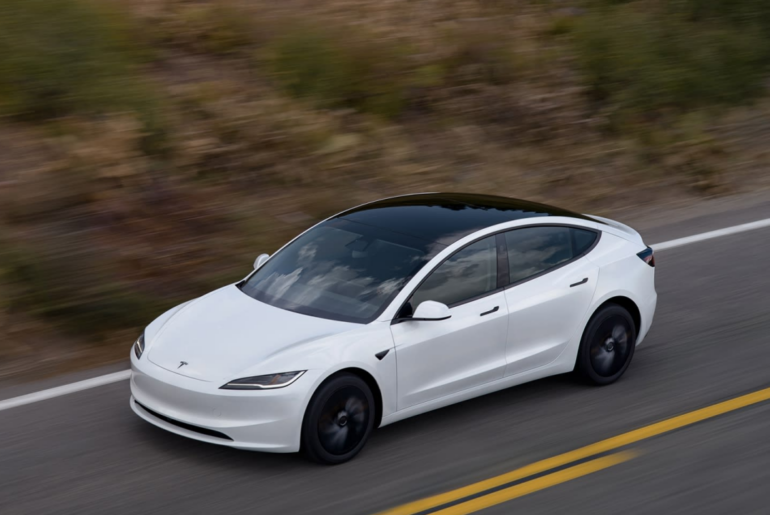
For years, Tesla was the undisputed leader in battery electric vehicle sales, delivering more than 1.8 million vehicles at its 2023 peak.
In 2024, BYD officially surpassed Tesla in global battery electric vehicle sales for the first time, a milestone that would have seemed implausible a decade earlier — particularly given that Tesla chief executive Elon Musk once openly laughed at the mention of BYD as a competitor, saying he did not see the company as a threat.
By 2025, the gap had widened significantly.
BYD ended the year with 2.25 million all-electric vehicles sold, a 27.9% year-on-year increase, while Tesla reported 1.64 million deliveries — a decline of roughly 9% from 2024.
BYD outsold Tesla by more than 600,000 battery electric vehicles.
Tesla, once the global EV sales leader, has seen its market share in Europe and China eroded by the rise of Chinese competitors.
The American company recorded just $3.8 billion (€3.5bn) in profit across 2025, its lowest tally in years, with total revenue from car sales falling 11% year-on-year.
It was the first time Tesla had posted an annual revenue decline.
However, more recent data shows Tesla registrations in the European Union have risen 29% in February, according to the European Automobile Manufacturers’ Association — its first monthly increase in the region since December 2024.
Related
Despite BYD’s volume dominance, the path has not been painless.
China’s EV market — the largest in the world — has become extraordinarily competitive, with manufacturers slashing prices to defend market share.
A top industry group last May rebuked Chinese automakers for fuelling a price war, just a week after BYD announced sweeping trade-in discounts.
BYD’s profit in the first quarter of 2025 was a record for that reporting period, but pressure mounted through the year as domestic spending remained sluggish.
With the home market squeezed, BYD has been accelerating its push overseas.
In September, it sold more than 13,000 vehicles in European Union countries, a year-on-year rise of 272%, according to the European Automobile Manufacturers’ Association.
BYD’s overseas sales surpassed one million units for the first time in 2025, up 150% from the previous year.
The contrast with Tesla’s European performance is stark.
Tesla’s US vehicle sales fell by 15% during the first half of 2025, while its share of the American electric car market shrank from more than 75% in 2022 to less than 50% in 2024.
In 2024, BYD’s annual revenue crossed the symbolic $100 billion (€87bn) mark at 777 billion yuan, surpassing Tesla’s for the first time.