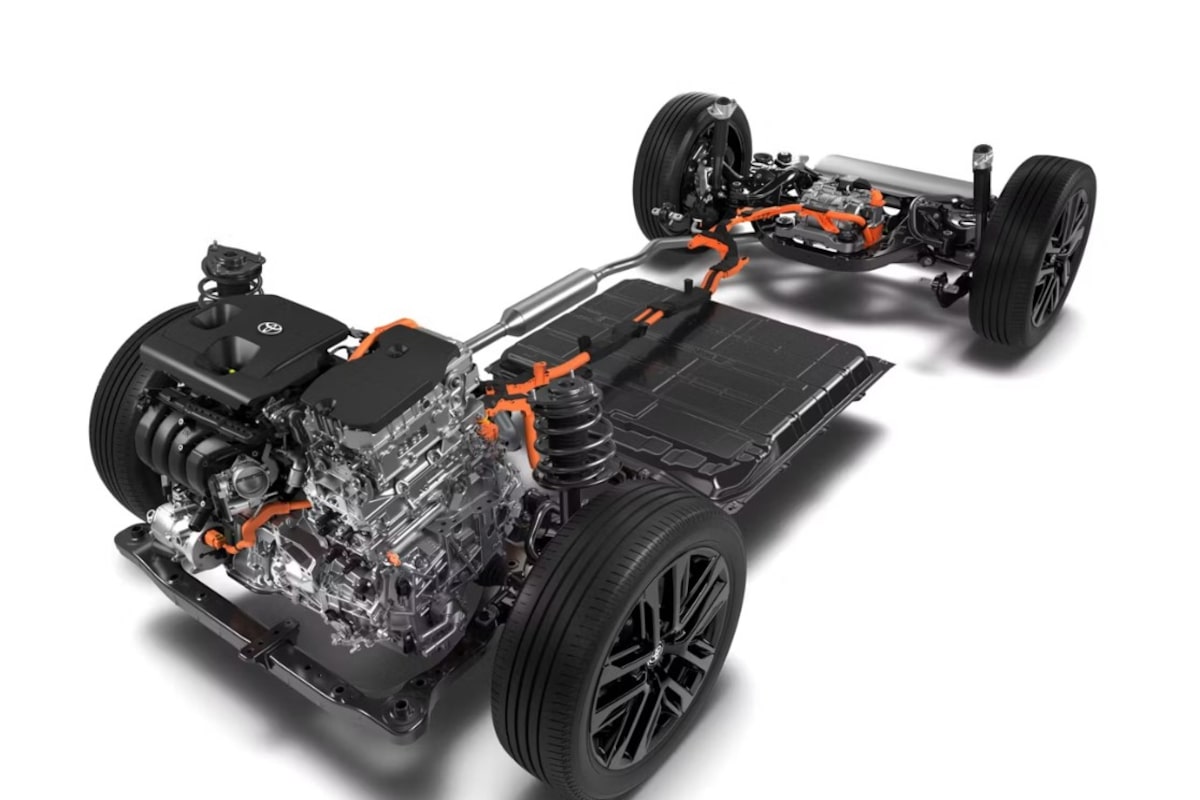
Toyota’s 6th generation plug-in hybrid system powering the all-new 2026 Toyota RAV4 PHEV.Courtesy of manufacturer
Not so long ago, the future of the automobile was being pitched as a clean sweep. Battery-electric vehicles would push gasoline aside. Software would take over. The mechanical side of the business would matter less.
The winners of the Automobile Journalists Association of Canada’s 2026 Innovation Awards, announced this week at the Vancouver International Auto Show, suggest otherwise. The three – Toyota’s sixth-generation plug-in hybrid powertrain, Volvo’s multi-adaptive safety belt and the quad-motor setup in the Mercedes-Benz G 580 with EQ Technology – do not point toward one direction. Neither do the other six finalists across the three award categories.
Taken together, they show an industry still attempting to lower emissions, improve safety and make better use of computing power. It’s also figuring out how not to drain the life out of the driving experience.
That is probably a more accurate read on the market, especially in Canada. Average buyers are not shopping for a transportation manifesto. They want a vehicle that uses less fuel, keeps the family safe, works in winter and does not make daily life more complicated than it needs to be.
Toyota’s win in the Best Green Innovation category makes that point nicely. The newly developed plug-in hybrid system in the 2026 RAV4 PHEV is more powerful and more efficient than before, while also extending electric range to about 80 kilometres, an increase of about 12 kilometres.
It gets a larger, higher-voltage battery and DC fast charging, which should make the electric side of the equation easier to use. There is nothing flashy about any of that – and that’s precisely the point.
Plug-in hybrids tend to get dismissed as a halfway measure. For a lot of Canadians, though, they remain the most sensible bridge between the old world and the new. You can handle the weekday commute on electricity, then keep driving when temperatures drop or distances grow and charging becomes a bigger consideration. Full electrification remains the destination for much of the industry, but the road there is not the same for everyone.
Two other green finalists completed the picture. Hyundai’s Stay Mode is an idea that sounds almost too obvious until you think about how often drivers idle a vehicle just to keep the cabin comfortable or to power accessories while parked. It addresses a small, familiar waste. And the BMW plant in Debrecen, Hungary, which will build the next-generation iX3, reminds us that innovation is not confined to the vehicle itself. If electric vehicles are going to become more affordable and less resource-intensive, manufacturing matters – a lot. The facility is customized specifically for EVs and serves as a blueprint for the future of the company’s production.
In the Best Safety Innovation category, the winner lands in a similarly practical way. The Volvo multi-adaptive safety belt adjusts restraint force and timing according to the size and shape of the front-seat occupant, as well as the type and severity of the crash. It’s a smart step forward from the one-size-fits-all thinking that governed restraint systems for years.
Volvo has been mining this territory for decades, but this one feels especially relevant because it speaks to where vehicle safety is heading. The biggest gains are no longer coming simply from adding more equipment, but from greater precision. A car that can better understand who is in the seat and what sort of impact is unfolding has a better chance of managing the consequences well.
The other finalists in the safety category help to flesh that out. Mercedes-Benz’s rear airbag is a reminder that passengers riding in the back do not always get the same attention as those up front, even in a family vehicle. Meanwhile, BMW’s Automated Driving Superbrain focuses on the growing importance of centralized computing power as driver-assistance systems become more sophisticated. More processing muscle on board should help to quicken responses and make for smoother, more coordinated operations.
Then there is the Mercedes-Benz G 580 with EQ Technology, winner of the Best Technical Innovation award. If Toyota’s powertrain is about pragmatism, the electric G-Class is about pure theatre.
The classic, fossil fuel-powered G-Wagon was already hugely capable off-road. With four independently controlled electric motors, Mercedes-Benz has handed it a different tool kit. Torque can be directed with far more precision at each wheel, which opens the door to levels of control that are difficult to match with a conventional drivetrain.
The G 580 can climb at a 45-degree angle on suitable surfaces, which sounds like the sort of thing designed to break the internet, but the larger point stands: electric propulsion is starting to do more than simply replace gasoline power. In some applications, it can rewrite what a vehicle is capable of doing.
The other technical finalists were no less interesting even though they were less dramatic. Stellantis’ Turbulent Jet Ignition is another sign that the internal-combustion engine is not finished yet, at least not when it comes to squeezing out more efficiency. Honda’s S+ Shift system for the upcoming Prelude hybrid tackles a different problem altogether. Electrified powertrains can be quick, smooth and eerily competent, but they are not always especially engaging. Honda is trying to put some theatre back into the experience.
When switched on, the new “S plus” system simulates an eight-speed automatic by manipulating the revs and playing engine sounds through the speakers.Kunal D’souza/The Globe and Mail
A button on the centre console engages the S+ system. When it’s on you can use paddle shifters on the steering wheel to change gears, but the Prelude doesn’t actually have a transmission.Kunal D’souza/The Globe and Mail
That may be one of the more revealing things about this year’s shortlist. Automakers are not just chasing lower emissions numbers or better crash outcomes. They are also trying to make vehicles easier to live with and, in some cases, more enjoyable to drive.
The big takeaway here is not that one next-generation technology has won the argument. In fact, the opposite is true. The best green innovation is a plug-in hybrid. The best safety innovation is a seatbelt. The best technical innovation uses electrification not merely for efficiency, but for capability. That is not as neat as the story the industry was selling a few years ago. It is, however, more believable. And, for many drivers, believability counts.