Since we launched the first Transit in 1965, the lineup of our now-legendary van family has continually evolved to help customers deal with all the challenges work throws at them.
Today though, those challenges aren’t just about carrying larger and heavier loads. Van operators in cities — part of the van-powered sector worth over €1 trillion to Europe’s GDP 1 — now also need to consider factors such as clean air zones, rising costs and operating restrictions while still delivering for their customers.
Ford Pro saw a way to help cost-conscious firms who need the right tool for work in increasingly electric-only cities. With the right battery, load area and equipment levels, we could offer a super-simple vehicle that still ticks every box — to the point that you wouldn’t need a single optional extra.
 “With the right battery, load area and equipment levels, we could offer a super-simple vehicle that still ticks every box — to the point that you wouldn’t need a single optional extra.”Simon Robinson, chief programme engineer for Transit City
This kind of fresh thinking needed a bold new approach. A new member of our iconic Transit family, with a laser-sharp focus on maximising efficiency and minimising cost. So I’m excited to reveal the all-new Transit City 2 — the answer that those hard-pressed, hard-working urban firms have been waiting for.
Cargo and Conversions
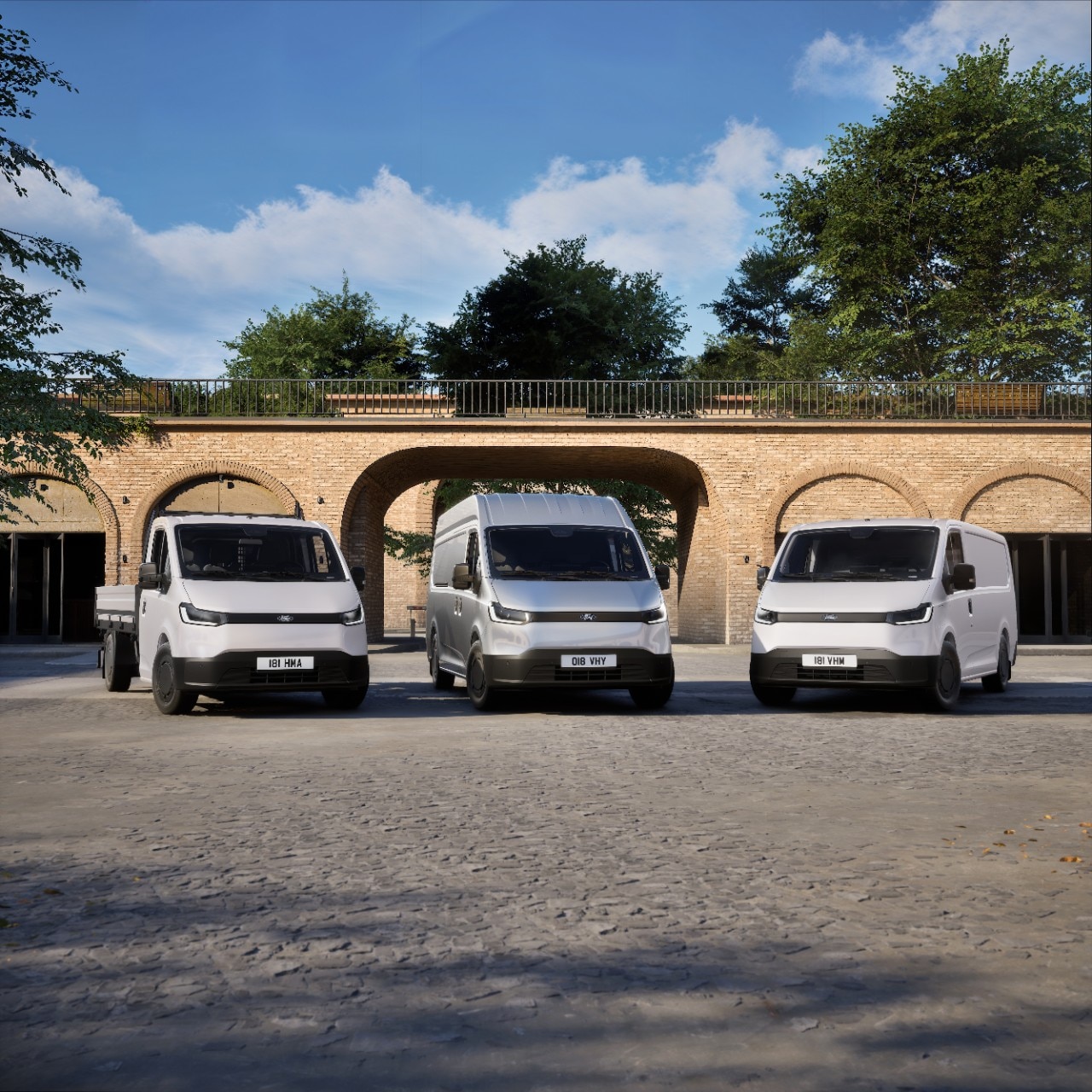
The business end of any commercial vehicle is the load area. Getting this right was fundamental for Transit City’s cost-effective, low-complexity approach to work. We’re offering three body styles, specifically targeted to meet the needs of urban customers:
• L1H1 Van: A compact configuration ideal for tight streets and congested loading bays. Capable of carrying three Euro pallets and payloads up to 1,085 kg 3
• L2H2 Van: A high-capacity variant with 8.5 cu. m of load volume, payload up to 1,275 kg and over 3,000 mm load length 3
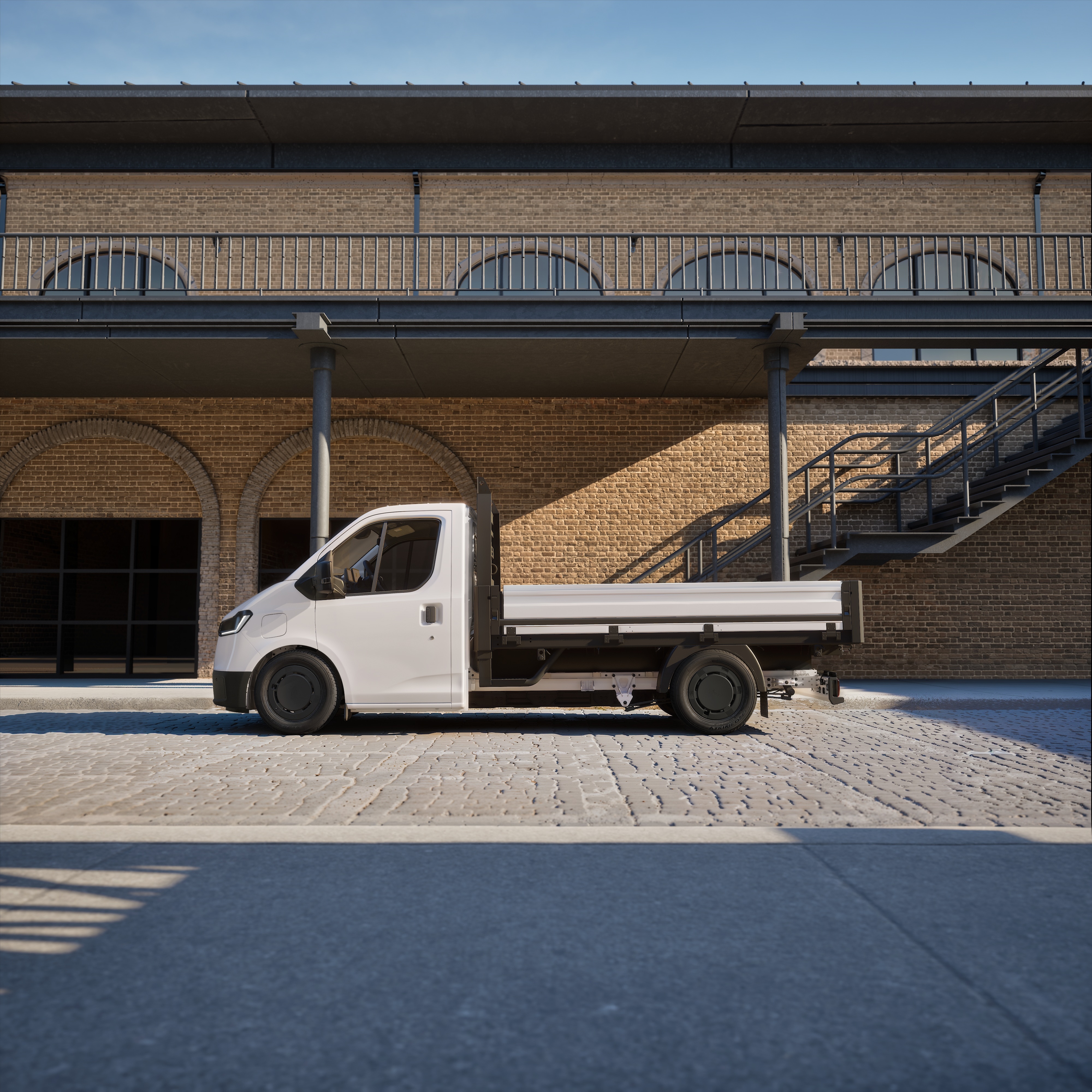
• Chassis Cab: Ideal for conversions such as delivery vans, or dropsides for municipal operators and utilities firms
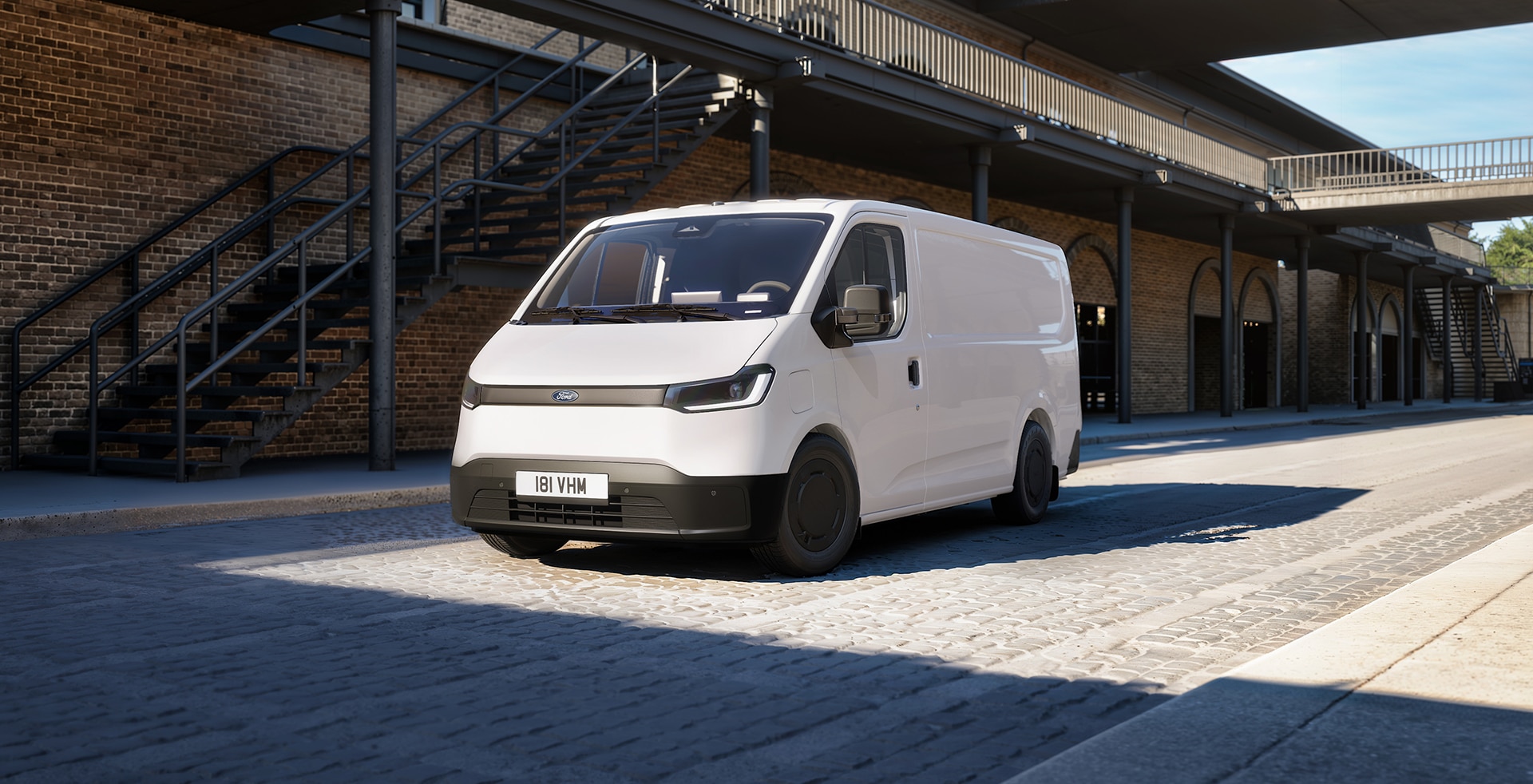
Transit City L1H1Capacity for three Euro pallets, gross payload of 1,085 kg and load length up to 2,770 mm
Regardless of body style, we’ll offer a single, comprehensive specification to help keep costs and complexity down. As just one example, every van model comes with a durable load liner, half-height interior trim and lashing points as standard.
Before working on Transit City, my previous job at Ford Pro was leading the Special Vehicles team for a decade. It was the best preparation you could hope for to bring our first-ever one-tonne chassis cab to customers and our network of over 200 approved Ford Pro Convertors across Europe.
“Leading the Special Vehicles team for a decade was the best preparation you could hope for to bring our first-ever one-tonne chassis cab to customers.”Simon Robinson, chief programme engineer for Transit City
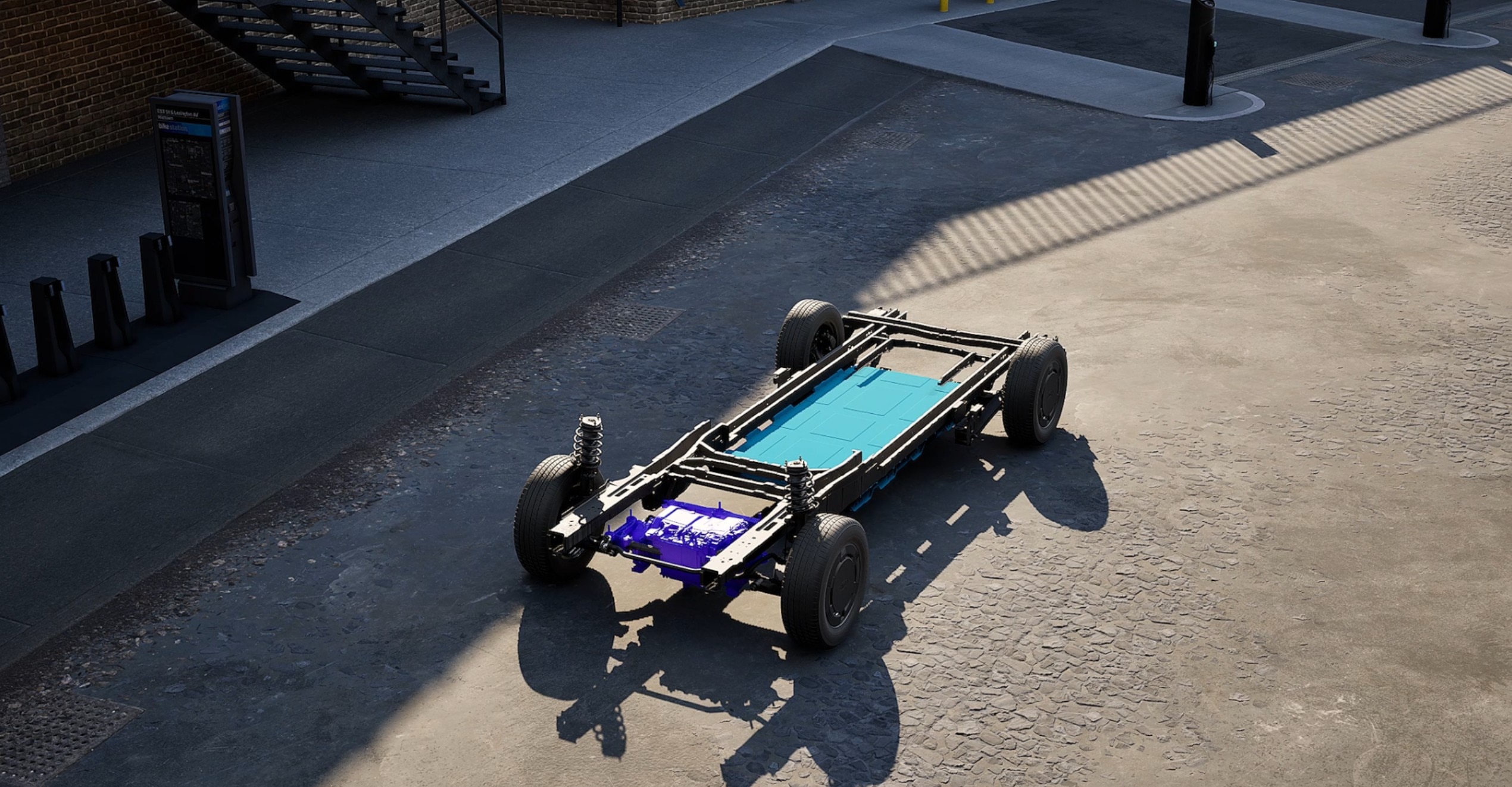
Transit City Chassis Cab was carefully designed to be their platform of choice. The front-mounted motor maximises conversion potential at the rear; the frame rails are optimised for simpler body building and easier access; and lessons from E-Transit chassis cab helped us optimise bolt patterns, standardise electrical connections and define no-drill zones to make conversion as efficient as possible.
Cost-Efficient Electrification
In an electric vehicle, the battery is what determines your cost, weight and range. Transit City delivers a competitive payload and enough range to comfortably cover a day’s work — all at an attractive price point.
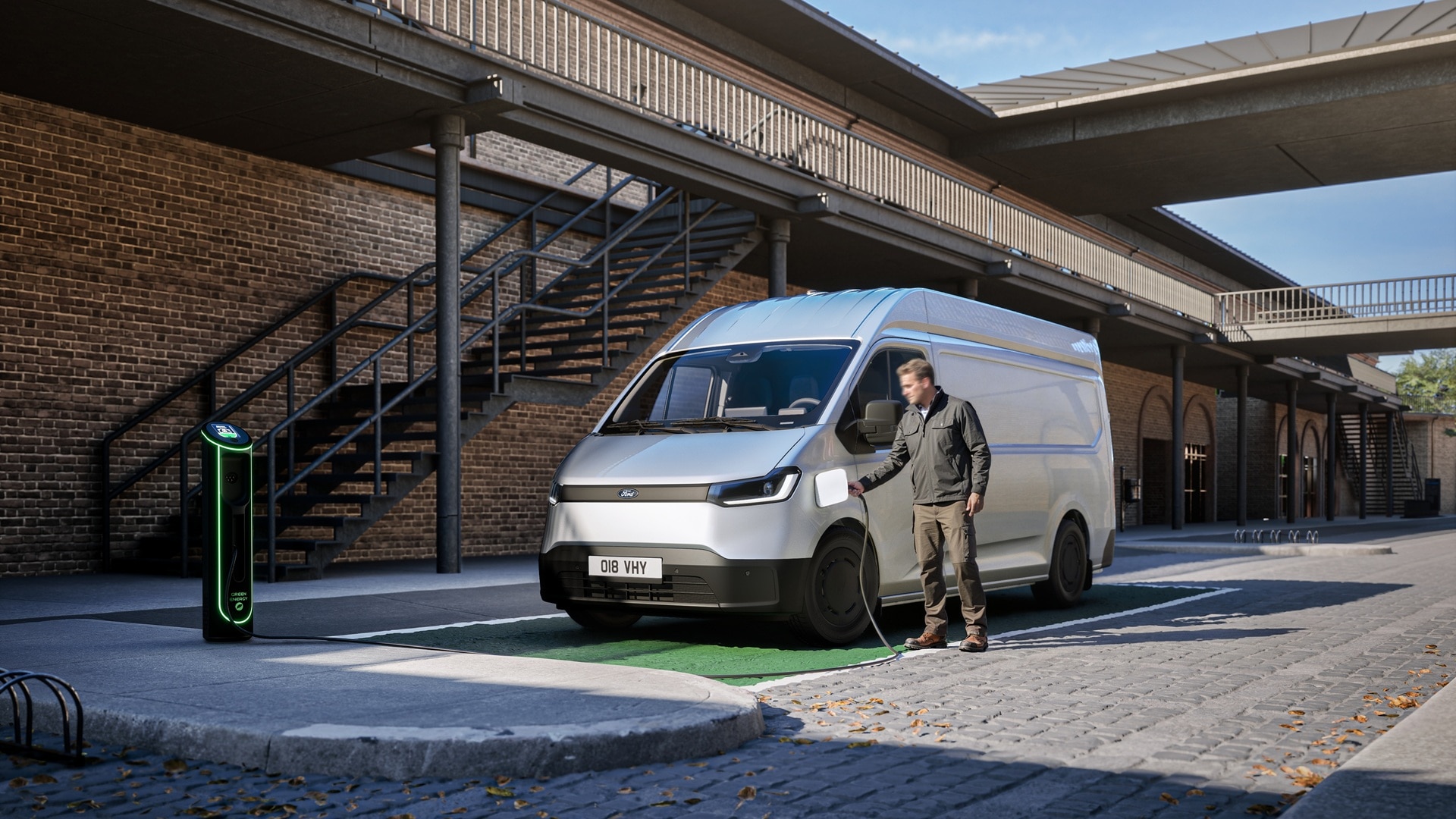
Data from thousands of connected Ford Pro electric vehicles revealed 90 per cent of vans in Transit City’s segment drive under 110 kilometres a day on average.
The battery’s 56 kWh useable capacity and lithium-iron phosphate (LFP) chemistry maximise cost-effectiveness and durability while targeting a range of up to 254 km 2 — more than double the distance the majority of our urban customers need. An LFP battery is also more suited to regular DC fast charging, so is a practical choice for city businesses that need dependable performance and minimal downtime.
I’m confident that diesel van drivers will love the shift to electric. A front-wheel drive setup and 110 kW e-motor mean Transit City is smooth, quiet, and offers instant torque to get heavy loads moving.
We also took feedback from existing Ford Pro electric van drivers to refine the one-pedal driving calibration, 4 improving efficiency and reducing driver fatigue during stop-and-go driving.
Focused on Reduced Cost of Ownership
The efficiency benefits of a right-sized battery extend to charging. Ford Pro Charging will help customers connect with providers of home and depot charging hardware and software to maximise the benefits of going electric. Customers may benefit from significant potential savings on energy compared to diesel vans when charging using cheaper off-peak tariffs.
Charge performance: 5
• 11 kW AC charging: 10-100 per cent in approximately 5.2 hours
• 67 kW DC: 10-80 per cent during a half-hour break
• Add around 50 km of range in 10 minutes on a fast charger
Going electric can also yield financial benefits beyond saving on energy. Fewer moving parts and service items mean we expect maintenance costs to be reduced by around 40 per cent compared to an equivalent diesel vehicle; our service interval on Transit City is two years or 40,000 km.
Productivity-Boosting Tech
Throughout Transit City’s development, we were focused on delivering a cost-effective van that’s still safe and comfortable for drivers, and gets the job done for fleets.
A delivery driver can get in and out over 200 times a day, so we fit every Transit City with a heated driver’s seat — it’s more efficient than trying to heat the air in the cabin. Keyless start is also standard to help save time and reduce mental load.
The 12-inch touchscreen with Apple CarPlay and Android Auto compatibility makes navigation and using AI assistants simple. 6
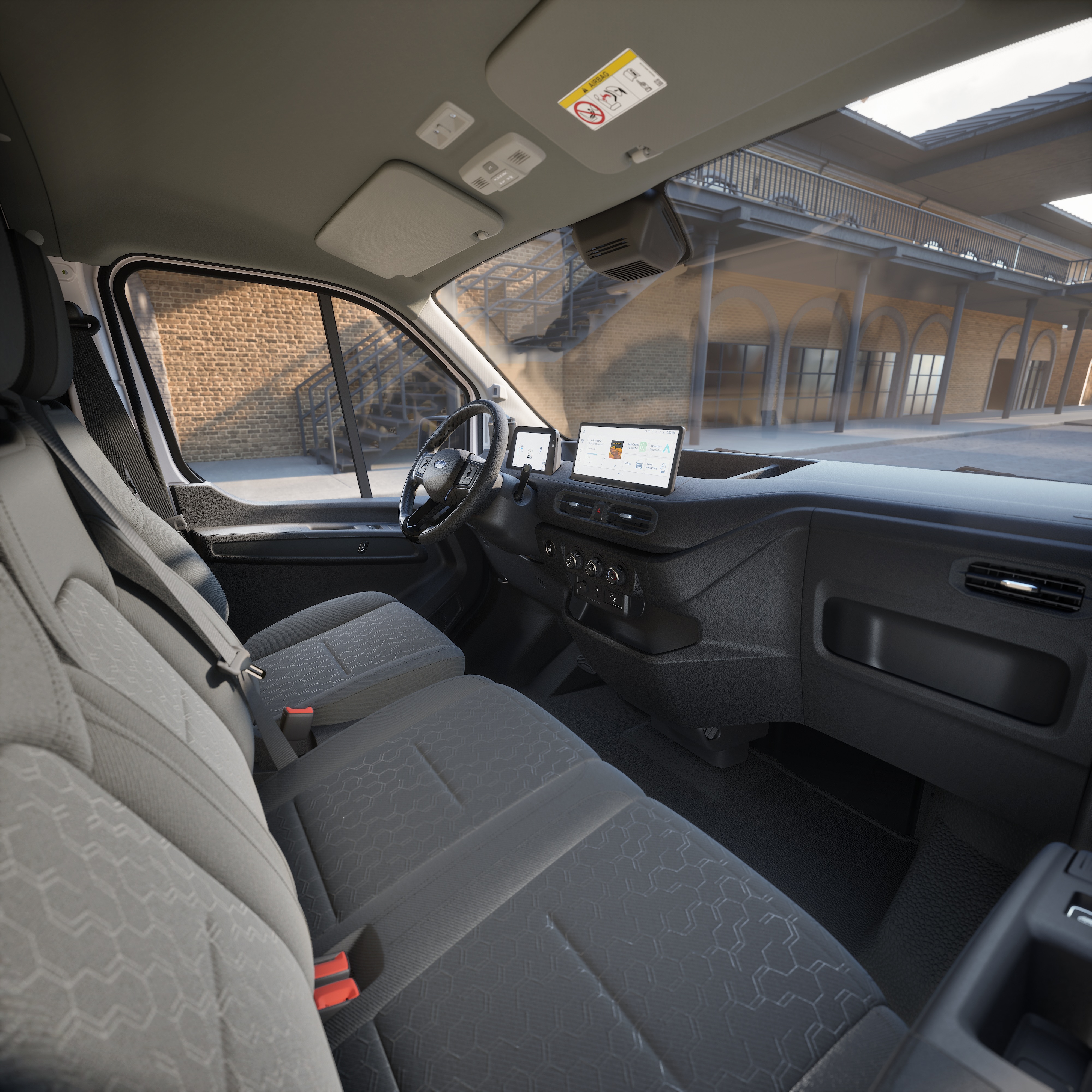
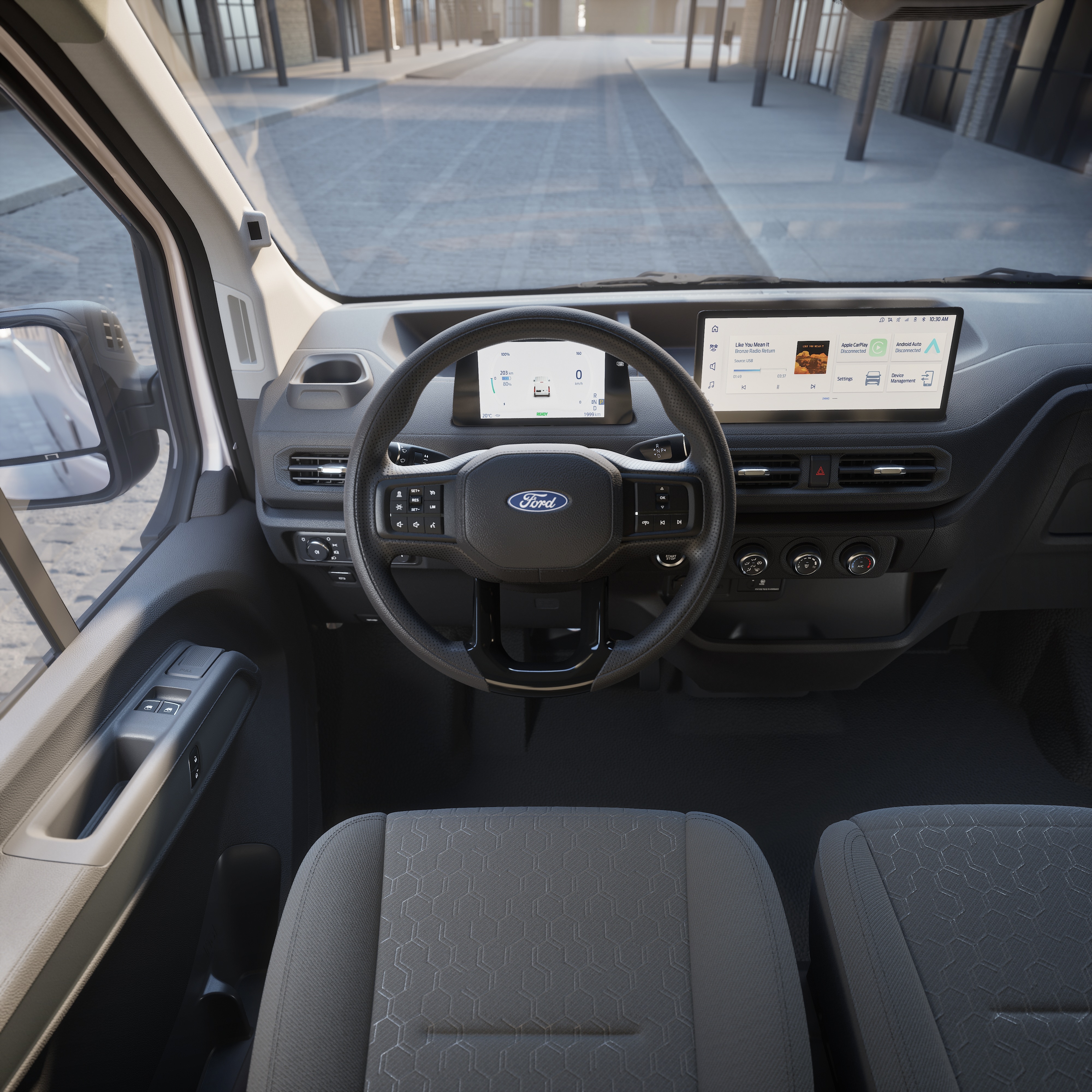
Transit City features a suite of systems to help drivers deal with busy, tight streets: 4
• Automatic Emergency Braking
• Front and rear parking sensors
• Rear-View Camera
• Adaptive Cruise Control
• Lane Departure Warning
Where required, an available plug-in device integrates Transit City with Ford Pro Telematics 7 or other systems to help fleet managers optimise productivity. This gives real-time access to essential vehicle data including location, speed and charge level.
Transit Durability and Support
We put Transit City through the same punishing global durability testing as every other Transit to ensure it was worthy of the badge. This regime compressed 10 years and over 240,000 km of the most demanding use into punishing assessments around the world.
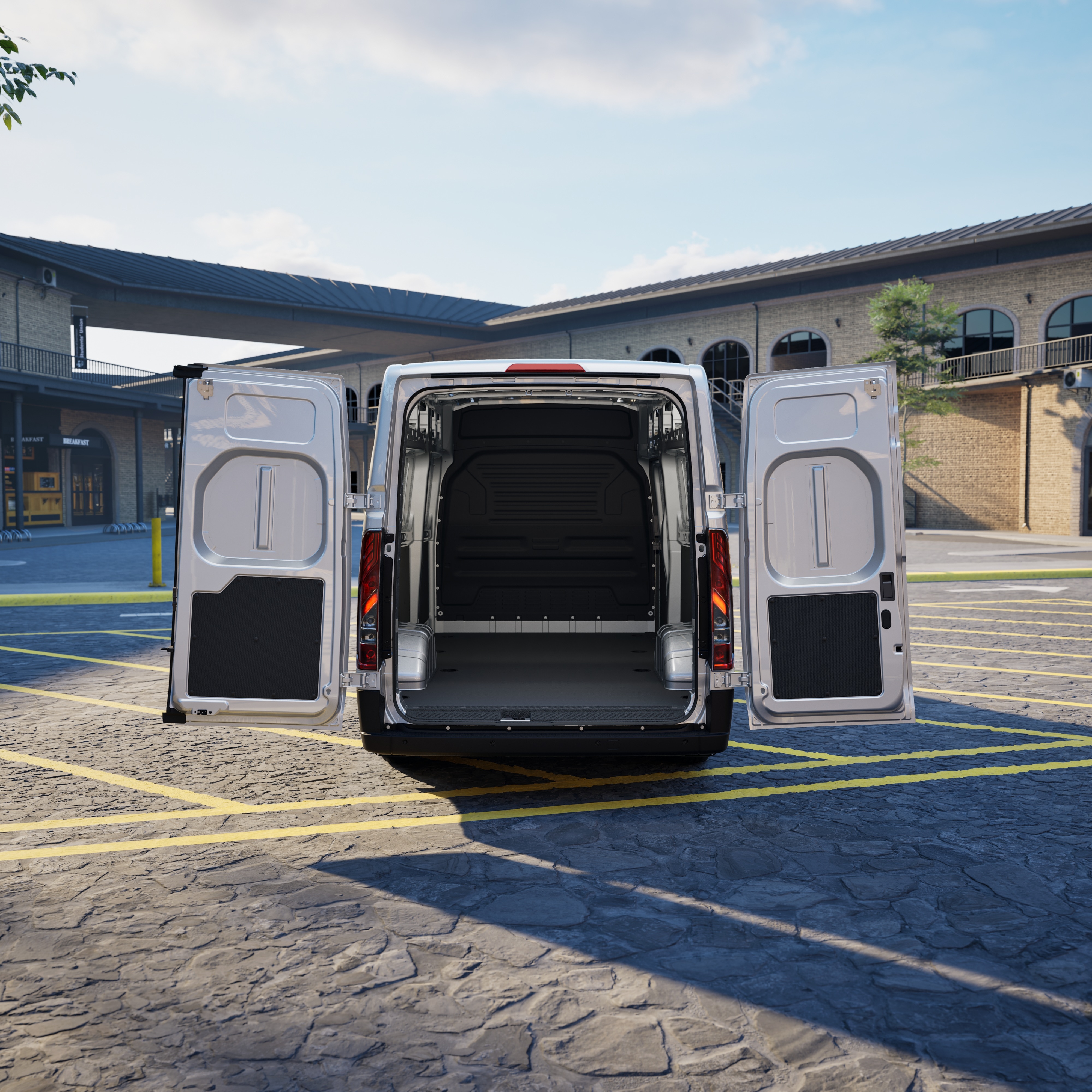
As stop-start city work puts extra stress on certain areas, we additionally tested the rear doors, side load door, driver’s door, ignition and driver’s seat to be fully confident that they’re ready for years of multi-drop deliveries.
“We put Transit City through the same punishing global durability testing as every other Transit to ensure it was worthy of the badge.”Simon Robinson, chief programme engineer for Transit City
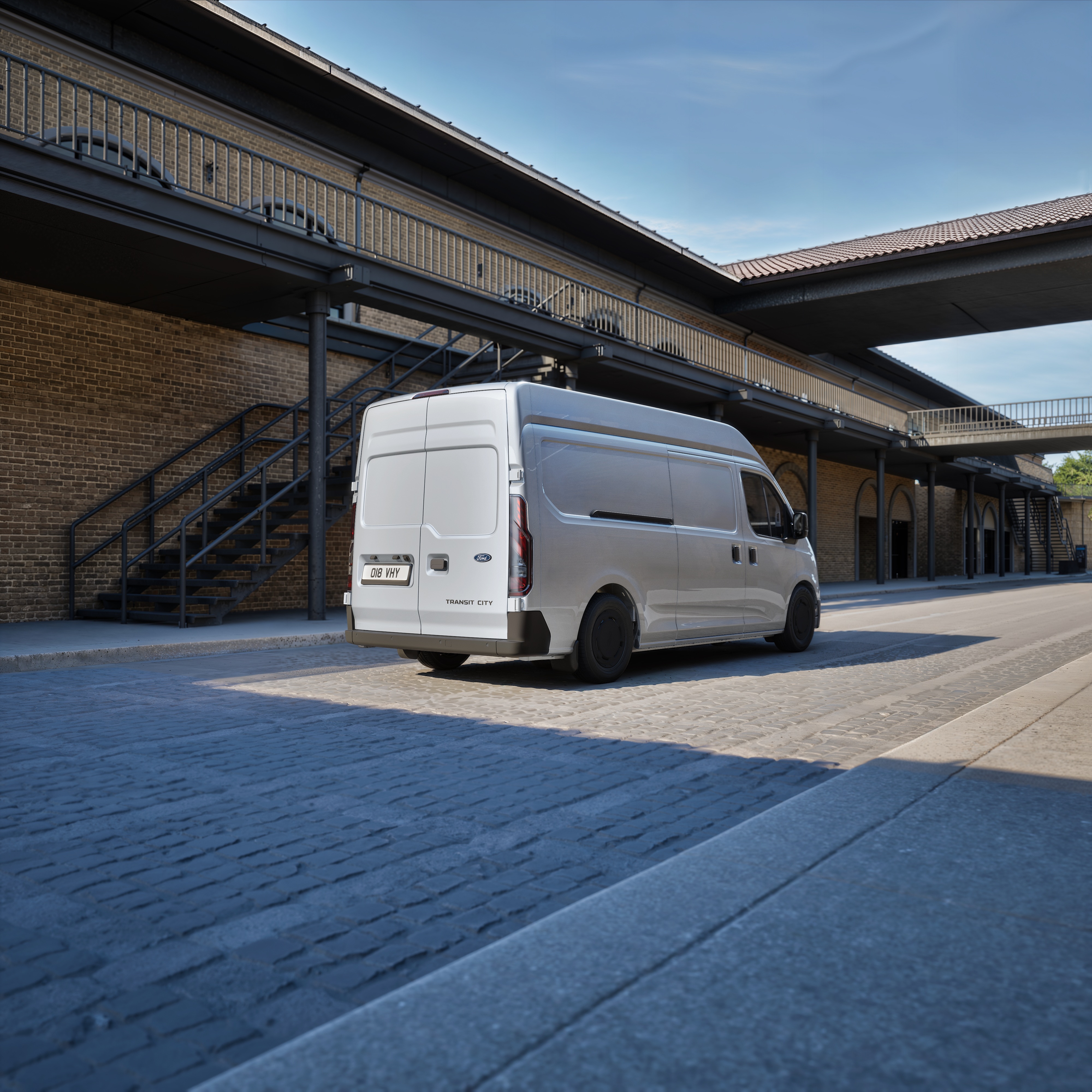
Customers can be confident in our comprehensive base vehicle warranty. Beyond that, an eight-year, 160,000-kilometre warranty for all high-voltage components ensures peace of mind and should help residual values when it comes to resale.
Transit City is also backed by uptime-boosting Ford Pro Service, which includes 800 specialist Transit Centres across Europe and an expanding fleet of about 500 Mobile Service vans.
Ready to Redefine Urban Commercial Mobility
I loved how we could think so differently in bringing Transit City to market. We know the customers and their needs inside out, so we could be single-minded and find an answer that leads the rest of the industry with an affordable, fit-for-purpose tool. Transit City is the perfect partner to E-Transit Custom 8 in our product portfolio, and together they give Ford Pro a class-leading offering for customers in the segment.
Order books open in the second quarter, and the first models should be in Transit Centres at the end of the year. I can’t wait to see Transit City out where it belongs, working hard as the go-to vehicle for the armies of operators who are the hidden heart of our cities.
Simon Robinson is chief programme engineer for the Transit City.

1 The Economics of Commercial Van Usage Across Europe
2 Targeted range calculated through Ford internal testing. Up to 254 km targeted driving range based on full charge of Transit City. Homologated vehicle data will be provided closer to on-sale date. The declared WLTP fuel/energy consumptions, CO2 emissions and electric range are determined according to the technical requirements and specifications of the European Regulations (EC) 715/2007 and (EU) 2017/1151 as last amended. The applied standard test procedures enable comparison between different vehicle types and different manufacturers. Figures shown are for comparability purposes and should only be compared with other vehicles tested to the same technical procedures. Actual range varies due to factors such as temperature, driving behaviour, route profile, vehicle maintenance, lithium-ion battery age and condition.
3 Max payload varies and is based on accessories and vehicle configuration. See label on doorjamb for carrying capacity of a specific vehicle. Always properly secure cargo. Cargo and load capacity limited by weight and weight distribution.
4 Driver-assist features are supplemental and do not replace the driver’s attention, judgment and need to control the vehicle. It does not replace safe driving. See Owner’s Manual for details and limitations.
5 Figures given are based on Transit City. Actual charge times and charging speeds will vary according to the type of home or public charging station used, as well as other factors (including weather, ambient temperature, driving behaviour, driving profile, vehicle condition, lithium-ion battery age, condition, and temperature).
6 Requires phone with active data service and compatible software. SYNC does not control 3rd party products while in use. 3rd Parties are solely responsible for their respective functionality. Android Auto is a trademark of Google LLC. Apple CarPlay is a trademark of Apple Inc., registered in the U. S.
7 Ford Pro Telematics is available complimentary for one year from the warranty start date, and then on a subscription basis, subject to agreement to Ford Smart Mobility terms and conditions, and provides a comprehensive suite of features in addition to vehicle health including location and mapping, driving behaviour, fuel/energy usage, multi-make capabilities and a companion app for drivers to interface with fleet managers. Fleet customers can contact the Ford Pro Software Command Centre at softwaresolutions@fordpro.com for information about these Ford Telematics products. Data availability subject to data connectivity and access to vehicle data.
8 Up to 373 km driving range based on full charge of E-Transit Custom rear-wheel drive 2026 model year. Estimated range using Worldwide Harmonised Light Vehicle Test Procedure (WLTP).