Automakers have tapped into a highly compelling marketing trope: the idea that your electric vehicle is not just a mode of transportation, but a massive rolling battery capable of keeping your lights on when the grid goes dark. It is an intoxicating vision. When I look at my own garage, navigating the daily EV landscape means balancing the proven driving dynamics of my 2022 Audi e-tron GT with the bleeding edge of automotive tech. I recently shifted an upcoming vehicle order from a Volvo XC60 to the new EX60 specifically because the latter’s EV architecture is vastly more advanced—the exact kind of foundational leap required for next-generation features like home power integration.
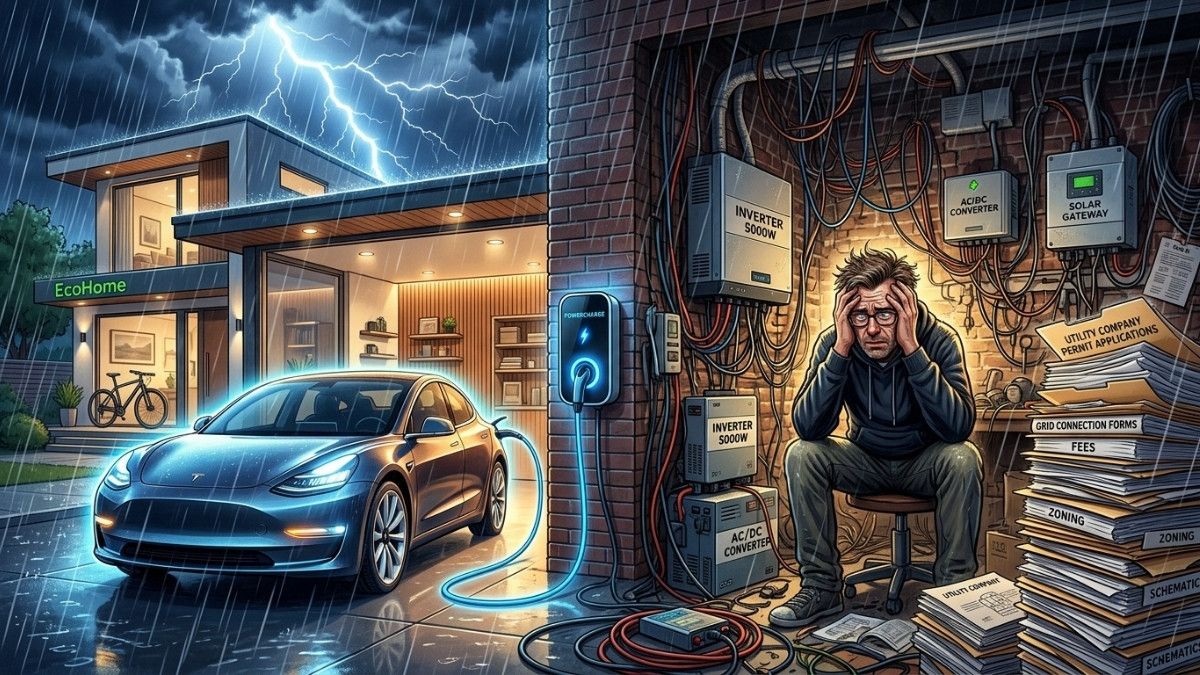
Yet, for all the promotional videos showing EVs happily powering a house through a blizzard, the reality on the ground is significantly more complicated. While the concept of “powering your home with your car” is technologically sound, the actual grid-compliance, hardware installation, and prohibitive costs are proving to be a major roadblock for mainstream consumer adoption.
Understanding Bidirectional Charging
To grasp the hurdles, we must first define what we are dealing with. Traditional EV charging is unidirectional: alternating current (AC) power flows from the grid, into your home, and through an onboard inverter that converts it to direct current (DC) to store in the car’s battery.
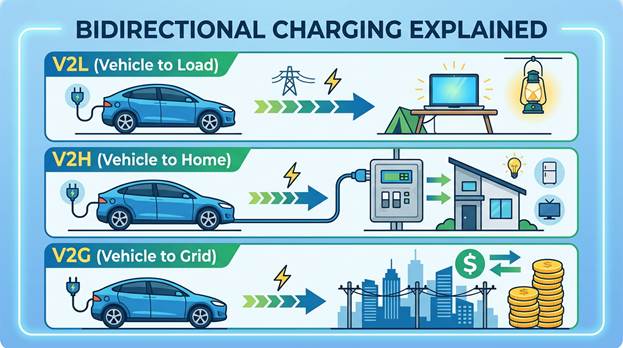
Bidirectional charging allows that energy to flow both ways. It is generally categorized into three distinct functionalities:
V2L (Vehicle-to-Load): The simplest form, where the car provides standard 120V or 240V outlets to plug in appliances, tools, or camping gear directly.
V2H (Vehicle-to-Home): The car connects to your home’s electrical panel, acting as a backup generator to power the entire house during an outage.
V2G (Vehicle-to-Grid): The most complex implementation, where the car not only powers the home but can actively sell stored energy back to the electrical utility during peak demand times to stabilize the broader power grid.
While V2L is incredibly common and cheap to implement, V2H and V2G are the features making headlines—and causing headaches.
The Setup Hurdles and Implementation Costs
The primary roadblock to V2H is that you cannot simply plug your car into a standard wall outlet and expect it to power your refrigerator. Because the car’s battery stores DC power and your home runs on AC power, a complex and expensive hardware handshake must occur.
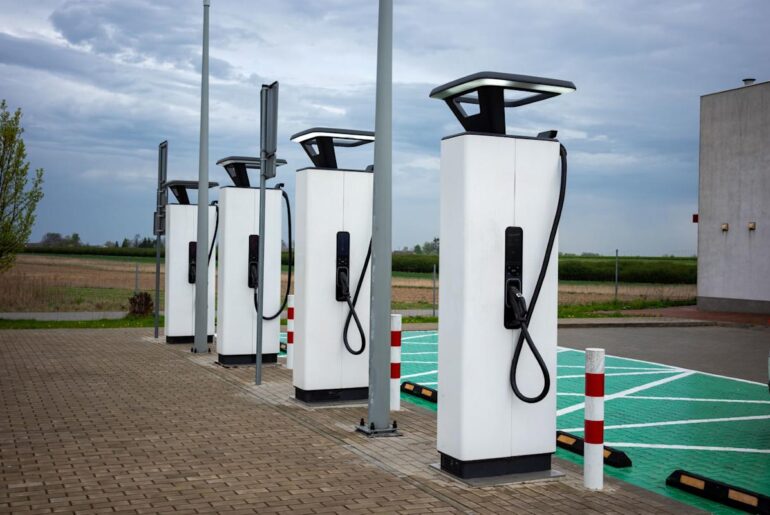
To enable V2H, owners must purchase and install specialized equipment. First, you need a bidirectional EV charger. Unlike a standard $500 Level 2 home charger, bidirectional units from companies like Wallbox, Enphase, and Ford’s Charge Station Pro are highly sophisticated pieces of hardware containing massive inverters.
But the charger is only half the battle. You must also install a Home Integration System (HIS). This equipment disconnects your house from the utility grid during a blackout (an essential safety requirement called “islanding” so you don’t electrocute line workers repairing the grid) and routes the car’s power to your home’s critical loads panel.
The costs are staggering for early adopters. A bidirectional charger typically costs between $1,500 and $4,000. The Home Integration System adds another $3,000 to $4,000. Once you factor in the necessary electrical labor, permitting, and potential home electrical panel upgrades, the total implementation cost rarely falls below $7,000, and routinely eclipses $10,000. For many consumers, buying a traditional $1,000 gas generator remains the vastly more economical, if less elegant, solution.
The Undeniable Benefits of Bidirectional Charging
Despite the friction, the ultimate payoff of a fully realized bidirectional setup is monumental.
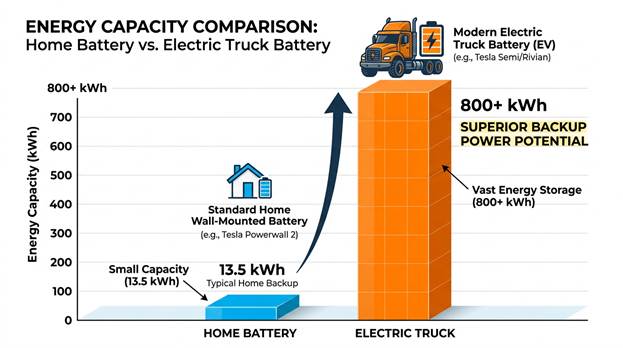
The most obvious benefit is energy security. A typical home battery backup system (like a Tesla Powerwall) holds about 13.5 kWh of energy, enough to run a house conservatively for a day. By contrast, a standard EV battery holds between 70 kWh and 130+ kWh. During winter storms in places like the Pacific Northwest, where I am based in Bend, a fully charged EV could comfortably power a home’s critical systems for over a week.
Secondly, bidirectional charging enables energy arbitrage and peak shaving. Homeowners on time-of-use utility plans can charge their EVs overnight when electricity is incredibly cheap, and then use the car to power the home during the late afternoon and evening when utility rates skyrocket. Over the lifespan of the vehicle, this daily cycling can drastically lower a household’s utility bills.
Finally, on a macro level, mass V2G adoption offers unparalleled grid stability. If millions of plugged-in EVs can instantly provide power back to the grid during extreme heatwaves, utility companies can avoid firing up dirty, expensive “peaker” fossil fuel plants, accelerating the transition to a fully renewable energy grid.
Which EVs Support It (And The Best Choices)
Not every EV sold in the US can push power back into a home. While V2L is common on platforms like the Hyundai Ioniq 5 and Kia EV6, true V2H is limited to a select few pioneers.
The Ford F-150 Lightning: Ford has been the aggressive standard-bearer for V2H in the US. Paired with Ford’s Intelligent Backup Power system and the Charge Station Pro, the Lightning’s massive 131 kWh extended-range battery is arguably the best, most proven V2H solution on the market today. Chevrolet Silverado EV: GM is rapidly catching up, offering robust V2H capabilities via their GM Energy division. With battery packs exceeding 200 kWh, the Silverado EV is a mobile power plant and a highly recommended option for those prioritizing home backup. Nissan Leaf: Ironically, the aging Leaf has supported bidirectional charging for years via its CHAdeMO port. However, the CHAdeMO standard is effectively dead in the US, making the Leaf a poor long-term investment for this feature. Tesla Cybertruck: Tesla finally entered the bidirectional arena with “Powershare” on the Cybertruck, allowing it to back up a home. Notably, other Tesla models do not yet support this via software, though future iterations are expected to.
For consumers seeking this feature today, the Ford F-150 Lightning is the most recommended choice, simply because Ford and its hardware partners (like Sunrun) have ironed out more of the residential installation kinks than the competition.
The Role of Electrical Utilities
Even if you have the car and the cash, your local utility company might stop you in your tracks. Electrical utilities are naturally risk-averse; their primary mandate is grid safety and stability.
To connect a bidirectional system, homeowners must sign an interconnection agreement with their utility. Because V2H and V2G systems are so new, many local utility co-ops and regional providers simply do not have the bureaucratic frameworks in place to approve them. Permits languish in regulatory purgatory because inspectors do not know how to classify the equipment.
To better enable bidirectional charging, utilities must standardize and expedite the interconnection process. They need to adopt modernized IEEE 1547 standards for distributed energy resources and aggressively implement dynamic pricing and net-metering incentives that actually financially reward EV owners for participating in V2G programs. Without utility cooperation, the hardware is useless.
The Road Ahead: Evolution and Broad Adoption
When will bidirectional charging transition from a costly luxury to a frictionless standard? The evolution hinges on the shift from DC bidirectional charging to AC bidirectional charging.
Currently, most V2H systems rely on an expensive external DC inverter mounted to your garage wall. The future is placing that bidirectional inverter inside the car itself. If the car can natively output grid-compliant AC power directly to the home, the need for a $4,000 external charger evaporates. You would only need a relatively inexpensive transfer switch to isolate the home from the grid.
Automakers like Renault and Volvo are already pioneering onboard bidirectional AC chargers in Europe. As this technology scales globally, we will see the cost of home integration plummet. According to industry analyses, including a recent comprehensive look at the market’s trajectory at GreenCars, charging infrastructure and vehicle capabilities are expected to expand dramatically by 2026 and beyond. By the late 2020s, the hardware hurdles will likely have diminished enough to make V2H economically viable for the average homeowner.
Will Bidirectional Charging Become Standard on All EVs?
The short answer is yes, but on an extended timeline. Regulatory bodies are already tipping their hands. The California State Senate recently advanced a bill (SB-233) that would mandate all new EVs sold in the state be bidirectional-capable by model year 2030. Where California regulations go, the broader US auto market usually follows.
Furthermore, as battery manufacturing costs continue to drop, automakers will utilize native bidirectional capability as a standard competitive differentiator, much like Apple CarPlay or heated seats. Once the onboard inverters are standardized to the global CCS and NACS (Tesla) port protocols, the feature will be unlocked across the board.
Wrapping Up
The promise of powering your home with your car is not vaporware, but it is currently trapped behind a wall of high hardware costs, complex installations, and utility company red tape. For early adopters willing to spend upwards of $10,000, vehicles like the Ford F-150 Lightning offer incredible energy security and peace of mind today. However, for the broader public, true plug-and-play bidirectional charging remains a few years away. As automakers shift the heavy lifting of power inversion into the vehicles themselves, and utility companies streamline their grid-connection policies, bidirectional charging will inevitably evolve from a frustrating hurdle into an indispensable, standard feature of the modern electric vehicle.
Disclosure: Images rendered by Artlist.io
Rob Enderle is a technology analyst at Torque News who covers automotive technology and battery developments. You can learn more about Rob on Wikipedia and follow his articles on TechNewsWord, TGDaily, and TechSpective.
Follow us today…