BMW used the world premiere of the new i3 sedan on March 18 to hint at what’s coming in the future.
Confirmation
As CEO Oliver Zipse wrapped up his speech, a shadowy silhouette of the next-generation 3 Series Touring appeared briefly on screen, giving the first official sign that the electric station wagon version is set to complement the combustion variant.
 We expect the i3 Touring as the fourth global model in the Neue Klasse family following the iX3, i3, and iX4. Image: BMW Group/Youtube
But there’s one model I’m happy to confirm, the BMW 3 Series Touring. Business customers and family will be particularly delighted. The Touring has always been a favorite with them. What will it look like? The pictures behind me give you a first slight glimpse!
BMW CEO Oliver Zipse, concluding his presentation at the BMW i3’s world premiere on March 18, 2026
Following are our expectations from the BMW i3 Touring (codename: BMW NA1), which could also be brought to the U.S.
Design
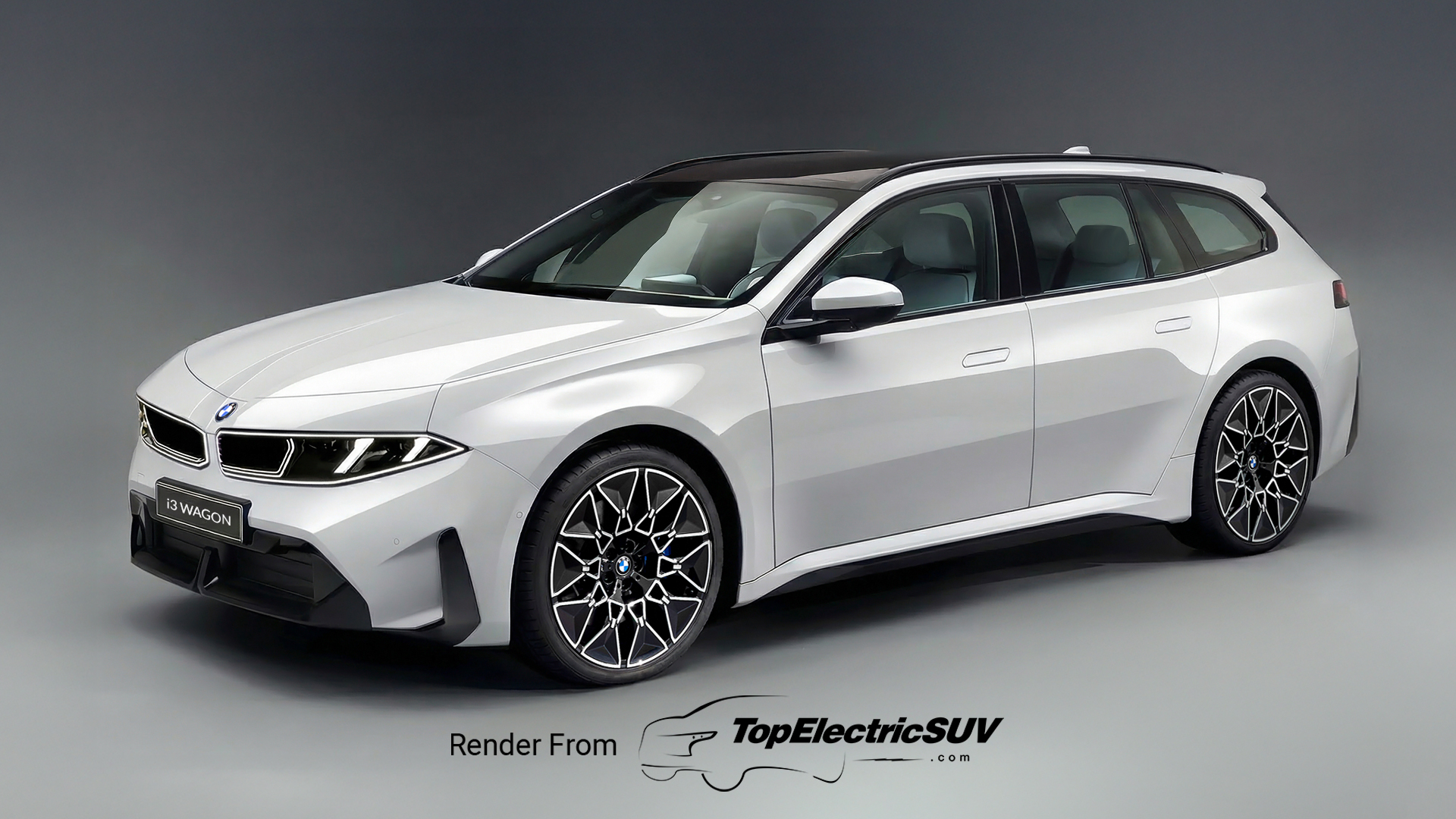
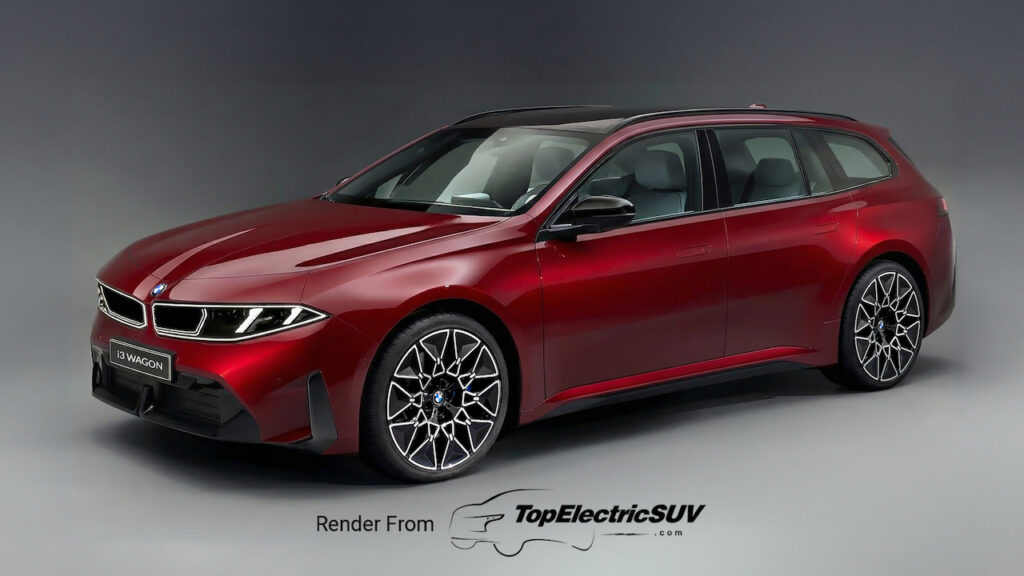
 The future BMW electric station wagon (rendered) should look pretty much the same until the B-pillar.
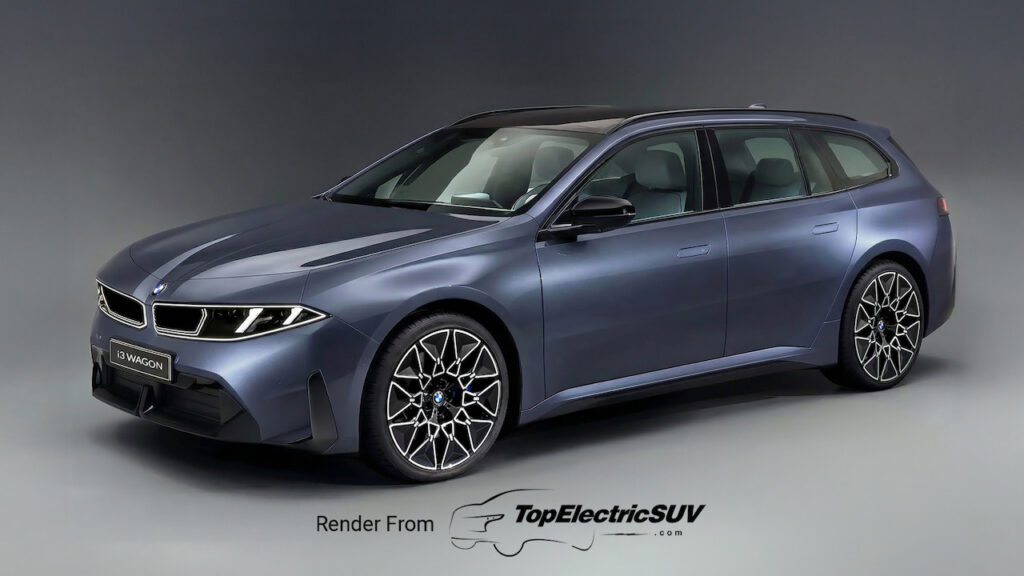
Our exclusive renderings in this story preview what that future model could look like based on the teaser shown at the end of the presentation.
The BMW i3 Touring should carry over the Neue Klasse sedan’s design up to the B-pillar, with the rear finished as a wagon body. Expect the same slim interpretation of BMW’s four-eye face, a unified kidney grille and lighting graphic, a shark-nose front end, and a clean surfacing theme.
The i3 sedan’s long wheelbase, short overhangs, flared wheel arches, and low-set character line create a strong base for the Touring’s side profile. At the rear, BMW will adapt the slim horizontal taillights featuring triangular corners with a more upright tailgate that offers easier loading.
Interior
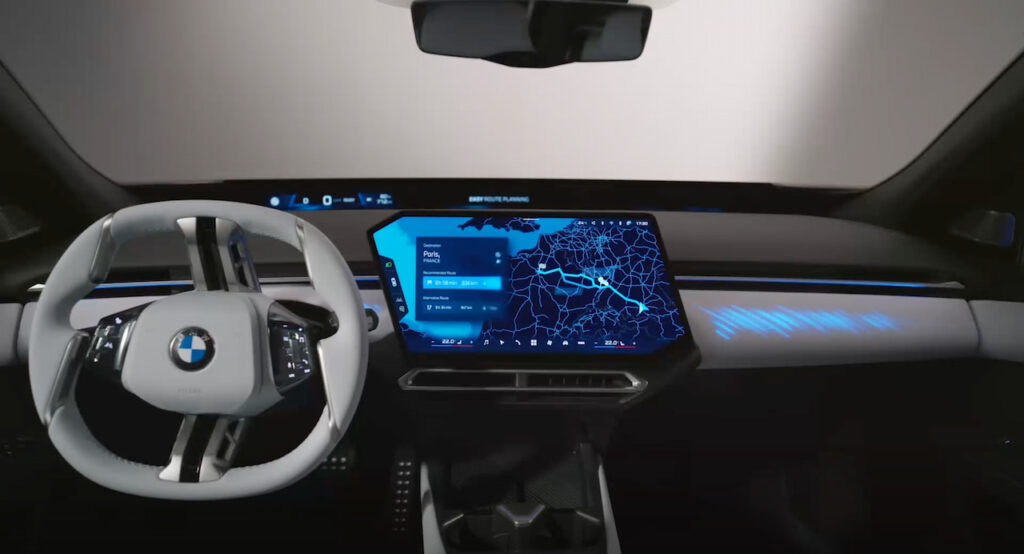 Expect the i3’s dashboard, seats, and tech to carry forward to the electric station wagon. Image: BMW Group
The i3 Touring should mirror the sedan’s cabin almost completely with features like the BMW Panoramic Vision at the base of the windshield, an available 3D Head-Up Display, and a 17.9-inch free-cut central display angled toward the driver.
BMW’s new steering wheel, My Modes, Operating System X, and the latest BMW Intelligent Personal Assistant should also carry over. The i3 sedan’s wraparound dashboard, panoramic glass roof, electrically operated door latches, wireless charging tray, and driver-focused layout would suit the Touring well.
BMW should also offer the same seat choices, including multifunction seats and M Sport seats, along with a cluster of interior themes.
Specifications
We expect the BMW i3 Touring to use a dual-motor xDrive setup with 463 hp and 476 lb-ft of torque. The Neue Klasse platform’s Gen6 BMW eDrive technology, 800-volt architecture, and up to 400 kW DC fast charging should also carry over.
The sedan targets up to 440 miles of EPA-estimated range, though the Touring could land a tad lower because of its body style and weight. Other expected features include bidirectional charging, battery preconditioning, NACS compatibility, adaptive suspension availability, and BMW’s latest Level 2+ driver assistance tech.
Pricing & Release Date
We should see test prototypes of the BMW i3 Touring later this year, and the model to follow the iX4 into the market by mid-2027, priced at around €55,000.
 The station wagon market continues to matter for buyers who prefer something different from an SUV.
There is also a possible U.S. angle, as reported by BMW Blog. BMW Head of Product Management Bernd Körber has confirmed that the next 3 Series Touring is under active consideration for this market, even though no decision has been made.
Also See: First Look Review: Mercedes CLA Shooting Brake seeks drivers bored of electric SUVs
Körber said U.S. buyers tend to like the Touring more for its shape and lifestyle appeal, while European customers value its mix of design, practicality, and long-range comfort. BMW is also seeing a Touring trend emerge outside Europe.
Featured image: TopElectricSUV’s exclusive illustration of the i3 Touring

An automobile engineer by training, I’ve analyzed the global car market since 2005, with a keen focus on EVs since 2008. My journey in online automotive publishing spans 17 years, during which I have reviewed cutting-edge automotive technologies and interviewed leading global CEOs and vehicle developers.