There have been many Tesla “Killers” over the years, all of which have either failed to dethrone the automaker from its dominance in the United States, or even make it to the market altogether.
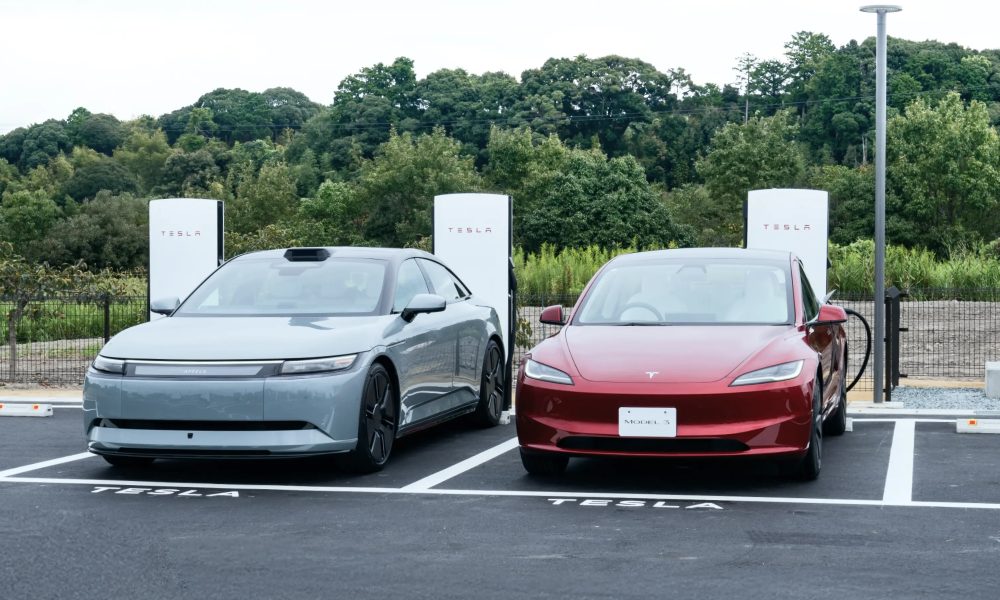
The Sony Honda Mobility (SHM) project, known as AFEELA, is the latest to make it to the grave, as the company announced its intentions to abandon the project earlier this week, Bloomberg reported.
SHM has officially discontinued development of its highly anticipated AFEELA electric vehicles. On March 25, the joint venture between Sony and Honda announced it would halt the AFEELA 1 luxury sedan and a planned SUV model.
🚗 Tesla Killers Graveyard:
Sony-Honda AFEELA
The sleek, AI-packed luxury sedan with PlayStation integration. Officially cancelled in March 2026 after Honda scaled back its EV plans.
Fisker Ocean
Stylish SUV with solar roof promises. Company filed for bankruptcy in 2024 amid… https://t.co/Om14UhISOy
— TESLARATI (@Teslarati) March 26, 2026
The decision follows Honda’s March 12 reassessment of its electrification strategy, which scrapped several upcoming EV programs amid slowing demand, high costs, and shifting market conditions.
SHM stated that it could no longer rely on key Honda technologies and manufacturing assets, leaving “no viable path forward.” Reservation fees for early buyers in California are being fully refunded, and the joint venture’s future is now under review.
Launched with fanfare in 2022, the AFEELA was positioned as a tech-forward premium EV blending Honda’s engineering reliability with Sony’s entertainment and AI expertise.
Prototypes featured advanced autonomous driving systems, immersive in-cabin displays, and even PlayStation integration, earning it early media labels as a potential “Tesla Killer.”
Priced around $90,000, the sedan was slated for limited production at Honda’s Ohio plant with deliveries targeted for late 2026. Industry watchers saw it as a serious challenger to Tesla’s dominance in software, connectivity, and premium appeal.
Yet, like many ambitious EV projects, it fell victim to broader industry headwinds: softening consumer demand, persistent high interest rates, and intense competition from established players.
The AFEELA joins a long list of vehicles once hyped as “Tesla Killers” that failed to deliver. In the late 2010s, Fisker’s second act, the Ocean SUV, promised stylish design and solid-state battery tech but collapsed into bankruptcy in 2024 after production delays, quality issues, and financial shortfalls.
Faraday Future poured billions into the FF 91 luxury sedan, touting it as a hyper-tech rival with unmatched performance and features; the company delivered fewer than 100 vehicles before fading into obscurity.
Lordstown Motors’ Endurance electric pickup generated massive pre-order buzz and Wall Street excitement but imploded after exaggerated range claims, a factory sale, and eventual bankruptcy.
Even Lucid Motors’ Air sedan, frequently called a Tesla slayer for its superior range and luxury, has struggled with sluggish sales and missed growth targets despite strong reviews.
Rivian’s R1T and R1S trucks enjoyed similar early acclaim and a blockbuster IPO, yet production ramp-up challenges and profitability woes have prevented it from dethroning Tesla.
The AFEELA’s quiet demise underscores a harsh reality in the EV sector. While Tesla’s first-mover advantage in software, charging infrastructure, and brand loyalty remains formidable, legacy automakers and tech newcomers alike continue to underestimate the complexities of scaling affordable, desirable electric vehicles.
As market realities force tough choices, the graveyard of “Tesla Killers” grows longer, another reminder that innovation alone is rarely enough to topple an established leader.