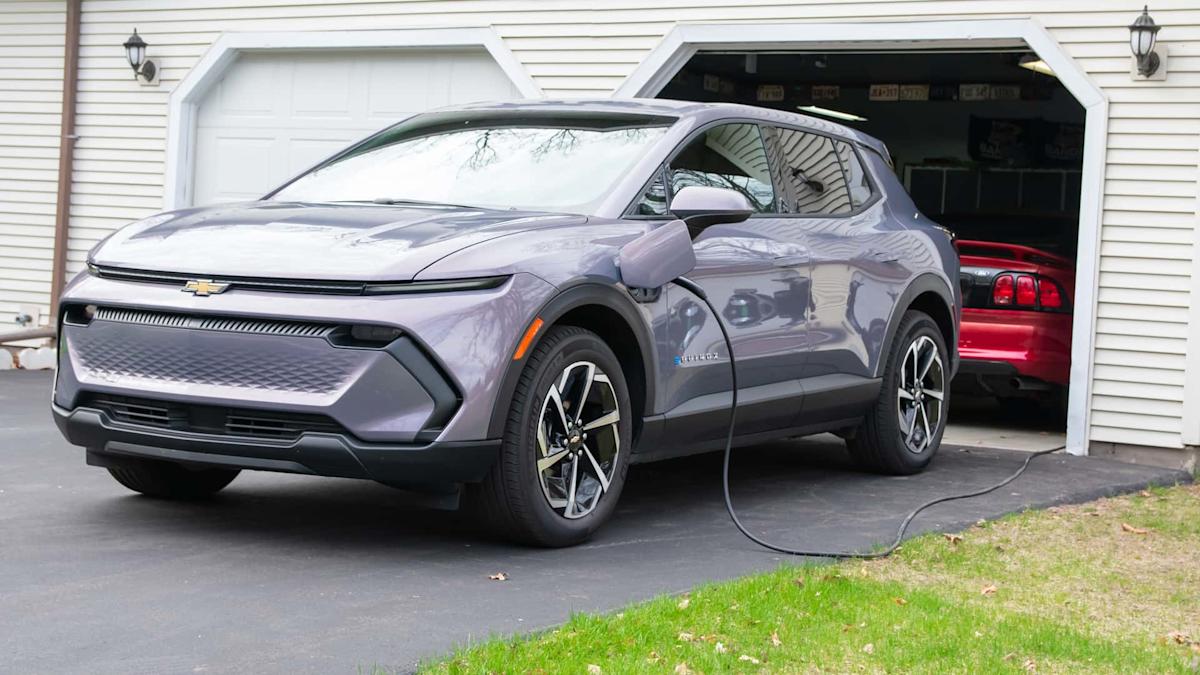
JD Power’s Electric Vehicle Experience (EVX) Home Charging Study revealed that energy costs are making EV owners less satisfied with home charging.
J.D Power found that home EV charging satisfaction is slipping, due in part to rising electricity costs.
86% of EV charging happens at home, according to JD Power
Overall, average home charging costs are up about $5 per month compared to last year.
The media is full of stories about DC fast charging not being up to snuff. But home charging has its issues too, a new JD Power study revealed this week. EV charging satisfaction scores are dropping, and rising energy costs are to blame. That matters, because according to the company, 86% of EV charging happens at home.
For this year’s Electric Vehicle Experience Home Charging Study, it surveyed 5,399 EV and plug-in hybrid owners between November 2025 to February 2026, who own cars in the 2020 to 2026 model year range. The study asks a lot of questions, concerning things like charging speed, charging cord length, ease of use, and how owners use their charging equipment. It also considered the cost of charging as part of the satisfaction score.
Overall satisfaction among owners of Level 1 portable chargers landed at 569 on a 1,000-point scale, down 12 points from last year. Satisfaction for Level 2 portable chargers was 710, down four points. Installed Level 2 chargers held stable at 733.
Part of the reason for the sinking scores? The cost of charging is going up. JD Power says that the average EV owner reported spending $63 on home charging in the last 30 days, up $5 from a year ago. In places that have lower charging costs, like Colorado, satisfaction is higher. Likewise, when charging costs are higher, satisfaction with home EV charging drops.
It’s easy to see one potential reason for rising home charging costs. On average, electricity prices rose about 6% nationwide from 2024 to 2025, but some locales have seen double-digit percentage increases that are well above average. According to the Energy Information Administration, in my state of Ohio, rates jumped a little over 10% from 2024 to 2025. New Jersey saw some of the worst inflation, with a staggering 17% jump in electricity costs from 2024 to 2025. No matter where you are, you’re definitely feeling it.
There are ways EV owners can reduce their charging costs. Many utility companies offer cheaper electricity during off-peak hours—say, after 11 p.m. and before 6 a.m.—ideal times for EV charging, since most people are sleeping and wouldn’t need to use a car anyway. JD Power found that the 38% of EV owners who always schedule their charging are happier with the experience and pay less: $65 over the last 30 days, versus $71 for those who never schedule.
And some utilities have smart-charging programs that save EV owners money by automatically starting charging during times of lower energy demand on the grid. JD Power said 69% of owners are aware of the programs, but only 12% are enrolled. Another roughly 20% of EV owners surveyed didn’t even know these programs existed, as they weren’t educated on programs like this, or charging in general, when they bought the car.
JD Power learned that in the places where these plans do make sense, the EV owners who have them love them. “When people are scheduling their charging, not only are they saving, but they’re also charging more,” said Brent Gruber, executive director of the firm’s electric vehicle practice.
On the flip side, some incentivized charging programs don’t actually work all that well. For example, my state, Ohio, does offer an opt-in program for on and off-peak charging, but the savings aren’t great. Ohio’s time-incentivized rate includes a rise in on-peak pricing over the standard rate. Since people likely have little ability to alter their energy use habits during the day, some have reported their bills increasing when enrolling in the program. The EV-specific variant of the program could reduce those on-peak surcharges since it decouples household energy use from EV charging use, but it requires a new electrical meter, installed at cost to the owner. That is not cheap, or often completely not feasible for those who don’t own their homes.
Still, it’s important to remember that even with the elevated pricing, home charging generally is cheaper than DC fast charging. And filling a car with electricity is much cheaper than filling one with gas, especially at today’s gas prices. With gas hovering around $4 a gallon due to the war with Iran, a single tank could cost you as much as the typical EV owner spends on home charging in an entire month.
Contact the author: Kevin.Williams@InsideEVs.com
Related Articles