Japan e-bike market size reached USD 3,116.2 Million in 2025. Looking forward, IMARC Group expects the market to reach USD 4,770.4 Million by 2034, exhibiting a growth rate (CAGR) of 4.85% during 2026–2034. The rising consumer environmental concerns and numerous technological advancements in the production techniques of e-bikes are primarily driving the market growth.
E-bikes occupy a unique and increasingly strategic position in Japan’s urban mobility landscape. An electric bicycle integrates the characteristics of conventional bicycles with the advantages of an electric motor — fitted with a rechargeable battery that provides different levels of pedal assistance, significantly simplifying hill climbs and extended-distance travel. Japan’s combination of severely congested metropolitan rail networks, a deeply entrenched cycling culture, aggressive national decarbonization targets, and world-class domestic manufacturers like Yamaha, Panasonic, and Shimano makes it one of the most technologically advanced and commercially mature e-bike markets in Asia — for both domestic producers and international mobility brands.
Request a Business Sample Report for Procurement & Investment Evaluation
Japan E-Bike Market Growth Drivers
Rising Environmental Concerns and National Decarbonization Goals
The growing awareness regarding pollution and climate change is prompting demand for eco-friendly transportation options, with e-bikes serving as a low-emission alternative driving market growth across Japan. The Japanese government’s commitment to carbon neutrality by 2050 has translated into concrete municipal-level action — bicycle sharing services have expanded rapidly, with 305 local governments fully adopting these services and 61 in trial phases as of 2022, while another 397 are considering adoption. This policy tailwind is creating a structural demand base for e-bikes that operates independently of consumer discretionary trends, providing manufacturers and investors with unusually durable long-term visibility.
Urban Congestion and the Collapse of Rail Comfort
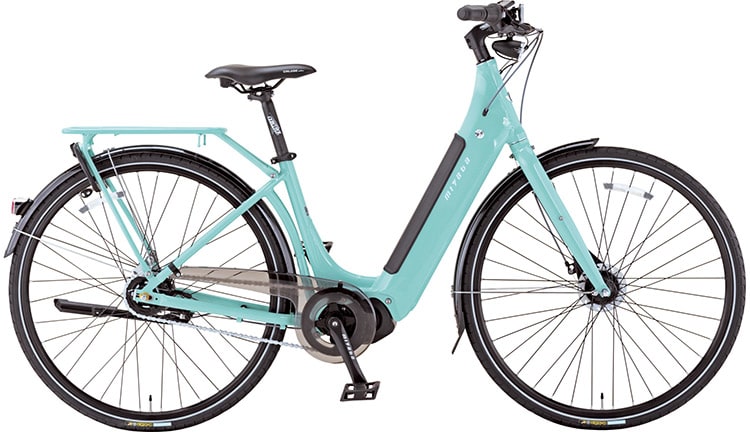
E-bikes provide a practical solution in crowded cities, allowing riders to avoid traffic, navigate narrow streets, and reduce commute times. The scale of Japan’s rail congestion problem is stark: average peak morning congestion rates in 2023 reached 136% in Tokyo, 115% in Osaka, and 123% in Nagoya — each rising year on year. For short-to-medium distance commuters, e-bikes are increasingly a rational first-choice alternative — faster than walking, cheaper than taxis, and dramatically more comfortable than a packed Yamanote Line carriage at 8 a.m. This commuter shift is directly translating into sustained city/urban segment growth that is expected to dominate the Japan e-bike market through the forecast period.
Lithium-Ion Battery Advances and Smart Component Integration
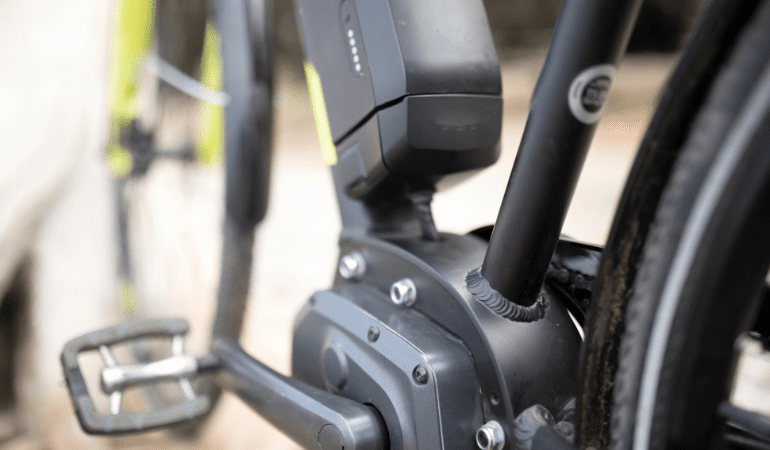
Improvements in battery life, motor efficiency, and lightweight materials make e-bikes more user-friendly, extending their range and performance, which drives consumer interest and product adoption. Contemporary lithium-ion powered e-bikes now routinely deliver ranges exceeding 100 km per charge in real-world conditions — a figure that was aspirational just five years ago. Shimano announced a novel AI-assisted gear-shifting system scheduled for launch by 2025, while Yamaha unveiled two new electric bicycles at the Japan Mobility Show in October 2023 — both reflecting the accelerating pace of technology integration that is raising consumer expectations and compressing replacement cycles across the category.
Japan E-Bike Market Trends
Pedal-Assisted Dominance and the Emerging Speed Pedelec Segment
The market is segmented by propulsion type into pedal assisted, speed pedelec, and throttle assisted. Pedal-assisted models — which provide motor support only when the rider is actively pedaling — remain the clear market leader in Japan, strongly aligned with the country’s existing legal framework for bicycles and its cultural preference for active commuting over passive riding. Speed pedelecs, capable of motor-assisted speeds up to 45 km/h, are the fastest-growing sub-segment, attracting performance-oriented commuters and last-mile logistics operators seeking to replace light commercial vehicles on congested urban routes.
City/Urban and Cargo Applications Driving Adoption Beyond Recreation
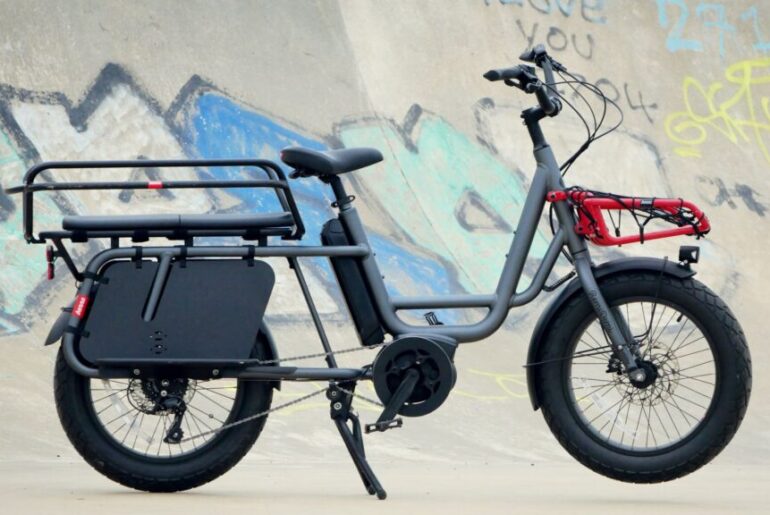
The market is categorized by application type into cargo/utility, city/urban, and trekking. City/urban applications account for the largest share, underpinned by Japan’s high urban population density and the practical case for e-bikes as a genuine car replacement for sub-20 km daily commutes. The cargo/utility segment is experiencing the sharpest growth trajectory, driven by last-mile delivery expansion from e-commerce platforms and food delivery services — operators who are actively electrifying their rider fleets to meet corporate sustainability commitments and reduce fuel cost exposure. Trekking e-bikes are carving out a premium niche among Japan’s active aging population, enabling older riders to maintain cycling habits well into their seventies and eighties.
Regional Market Structure and Bike-Sharing Infrastructure Expansion
The regional market spans the Kanto Region, Kansai/Kinki Region, Central/Chubu Region, Kyushu-Okinawa Region, Tohoku Region, Chugoku Region, Hokkaido Region, and Shikoku Region. The Kanto Region commands the largest share of urban commuter e-bike demand, anchored by Tokyo’s vast and densely populated commuter belt. The Kansai region is emerging as a strong secondary hub, with Osaka and Kyoto municipalities actively expanding bike-sharing infrastructure as part of tourism-linked mobility initiatives. Bike-sharing stations have grown from 828 in 2014 to over 15,000 in 2022 — a trajectory that is laying permanent physical infrastructure for e-bike adoption across all regions.
Recent News and Developments in Japan E-Bike Market
March 2026: Panasonic Energy launches next-generation 21700-format lithium-ion cells optimized for e-bike applications, delivering a 20% improvement in energy density and enabling sub-3-hour full charges for standard commuter models.
February 2026: Yamaha Motor expands its E-Ride Base showroom network to Osaka and Nagoya, offering free 60-minute city tour rentals alongside its full electric-assist bicycle lineup, targeting 500,000 annual test riders by end of fiscal year.
January 2026: Honda begins mass production of its e-MTB Concept electric mountain bicycle at its Kumamoto facility, marking the company’s first full commercial entry into the electric bicycle segment after two years of prototype development.
December 2025: JATCO and HODAKA CORPORATION complete regulatory certification for their jointly developed electric-assist bicycle and commence dealer network rollout across 12 prefectures, targeting the urban commuter segment with a retail price point under ¥150,000.
November 2025: Tokyo Metropolitan Government announces subsidies of up to ¥30,000 per unit for cargo e-bike purchases by small businesses operating within the 23 Special Wards, accelerating fleet electrification among food delivery and retail logistics operators.
Note: If you require specific details, data, or insights not currently included in the scope of this report, we are happy to accommodate your request. As part of our customization service, we will gather and provide the additional information you need, tailored to your specific requirements. Please let us know your exact needs, and we will ensure the report is updated accordingly to meet your expectations.