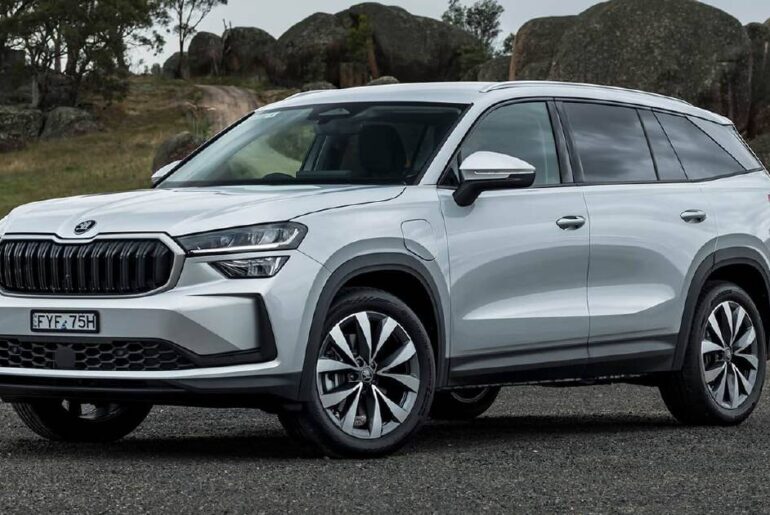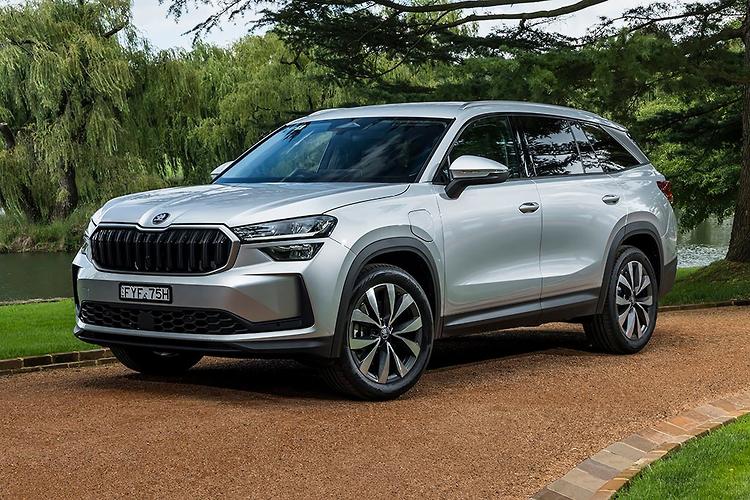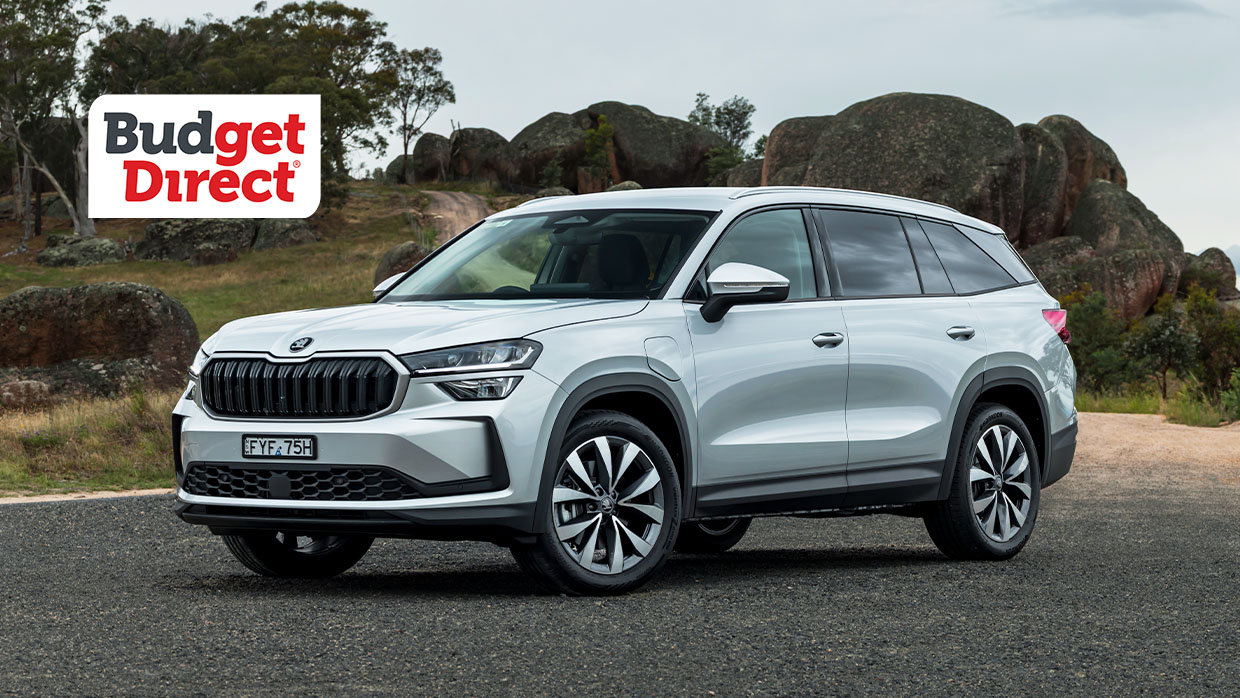
Skoda Australia’s significant electrification push sees the quite recent (2025 debut) second-generation Kodiaq large SUV range blossom from three variants to five, adding a pair of front-drive hybrids to what was strictly a turbo-petrol all-wheel-drive line-up.
A new 48-volt ‘mild’ (mHEV) Select Hybrid opens the Kodiaq gambit at $49,990 list, but the subject of this review is the Select Plug-In Hybrid – its name spells it out – as the penultimate version of the lineup, priced from $63,490 before on roads, or from $68,990 driveaway.
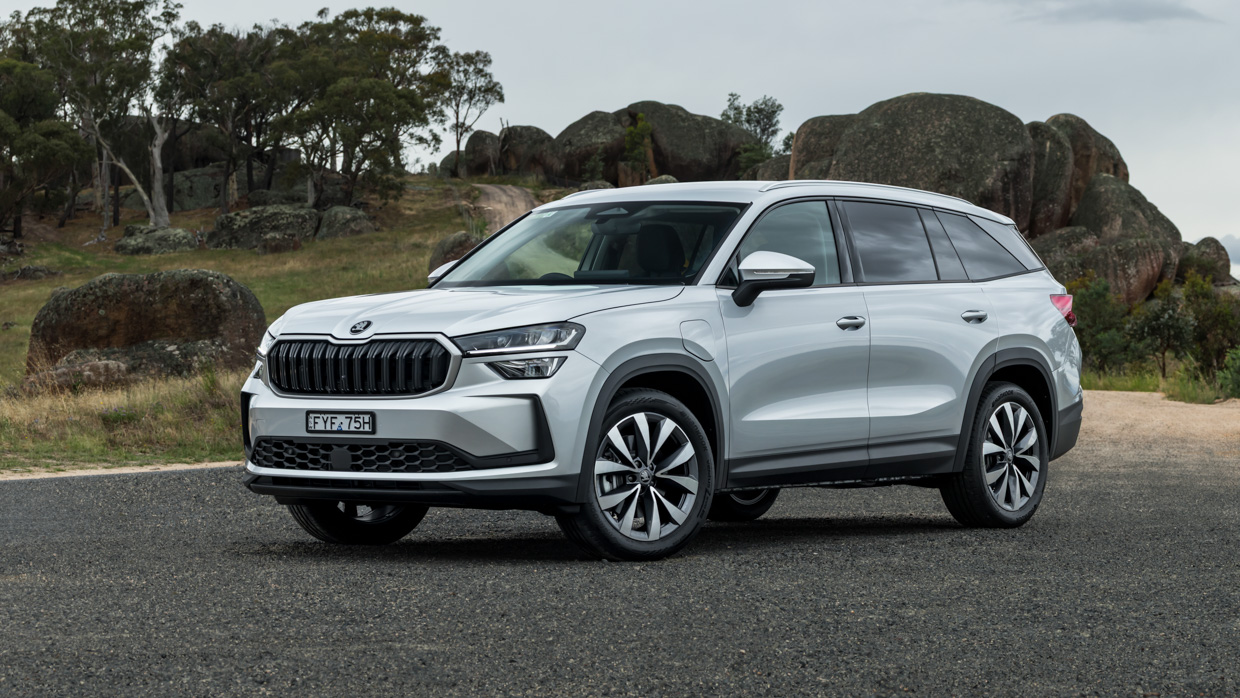
Unlike the mild-hybrid three-row options, the sole PHEV choice is a five-seater only. And front-wheel-drive only. At least for now.
So what do you gain, especially over the cheaper 140TSI 4×4 versions? Well, of course, there’s efficiency: where its siblings’ 140kW/320Nm 2.0L turbo-four format offers a quite thirsty 9.0L/100km combined claim, the plug-in quotes just 1.9L/100km!
The PHEV, though, offers superior 150kW and 350Nm combined outputs once its smaller 110kW 1.5-litre turbo four pot is summed together with an (85kW) electric motor. That said, the plug-in’s 0-100km/h prowess (8.4sec) is half-a-second slower than the 140kW 4x4s (7.9sec) and well off the mightier 195kW RS (6.3sec) flagship.
What’s lacking in performance is – Skoda hopes – overshadowed by user benefits of healthy 110km electric-only range (according to WLTP) and convenient 50kW DC charging speeds to top up the 25.7kWh battery from 10-80-percent result in 25 minutes, or 2.5 hours for a full 0-100-percent replenishment using an 11kW (16amp) AC wallbox.
Owners up for burying into geekery can meddle with switchable powertrain modes (E-mode and Hybrid), recuperation adjustment (Auto, High, Low) and charging control (Auto and Manual) settings, though in our set-and-forget testing our exampled forecast almost 800km of combined electro-combustion touring range.
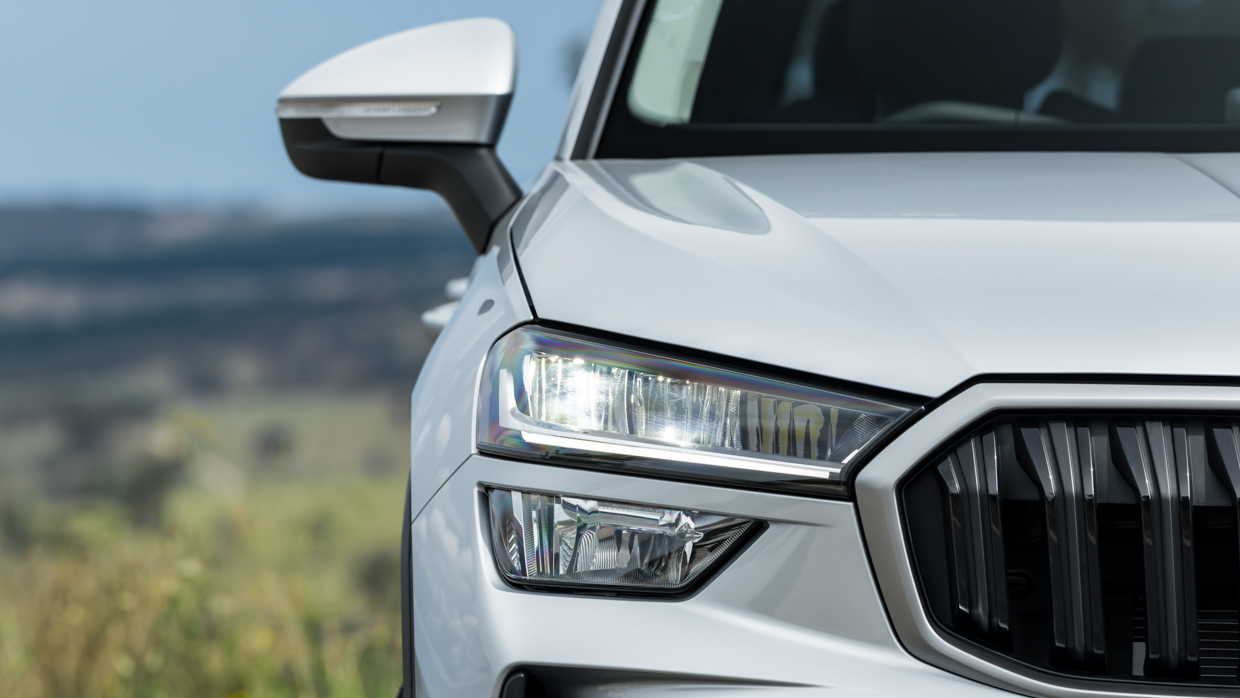
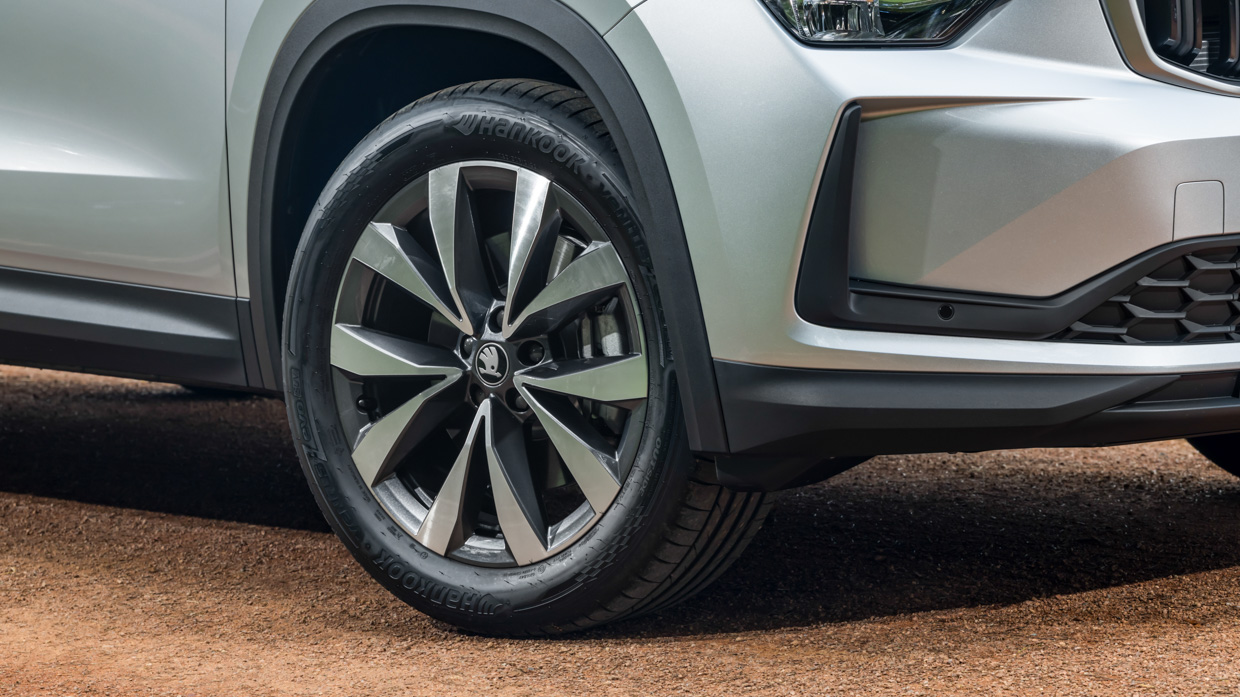
Features? LED lighting, 19-inch wheels, auto-dimming/heated mirrors and electric tailgate feature outside. The cabin brings leather seat trim, 10-inch driver and 13-inch media screens, tri-zone climate, dual phone-charging pads, and Skoda’s expected ‘simply clever’ treats such as the umbrella tucked into the driver’s door.
A $6500 Signature package adds niceties such as massage front seating, a head-up display, LED Matrix headlights and Canton 13-speaker sound, while a sunroof is a separate $2000 upcharge.
Safety credentials include a broad array of active systems, including the likes of lane assist with adaptive lane guidance and traffic jam assist, while there are a total of nine airbags – including front-centre unit – for the two-row family hauler.
How does the Kodiaq Select PHEV drive?
As gearheads in the know, erm, know: Skoda has a particular knack for producing cars that are wonderful to drive. We’re talking ride, handling, comfort and resolve punching well above its model’s price points. When a Skoda model fails to overachieve in the drive experience, it’s an anomaly.
And the Kodiaq PHEV is…true to fine form.
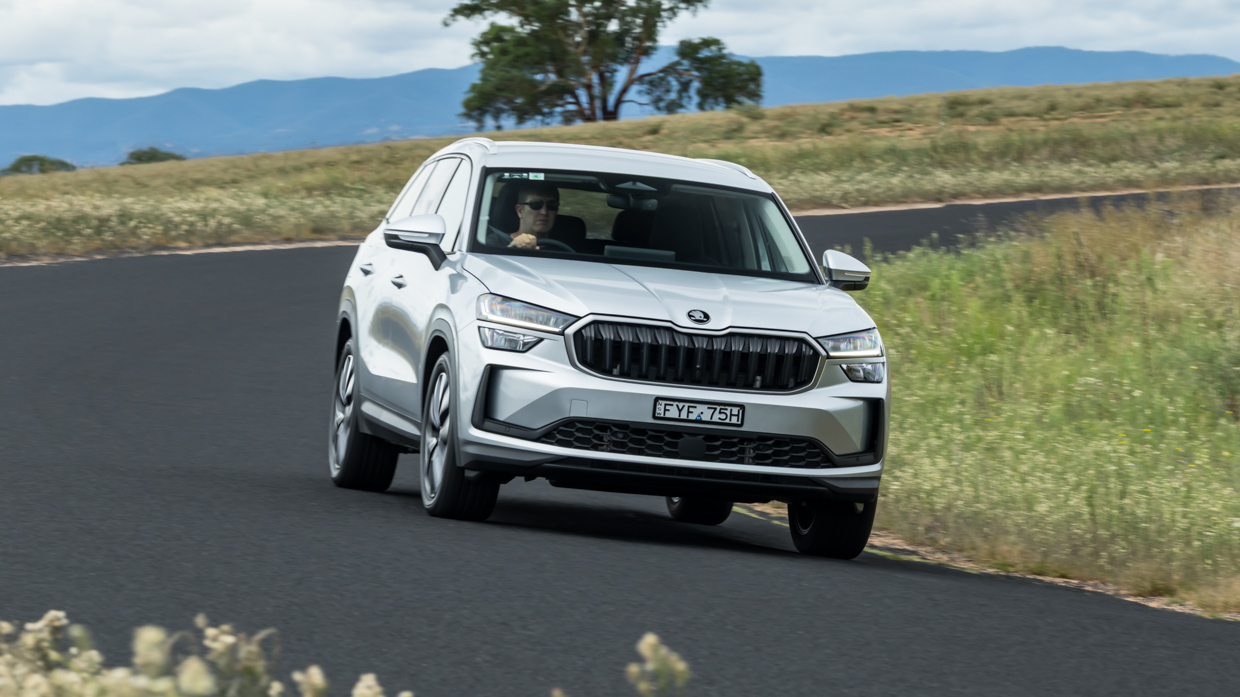
Your reviewer’s last Kodiaq reference point was the launch of the satisfyingly red-misted 195kW RS. And it’s clear from the get-go that the PHEV is polar opposite by design and yet no less satisfying despite its mild-mannered character. It’s just a different animal.
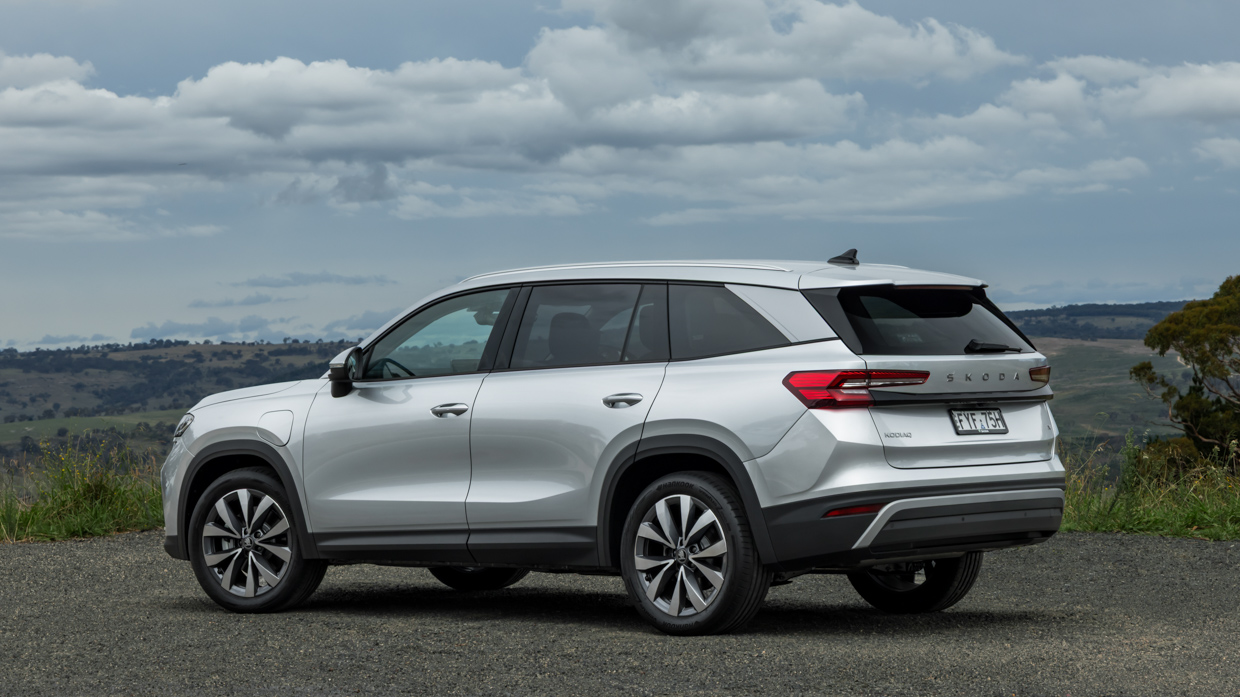
A highlight is the chassis. It appears larger than its relatively short 4.8-metre length suggests, though it feels from the helm much lighter on its rubber than its almost two-tonne weighbridge ticket suggests. One suspects this Skoda black magic is not by accident.
It drives a little less large SUV and a little more large station wagon, sort of akin to a Superb on stilts. So much of this is its fluid nature – a word we’d attached to our recent Enyaq Select 60 review – that blends direct and clear steering with the crisp lightness and keen engagement of the chassis.
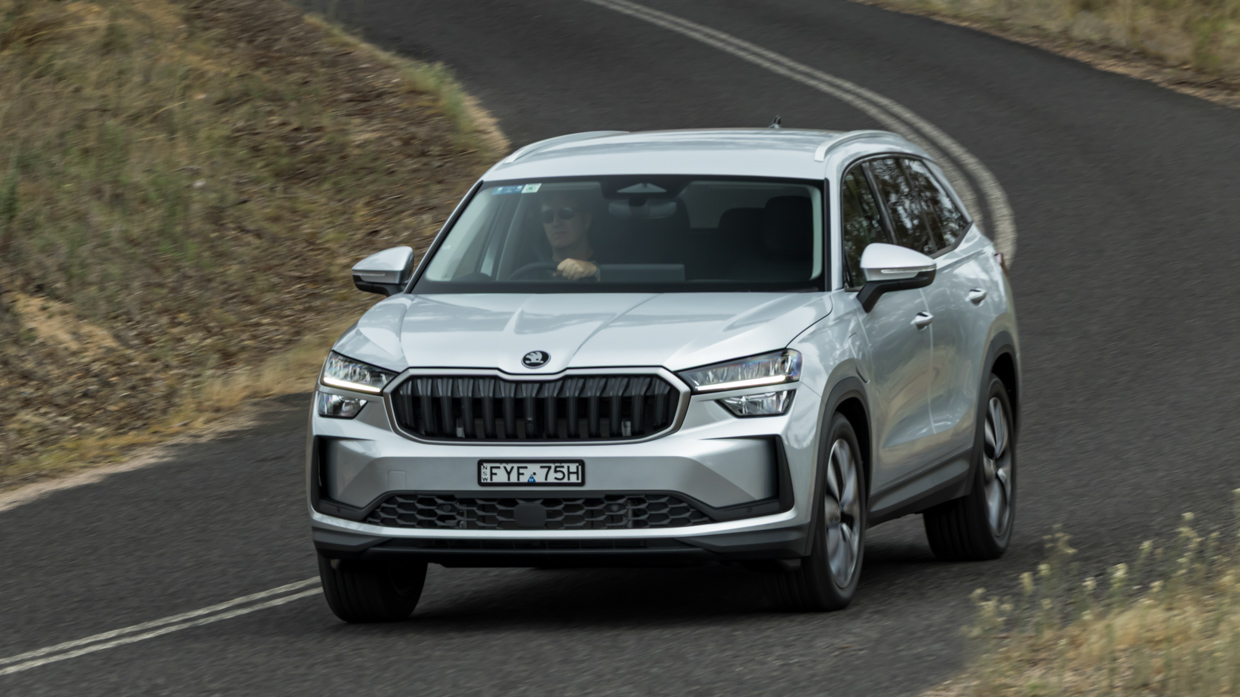
It’s not sporty per say, just abundantly natural in feel. It’s an easy rig to find a solid connection with, which itself cultivates comfort and a sense of confidence with the driver. When you are enticed to push on, there’s ample grip and balance to back up its good vibes in its capabilities.
As we’ve found in other Kodiaq variants, the ride compliance of the Select-spec passive damping is so good that the adaptive hardware (not offered in PHEV) is almost an overly complicated compromise, so no loss with its absence. Optional ($770) 20-inch wheels can be had, though we suspect here, too, ride quality would go backwards.
The powertrain is also impressively resolved and polished, if conditionally. With the full battery charge, it seems energetic enough around town, complete with whisper operation and quite seamless drive shuffling between the combustion and electric drive units.
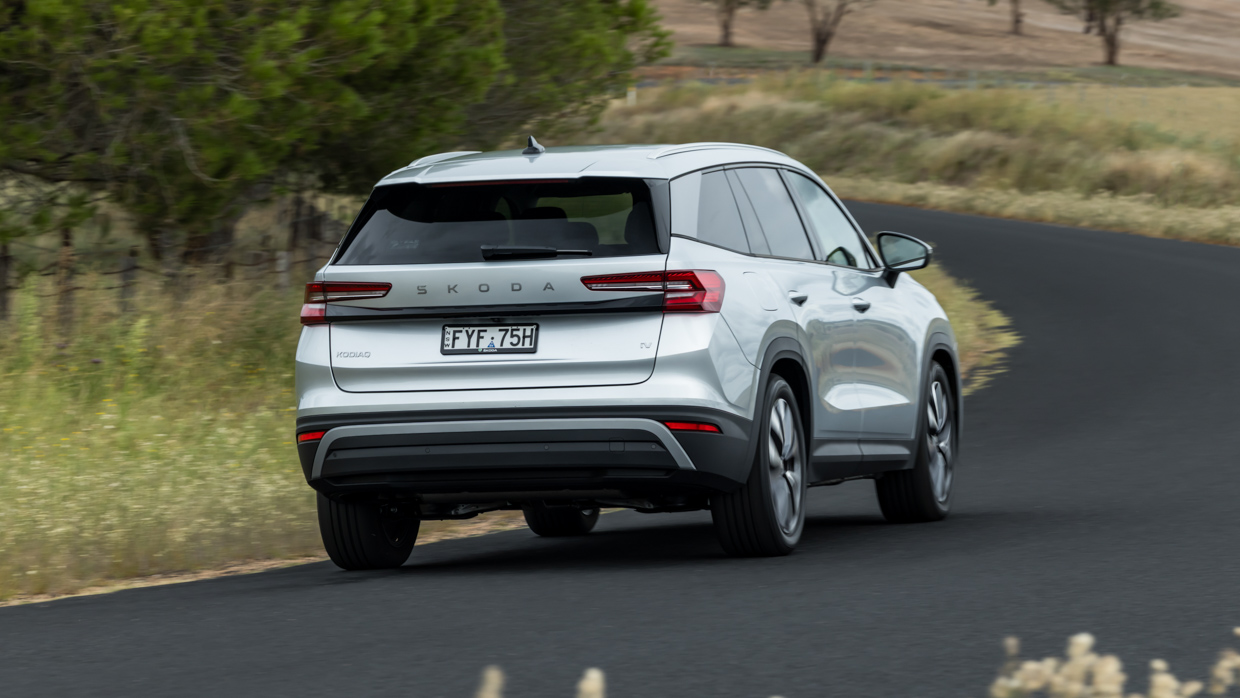
Here it’s right at home. The torque filling and heavy lifting the e-motor does with charge onboard really suits the ebb and flow of urban driving without being caught short on a motorway.
But bury the throttle off the mark and the powertrain becomes unruffled. Acceleration is leisurely – even one-up with no passengers and luggage to anchor progress – and faint nips and palpitations accompany the two power units’ unhappy marriage attempting to man the battle stations at once.
It’s a bit of the same story with engine/motor braking. With recuperation set to Auto, oftentimes the SUV would runaway downhill, other times deceleration would be pronounced off the throttle…oftentimes in the same moment of descent. User error? This demands a deeper dive in future…
As is typical for SUV-dom, front-wheel drive and six forward dual-clutch ratios presents few shortcomings against the all-paw seven-speed format of the PHEV’s Kodiaq siblings. Unless, that is, you’re assessing full-march acceleration or you’re a regional owner/frequenter often driving on broken or slippery surfaces.
For now, you cannot have plug-in frugality and all-wheel traction as a combination as you can in, say, Mitsubishi Outlander PHEV ES Five-Seater (from $57K) or the BYD Sealion 6 Premium Extended Range (around $53K).
How is the Kodiaq Select PHEV’s interior?
There are two sides to the PHEV’s five-seat-only coin, wholly an outcome dictated because the 25.7kWh battery is located precisely where the third-row footwell resides in the ICE variants.
It dissuades family buyers who either a) need three rows or b) simply want three-row flexibility for blue moon situations. However, because of the Kodiaq’s length, sticking to two rows affords fantastic interior space and practicality as a fiver.
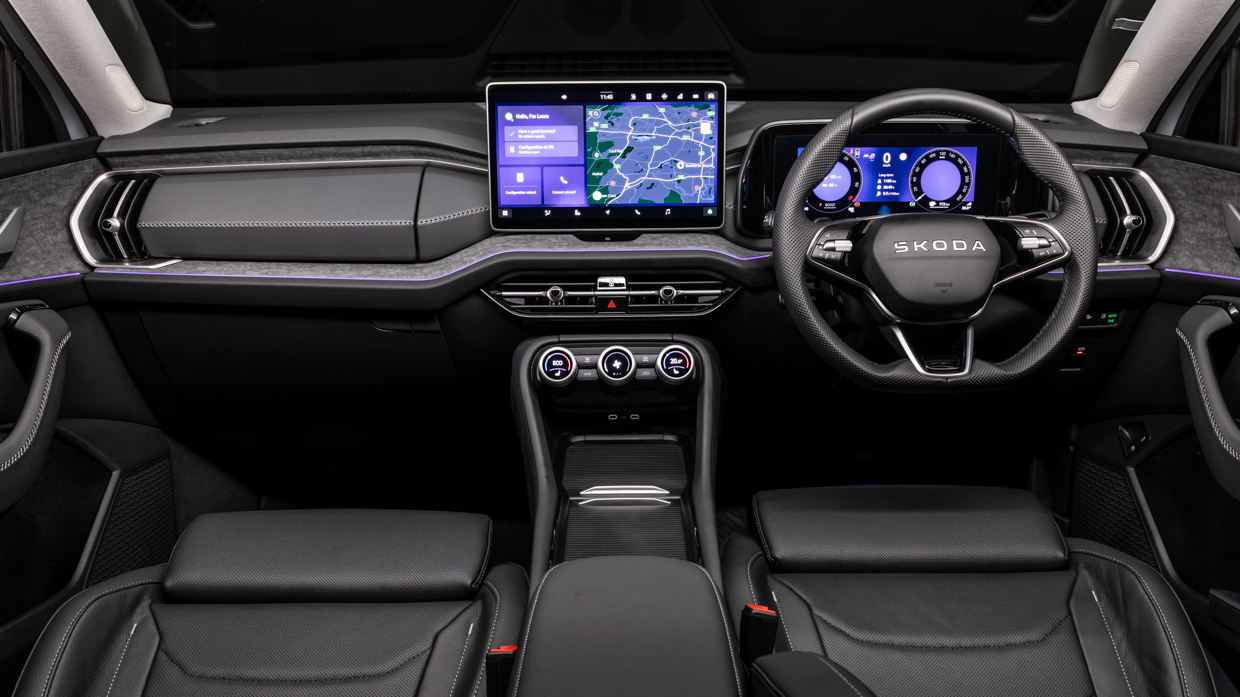
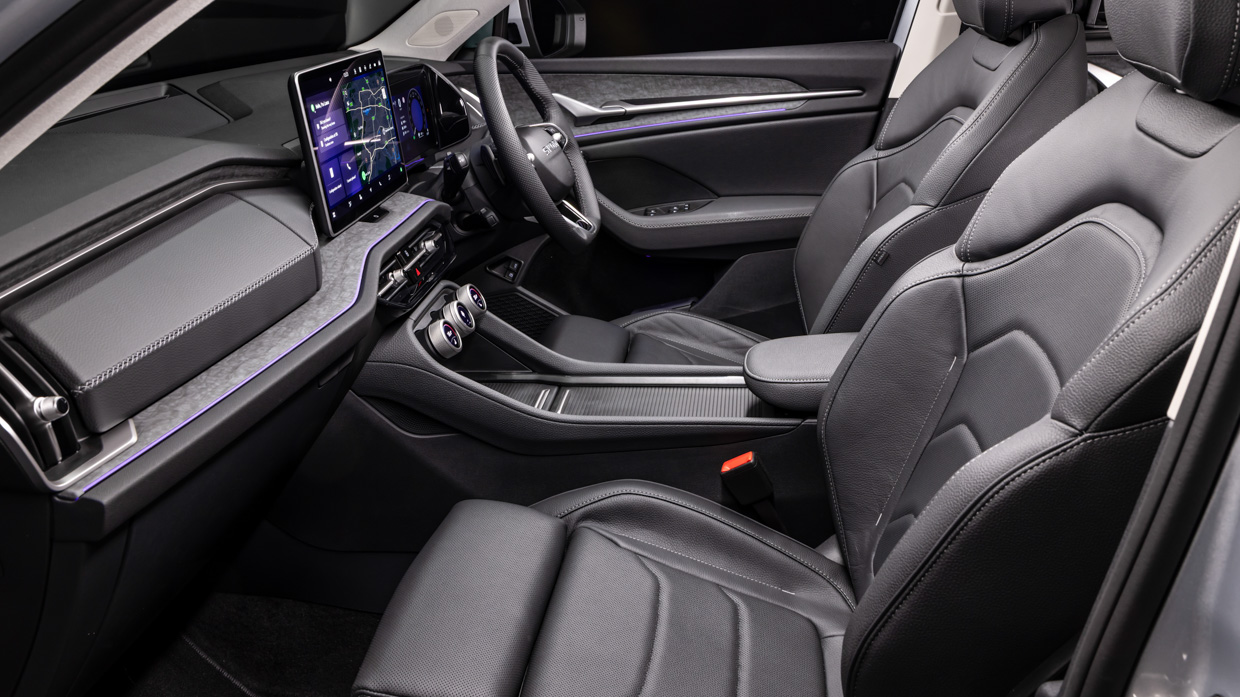
Presentation up front is (unsurprisingly) Volkswagen-like semi-premium, its relatively fresh-generation design landing after the VW Group started migrating back to a more conventional user interface than the much criticised formats and elements its brands had adopted.
Colour ‘smart’ dial for the three-zone climate control system adjustment (or drive modes, if you like)? Hallelujah!
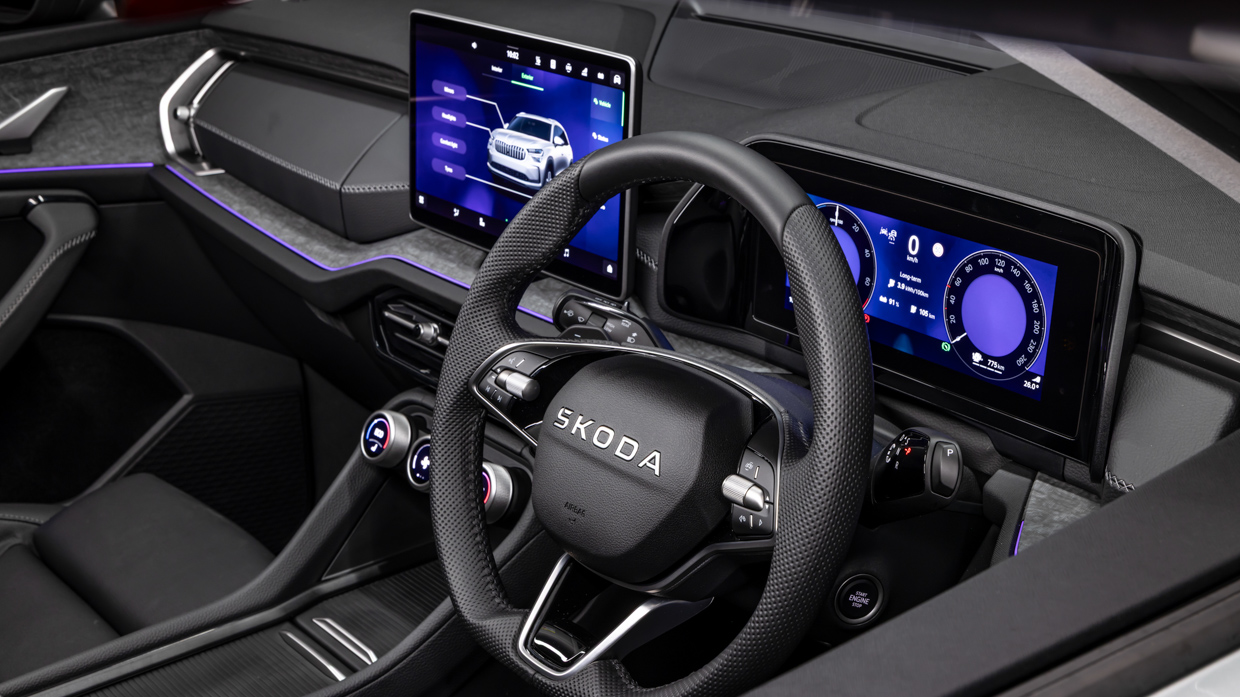
The separate countersunk (10in) driver and floating (13in) media screens is a nice old-school counterpoint to the me-too 12.3in panel display prevalent today, and there’s a richness and diversity in the material choice – lashings of leatherette, cross-stitching and woven cloth – and how they blend.
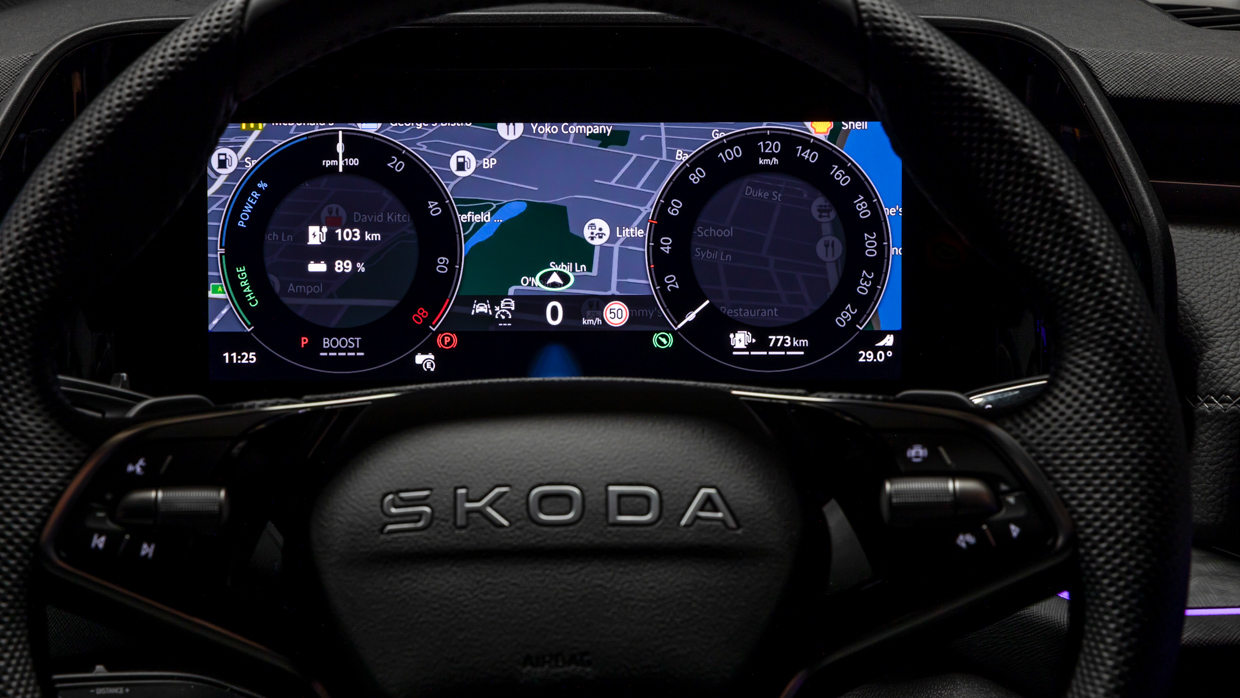
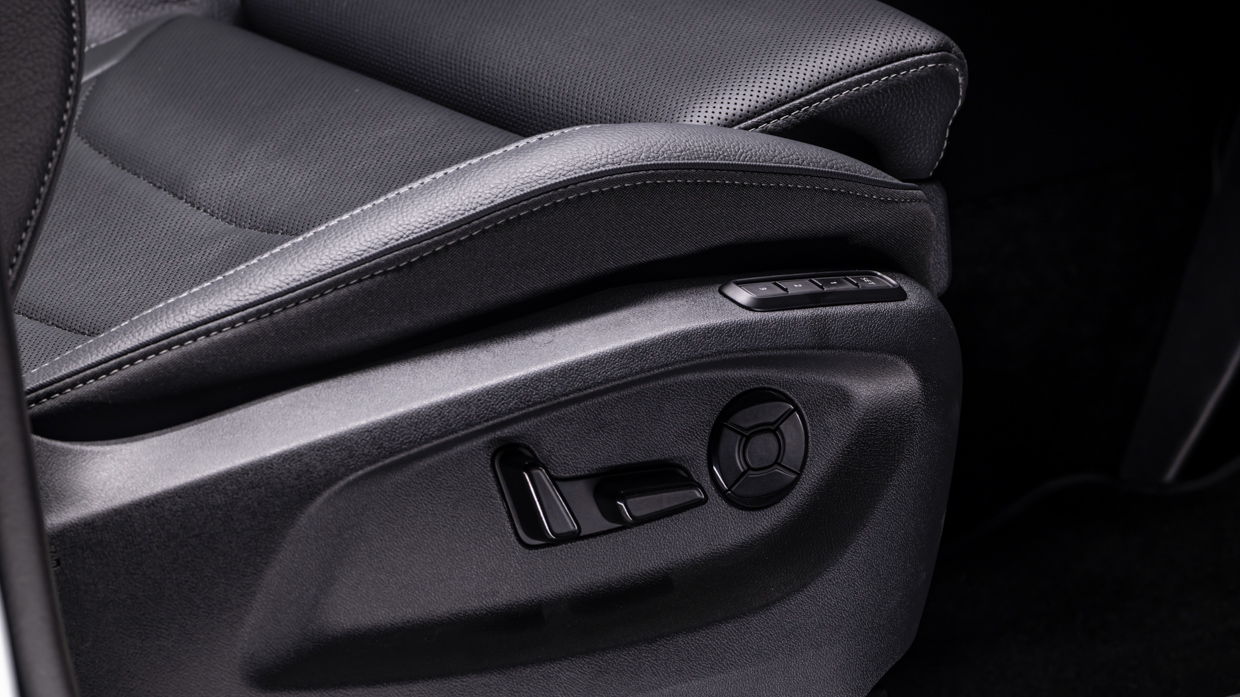
The flat-bottom wheel feels sporty and classy, the controls are intuitive and logically placed, and not too much digging is required in the fast, slick media system, with most vehicle setting adjustments paired with and shortcut icons located top and bottom of the screen.
Seating is decent, and comfy and supportive enough not to really warranty the $6.5K splurge for the pack with the optional massage pews. They’re heated too. The front passenger should really be electrically adjustable, though. It presents well in standard black but is quite tasty in optional Cognac (terracotta brown).
Details such as the dual 15-watt cooled inductive phone pads and huge flocked door bins seem indulgences until you live with them and realise they’re tough to live without. Cabin storage is good, and the ‘simply clever’ touches, such as the de rigueur umbrella or the touchscreen cleaning ‘block’, are more welcome than strictly necessary.
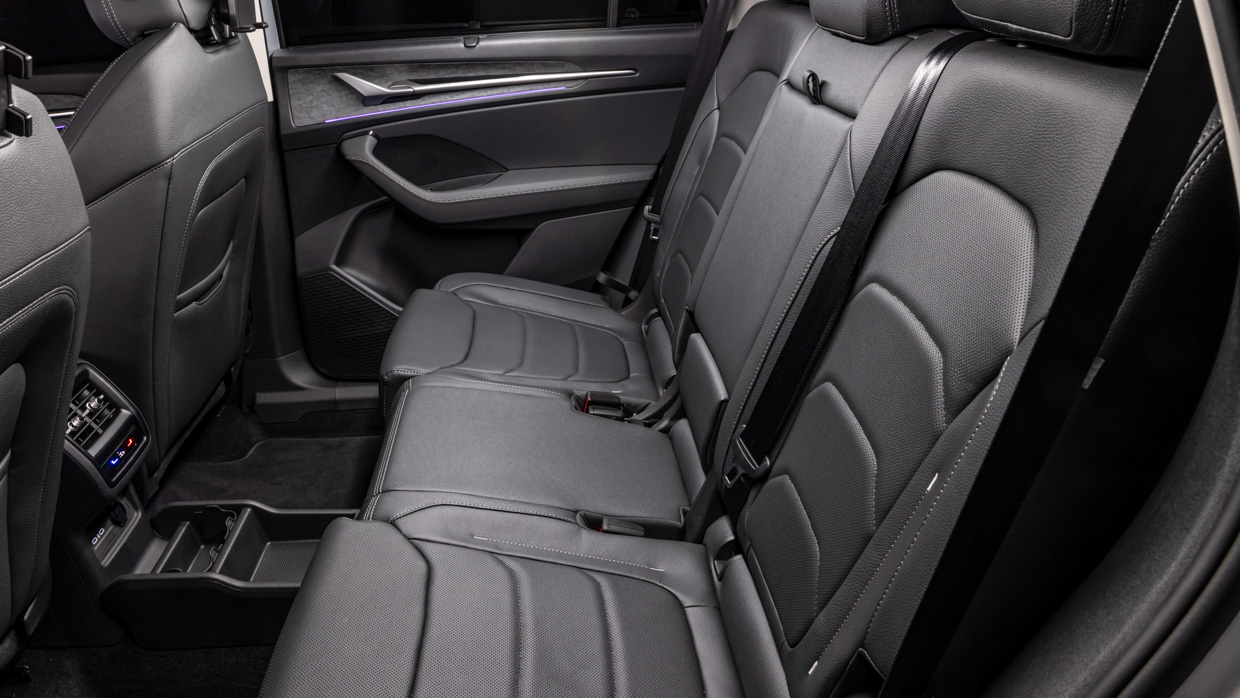
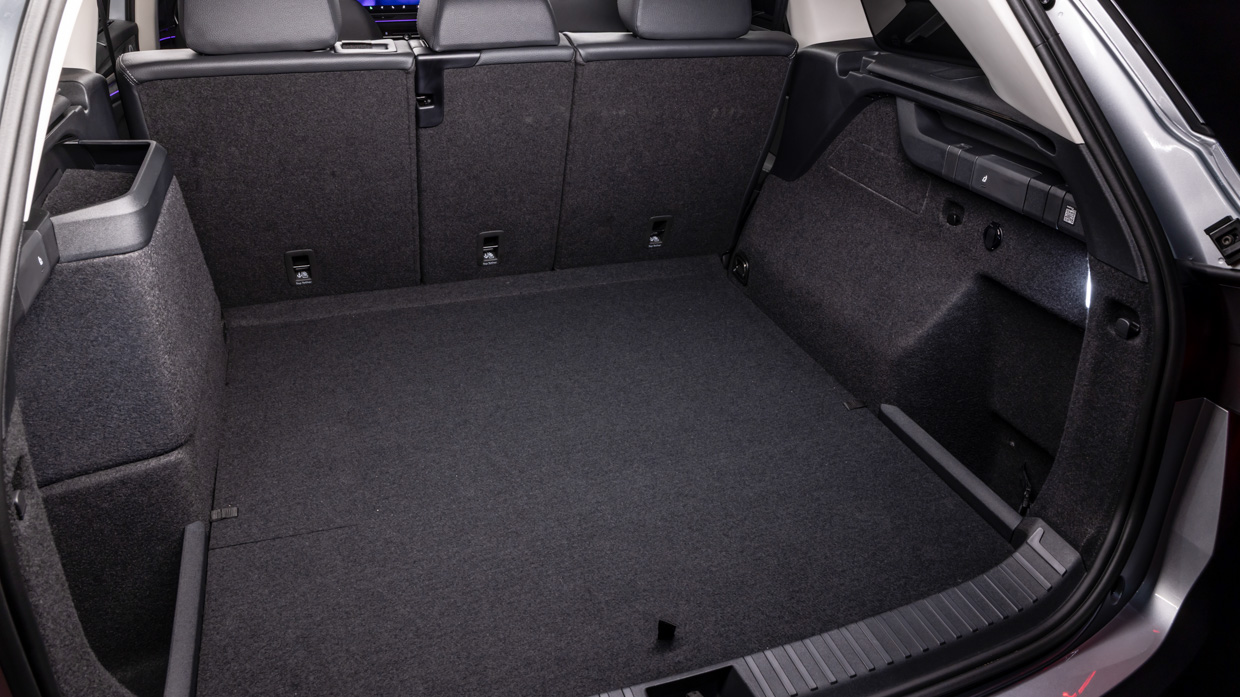
Row two is very roomy, with all of the typical gen-two Kodiaq treats, such as handy recline adjustment, dedicated third-zone climate control adjustment, manual window sunshades and the removable drink and oddment caddy that’s located off the backside of the centre console.
Boot space is a whopping 745 litres, convertible to 1945L with the second row stowed.
What are the Kodiaq Select PHEV’s ownership costs?
The Kodiaq is covered by Skoda Australia’s seven-year, unlimited-kilometre warranty. Servicing is required every 12 months or 15,000km and totals $2990 pre-paid for a five-year pack for front-drive Kodiaqs, or an average per-year outlay of $598.
Real-world fuel consumption? As with all PHEVs, it depends on recharging frequency. With the battery topped up performed daily, and tasked with a typical Aussie urban commute (circa-45kms), it’s near enough to zero.
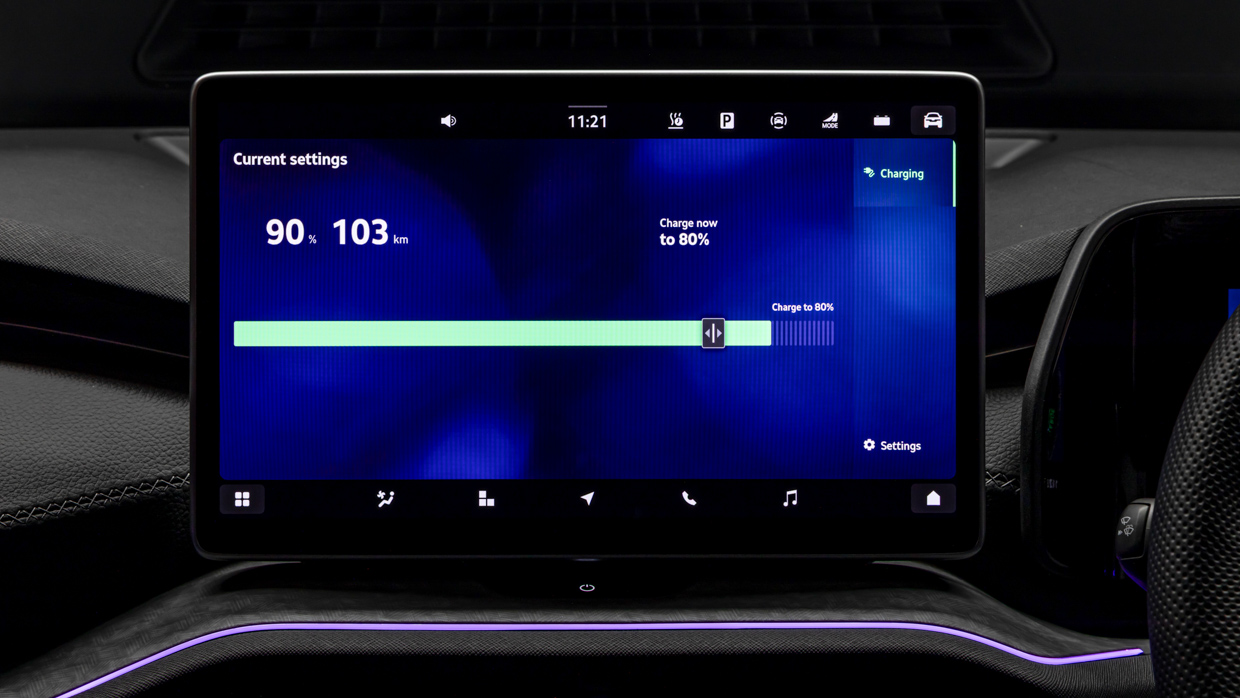
Tank and battery brimmed on an interstate road trip, its 800km-odd range using a 45-litre fuel has it approaching more like 5.0L/100km.
Budget Direct told us the median annual premium purchased for the first time between 1/2/25 and 1/2/26 to comprehensively insure a new Skoda Kodiaq was $1237. Individual circumstances and policy terms may vary.
Of course, everybody’s situation is different, and the premium will vary according to make and model, and other things insurers take into account, such as your postcode, driving history, who drives the car, where you garage the car and more.
Please quote for yourself. Subject to meeting underwriting criteria. Insurance issued by Auto & General Insurance Company Limited. See PDS & TMD at budgetdirect.com.au.
The honest verdict
When this generation of Kodiaq launched back in April 2025, we praised it for its Euro slickness, thoughtful practicalities, its ride comfort and general value proposition, but we did call out the 2.0TSI versions’ sheer thirst.
“This nameplate remains one of the very best just begging for a hybrid option to go big,” we surmised. Well, almost 12 months on, here it is.
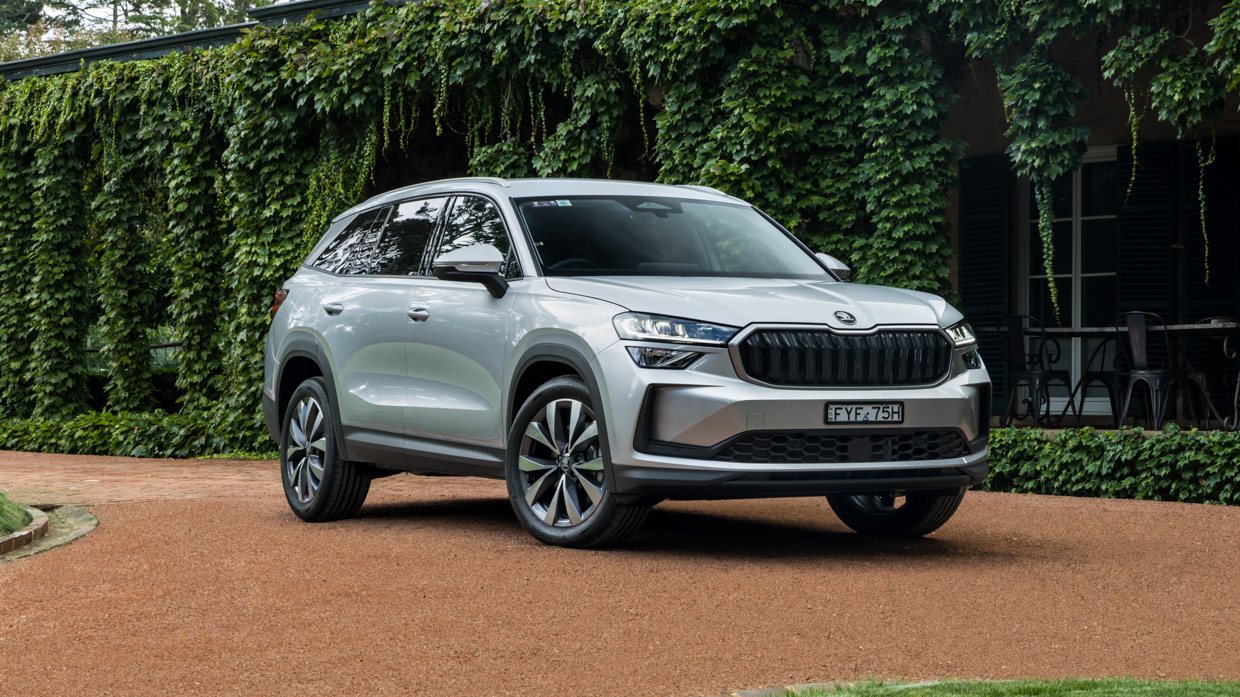
At around $69K on road, the PHEV is priced expectedly, rather than being priced well, given the lack of front-wheel drive and seven-seat options. But on singular merit for what it is, and what it sets out to be for certain buyers, the plug-in Select is an easy-to-recommend choice.
However, if you penny pinching – up front and/or at the bowser – the other petrol-electric choice on the Kodiaq block, the Select Hybrid (mHEV), is vastly cheaper ($49,990 list) to get into.
Sure, this new entry variant to the range is slower and less powerful, but its turbo 1.5’s 6.0L/100km frugality is nothing to scoff at, and it can also be had in a choice of five or seven seats.