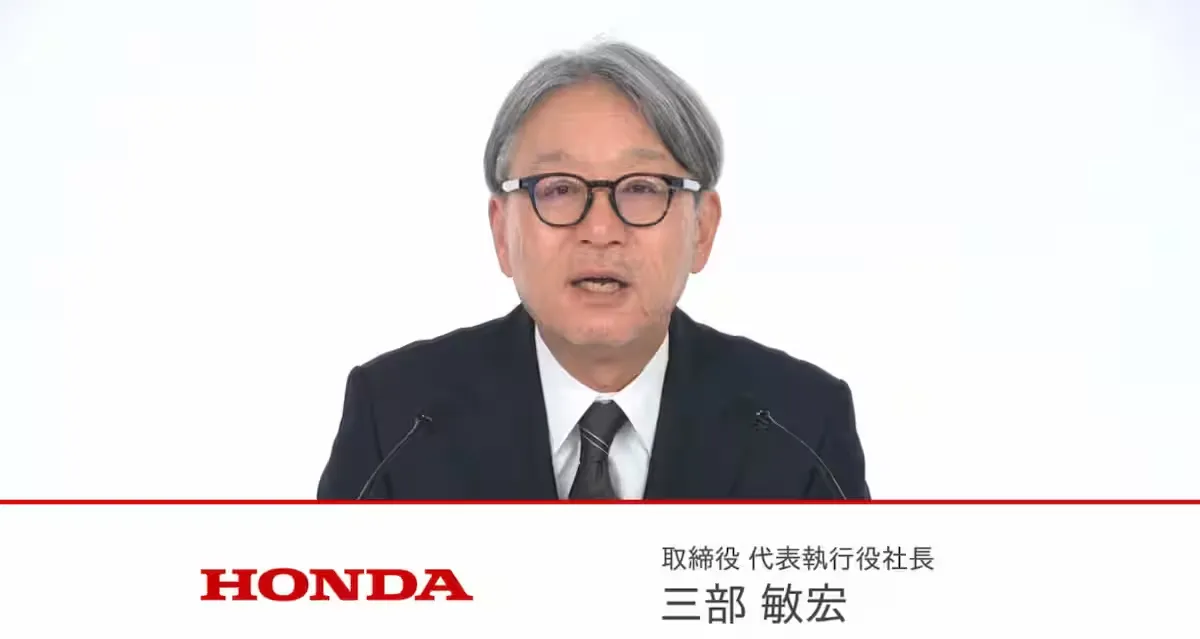
Honda Motor Co, Ltd, has been hit by enormous net losses. The main factor behind the loss was the cancellation of three models being developed for production in North America. Honda’s move also reflects declining demand for electric vehicles (EVs) in the United States, which is the company’s mainstay market.
Due to factors such as the recording of impairment losses related to equipment, the company has revised its consolidated net profit/loss forecast for the fiscal year ending March 2026 to a maximum loss of ¥690 billion ($4.35 billion). It’s also faced with the possibility of incurring significant losses in the upcoming fiscal year ending March 2027 and beyond.
Honda is the only domestic automaker to have adopted a “de-engine” strategy. Its goal was to make all new Honda cars either electric vehicles or fuel cell vehicles by the year 2040. That would end Honda’s gasoline fuel option for its vehicles.
However, the arrival of the Trump administration drastically changed the market situation in the US. Environmental policies have been successively revised, including relaxed emissions standards. Furthermore, tax incentives for EV purchases have been eliminated. As a result, there has been a marked slowdown in EV demand in the US.
Honda must now urgently revise its strategy.
Infrastructure Not There Yet
Honda’s massive losses have again highlighted that, without government support, EVs are still not an attractive option for many consumers. EV sticker prices are still high, and the charging infrastructure has not yet been fully developed.
Meanwhile, Honda is not alone in struggling with EV-related losses. Overseas manufacturers such as General Motors (GM) and Ford Motor Company in the US, and Stellantis in Europe, are also suffering massive losses.
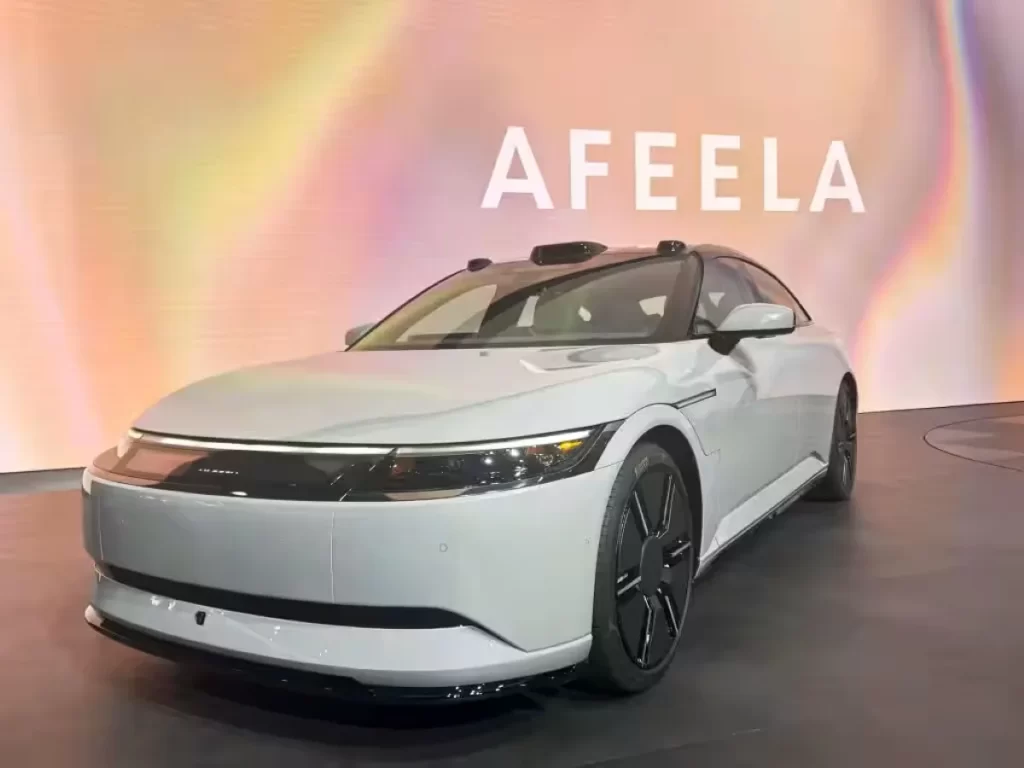 Sony Honda Mobility uveiled its pre-production prototype of the “AFEELA 1” in Los Vegas on January 5 and began taking pre-orders. Since then, the cross-industry collaboration has fallen through due to a change in the marketing environment and other factors. (©Kyodo)
Nevertheless, the medium to long-term prospects for EVs remain unchanged. They will continue to be the central focus of decarbonization technology for automobiles in the future.
Accelerate Next-Gen Vehicle Technology
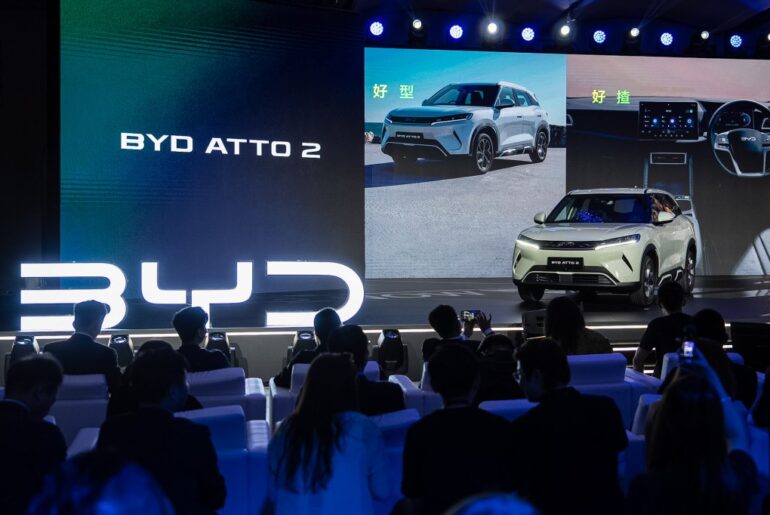
If the surge in crude oil prices continues, EVs may also come to be viewed differently. The rise of Chinese vehicle manufacturers like BYD, which focus on electric vehicles, is remarkable. In order for carmakers to maintain international competitiveness in the future, it will be difficult for them to slow down EV development.
Honda also possesses competitive hybrid vehicle technology. For the time being, the company must strive to secure profits through a sales strategy centered on hybrid vehicles, which are seeing strong sales in the United States. At the same time, the company should continue to develop attractive EVs from a medium- to long-term perspective.
The future will not belong solely to gasoline-powered vehicles, including hybrids and electric vehicles. Honda must also accelerate the development of software-defined vehicles, known as SDVs. These are next-generation vehicles whose performance can be improved by rewriting the in-car software.
Nonetheless, development costs will be onerous for the company to bear on its own. A strategy of forming partnerships with other companies will also be important. That includes Nissan Motor Co, even though its earlier proposed merger with Honda fell through.

RELATED:
(Read the editorial in Japanese.)
Author: Editorial Board, The Sankei Shimbun
Continue Reading