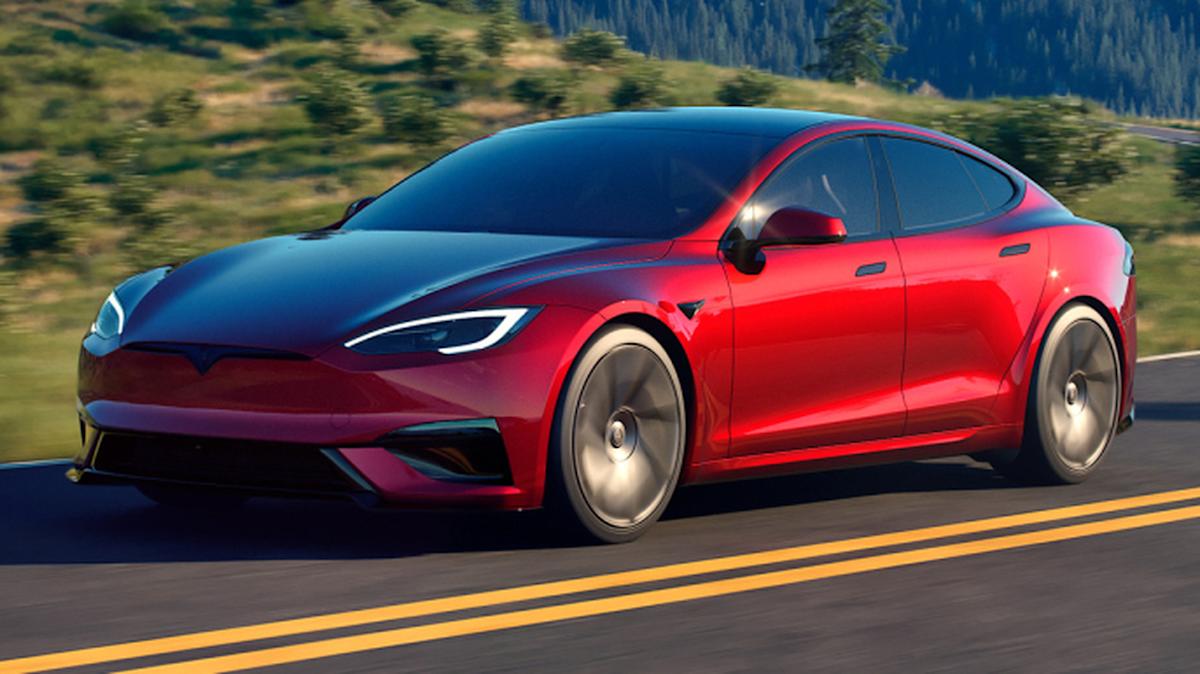
The Tesla Model S is not long for this world, but it will most assuredly be remembered fondly for marking a pivotal point in EV history long after it’s gone. Before the Tesla Model S burst onto the scene in 2012, electric vehicles were often perceived as niche products that couldn’t possibly ever become big-volume sellers. They were slow, impractical, and only good for short distances. Yet, within just a year of it being on the market, all of those narratives got punctured, as the Model S wasted no time in staking its claim as a serious proposition.
While EVs of the time topped out at 122 miles, the Model S offered up to 265 miles of all-electric driving range on a full charge, according to the EPA. Charging was swift, too, with Tesla’s DC fast-charging stations able to fully charge the EV’s largest battery in no more than 60 minutes. Cut to 2026 and things have only improved. The car charges faster, travels farther, and has gone from offering between 362 and 416 horsepower at launch to now putting out 670 to 1,020 horsepower.
So, even with it now being discontinued, the Model S’ features and standing as arguably the most important car of the century should continue to make it a tempting option for those of you who want to buy a used electric car. However, as someone who wants peace of mind, you may be wondering if reliability is something it similarly has in spades. Well, on the whole, the Tesla Model S is reliable. This is helped by the fact that, with it being an electric car, there are fewer failure points compared to ICE vehicles. But like any car, it does have its weaknesses.
Read more: These Are The Car Batteries Consumer Reports Rates The Lowest
What the Tesla Model S does well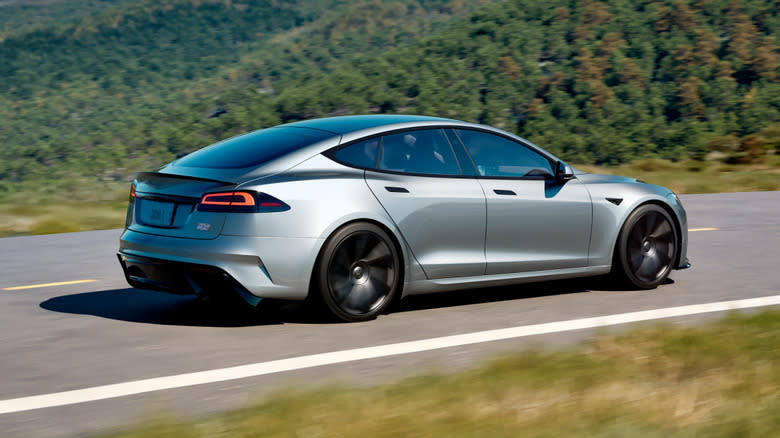
3/4 rear action shot of a silver Tesla Model S – Tesla
Historically, reliability surveys carried out by Consumer Reports have never been kind to the Tesla Model S, with the car being handed down average verdicts at best. However, some owners had more positive views about the reliability of the Tesla Model S. Key to the Model S’ reliability is its build quality, which drivers say is great in the 2021 to ’26 versions of the car especially. The newer cars are said to have little to no rattling, creaking, clunking, or other such worrying sounds.
Speaking of worry, the common concern when it comes to buying a used electric car is battery degradation, and rightly so. An EV’s battery degrades over time as the car ages, reducing the distance it can travel on a full charge. Thankfully, however, the Tesla Model S battery seems to exhibit high levels of sustained health. Real-world use cases show that batteries in well-cared-for examples degrade by between 5% and 8% after 50,000 miles. After this first big drop, the rate of degradation slows down, increasing only slightly to 8% to 12% by 100,000 miles and 12% to 15% by 200,000 miles, according to Recharged.
That, of course, is in addition to an exceptional thermal management system, an available full self-driving system, fast charging speed, strong performance, handling, and grip. A bit more good news for you as a buyer is that, with the Model S being one of the fastest depreciating cars, buying used allows you to reduce your depreciation liability while picking up a clean example for a fraction of the original price.
Tesla Model S problems and reliability concerns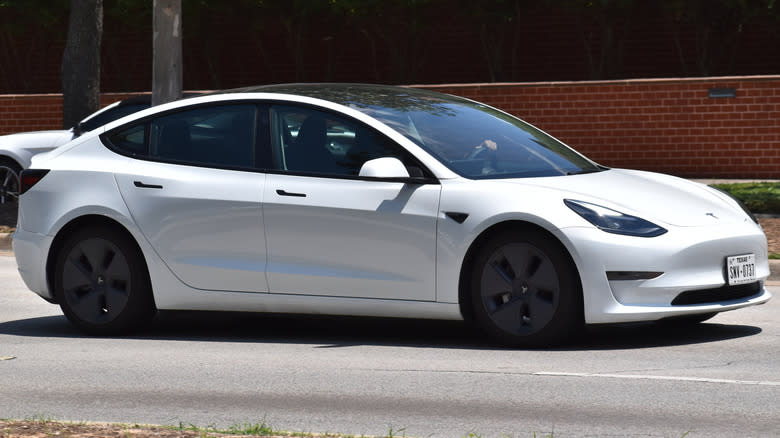
Front-right image of a white Tesla Model S – Artistic Operations/Shutterstock
While solid, there can be problems with the Tesla Model S. Its electronically retractable, flush-fitting door handles, for example, are a consistently troublesome element. They are designed so that if they aren’t used within 1 minute of them popping out, the handles retract into the vehicle and sit flush to the body to enhance aesthetics and efficiency.
The trouble is, as with most EVs equipped with the feature, the retractable door handles may not open in real-world crashes if the 12-volt battery dies or becomes disabled. And while the Model S is fitted with manual door releases as a backup for emergency exit, the rear door releases are located under the carpet below the front of the rear seats, where they can’t easily be found or accessed by rear occupants.
This can result in passengers being trapped inside the car in precarious, life-and-death situations, where life-saving decisions need to be made in just split seconds. In addition, there have been reports of the door handle breaking or failing to extend as owners walk toward the car. Issues with the climate control, as well as with the steering and suspension systems can also occur.
Want more like this? Join the Jalopnik newsletter to get the latest auto news sent straight to your inbox, and add us as a preferred search source on Google.
Read the original article on Jalopnik.