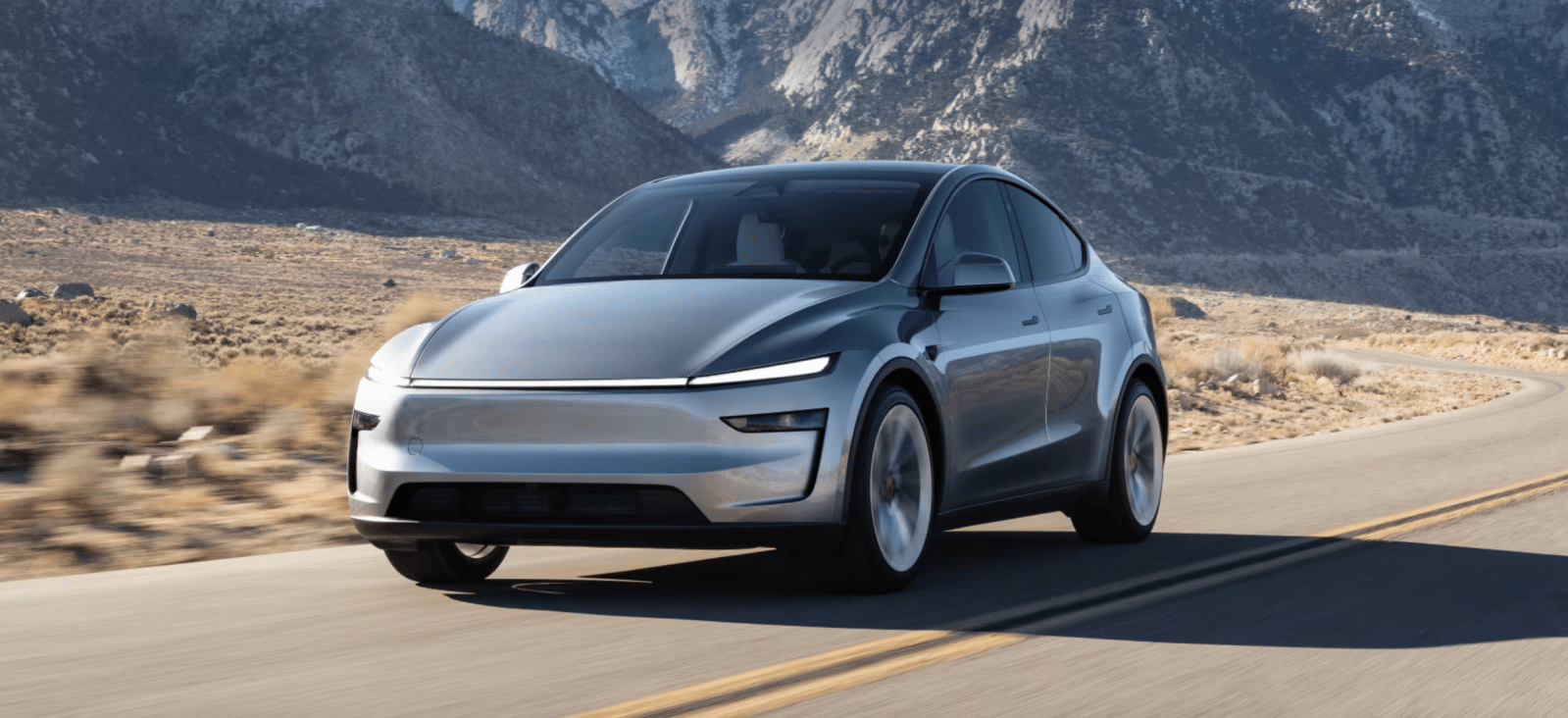
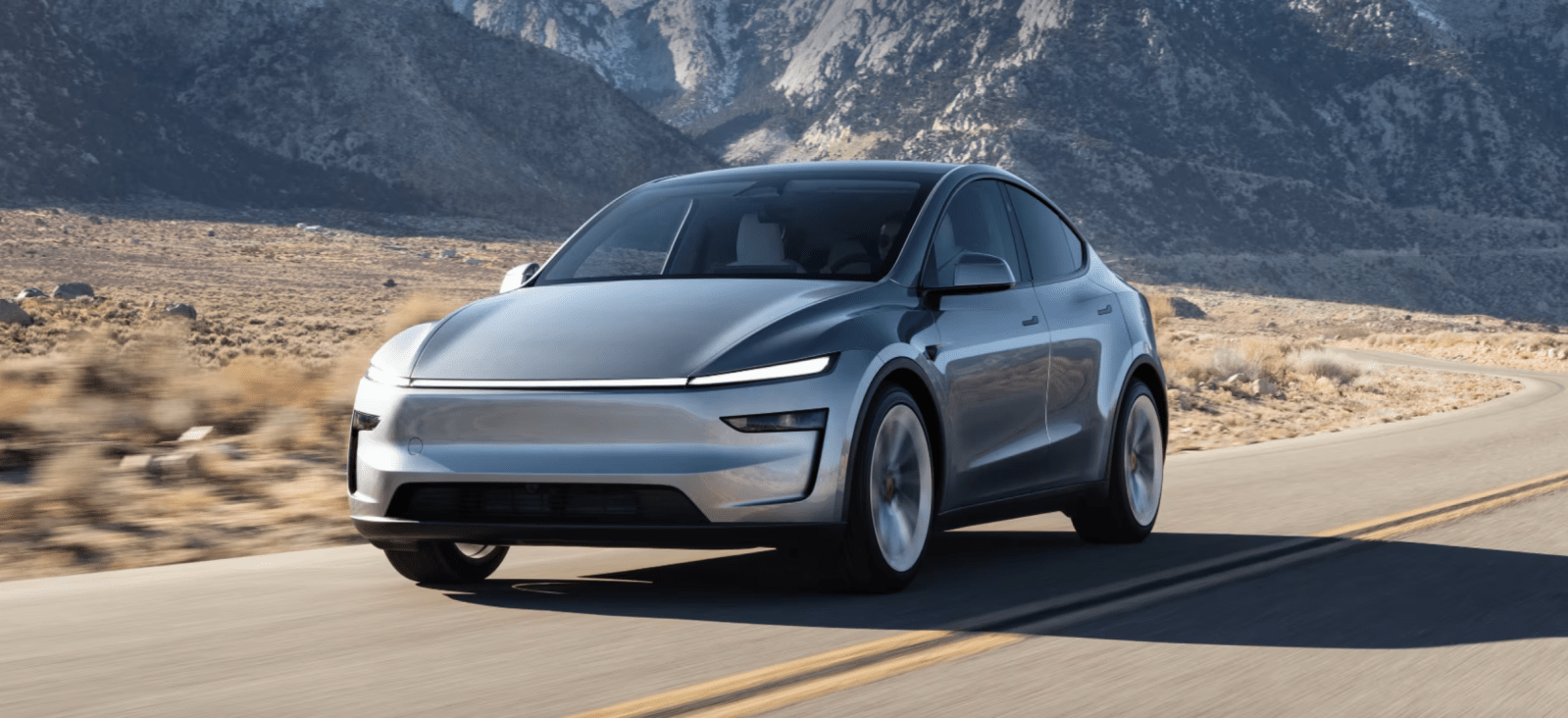
New Tesla Model Y; via Tesla.
BYD outsold Tesla in Europe for the second consecutive month in February, registering 17,954 vehicles compared to Tesla’s 17,664, and the year-to-date gap is becoming a chasm.
The data is particularly damning for Tesla because February 2025 was one of its weakest months in years, with factories shut down for the Model Y Juniper changeover. The fact that Tesla can barely grow from that low bar a year later tells you everything about the state of the brand in Europe.
The numbers
According to registration data, BYD surged 162% year-over-year in Europe’s broader market (EU + EFTA + UK), climbing from just 6,844 registrations in February 2025 to 17,954 in February 2026. Tesla managed only an 11.8% increase, from 15,794 to 17,664.
In the EU specifically, the picture is even worse for Tesla. BYD registered 15,438 vehicles (+185% YoY), grabbing 1.8% market share, up from 0.6% a year ago. Tesla registered 13,740 units (+29.1% YoY) for a 1.6% EU market share, up from just 1.2%.
Advertisement – scroll for more content
Year-to-date, the divergence is stark. BYD has accumulated 36,069 registrations through February, up 162.7% year-over-year. Tesla sits at 25,753 — essentially flat with a 0.9% increase. BYD now leads Tesla by more than 10,000 units across the first two months of 2026.
Context matters: Tesla’s “growth” is from rock bottom
Tesla’s 11.8% year-over-year increase in February sounds positive in isolation, but it collapses under scrutiny. In early 2025, Tesla had shut down production lines at Gigafactory Berlin, Gigafactory Shanghai, and its other facilities to retool for the refreshed Model Y “Juniper.” That factory changeover crushed Tesla’s Q1 2025 deliveries across Europe, making it one of the weakest comparison periods imaginable.
A year later, with the refreshed Model Y in full production and widely available, Tesla managed to add fewer than 2,000 units over that dismal baseline. For context, Tesla’s full 2025 European data was a total bloodbath — registrations plunged 27.8% for the year, with catastrophic declines in Germany (-48%), Sweden (-67%), and Belgium (-53%).
The year-to-date figure is the real tell. At 25,753 units through February, Tesla is essentially flat compared to the same period last year, a period that was already severely depressed by the factory shutdowns. That’s not recovery. That’s stagnation at a much lower level.
As we reported in January, Tesla entered 2026 unable to find a bottom in Europe. January’s data showed a 17% crash even as the broader BEV market surged 14%. February’s modest uptick doesn’t change the trajectory.
BYD’s European expansion accelerates
BYD’s 162% growth is not coming from a low base anymore. The Chinese automaker registered 18,242 vehicles in January alone and followed it with nearly 18,000 in February. That’s consistent, high-volume performance, not a one-month spike.
The company has been aggressively expanding its European dealer network and now offers a competitive lineup of BEVs and plug-in hybrids across multiple price segments. It’s worth noting that BYD’s European figures include PHEVs while Tesla sells exclusively battery-electric vehicles, but even on a BEV-only basis, BYD’s growth trajectory dwarfs Tesla’s.
Meanwhile, the broader European EV market continues to grow without Tesla’s help. According to ACEA data, BEV market share in the EU reached 18.8% in the January-February period, up from 15.2% a year earlier. France (+38.5%) and Germany (+26.3%) posted strong BEV growth. Tesla is not participating in this expansion, it’s actively dragging down the growth rate.
Electrek’s Take
The February data confirms a pattern that has been building for over a year now: BYD is ascending in Europe while Tesla is stuck in place. And “stuck in place” is generous, Tesla is flat compared to a period when its factories were literally shut down.
We kept hearing that the refreshed Model Y would reignite European demand, but a year later, the data simply doesn’t support that narrative.
At some point, you have to stop blaming temporary production disruptions and acknowledge that Europe has a deeper Tesla problem — one driven by intensifying competition, brand damage from Elon Musk’s political activities, and a lineup that still lacks a truly affordable option for the mass European market.
BYD, meanwhile, keeps executing. Doubling and tripling registrations quarter after quarter is no longer surprising — it’s the new normal. If Tesla can’t find real growth by the time BYD’s next wave of models hits European shores, the gap will only accelerate from here.


FTC: We use income earning auto affiliate links. More.