Spend enough time in the e-bike world, and you’ll start to notice something strange: a huge amount of how we regulate micromobility comes down to one simple question – does it have pedals? That might have made sense a decade ago, but today it’s starting to look increasingly outdated.
And to be clear, this isn’t about whether having pedals is a requisite for being considered an electric bicycle. It surely is. Rather, I think the bigger question here is this: Should it even matter?
I was reminded of this issue recently while testing out the JackRabbit MG Doble, a small, lightweight electric two-seater that sparked an unusually heated debate in the comments. It wasn’t about performance (it’s got a 750W motor and goes 20 mph or 32 km/h), safety, or even practicality – but about legality. Specifically, whether it “counts” as an electric bicycle.
The answer, of course, is no. And that’s exactly the point.
Advertisement – scroll for more content
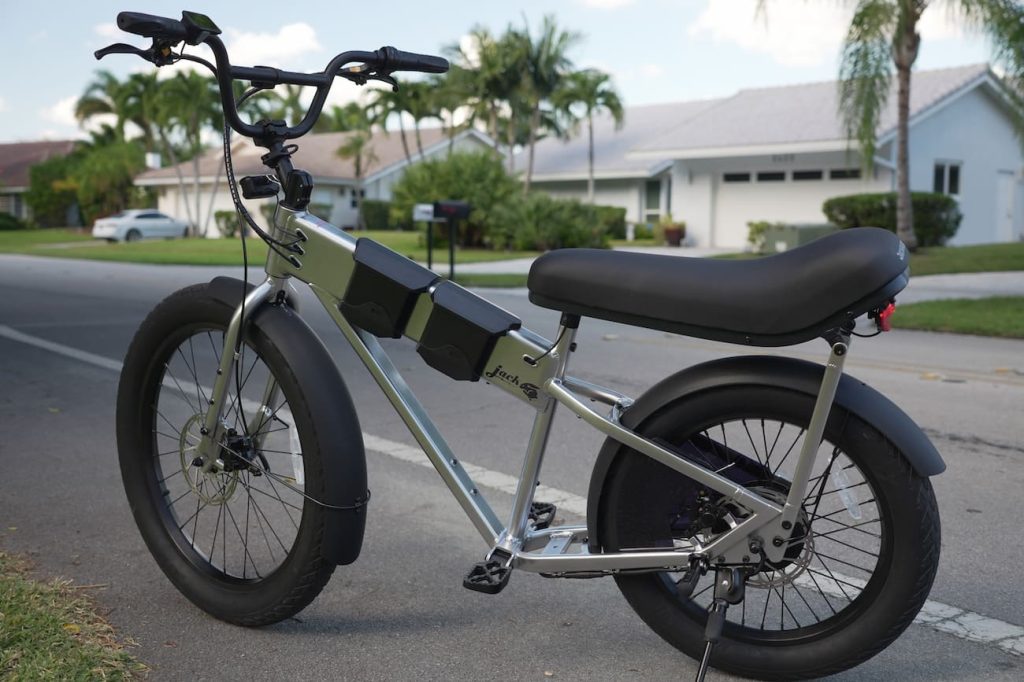 JackRabbit MG Doble, sometimes referred to as a ‘micro e-bike’ despite its obvious lack of pedals
Stick with me here and try to keep an open mind, even if your eyebrows are understandably already heading skyward. I hear you, but let’s wade into this conversation together.
If in the end you still disagree with me, that’s fine, and I’ll respect your opinion. But I think there’s a conversation to be had here, and you might see another side of micromobility you hadn’t previously considered.
When pedals define everything
In the US, most states have adopted some version of the three-class electric bicycle system, which regulates e-bikes to reasonable performance limits of up to just one horsepower, up to 20 or 28 mph (32 or 48 km/h), and either allows or forbids a hand throttle, depending on the class. It’s a simple and pretty darn well-designed framework that has done a lot of good. It created clarity where there had been confusion, helped legitimize e-bikes, and opened the door to wider adoption.
I’m firmly in the camp that says this system has been a huge net positive. More e-bikes on the road is a good thing. They’re efficient, affordable, and one of the best tools we have for replacing short car trips.
But like a well-meaning but still problematic family SUV, the system has a glaring blind spot. Because it hinges so heavily on its pedals requirement, it creates an arbitrary dividing line between vehicles that are, in many cases, functionally very similar to electric bicycles.
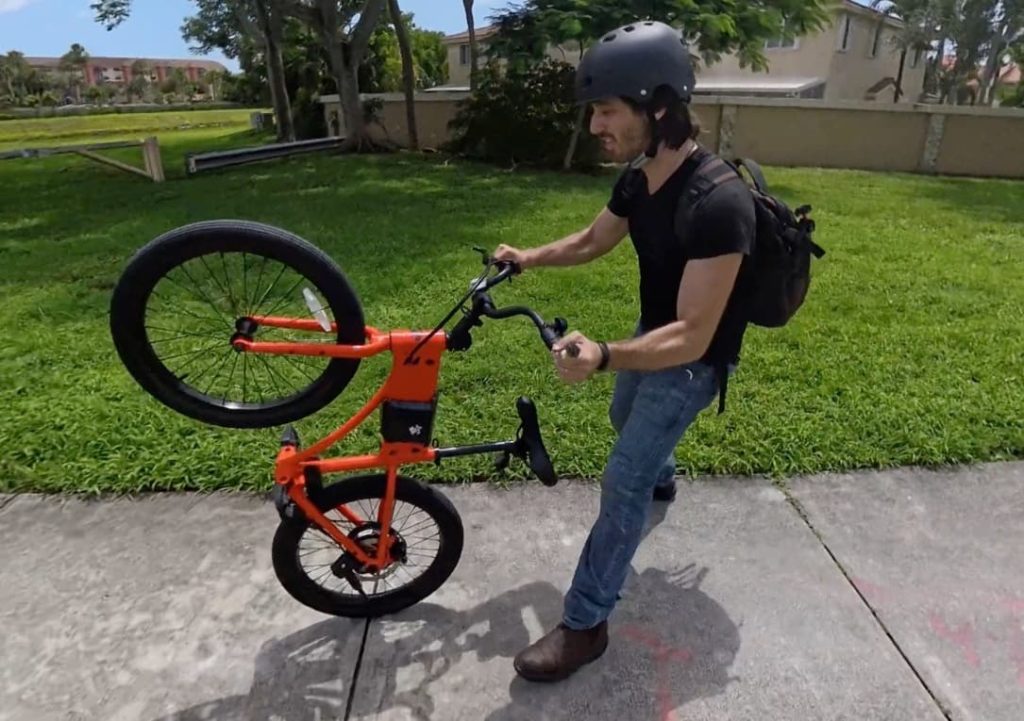 Everything about a JackRabbit screams “bike” to me, except that it also slides right under my couch
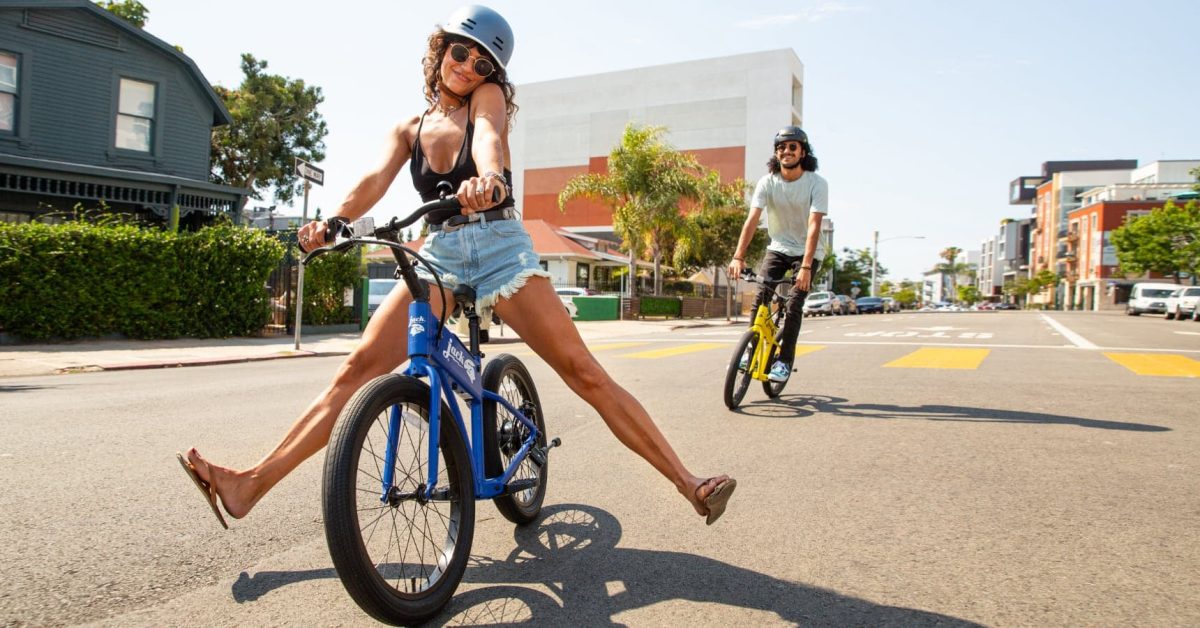
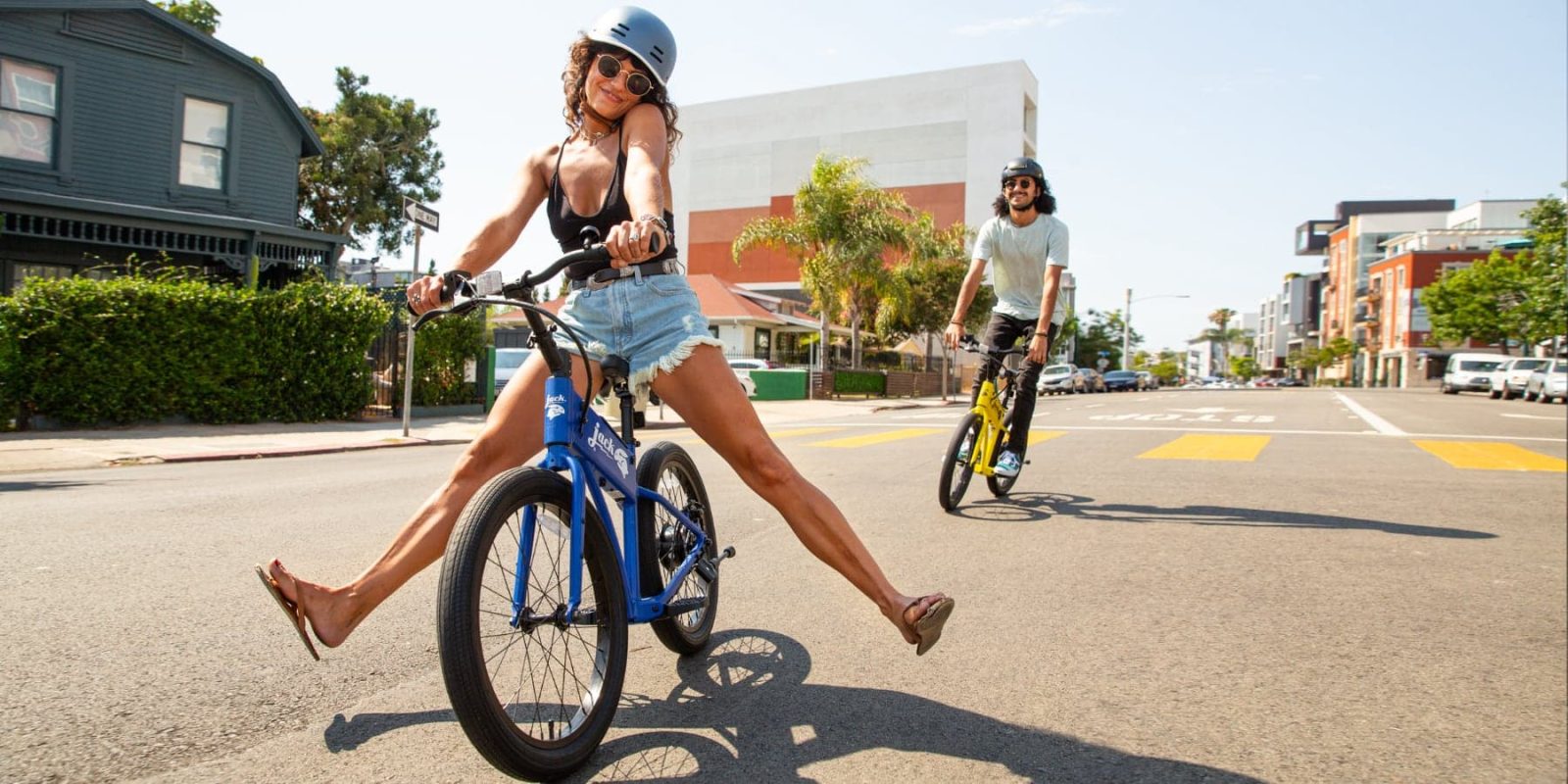
Take something like a JackRabbit. It doesn’t have pedals, so it’s generally regulated as an electric scooter. But in terms of speed, power, and real-world use, it’s often closer to a modest e-bike than to the high-speed stand-up scooters that many people picture.
In fact, just about everything on a JackRabbit comes from the cycling world (brakes, handlebars, saddle, headset, wheels, tires, hubs, spokes, reflectors, etc.). It’s a fascinating hodgepodge of bike parts and several other proprietary components, but because it eschews pedals for folding footpegs, it is lighter, smaller, and easier to store in a dorm room. It’s basically a small e-bike without pedals, traveling at e-bike speeds and with a small e-bike motor, to boot. Without pedals, though, it’s not legally an electric bicycle and thus often falls outside of established classifications for legal use where bicycles and e-bikes are allowed.
At the same time, you can have pedal-equipped bikes pushing higher speeds and power levels that still fit neatly into the “e-bike” category, despite arguably being a bigger “issue” in regards to safety, both for riders and those around them.
So you end up with a strange situation where two vehicles that behave similarly are treated very differently, while two that behave very differently can be grouped together – all because of whether there’s a crankset attached.
And this isn’t a problem only for JackRabbits and other seated scooter-type rides. The four micromobility devices shown in the image below all have approximately the same weight, top speed, and power level. For all intents and purposes, they’re the same in regard to physics when they’re traveling down the local bike lane on the way to work or class. The key difference is that one option allows the rider’s feet to move in a small circle. And as it were, that’s the only one that is fairly universally regarded as street legal everywhere bicycles are, while the other three face varying degrees of legal grey areas or even outright bans in some areas. And that doesn’t even begin to cover some of the more niche mobility devices that still count dedicated communities, such as OneWheels, electric unicycles, etc.
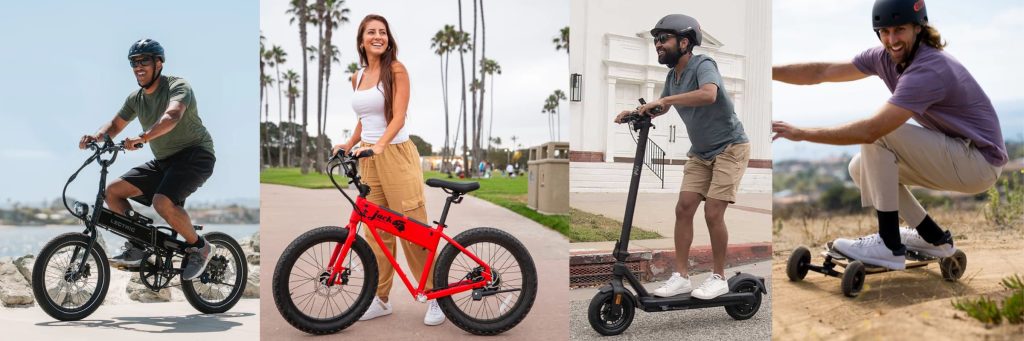 Left to right: Lectric XP Lite2 (e-bike); JackRabbit XG (seated e-scooter); VMAX VX2 (standing e-scooter); Meepo Rover (e-skateboard)
The risk of over-fitting the rules
This isn’t an argument against e-bike regulation. Quite the opposite.
Clear, sensible frameworks have helped e-bikes grow, and we should absolutely continue supporting them. If anything, we need more infrastructure, better incentives, and stronger protections for riders. Groups that lobby for electric bicycle adoption and for creating better legal frameworks have done a great job supporting the continued growth and adoption of e-bikes in the US. They should be applauded for that work.
And I’m still team e-bike. Anyone who knows me and my coverage will already know that e-bikes are my first true love (I’d say don’t tell my wife, but she knows). I still spend most of my time on traditional e-bikes, and I even sometimes ride mine with the power turned off, basically making it a heavy pedal bike for extra exercise. So I love a good old-fashioned, classic e-bike as much as the next guy.
But as micromobility evolves, we’re seeing more products that don’t fit neatly into the existing boxes, and sometimes are being actively excluded because of it.
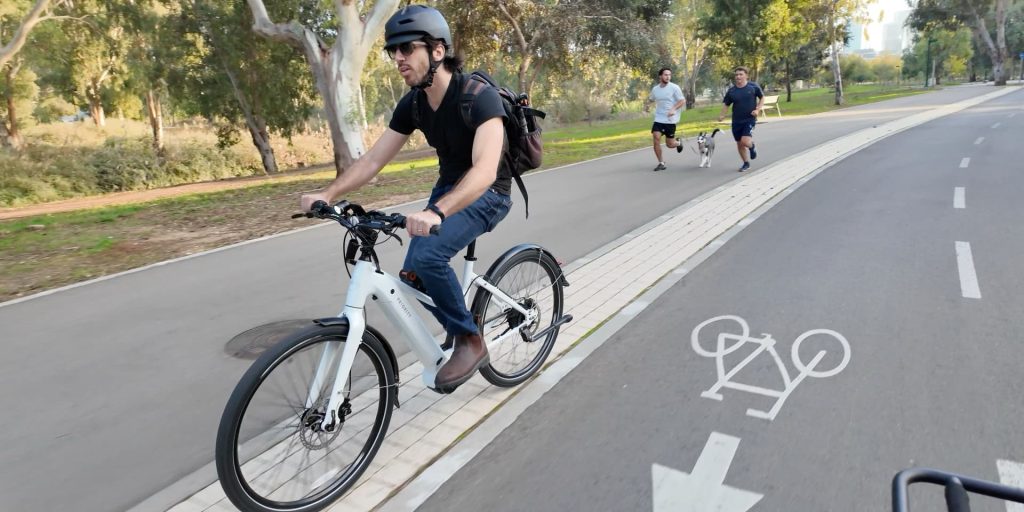 Don’t get me wrong, I love a traditional pedal-assist e-bike just as much, but it’s a slice of the larger pie
Seated scooters, standing scooters, pedal-less mini bikes, e-skateboards, compact cargo-oriented designs – these are all part of a broader shift toward smaller, more efficient electric vehicles for short trips. And many of them are just as capable of replacing car trips as traditional electric bicycles.
If our regulations only recognize “bikes with pedals,” we risk unintentionally sidelining these alternatives.
And that matters so much because different riders are drawn to different formats. Some people love the feel of pedaling. Others want something simpler, more accessible, or less physically demanding. Some are drawn to step-through e-bikes, others to seated scooters, and others still to entirely different designs.
There’s no single solution that will get everyone out of a car. But a diverse ecosystem might.
And we’re actually seeing positive signs that some states are working towards that diversity. Oregon is proposing a new law that finally spells out a wider definition of micromobility, bringing these kinds of “other” non-bikes into the legal fold. So this isn’t just me waxing poetic here; there’s real change afoot in areas that have opened their eyes to the benefits of wider micromobility.
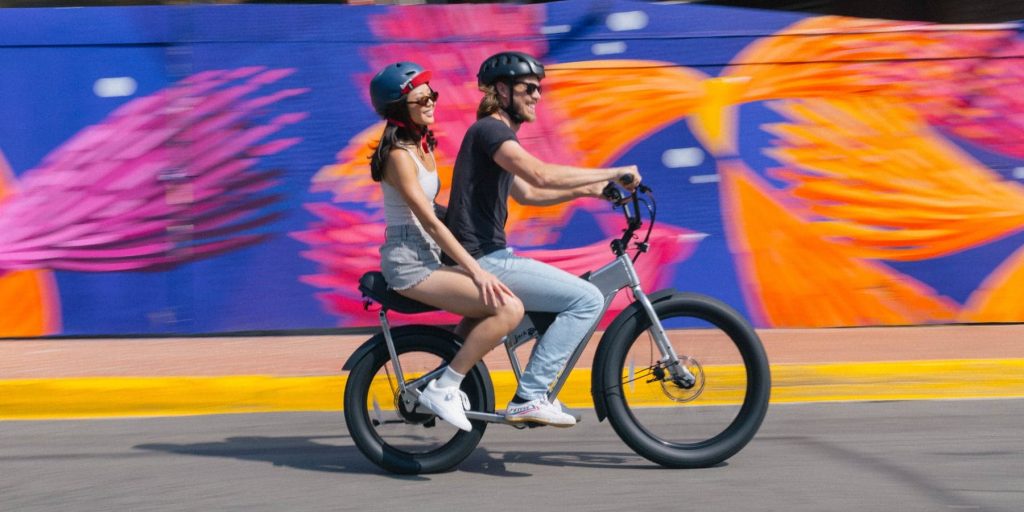 Sure, it doesn’t have pedals. But this JackRabbit is also going 20 mph and taking a car off the road – or even two cars!
A bigger tent for micromobility
I don’t think that the goal should be to redefine everything as an e-bike.
Instead, we should be thinking about how to build parallel frameworks that allow a wider range of low-speed electric vehicles to exist safely and legally.
That means recognizing that the real variables that matter aren’t pedals, but things like speed, weight, power, and how and where a vehicle is used.
It also means resisting the urge to lump everything together. A 20 mph seated micro-EV isn’t the same as a 50 mph electric motorcycle, even if neither has pedals. And treating them as if they are doesn’t help anyone.
So this isn’t saying we should put a bunch of 50 mph Sur-Rons and Talarias on the road. That’s not the answer (though there’s an interesting question in there for another time about whether there is value in creating a new light electric motorcycle category that sits between e-bikes and nearly half-ton Harleys). We should still ensure that non-street-legal light electric motorcycles aren’t menacing bike lanes and city streets.
But let’s not lose sight of what we’re trying to protect, either. Our goal is to promote safe, realistic micromobility, and lightweight, moderate-speed electric two-wheelers fit that category.
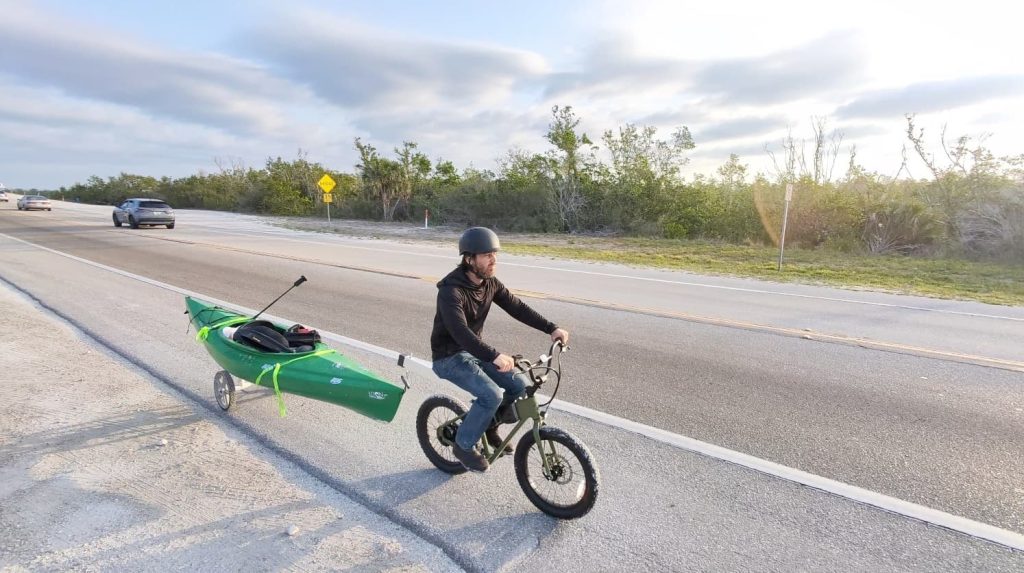 That’s my barely 30-lb JackRabbit pulling my fully loaded kayak (which I later used to paddle me and my micro e-bike to an island campsite)
The path forward
If the post-pandemic years have shown us anything regarding personal transportation, it’s that micromobility works.
E-bikes have proven that when you give people a practical, affordable alternative, they’ll use it. They’ll ride to work, to the store, to the gym – and they’ll leave their cars at home more often.
Now we’re seeing the next wave of that idea. And it’s one I’m reminded of every time I throw a leg over my JackRabbit, riding it just like a bike, in the bike lane, but potentially becoming a scofflaw due to narrow legal definitions that miss the forest for the trees. It feels like Juliet Capulet’s rose by any other name, and it surely does smell as sweet. Or, at least, it rides as sweet.
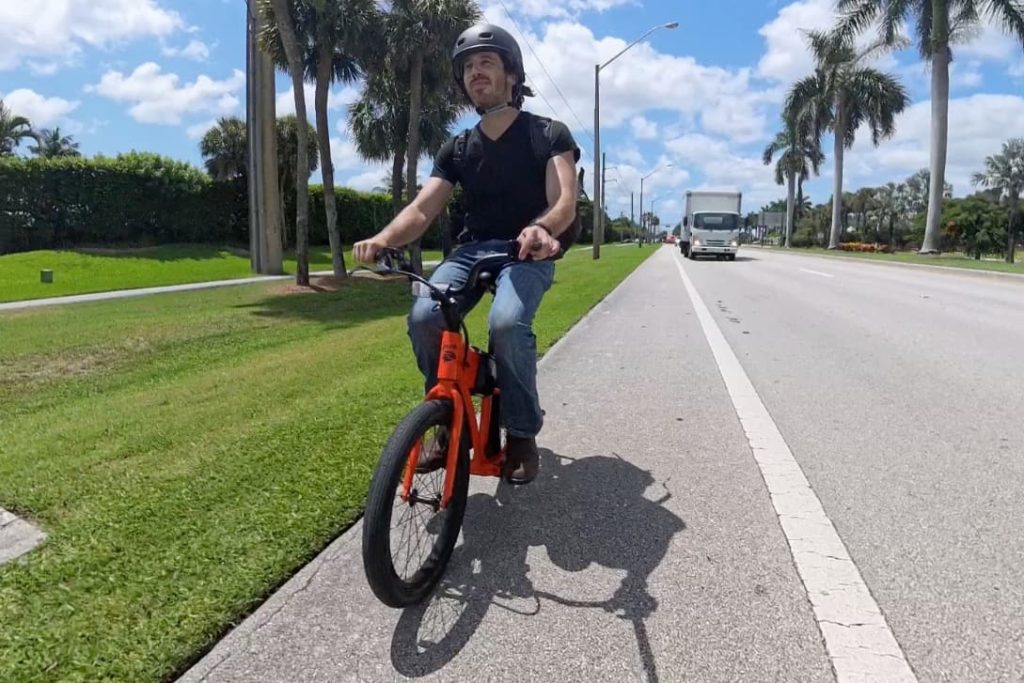
The opportunity here isn’t to protect one category at the expense of others. It’s to expand the tent.
We should absolutely continue championing e-bikes. But we should also be making room for the adjacent technologies that are trying to solve the same problem in slightly different ways.
Because at the end of the day, it’s not about pedals, but about giving people better options. And in the US e-bike world, where frankly over 9 out of 10 e-bikes sold are throttle e-bikes where riders treat the pedals like footrests anyway, a more holistic approach to lightweight two-wheeled transportation seems like it just makes sense.
And the more of those options we have, the easier it becomes to replace car trips – which is really the whole point.


FTC: We use income earning auto affiliate links. More.