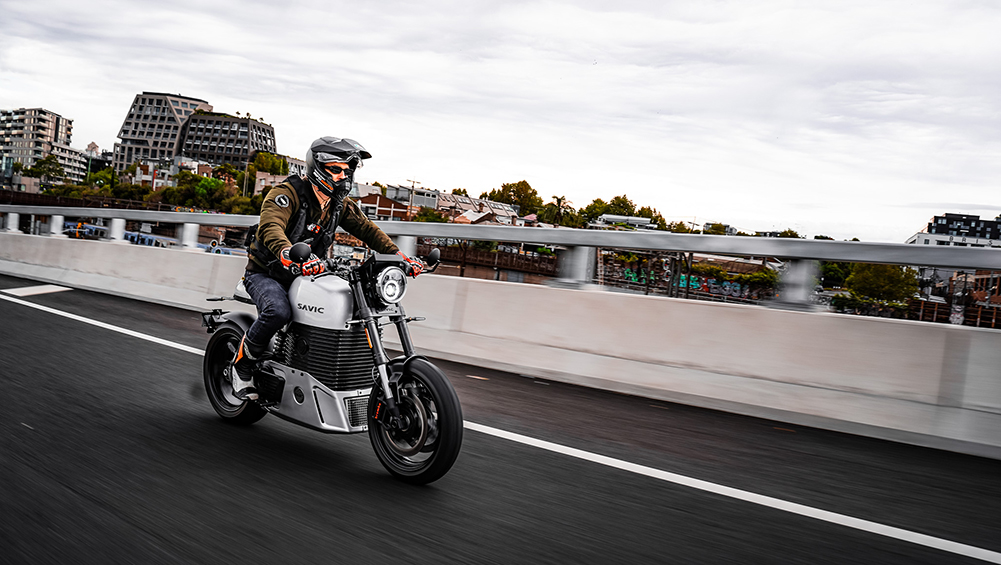
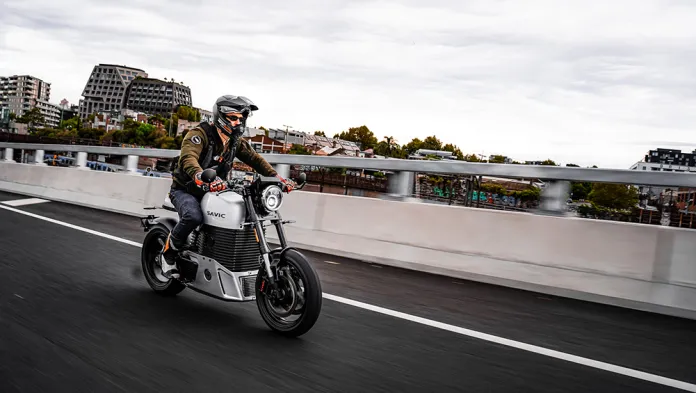
There was at least one moment riding over the Bolte Bridge in Melbourne, watching the city reveal itself in stages. Accelerating with nothing but the sound of the wind. Like a scene out of a Christopher Nolan movie that precedes an inevitable crescendo.
On a conventional motorcycle, there would be an exhaust note to match the drama. On the Savic C-Series, there is a stillness. It is an appropriate way to be introduced to Australia’s first commercially produced electric motorcycle.
I mention that moment because it captures something essential about the C-Series: when the conditions suit it, this bike delivers an experience that is genuinely affecting. The problem, and it is a problem worth naming honestly, is that not all conditions suit it yet.
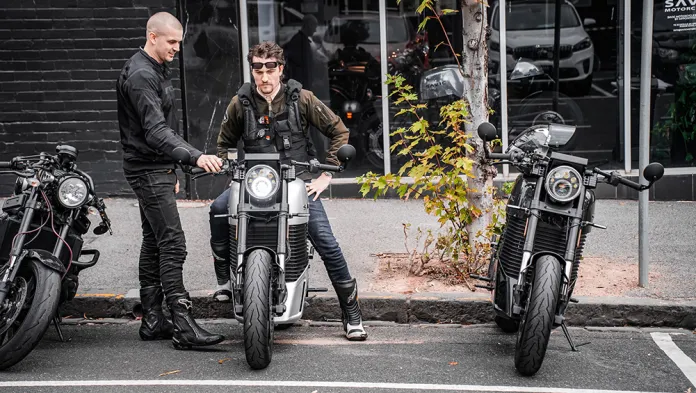
It would be easy to dismiss the “made in Australia” narrative as marketing sentiment. Eight years after the last car rolled off the line at Holden’s Elizabeth plant, any claim to reviving domestic manufacturing carries the weight of everything that went before it. But spend an afternoon with the Savic team in Melbourne’s west and the cynicism softens.
Dennis Savic and his core group of engineers, programmers and designers have spent seven years building this motorcycle from scratch, genuinely from scratch, on a blank sheet, without the crutch of a donor platform.
The SM1 powertrain. The suspension refined at Phillip Island under the guidance of former European Superstock 600 champion Jed Metcher: these are hard-won achievements.
It is worth being clear-eyed about what “Australian made” means in 2026, though. The SM1 powertrain unit is now assembled at a Savic-owned facility in Zhejiang province, China, a move the company describes as one of logic and necessity, driven by cost and logistics realities. The heart of the bike, as lead software developer Kim Suandee puts it, still lives in Australia. That is broadly true. But buyers paying $29,990 plus on-roads deserve to understand the full picture.
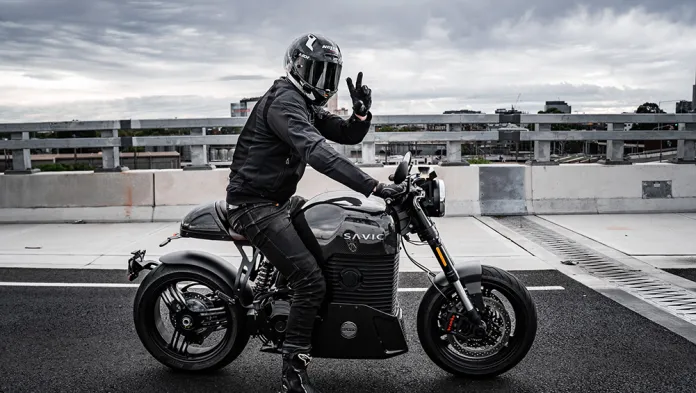
What is beyond dispute is the achievement of getting here at all. Twenty-three bikes have been delivered to owners nationwide. Build slots to mid-June are fully booked. For a small Melbourne company operating in one of the most capital-intensive industries on earth, that is not nothing.
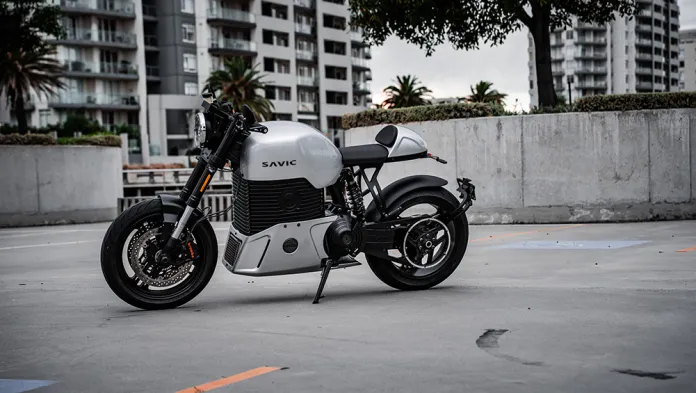
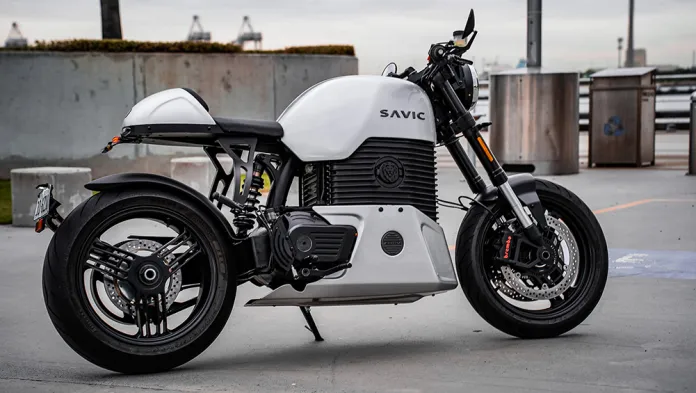
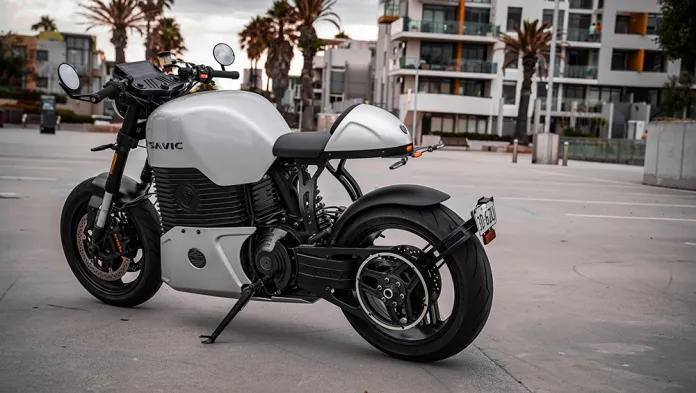
The C-Series is a cafe racer in both form and philosophy. It’s stripped back, purposeful, and unapologetically style-forward. The anodised aluminium exoskeleton draws attention wherever it goes, and the single-sided swingarm gives the rear end a presence that few production motorcycles at any price can match.
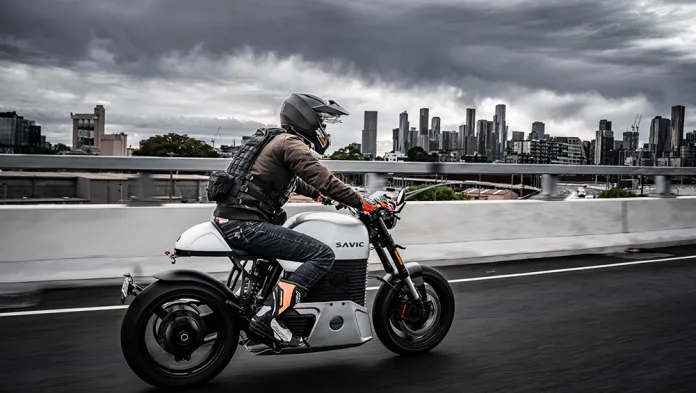
At 280 kilograms, it is a substantial machine. Standing still, that weight is present and accounted for, you feel it when manoeuvring in a car park, and the lack of a hill-hold is noticed at this price point. The reverse gear helps, and it works seamlessly.
Once moving, however, the weight largely disappears. The suspension developed and refined over two years of real-world testing keeps the bike settled and planted across the urban and suburban mix of Melbourne’s inner-west. Handling is smooth rather than sharp, unhurried rather than urgent. For a city bike, that is the right trade-off.
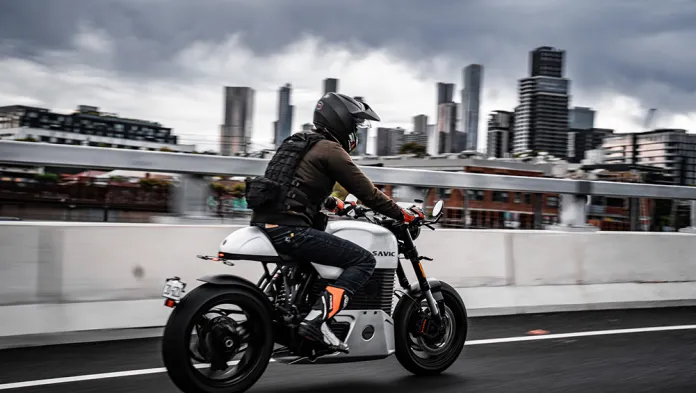
The Brembo brakes are a genuine highlight. Front and rear, they are precise and confidence-inspiring, working alongside the custom Bosch ABS to give the rider a level of stopping control that the bike’s performance numbers demand. Paired with Pirelli Diablo Rosso III rubber front and rear, the C-Series stops and corners with authority.
The acceleration is the other highlight. The 80kW motor and 250Nm of instant torque pull with the kind of effortlessness that internal combustion engines have to work hard to replicate. The electric whirr that accompanies it is, unexpectedly, rather cool.
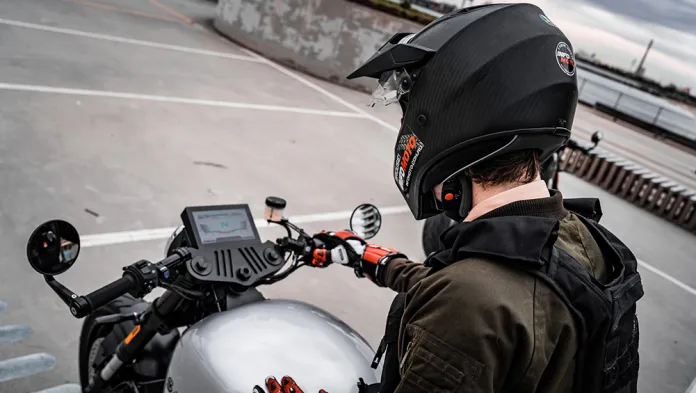
Rider modes make a meaningful difference to the experience. Sport mode sharpens throttle response and reduces range; Eco softens everything and stretches it. Custom modes let you create your own experience. With 220km of combined range on offer and the ability to charge from any standard wall outlet, range anxiety is less of a concern here than on many EVs though real-world figures will vary considerably based on riding style and speed.
The C-Series as tested carries a handful of omissions that are difficult to overlook at its price point, and which collectively reinforce a sense that the bike has arrived slightly ahead of its finished state.
Traction control is not yet live. On a machine generating 250Nm of torque, its absence is conspicuous and Savic has no firm timeline for its over-the-air (OTA) delivery. In practice, the bike’s weight and the quality of the Pirelli tyres provide more mechanical traction than you might expect, but the feature should be present on a production motorcycle of this specification.
The TFT touchscreen is well-designed and easy to navigate once running, but its startup time is sluggish which is a minor irritant that would accumulate over repeated rides. The pin-code unlock system, while clever in concept, raises a practical question: what happens when you forget the code? You can also use an app on your phone. I don’t know, it just feels risky. What was ever so bad about a physical key?
The demo fleet has cruise control deactivated, active on customer bikes, Savic confirmed, but disabled during events to limit issues with high turnover of unfamiliar riders. These are understandable decisions in isolation. Together, they add to a feeling that the ownership experience is still being refined.
The service network is also a work in progress. Savic currently has coverage in Melbourne, Perth and Adelaide, with Brisbane and Sydney in active discussion. For a bike targeting urban commuters nationally, that gap matters.
The Savic C-Series is a legitimate achievement. That a small Melbourne company has designed, engineered and brought to market an electric motorcycle of this specification, with Brembo brakes, Pirelli tyres, and a genuinely compelling powertrain, is worthy of real respect. The Australian-made story is not spin. It is the product of extraordinary effort over an extraordinary timeframe.
But the C-Series Alpha is not yet a complete product, at least in the way we would expect from the established manufacturers. Missing features, an unproven service network, and the everyday friction of a product still finding its feet mean that early adopters are buying into a promise as much as a product. For some riders, that is entirely acceptable and the Savic team’s passion and credibility as actual motorcyclists gives confidence that the promise will be fulfilled.
At $29,990 plus on-roads, it sits in a space where the competition is limited and the narrative is powerful. For buyers drawn to the electric cafe racer concept, the Australian provenance, and the customisation options including a personal colour program from $3500, there is nothing else quite like it.
Ride it on a clear morning overlooking the city, or through the neon-soaked laneways at night, and you will understand exactly what Savic is building toward, and I look forward to following its journey ahead.

Spencer has a keen eye for hard news, and does some of his best living on deadline day. He loves more than anything to travel on his motorcycle, and is adamant that Melbourne Bitter is a world-class lager. By night, Spencer plays guitar with Melbourne punk outfit LOUTS.