Support CleanTechnica’s work through a Substack subscription or on Stripe.
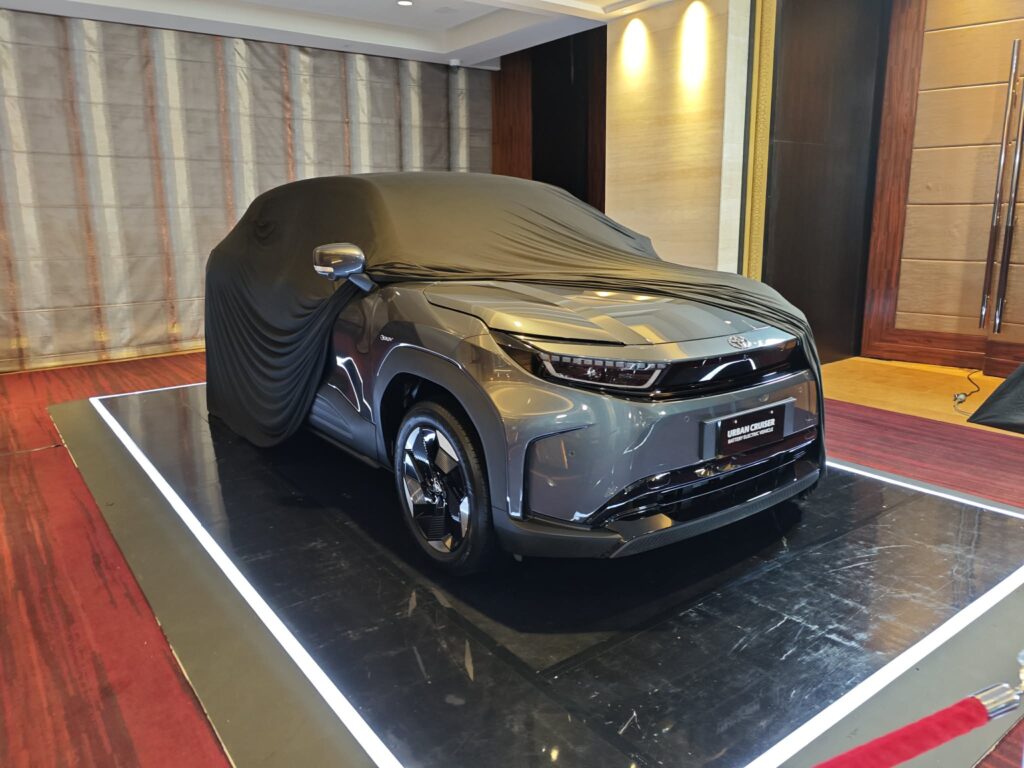
Toyota Motor Philippines (TMP) previewed the Urban Cruiser EV earlier this year before formally pricing it last week, positioning it as its most affordable fully electric offering. At P2.135 million (~$38,000), it undercuts the bZ4x launched last December at P2.699 million (~$44,700), offering a clearer signal of how the world’s largest automaker intends to approach the country’s slow but steadily developing EV transition.
For years, Toyota has resisted the global industry’s rapid shift to full electrification, instead prioritizing hybrids. In markets like the Philippines, that approach remains rational: infrastructure is uneven, electricity costs fluctuate, and consumer readiness is inconsistent. Hybrids provide a practical bridge—familiar, usable, and scalable.
The Urban Cruiser shifts that equation—but only marginally.
While priced below the bZ4x, it remains out of reach for the broader mass market. Instead, it targets a narrow but growing demographic: urban professionals, early adopters, and households willing to transition to EVs within the safety of a brand they already trust.
Toyota is not trying to win the EV race in the Philippines—at least not yet. By global EV standards, it is a late mover, and its current offerings suggest a strategy focused on maintaining relevance rather than leading the transition.
Here is a comparative chart between the Urban Cruiser and what we believe are its closest competitors in terms of price and range: BYD’s Atto 3, Great Wall’s Ora 03, and MG’s ZS EV.
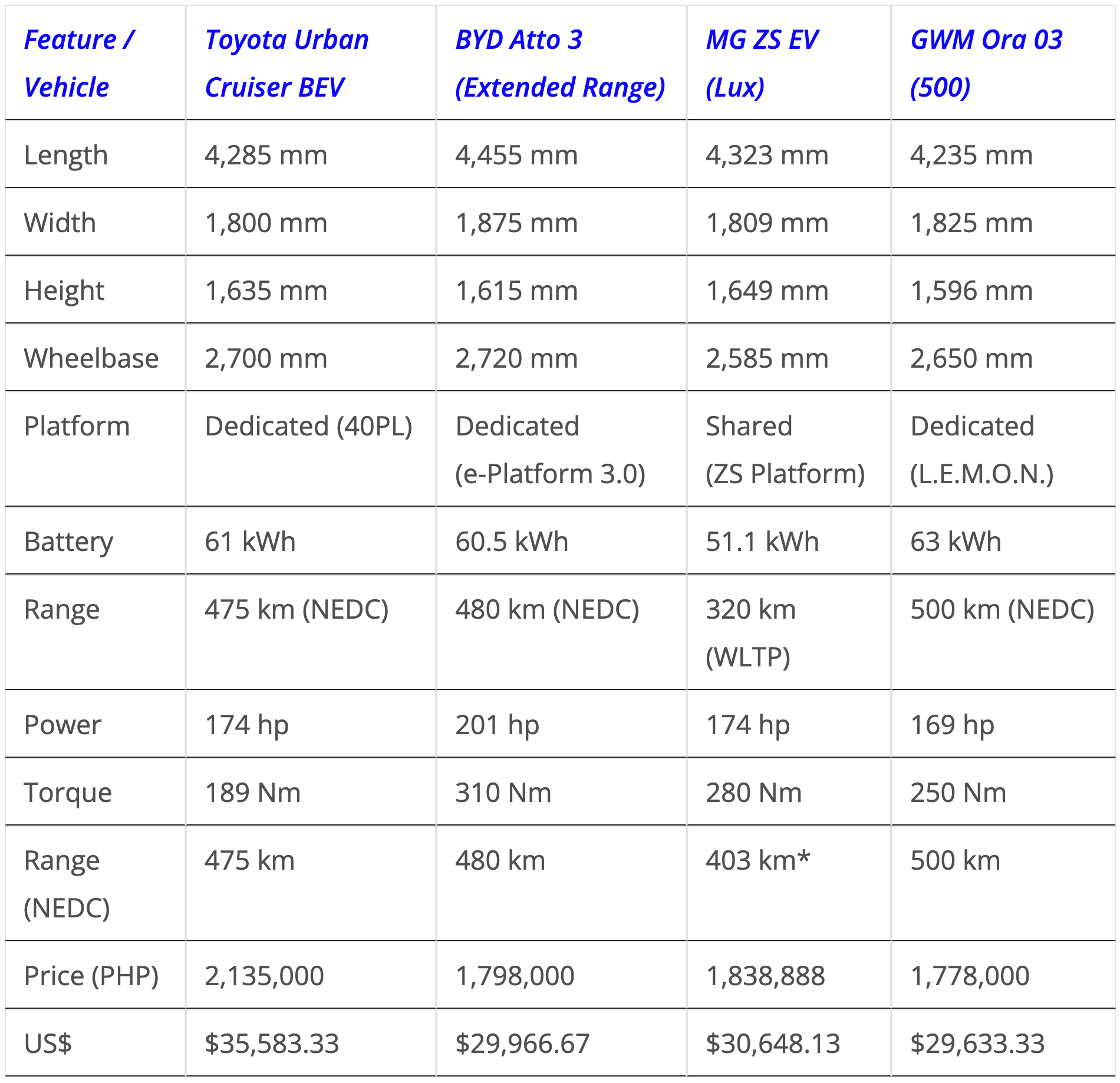 Specifications reflect Philippine-market models. WLTP and NEDC figures are not directly comparable.
The specifications reinforce the positioning. A front-wheel-drive layout, a mid-sized battery, and a range hovering between 400 to 475 kilometers place the Urban Cruiser squarely in the middle of the pack—competitive, but not disruptive. Even its shared platform lineage with Suzuki highlights a pragmatic strategy: reduce costs, share risk, and scale cautiously.
The Urban Cruiser arrives in the Philippines as a Completely Built Unit (CBU), imported from Suzuki Motor Gujarat (SMG) in India. It is produced under the Toyota–Suzuki global partnership, where Suzuki leads the development and production of compact EVs for both brands.
The model is the direct sibling of the Suzuki e-Vitara.
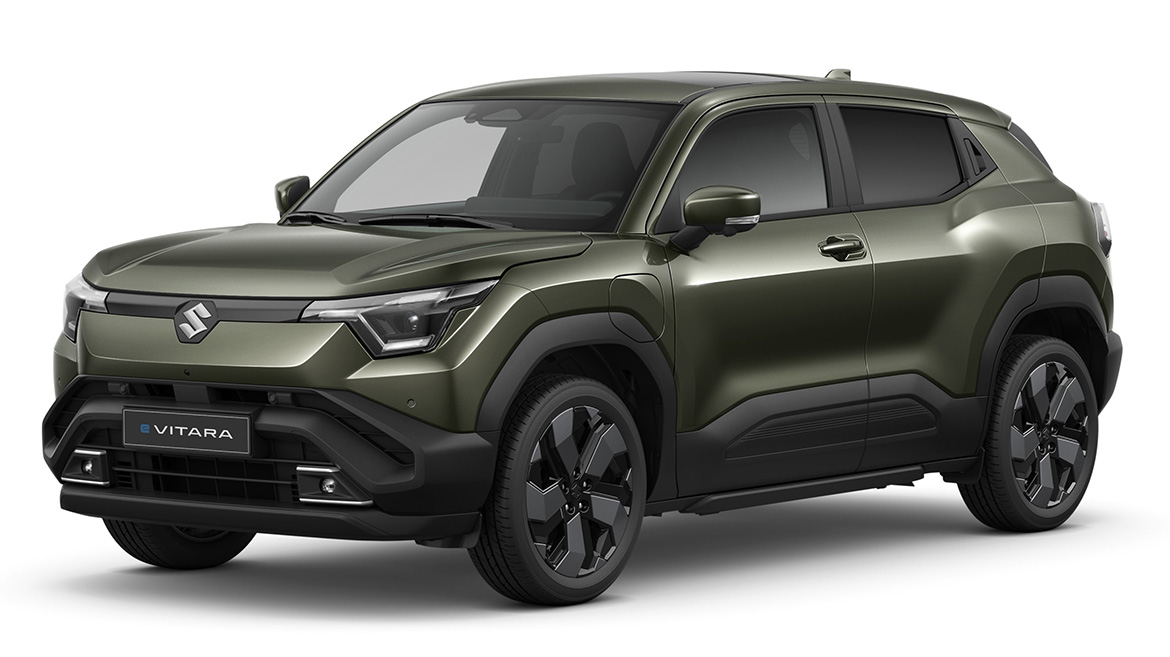 The Toyota Urban Cruiser’s practical twin, Suzuki’s e-Vitara. (Photo from Suzuki)
This stands in stark contrast to the aggressive push from Chinese automakers already operating in the Philippines. Geely Motor Philippines has been directly managed by its Hangzhou headquarters since early 2025. MG operates under SAIC Motor without a local distributor. GAC Motor functions under direct corporate oversight. Market leader BYD is factory-backed and supported by Ayala Corporation through AC Mobility.
These brands are playing offense—offering lower-priced EVs, longer feature lists, and aggressive market positioning. Toyota, by comparison, is playing defense: protecting its vast customer base while testing the limits of EV demand.
Yet this caution should not be mistaken for weakness. A closer look at its hybrid lineup shows strong coverage across both volume and premium segments, complemented by its Lexus portfolio.
Lexus has already introduced the fully electric RZ 450e in the Philippines, priced from P4.828 million (~$80,500) to over P5 million (~$83,500), featuring a 71.4 kWh lithium-ion battery and all-wheel drive.
Toyota understands the Philippine car buyer better than most. Adoption curves here are not driven by hype cycles but by infrastructure, policy, and purchasing power. Charging networks remain sparse outside major urban centers. Range anxiety is not a feeling but a logistic. And for many consumers, the total cost of ownership of an EV remains an open question.
In that context, the Urban Cruiser becomes less about volume and more about influence.
Can Toyota introduce electric mobility without alienating a customer base that still values internal combustion for its predictability?
Seen this way, the Urban Cruiser is not Toyota’s answer to the EV revolution. It is a necessary placeholder, with the bZ4x remaining the brand’s flagship for now.
The risk, however, is that the market may not wait. As more competitively priced EVs enter the Philippines—many from brands unburdened by legacy systems—the definition of “accessible” will shift quickly. What feels like a reasonable entry point today may look expensive tomorrow.
Toyota is betting that its brand equity, dealer network, and after-sales reliability will offset that gap. It is a strong bet, but not an unassailable one.
In the end, the Urban Cruiser’s significance lies not in what it is, but in what it represents: a global giant adjusting to local realities, choosing evolution over disruption, and entering the electric transition with measured intent—dependent on how quickly the Philippine market itself is ready to move.
Sign up for CleanTechnica’s Weekly Substack for Zach and Scott’s in-depth analyses and high level summaries, sign up for our daily newsletter, and follow us on Google News!
Advertisement
Have a tip for CleanTechnica? Want to advertise? Want to suggest a guest for our CleanTech Talk podcast? Contact us here.
Sign up for our daily newsletter for 15 new cleantech stories a day. Or sign up for our weekly one on top stories of the week if daily is too frequent.
CleanTechnica uses affiliate links. See our policy here.
CleanTechnica’s Comment Policy